
If bad car odors keep coming back after you clean, ozone can help by breaking down the odor source inside fabric, carpet, and air vents. In a sealed, empty car, ozone moves into places sprays and wipes often miss, including seat foam, padding, ductwork, and the AC evaporator area.
Here’s the short version:
- It targets stubborn odors like smoke, pet smells, food spills, and mildew
- It reaches hidden areas such as upholstery, carpet padding, headliners, and HVAC passages
- It can cut down mold, bacteria, and allergen residue left in the cabin
- It must be used with care because no person or pet should be inside during treatment
- It works best after cleaning first, not instead of cleaning
- Most cars need 10 minutes to 4 hours of treatment, plus 30 minutes to overnight for airing out, based on odor strength
A few facts matter here. Ozone often breaks down back into oxygen in about 30 to 60 minutes, and larger vehicles like SUVs or vans may need 25% to 50% more treatment time than sedans. But more time is not always better. Too much ozone can be hard on trim, rubber, and some interior surfaces.
So when I look at ozone treatment for cars, I see it as a targeted odor-removal step: clean first, treat the empty car, run the fan on recirculate, then air it out well before driving.
The article below explains what ozone does, where it helps most, how to prepare the car, how long to run it, and how to avoid overdoing it.
OZONE: HOW TO DISINFECT, SANITIZE AND REMOVE ODORS FROM YOUR CAR WITH THIS: HERE IS HOW TO DO IT!
sbb-itb-5fea4da
How Ozone Improves Air Quality in Cars
Ozone doesn’t just make a car smell cleaner. It changes the chemistry behind the odor in the first place. That matters most in the spots normal cleaning tends to miss, like upholstery, carpet, and HVAC passages.
How Ozone Breaks Down Odors in Fabric, Carpet, and Hidden Crevices
Smoke residue, pet accidents, spilled food, and mildew don’t stay on the surface. They sink into foam cushions, carpet padding, door panels, and trunk liners, where a vacuum or spray cleaner can only do so much. Ozone moves through porous materials and oxidizes the compounds causing the smell deep inside fabric, carpet, and padding. Instead of masking the odor, it breaks it down at the source.
That’s why ozone treatment can deliver strong odor reduction in smoke-damaged vehicles when compared with older enzyme-based methods.
The same action also extends into the vehicle’s ventilation system.
How Ozone Reduces Bacteria, Mold, and Contamination in HVAC Passages
That musty blast you notice when the AC first turns on often starts with moisture on the evaporator core and inside the ductwork. Once that damp area sits for a while, mold and bacteria can grow there. When the vehicle’s HVAC is set to recirculation mode during treatment, ozone moves through the full ventilation network, including the ducts and evaporator area, instead of just sitting in the cabin. That’s what helps it get to buildup that manual cleaning can miss.
Research shows that ozone treatment can significantly reduce microbial contamination on surfaces and within air handling systems. That includes bacteria like E. coli and Staphylococcus, along with viruses and fungi.
Beyond odors and microbes, ozone can also reduce the cabin’s allergen load.
How Ozone Lowers Allergen Load in the Cabin
Pollen, dust mite proteins, pet dander, and mold spores can build up inside a car and get pushed back into the air every time the fan runs. Ozone helps reduce allergen residues such as pollen, dust, pet dander, and mold particles, which can make the cabin less reactive for sensitive passengers.
No one should be inside the vehicle during treatment, and the cabin needs to be ventilated afterward. Proper prep and ventilation make the treatment safer and help it work as intended.
How to Prepare a Car for Ozone Treatment
Before you run ozone treatment, clean the cabin first. That gives the treatment a clear path to the odor source instead of wasting it on loose dirt and debris. Ozone works best after the interior has been cleaned because it treats odor sources, not the mess sitting on top of them.
Remove Debris, Vacuum Soft Surfaces, and Wipe Hard Surfaces
Start by removing all trash, food wrappers, and loose items from the cabin and trunk. After that, vacuum every soft surface well, including the seats, floor mats, carpet, and trunk liner. This helps pull out pet hair, crumbs, and dust that can keep the gas from getting deep into the fibers.
Then wipe the dashboard, center console, and door panels with a damp microfiber cloth. That clears away surface dust and residue so ozone can get closer to odors stuck in foam, padding, and fabric.
Check for Moisture Problems and Inspect the Cabin Air Filter
Before any treatment starts, check for damp carpet or leaks and make sure the interior is fully dry. If the carpet is wet or there’s an active leak, odors and mold can come right back. Fix the moisture issue first.
Next, inspect the cabin air filter. A dirty filter can keep bad smells moving through the vehicle. Remove the filter before the ozone cycle runs, then install a new one afterward so the odor doesn’t come back through the vents.
When to Use a Professional Service Instead
A professional service makes sense when you’re dealing with heavy smoke smell, flood damage, water damage, or an odor that’s spread through the vehicle and isn’t easy to track down. In those cases, a DIY job may not go far enough.
For vehicle deodorizing and sanitization in the Chicagoland area, Ozonated Cleaning LLC offers professional ozone treatment for cars and other vehicles.
Once the cabin is clean, dry, and set up, you can move on to the treatment steps.
Step-by-Step: How to Run an Ozone Treatment Safely
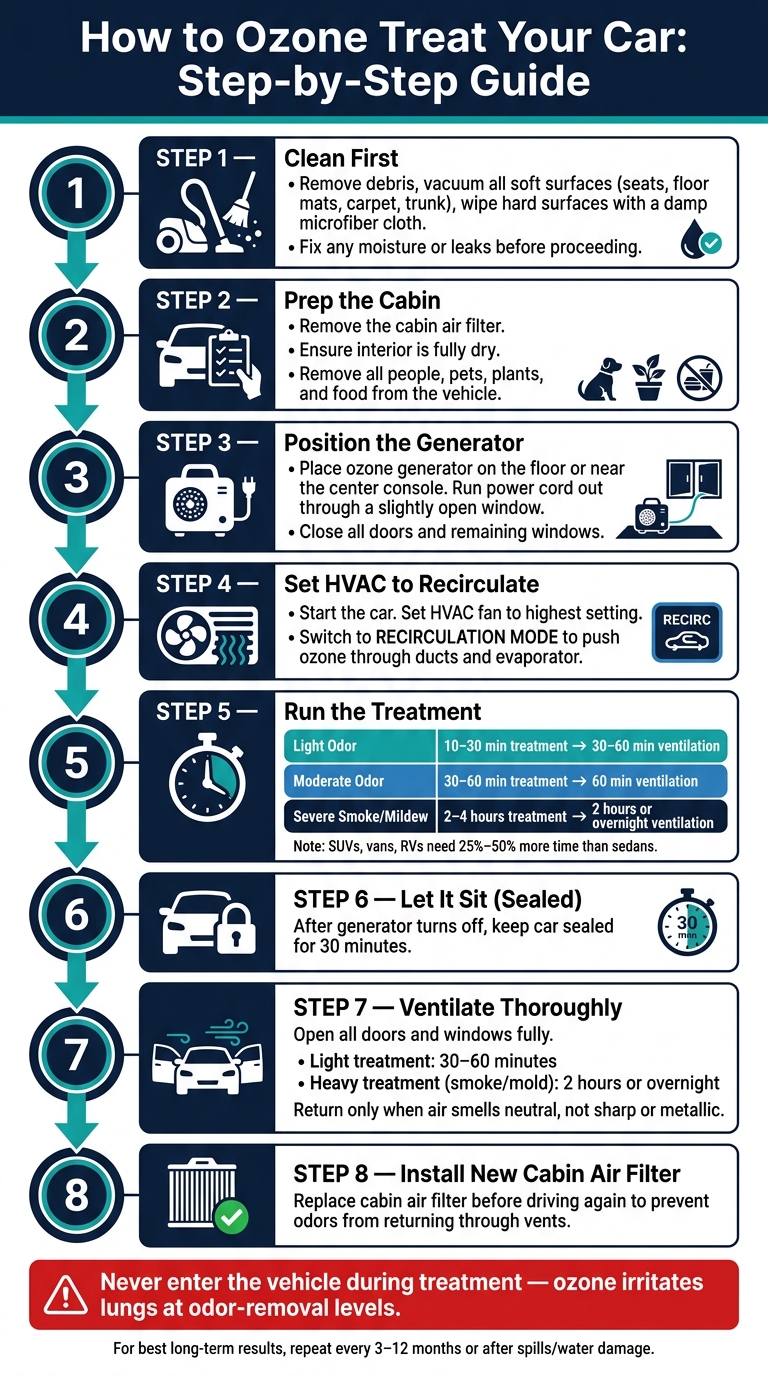
How to Ozone Treat Your Car: Step-by-Step Guide with Timing
Once the cabin is empty and dry, run the treatment in a way that lets ozone move through the cabin, vents, and soft surfaces.
Position the Ozone Generator and Set the HVAC to Recirculate
Park the vehicle outdoors or in a well-ventilated garage. Put the ozone generator on the floor or near the center console inside the cabin. Then run the power cord out through a slightly open window. Close the doors and all other windows so the gas stays inside.
Next, start the car, turn the HVAC fan to its highest setting, and switch it to recirculation mode. This helps move ozone through the ducts and evaporator, where smells often stick around.
How Long to Run the Treatment Based on Odor Severity
Treatment time depends on how strong the odor is. Use the table below to match the odor level with the right cycle time and ventilation time.
| Odor Level | Treatment Time | Ventilation After |
|---|---|---|
| Light odor | 10–30 minutes | 30–60 minutes |
| Moderate odor | 30–60 minutes | 60 minutes |
| Severe smoke or mildew | 2–4 hours | 2 hours or overnight |
If you’re treating a larger vehicle, like an SUV, van, or RV, expect it to need 25% to 50% more time than a sedan with the same odor level. And if the smell is bad, don’t just run one extra-long session. It’s smarter to do a few shorter cycles instead, which helps limit wear on interior materials.
How to Ventilate the Car Before Driving Again
After the generator turns off, keep the car sealed for about 30 minutes. Then open all doors and windows all the way.
For lighter treatments, 30 to 60 minutes of open-air ventilation is usually enough. After a heavier treatment for smoke or mold, plan for at least 2 hours of ventilation, or just leave the car open overnight.
Go back inside only when the air smells neutral, not sharp or metallic. When the odor is gone and the cabin has aired out fully, the car is ready to drive again.
Safety, Material Care, and Long-Term Upkeep
After the ozone cycle, the next step is just as important: air the car out the right way, avoid wear on the interior, and keep bad smells from creeping back in.
Safety Rules for Using Ozone in Cars
Start with the big rule: keep the vehicle empty during treatment: no people, pets, plants, or food. Ozone can irritate the lungs at odor-removal levels, so the cabin needs to be completely empty before you turn on the generator.
Stick to the suggested cycle time. Running the machine longer doesn’t mean a better outcome. It just adds more risk. After the cycle ends, let the vehicle sit for at least 30 minutes. Then open all doors and windows and ventilate it for another 30 minutes to 2 hours before getting back inside. If the air still bothers your throat or lungs, step away and give it more time to air out. For more details on the process, see our odor removal FAQs.
How to Protect Interior Materials and Avoid Over-Treatment
Ozone works because it’s reactive. That’s the upside. The downside is that too much of it can be hard on the car’s interior. Overexposure can dry out seals and trim, harm electronics, and fade dashboard coatings.
If a smell hangs on after one session, don’t jump to one long marathon run. A second, shorter cycle is the safer move. That approach helps protect both the odor-removal result and the materials inside the car.
How to Keep Car Air Cleaner After Treatment
Once the cabin is fully ventilated, the goal shifts to upkeep. This is where simple habits make a big difference.
Regular cleaning and ozone treatment work best as a pair. Put in a new cabin air filter after treatment, since an old one can bring odors right back. After that, keep up with the basics:
- Vacuum weekly
- Clean spills right away before they soak into the padding
- Keep the interior dry to help stop mold
- Crack the windows on sunny days to cut moisture buildup
- Run the ventilation system often so air keeps moving through the ducts
For long-term freshness, an occasional ozone treatment every 3 to 12 months – or after a clear event like a spill or water damage – is enough for most vehicles. Used that way, ozone stays a focused fix instead of becoming the go-to answer for messes that normal cleaning should handle.
FAQs
Can ozone remove odors permanently?
Yes – ozone treatment can permanently remove odors by oxidizing odor-causing molecules at the source. It doesn’t just cover up a smell. It breaks down the molecules that cause it.
That’s why ozone can work so well in places other methods miss. It can move into porous materials and ventilation systems, helping treat odors deep inside a space instead of only on the surface.
That said, lasting results depend on one thing: the original source has to be removed first. If spills, mold, debris, or other odor sources are still there, the smell can come back.
When the root cause is dealt with, the odors should not return.
Is ozone treatment safe for my car interior?
Yes – when it’s done by trained professionals with strict safety steps in place. Ozone is hazardous at the concentrations used for odor and bacteria removal, so the vehicle must be completely unoccupied during treatment.
Ozonated Cleaning LLC makes sure the vehicle is properly sealed, treated, and then thoroughly ventilated before it’s returned. That ventilation period gives the ozone time to convert back into breathable oxygen, with no harmful residue left behind.
When should I hire a professional for car ozone treatment?
Bring in a professional when smells are severe, won’t go away, or have soaked deep into the vehicle, like heavy smoke, pet odors, or moisture damage. If normal cleaning hasn’t fixed the problem, that’s usually the line.
Professional treatment matters because ozone levels used for odor removal can be 5 to 10 times higher than public safety limits. Ozonated Cleaning LLC has the know-how to handle the process safely, run the treatment the right way, and ventilate the vehicle afterward to help cut risk and protect your car’s interior.
Recent Comments