Ozone generators are used for one job: removing hard-to-clear odors after the source has been cleaned up. I’d use them for smells that sink into carpet, upholstery, drywall, vents, and seat foam – especially smoke, pet accidents, mildew, cooking smells, cannabis, and vehicle interior odors.
Here’s the short version:
- Ozone breaks down odor molecules, instead of masking them
- It works best on organic odors stuck in porous materials
- It does not fix the cause of the smell
- You must clean first, then treat
- The space must be empty during treatment
- Afterward, you need full ventilation before re-entry
In plain terms: if the smell keeps coming back after wiping, spraying, vacuuming, or washing, ozone may help with what’s left deep below the surface.
The main odor groups covered here are:
- Tobacco and fire smoke
- Pet and other biological odors
- Mold, mildew, and musty basement smells
- Cooking and food odors
- Cannabis, vape, and similar lifestyle odors
- Vehicle, RV, and boat interior odors
- Restroom, medical, and some chemical odors
Ozone Generator – Why they work and how to use one
sbb-itb-5fea4da
Quick Comparison
| Odor Type | Where It Usually Hides | Ozone Result | What I’d Do First |
|---|---|---|---|
| Smoke | Walls, fabric, ducts, cars | Strong | Remove soot or residue |
| Pet odors | Carpet, padding, upholstery | Strong | Clean urine, feces, vomit |
| Mildew/musty smells | Basements, crawl spaces, vents | Strong for odor | Fix moisture problem |
| Cooking odors | Cabinets, curtains, ducts | Strong | Remove grease and food waste |
| Cannabis/vape | Furniture, carpet, walls, vents | Strong | Clean residue, seal space for treatment |
| Vehicle odors | Seat foam, carpet, AC system | Strong | Vacuum, clean spills, change cabin filter if needed |
| Restroom/medical odors | Drywall, subfloors, padding | Good to mixed | Fix leak or waste source first |
A few treatment numbers stand out in the article: 2 to 4 hours is common for many odor jobs, vehicle treatments can range from 30 to 60 minutes for mild issues up to 2 to 4 hours for heavy odors, and some larger problem spaces may need 4 to 24 hours, followed by 30 to 60 minutes or more of airing out.
If I had to sum it up in one line: ozone can finish the odor-removal job, but it can’t replace cleanup, repairs, or mold work.
How Ozone Removes Odors
Ozone works best on stubborn odors that get stuck deep inside porous materials. Ozone (O3) is a gas, so it can move into carpets, upholstery, and air ducts where smells tend to settle. It removes odors by breaking down odor molecules through oxidation. In plain English, it changes the odor compounds so they no longer smell the same way.
This works best on smoke, pet, mildew, and cooking odors. It is less effective against certain inorganic chemicals. That’s why ozone is most useful for stubborn odors trapped in materials.
Why Some Odors Keep Coming Back
Once odor molecules sink into fabrics, foam, and ductwork, surface cleaning often isn’t enough. You can wipe, spray, and vacuum all you want, but the smell may still hang around because the source is below the surface.
That’s why smoke and pet odors can linger in fabrics and ductwork.
What Ozone Can and Cannot Do
Ozone neutralizes odor molecules – it does not fix what caused them. That distinction matters.
If there is active mold growth, a moisture problem, or smoke residue on a surface, those issues need to be physically cleaned or remediated first. Fix the source first, or the odor will return.
Basic Safety and Ventilation Rules
Because ozone works only in empty spaces, safety and ventilation come first. Ozone is harmful to breathe at treatment levels, so people, pets, and plants must leave the space.
It’s also smart to remove or cover rubber, silk, and sensitive electronics. After treatment, ventilate fully before re-entry. The next sections show the odors ozone handles best.
1. Tobacco and Fire Smoke Odors
Smoke odors can hang around long after the smoking stops or the fire is out. Cigarette smoke and fire smoke both leave behind compounds that basic cleaning often can’t touch.
What Makes Smoke Odors So Stubborn
Tobacco smoke leaves a sticky residue that clings to walls, fabrics, and other surfaces. Fire smoke is different, but just as hard to deal with. It creates odor-causing compounds that can work their way into building materials.
Where Odors Linger
The problem isn’t just the air. Smoke settles into porous materials and hides deep inside places you can’t easily wipe down. That includes drywall, insulation, subflooring, curtains, and small gaps in cabinets and trim. In vehicles, smoke seeps into seats, headliners, carpets, and even the air-conditioning system.
That’s why surface cleaning alone often falls short. You can clean what you see and still be left with the smell.
How Ozone Neutralizes Smoke Compounds
Ozone breaks down odor molecules through oxidation. It targets smoke compounds buried deep in materials, including areas that normal cleaning tools can’t reach. That’s a big reason smoke is one of the best uses for ozone.
Treatment Considerations
Ozone isn’t a shortcut for cleanup. Visible residue has to go first. If soot or sticky film is still sitting on surfaces, the odor source is still there.
For fire damage, remove soot before treatment. If the contamination goes deeper, extra deodorizing steps may still be needed. After the smoke residue is removed, ozone can handle what remains in the air and inside materials.
2. Pet and Biological Odors
Primary Odor Sources
Pet and biological odors usually begin with direct contamination, not just particles floating around. Understanding these common sources of indoor odors is the first step toward total elimination. In most cases, pet smells come from accidents, plus the buildup of dander and body oils.
Where Odors Linger
In homes, these odors often sink into porous materials like carpets and upholstery. In vehicles, RVs, and boats, the same smells tend to get stuck in upholstery, carpets, and internal ventilation systems.
Once you remove the source, ozone can help neutralize what’s left behind in the air and deep inside hidden fibers.
How Ozone Neutralizes Biological Odor Compounds
Ozone can reach odor molecules trapped in fabric, carpet, and ventilation systems, then break them down at the source. That’s why it works well for smells buried in carpet, upholstery, and vents.
Treatment Considerations
Cleanup comes first. Remove urine, feces, or vomit before treatment. Ozone deals with the odor that remains after cleanup.
Typical treatment lasts 2 to 4 hours, followed by 30 to 60 minutes of ventilation before re-entry. Keep pets, people, and plants out during treatment. Ozone irritates the lungs and is harmful to animals.
3. Mold, Mildew, and Musty Basement Odors
Primary Odor Source
When a musty smell keeps coming back, moisture is usually the root cause. In most cases, mold and mildew odors come from damp, biological odor compounds that get trapped inside materials.
Where Odors Linger
Musty smells often sink into carpets, upholstery, and ventilation systems. Basements and crawl spaces are common trouble spots because dampness tends to build up there and spread into nearby surfaces.
How Ozone Neutralizes Mold-Related Smells
Ozone oxidizes the compounds behind musty smells. It can also move into porous materials, cracks, and crevices. That helps in basements and crawl spaces, where odors often hide out and stick around.
Treatment Considerations
Fix the moisture source first. If the dampness stays, the odor will come back. Use a unit that matches the room size and the odor level. After you fix the moisture issue, ozone can help with home odor removal for what’s left in the air and in the materials.
4. Cooking, Food, and Kitchen Odors
Primary Odor Source
Kitchens are a common source of stubborn indoor smells. Fried food, garlic, onions, fish, spices, burnt-food smoke, and grease buildup can all leave odors that hang around long after the meal is over.
Where Odors Linger
These smells don’t always stay in the kitchen. They often drift into living rooms and bedrooms, then settle into upholstery, carpets, curtains, wood cabinetry, drywall, and HVAC ductwork. Once that happens, the odor can keep moving through the home each time the system runs. That’s why ozone helps when the smell has spread past the kitchen itself.
How Ozone Neutralizes Cooking-Related Smells
Because ozone is a gas, it can move into the hard-to-reach spots where cooking odors stick around, like behind appliances, inside cabinetry, and through ductwork. It neutralizes the odor itself, improving overall air quality, but it does not remove grease or burned residue.
Treatment Considerations
Before treatment, wipe away grease, remove any burnt food, and throw out spoiled food. For kitchen-fire residue or heavy grease odors, use a longer treatment cycle. Run the HVAC fan so ozone can move through the ductwork. After the cycle ends, ventilate the area well before going back inside.
5. Cannabis, Vape, and Other Lifestyle Odors
Primary Odor Source
Cannabis and vape odors act a lot like other smoke smells, but they often move through a room faster. The source is the same basic problem: smoke particles and odor-causing compounds stick to surfaces, then settle into the space over time.
Where Odors Linger
These smells don’t just hang in the air. Carpets, furniture, and upholstery soak them up deep into their fibers. With repeated use, the odor can work its way into walls, ceilings, and even subfloors. Ventilation systems can also move it through ductwork, which makes the smell spread farther than most people expect.
How Ozone Neutralizes These Odor Compounds
Ozone reacts with odor molecules and changes them so they no longer smell. In plain terms, ozone cleaning for homes breaks down the compounds instead of covering them up. That matters because cannabis and vape residue tends to hide in porous materials, and ozone can reach those same spots where the smell sticks around.
Treatment Considerations
The space should stay empty during treatment. Close windows and doors so the room stays sealed and ozone concentration holds steady. Be careful around rubber and some plastics, since ozone can damage them. Once the cycle ends, ventilate the area well before anyone goes back in. The same method also works in other enclosed spaces where odor builds up fast.
6. Vehicle, RV, and Boat Interior Odors
Odors are tougher to clear from vehicles, RVs, and boats because these are small, sealed spaces. The smell has nowhere to escape, so it keeps circling through the interior. Common causes include smoke, professional vs DIY pet odor removal methods, leaks, food spills, and vomit. Once you clean the source, ozone can help neutralize what’s left behind. That makes it a good fit for tight interiors where odors keep settling into the same materials.
Where Odors Linger
The smell usually doesn’t stay in the air for long. It gets pulled into upholstery, carpet, headliners, and seat foam. Damp vents can also hold mold and bacteria, then blow that odor back into the cabin every time the system turns on. And then there are the spots you can barely reach, like under seats, behind panels, and inside vents. Those hidden areas trap odors that normal cleaning often misses. That’s why surface cleaning alone often falls short.
How Ozone Neutralizes Interior Odors
Ozone can move into seat foam, carpet, and hidden cabin spaces, where it breaks down odor molecules instead of just covering them up. For HVAC odors, run the AC on recirculate during treatment. That step matters because the system can keep feeding the same smell back into the space.
Treatment Considerations
Start with the basics: vacuum, clear out debris, and clean any soiled surfaces before treatment. Take out pets, plants, and food as well. Mild odors may need 30–60 minutes, while severe smoke, mold, or biological odors may need 2–4 hours or repeat treatments.
Be careful with rubber, leather, and electronics. If exposure goes on too long, ozone can dry them out or cause damage. After treatment, ventilate for 30–60 minutes. If the odor is heavy, give it more time. It also helps to replace the cabin air filter if it’s holding onto the smell.
7. Restroom, Medical, and Certain Chemical Odors
Some of the hardest odors to deal with show up in restrooms, clinics, and utility areas. These spaces often trap stubborn smells from sewage, bacteria, biological waste, and VOCs left behind by cleaning products.
Where Odors Linger
These odors don’t just sit on the surface. They can soak into drywall, subflooring, wall cavities, carpet padding, and upholstery. That’s why a basic wipe-down or surface cleaning often doesn’t get the job done.
How Ozone Neutralizes These Odors
Ozone neutralizes odor by oxidizing odor-causing molecules. It tends to work best on organic odors tied to bacteria, mold, mildew, and biological waste. It’s less effective on some inorganic chemical odors.
Treatment Considerations
Start with the source. Ozone won’t fix a sewage leak or an active mold issue by itself. After that problem is handled, the space must be completely vacant, with no people, pets, or plants inside.
Treatment time depends on the size of the area. In many cases, ozone needs 4 to 6 hours to work. Larger spaces may need up to 24 hours, followed by full ventilation before anyone goes back in.
One more thing: don’t use ozone in areas where cleaning chemicals are still sitting around. Ozone can react with residue and damage electronics, contacts, and wiring. That’s why cleanup and ventilation need to happen before treatment.
Odor Types and Treatment Expectations at a Glance
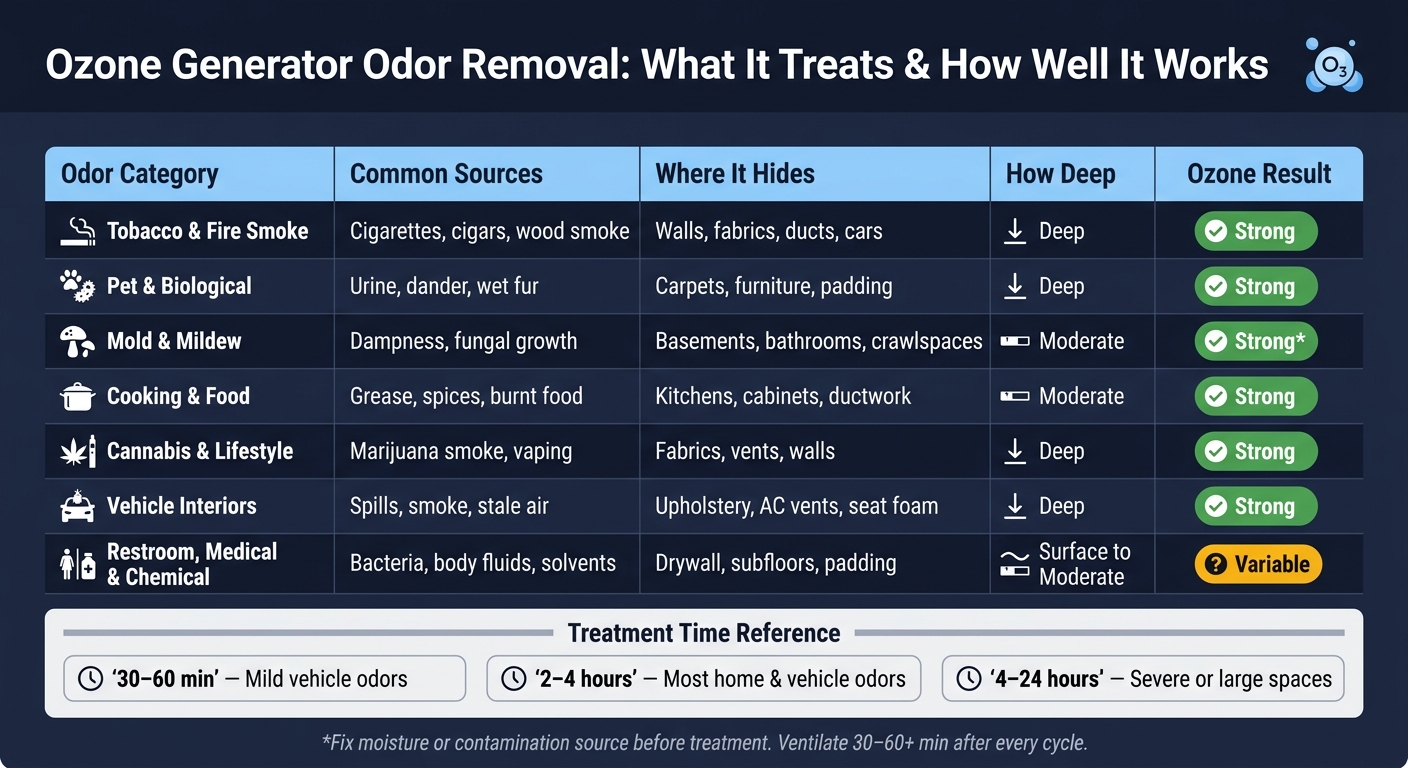
Ozone Generator Odor Removal: What It Treats & How Well It Works
After the examples above, this chart makes the treatment pattern easier to compare. Use this quick reference to see where ozone tends to work best and where results can be less predictable.
The table below shows where each odor shows up, how deep it sinks in, and how well ozone usually works.
| Odor Category | Common Sources | Typical Locations | How Deep It Reaches | Typical Results |
|---|---|---|---|---|
| Tobacco & Fire Smoke | Cigarettes, cigars, wood smoke | Rental units, living rooms, hotels | Deep (walls, fabrics, ceilings) | Strong |
| Pet & Biological | Urine, dander, wet fur | Carpets, furniture, pet beds | Deep (padding, fibers) | Strong |
| Mold & Mildew | Dampness, fungal growth | Basements, bathrooms, crawlspaces | Moderate (surface & air) | Strong for odor only |
| Cooking & Food | Grease, spices, burnt food | Kitchens, open-plan homes | Moderate (surfaces, cabinets) | Strong |
| Cannabis & Lifestyle | Marijuana smoke, vaping | Apartments, bedrooms, cars | Deep (fabrics, vents) | Strong |
| Vehicle Interiors | Spills, smoke, stale air | Cars, RVs, boats | Deep (upholstery, AC vents) | Strong |
| Restroom, Medical & Certain Chemical Odors | Bacteria, body fluids, paint, solvents, new carpet | Bathrooms, clinics, care facilities, renovated rooms, workshops | Surface to moderate | Strong for restroom and medical odors; variable for some chemical odors |
Basements, rentals, and vehicles often need longer cycles because odors settle into porous materials and HVAC systems. In plain terms, the deeper the contamination and the tighter the space, the longer the treatment usually takes.
In multi-room homes, you may need to move the generator from one zone to another or run the central HVAC fan to help spread ozone through the space. After that, plan for plenty of ventilation time before anyone goes back inside. Severe or long-standing odors may also need repeat cycles, with airing-out time between runs, to fully neutralize deep-set odor molecules.
Always remove the source first. Ozone finishes the job; it doesn’t replace cleanup. If an odor falls in the variable column or keeps coming back, the next section explains when professional treatment makes more sense.
When to Call a Professional for Ozone or Hydroxyl Treatment
When an odor comes back after cleanup, or starts spreading into porous materials, it’s usually time to bring in a professional for ozone or hydroxyl treatment.
Cases Where DIY Often Falls Short
If the smell keeps coming back after the steps above, the source is often buried deeper than a consumer-grade unit can reach. That’s where DIY tends to hit a wall.
This usually happens when odors return soon after treatment or have soaked into materials like carpet padding, subflooring, drywall, insulation, or ductwork. When a smell comes back fast after cleanup, that’s a strong sign it has moved past the surface and into deeper layers.
Why Hydroxyl Treatment May Be Used Instead
If a space can’t be cleared out, hydroxyl is often the better fit. It can run while people are still in the area and is gentler on sensitive contents. The tradeoff is speed: it usually works more slowly, often over days instead of hours.
For heavy, deep-set smoke odors in spaces that can be vacated, ozone often works faster. In some cases, pros use ozone first and then follow with hydroxyl for any odor that still hangs around.
Professional Odor Removal in Chicagoland
For severe or repeat odor problems, professional treatment can save time and cut down on failed do-it-yourself attempts. Ozonated Cleaning LLC provides ozone and hydroxyl odor removal in Chicagoland for homes, businesses, and vehicles, serving the greater Chicago area with extended coverage into northwestern Indiana and southeastern Wisconsin.
Conclusion
Ozone generators do their best work on lingering organic odors that get stuck in porous materials. They tend to work best when you remove the source first, match the treatment to the size and type of space, and fully ventilate the area afterward.
For severe, deeply embedded, or recurring odors, professional treatment is often the best route. Ozonated Cleaning LLC offers odor removal services across Chicagoland for homes, businesses, vehicles, RVs, and boats using ozone and hydroxyl technology.
FAQs
How do I know if ozone will work for my odor?
Ozone can help with odors from smoke, pets, mold, and cooking because it oxidizes the molecules that cause the smell. Since it’s a gas, it can move into places where odors like to stick around, including fabrics, carpets, and HVAC systems.
That said, it works best after you remove the source of the odor, such as moisture or debris. If the smell is deep-set or keeps coming back after DIY cleanup, professional treatment may be worth a look.
Can I stay in the space during ozone treatment?
No. Never stay in the room during ozone treatment.
Ozone can irritate your respiratory system and may lead to coughing, chest tightness, and shortness of breath.
Before treatment begins, remove all people, pets, and plants from the area. The space must stay empty during treatment and throughout the ventilation period so the ozone has time to dissipate.
When should I hire a professional instead of doing it myself?
Consider hiring a professional for severe odor cases like fire damage, major mold growth, or flood impact. If DIY fixes haven’t worked, a smell that just won’t go away can be a sign of hidden contaminants that need an expert look.
Ozonated Cleaning LLC handles these tougher jobs for homes and businesses across the Chicagoland area. They use advanced equipment and precise concentration calculations to deliver effective, safe results.
Recent Comments