
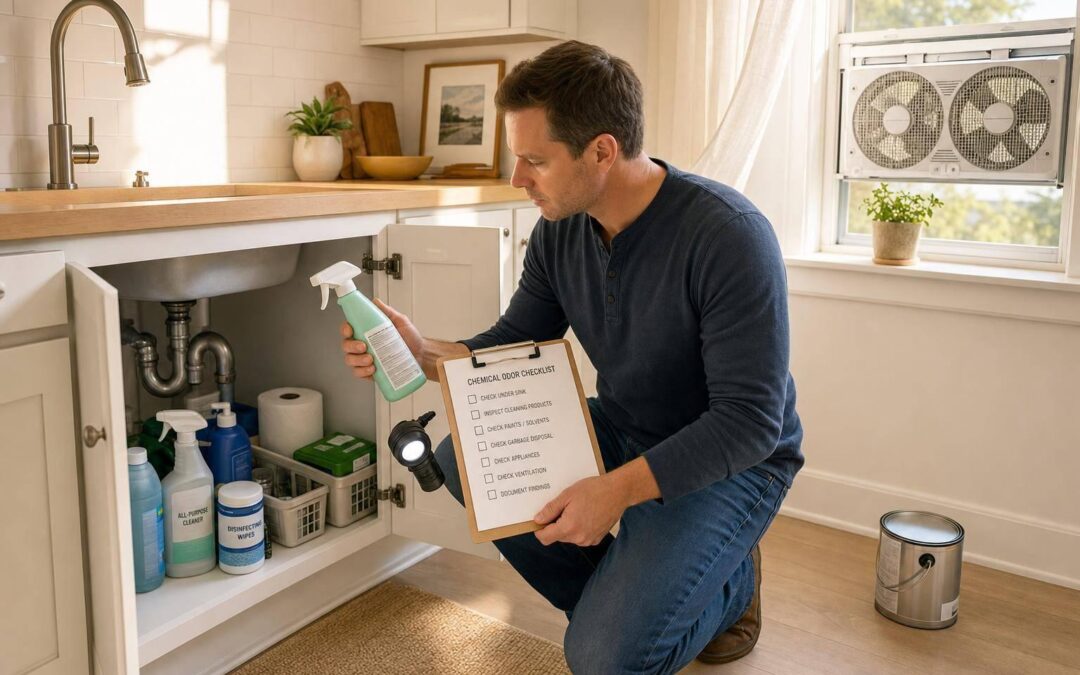
If I smell a chemical odor at home, I should treat safety first, then trace the source room by room. Some smells need immediate action, especially rotten egg, burning plastic, or strong fuel odors. And one fact matters most: no smell does not mean indoor air is safe, because some VOCs have little or no odor.
Here’s the short version of what I need to do:
- Leave right away and call for help if I notice gas, burning, fuel vapors, or symptoms like dizziness, nausea, eye irritation, or trouble breathing
- Ventilate for 15 minutes if outdoor air is okay, using windows, doors, and exhaust fans that vent outside
- Check high-risk areas first like kitchens, bathrooms, laundry rooms, garages, and utility spaces
- Look at recent changes such as paint, flooring, carpet, furniture, mattresses, or cabinets
- Watch HVAC and appliances to see if the smell gets worse when air or machines turn on
- Match the odor type to the likely source like paint, pressed wood, fuel, damp materials, or cleaners
- Track patterns in a simple log with time, room, odor, and trigger
- Call a pro if the odor stays, comes back, or causes headaches or breathing problems
A few points stand out from the article:
- VOCs can come from paints, adhesives, flooring, furniture, and composite wood
- Off-gassing can last weeks or even months
- Children, older adults, and people with asthma may react more strongly
- Consumer monitors may show that something is off, but lab testing is needed to identify the chemical and level
| What I notice | What I should do |
|---|---|
| Rotten egg, burning plastic, strong gasoline/solvent smell | Leave the area and call for help |
| Mild chemical smell after new paint, carpet, or furniture | Ventilate and check recent items |
| Odor stronger near vents or when HVAC runs | Check ductwork, airflow, and source location |
| Odor plus headache, dizziness, nausea, or breathing issues | Get to fresh air and seek help |
| Smell stays after ventilation and source removal | Call an indoor air or odor removal pro |
This article gives me a simple home checklist: check safety, cut exposure, inspect each room, match the smell, and get help if it doesn’t go away.
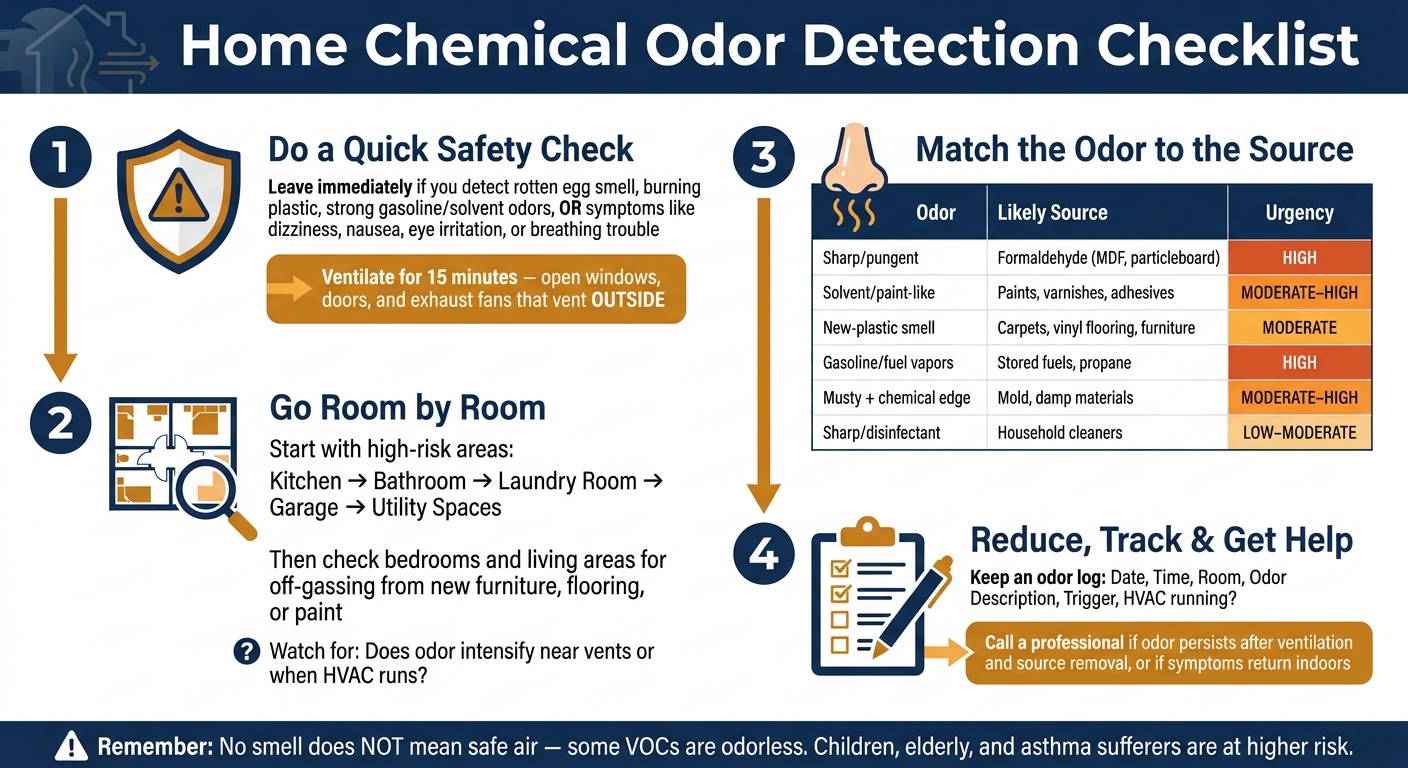
Home Chemical Odor Detection Checklist: 4 Steps to Safety
How to Test Your Home for VOCs, Formaldehyde, and Hidden Toxins
sbb-itb-5fea4da
Step 1: Do a Quick Safety Check Before You Investigate
Start with safety, not source-finding. Before you look for the cause, figure out whether the smell needs immediate action. If it doesn’t seem urgent, then move on to checking where it’s coming from.
Signs an Odor Needs Immediate Attention
Some chemical smells are serious. Leave the area at once and call your utility company or emergency services if you notice any of these:
- A rotten egg smell, which can point to natural gas
- Burning plastic or an electrical burning smell
- A sudden, strong gasoline or solvent smell
- Any chemical smell plus dizziness, nausea, lightheadedness, breathing trouble, a tight headache, or eye irritation
Children, older adults, and people with asthma or other respiratory conditions can be hit harder by these fumes. If symptoms show up, move them to fresh air right away. Don’t wait and hope it passes.
First Steps to Reduce Exposure
If the odor isn’t an emergency but you can still smell it, cut down your exposure before you start checking rooms. First, look at AirNow.gov to make sure outdoor air quality is okay. If it is, open windows and doors for 15 minutes and run exhaust fans that vent outside.
Don’t use a fan that just recirculates indoor air. That can push vapors into other rooms. If the smell seems limited to one area, shut that room’s door.
Also, never mix cleaning chemicals to try to get rid of a smell.
If the odor is still there after ventilation, start room-by-room checks.
Step 2: Go Room by Room to Find the Source
Move through the house one room at a time and pay attention to where the smell is strongest. Begin with the spaces most likely to hold chemical products, then check the rest of the home. As you walk, notice whether the odor fades or gets stronger. Also watch for patterns. Does it get worse when the HVAC system turns on? Does it show up when a nearby appliance is running?
Start with Kitchens, Bathrooms, Laundry Rooms, and Garages
Begin here. These rooms tend to collect cleaners, fuels, and appliances that deal with moisture.
Look for open or recently used cleaners, disinfectants, air fresheners, pesticides, fuel containers, solvents, or rags soaked with solvents or cleaning products. In garages and utility areas, stored fuel and other chemicals can send fumes indoors.
If the smell is light or hard to pin down, move on to bedrooms and living spaces and focus on anything that changed recently.
Check Bedrooms and Living Areas for Off-Gassing Materials
If the odor smells faint, sweet, or chemical and you can’t tell where it’s coming from, check what’s new in the room. Recent renovations, flooring, and furniture often release VOCs for weeks or months. Common sources include new furniture, mattresses, rugs, carpets, and vinyl flooring. Composite wood, including particleboard and MDF, can release formaldehyde and other VOCs for months after delivery.
Think back over the last few weeks. Was there fresh paint, new flooring, assembled furniture, or deep cleaning with strong products? Changes like these can leave odors that stick around, especially in rooms with poor airflow.
Inspect Vents, HVAC Equipment, and Major Appliances
Stand near supply and return vents while the system is running. If the smell gets stronger there, it may be traveling through the ductwork instead of staying in one room.
Check washers, dryers, dishwashers, and other major appliances as well. If the odor shows up only when one appliance runs, that’s a strong clue that you’ve found the source.
If the source still isn’t clear, the next step is to match the type of odor to the most likely household source.
Step 3: Match the Odor Type to Likely Household Sources
If Step 2 helped narrow it down to one room, the next move is simple: use the type of smell to zero in on the source. In many cases, the odor itself gives you a pretty strong clue.
Common Odor Patterns Homeowners Should Know
A sharp smell near new cabinets or shelving often points to formaldehyde off-gassing from pressed wood products like particleboard or MDF. This smell can hang around for months after installation.
A solvent or paint-like smell in a recently redone room usually comes from paints, varnishes, sealants, or adhesives.
A new-plastic smell in bedrooms or living rooms often means new carpets, vinyl flooring, or upholstered furniture are off-gassing.
A gasoline or fuel vapor smell near the garage or utility room is one to take seriously. It may come from stored fuel containers, propane, or nearby fuel storage. Check for leaks or spills right away.
Musty odors with a chemical edge in basements, crawlspaces, or under sinks often suggest moisture, mold, and damp materials.
Odor Type Comparison Table
Use the table below for a quick side-by-side look at odor type, source, and urgency.
| Odor Description | Likely Sources | Common Location | Urgency |
|---|---|---|---|
| Sharp or pungent | Formaldehyde from MDF, particleboard, adhesives | Near new cabinets, shelving, furniture | High |
| Solvent or paint-like | Paints, varnishes, sealants, adhesives | Recently renovated rooms, workshops | Moderate–High |
| New-plastic smell | New carpets, vinyl flooring, upholstered furniture | Bedrooms, living areas | Moderate |
| Gasoline or fuel vapors | Stored fuels, propane, nearby fuel storage | Garages, utility rooms | High |
| Musty with chemical edge | Mold, moisture, VOCs from damp materials | Basements, crawlspaces, under sinks | Moderate–High |
| Sharp or disinfectant | Household cleaners, sanitizing sprays | Kitchens, bathrooms | Low–Moderate |
Once you have a likely source, use short-term fixes and an odor log to see if the smell lines up with what you found.
Step 4: Reduce the Odor, Track Patterns, and Know When to Call for Help
Short-Term Steps to Lower Chemical Odors
Once you’ve narrowed down the source, the next move is simple: contain it and cut down exposure.
Open windows only when the air outside is clean. If outdoor air is polluted, keep them shut. Run exhaust fans that vent outdoors, not fans that just push air around the room. If you can, move the source to a garage or another outdoor area so it can off-gas away from your living space.
Keep an Odor Log and Look for Patterns
A basic written log can help you spot what’s setting the smell off. Sometimes the pattern becomes obvious once you see it on paper.
Each time you notice the odor, write down:
- Date and time
- Room
- Odor description
- Likely trigger
- Whether the HVAC system or any appliances were running
Nighttime spikes often point to lower ventilation or heat-related off-gassing. If the smell keeps returning, your log can help narrow the source instead of leaving you guessing.
When to Call a Professional for Odor Removal or Air Quality Help
If the odor doesn’t improve after these steps, it’s time to stop troubleshooting on your own and move to professional testing. Consumer VOC monitors may tell you that something is off, but professional lab testing is needed to identify specific chemicals and their levels.
If a chemical odor sticks around even after ventilation and source removal, or if people in the home are dealing with headaches, dizziness, or breathing issues that get better after leaving the house, bring in outside help.
If the odor persists after source removal and ventilation, call a professional for odor removal or indoor air quality testing. For persistent odors in the Chicagoland area, Ozonated Cleaning LLC offers professional odor removal and disinfection services.
FAQs
How long can off-gassing last?
Off-gassing can last from a short period to weeks or months, depending on the source. Better ventilation can help some volatile organic compounds fade faster.
Odors from particleboard, adhesives, carpets, and new furniture often stick around longer. Some semi-volatile organic compounds can last even longer because they attach to dust and surfaces.
Can HVAC spread chemical odors?
Yes. Your HVAC system can spread chemical odors through your home if it pulls air from a room where things like stored cleaning products or building materials are giving off fumes.
Sometimes, the smell comes from the HVAC system itself. A refrigerant leak, for example, can produce a sweet, chloroform-like odor. If the smell gets stronger when the system turns on, it’s a good idea to contact professionals such as Ozonated Cleaning LLC.
When should I call a professional?
Call a professional if odors stick around after a deep cleaning, or if you think the source is hidden behind walls, under flooring, or inside your HVAC system.
It’s also smart to get expert help if you notice respiratory irritation, headaches, or asthma symptoms that ease up when you’re away from home. The same goes for bigger problems, like mold covering more than 10 square feet or serious water damage. Ozonated Cleaning LLC handles these cases with ozone and hydroxyl technology.
Recent Comments