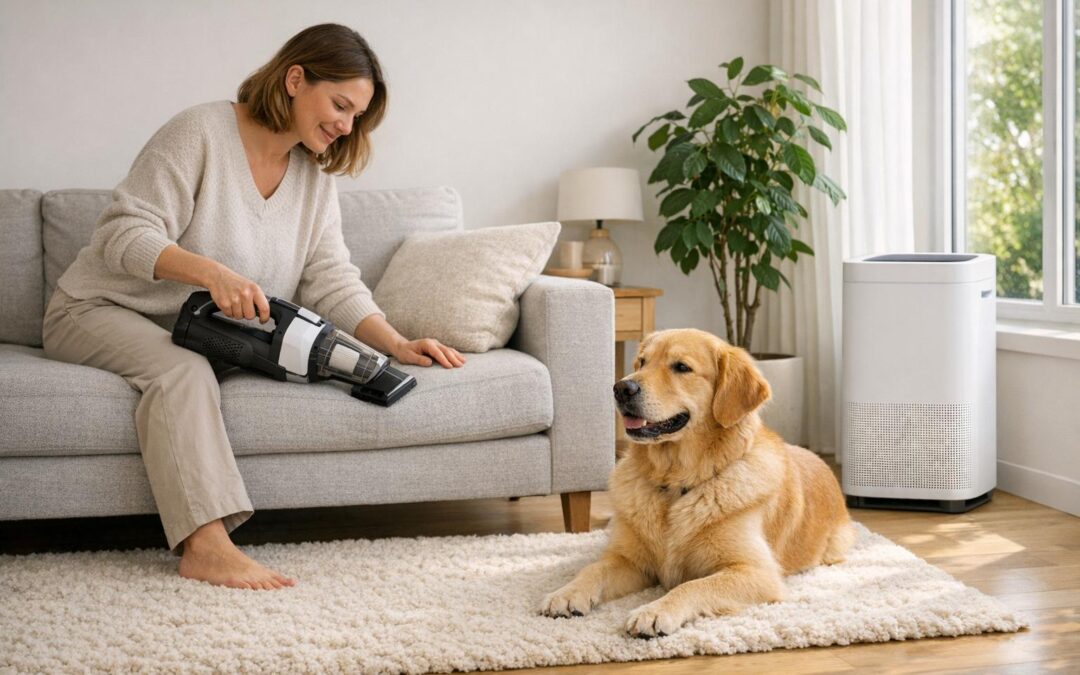
Living with pets often means dealing with allergens like dander, saliva, and urine proteins that trigger sneezing, itchy eyes, and congestion. These allergens cling to surfaces and can linger for months, making them challenging to manage. Here’s how you can reduce pet allergens in your home without using harsh chemicals:
- Prepare Your Space: Start with HEPA vacuuming and damp wiping to remove allergens from surfaces. Create a pet-free zone and improve ventilation by decluttering and opening windows.
- Ozone Generators: Use these devices for deep cleaning. They neutralize allergens and odors but require you to vacate the area due to safety concerns.
- Hydroxyl Generators: These can safely run in occupied spaces for continuous allergen management. Place them in bedrooms and areas with fabric surfaces.
- Regular Cleaning: Maintain cleanliness with HEPA vacuums and microfiber cloths to physically remove allergen residues.
- Professional Services: For stubborn allergens, hire professionals who use industrial-grade ozone and hydroxyl equipment for a deeper clean.
Both ozone and hydroxyl technologies are effective but serve different purposes. Ozone works quickly but requires safety precautions, while hydroxyl is safer for daily use in occupied spaces. Pair these treatments with regular physical cleaning for the best results.
Step 1: Prepare Your Home for Treatment
Getting your home ready is a crucial first step when using ozone or hydroxyl technology. Start by vacuuming with a HEPA-filter vacuum and wiping down hard surfaces with a damp cloth. This helps remove dust and dander, which can interfere with the treatment’s effectiveness. Dr. Sandra Hong, an allergist at Cleveland Clinic, explains how persistent pet proteins can be:
"They [pet proteins] get attached to couches, any sort of cloth surfaces like rugs and carpets, and other upholstery, and they stay and linger there."
Once you’ve cleaned, focus on creating a pet-free zone and improving ventilation to ensure the treatment works as intended.
Remove Pets from the Area
To prevent allergens from being reintroduced and to adhere to ozone safety guidelines, temporarily relocate your pets. Even when pets are removed, allergens like cat proteins can stick around for months. Designating pet-free zones – especially in spaces like bedrooms – can help reduce allergen buildup over time. Before letting your pets back inside, consider wiping them down to remove external allergens, such as pollen, that they may carry in.
Open Windows and Declutter the Space
After pets are out of the area, take steps to enhance the treatment by decluttering and improving ventilation. Remove items that tend to trap dander, such as upholstered furniture, curtains, and blinds. Hard surfaces like tile, wood, or vinyl are much easier to clean and don’t hold onto allergens as much as porous materials like carpets or rugs. Opening windows allows for better air circulation, helping ozone or hydroxyl molecules reach every corner of the room. This step is especially important for ensuring the treatment is as effective as possible. If feasible, consider replacing wall-to-wall carpeting with alternatives, as carpets can be a haven for allergens that are hard to fully remove.
sbb-itb-5fea4da
Step 2: Use Ozone Generators for Deep Cleaning
Ozone generators are a powerful tool for tackling pet allergens and odors. They work by releasing ozone (O₃), a molecule with an extra oxygen atom that reacts with and breaks down contaminants like bacteria, viruses, mold spores, and stubborn pet-related smells. This process, called oxidation, is highly effective in neutralizing these issues.
That said, ozone generators don’t physically remove particles such as pet dander or pollen from the air. Instead, they chemically alter these contaminants. Research shows that when used correctly, ozone treatments can reduce pet dander by 82–94% compared to regular cleaning methods. However, achieving these results requires operating the device at concentrations much higher than what is considered safe for occupied spaces.
Where to Place the Ozone Generator
To get the best results, position your ozone generator in areas where your pets spend the most time and where allergens tend to build up – think living rooms, bedrooms, or basements. Placing the machine near an HVAC outlet can help distribute the ozone evenly throughout your home, ensuring a more effective treatment.
Keep in mind that ozone concentration is strongest right at the device’s output and decreases as it disperses. Factors like room size, open or closed doors, and the amount of furniture in the space can impact how well the treatment works. For example, in a 350-square-foot room, a large ozone generator can produce concentrations of 0.50 to 0.80 ppm – levels that are 5 to 10 times higher than public health safety limits. Proper placement and careful management of these concentrations are key to using ozone effectively.
Follow Safety Guidelines
Using ozone generators safely is critical. The FDA caps ozone output for indoor medical devices at 0.05 ppm, and OSHA sets an exposure limit of 0.10 ppm over an 8-hour workday. Because ozone is toxic and can harm lungs, always clear the area of people and pets before running the machine. Birds and reptiles, in particular, are extremely sensitive to ozone and should never be exposed.
Additionally, protect or remove items like rubber products, electrical wires, fabrics, and artwork, as high ozone levels can damage these materials. After the treatment is complete, wait at least 30 minutes for the ozone to break down into regular oxygen. Then, open windows and use fans to ventilate the space thoroughly. Don’t rely on your nose to judge when it’s safe to re-enter – the ability to smell ozone decreases quickly with exposure.
Step 3: Use Hydroxyl Technology for Ongoing Treatment
Once you’ve tackled deep cleaning with ozone, it’s time to switch to a solution that offers continuous protection. Unlike ozone generators, which require you to leave your home during use, hydroxyl generators can run safely while you’re there. This makes them perfect for managing allergens long-term without disrupting your daily life.
How Hydroxyl Generators Work
Hydroxyl generators produce hydroxyl radicals (OH), molecules that naturally break down allergens, odors, and contaminants on contact. The best part? These radicals are safe to use indoors at the concentrations produced by these devices, so you can keep them running around the clock – even in occupied spaces.
This technology is especially effective at targeting pesky allergenic proteins found in pet saliva, urine, and feces, which tend to cling stubbornly to fabrics and surfaces in your home. For example, cat allergens can remain active for as long as four months. hydroxyl technology reduces allergens by working continuously to neutralize these residues without the need for harsh chemicals. To get the most out of this method, thoughtful placement of the device is key.
Best Locations for Hydroxyl Generators
Unlike ozone treatments, which require you to vacate the area, hydroxyl generators can be placed in rooms where you spend the most time. Start with bedrooms, even if pets are already kept out of these spaces. Creating a true pet-free zone can significantly reduce chronic symptoms like stuffy noses or postnasal drip, which often disrupt sleep. Bedrooms should always be the first priority.
Next, focus on areas with upholstered furniture, carpets, and other fabric surfaces, as these are hotspots for pet proteins to accumulate. Wall-to-wall carpeting can be particularly problematic – walking on it stirs up allergens, making continuous treatment in these spaces essential. For maximum effectiveness, place the generator in rooms where your family spends the most time, helping to reduce exposure to airborne allergens throughout the day.
Step 4: Maintain Cleanliness with HEPA Vacuuming and Wiping
While ozone and hydroxyl treatments are excellent at neutralizing allergens, physical cleaning is just as important. To fully address pet allergens, you need to physically remove the proteins from carpets, furniture, and other surfaces. That’s where HEPA vacuuming and damp wiping come into play. Together, these methods provide a solid follow-up to the advanced treatments you’ve already used.
Even after deep treatments, regular cleaning ensures that any remaining allergen residues are removed. This step not only reinforces the effects of ozone and hydroxyl treatments but also helps maintain a cleaner, healthier environment over time.
Use HEPA Filter Vacuums
Standard vacuums can actually make things worse by releasing fine dust and dander back into the air. HEPA vacuums, on the other hand, are designed to trap 99.97% of particles as small as 0.3 microns. That’s small enough to capture pet allergens like Fel d 1 (from cats) and Can f 1 (from dogs), which are proteins attached to microscopic skin flakes.
When choosing a vacuum, make sure it has a completely sealed system. Without this feature, allergens can escape before they even reach the filter. Also, look for models labeled "certified HEPA" instead of "HEPA-type", as the latter often doesn’t meet rigorous standards. If you’re using a bagless vacuum, empty it outdoors to avoid releasing dust back into your home.
"You really want to try to do your best to vacuum regularly." – Sandra Hong, MD, Allergist, Cleveland Clinic
For ongoing maintenance, focus on high-traffic areas at least two to three times per week, and increase the frequency if you have multiple pets. Use specialized vacuum attachments to target upholstered furniture, stairs, and curtains – soft surfaces where allergens tend to accumulate.
Wipe Surfaces with Damp Cloths
Dry dusting might seem effective, but it often stirs up allergens, which can trigger symptoms within minutes. Instead, opt for damp microfiber cloths that trap particles instead of spreading them around.
"A damp or microfiber cloth will help keep the pet dander and fur from going back into the air." – Asthma and Allergy Foundation of America (AAFA)
Pet allergens are notoriously "sticky" and cling to walls, cabinets, floorboards, and even blinds. Regularly wiping these surfaces with a damp cloth helps remove the proteins loosened by ozone and hydroxyl treatments. For hard floors, damp floor wipes (like Swiffer-style products) are an effective way to capture allergens.
It’s worth noting that cat allergens can remain active for up to six months after a pet is no longer in the home. This makes consistent wiping an essential part of keeping your space allergen-free.
Step 5: Hire Professional Ozone and Hydroxyl Services
Even with consistent cleaning using HEPA vacuums and damp wiping, some allergens can remain deeply embedded in areas that standard methods just can’t reach. This is where professional ozone and hydroxyl treatments can make a real difference, offering a deeper level of cleaning that complements your regular efforts.
Why Professional Services Matter
While DIY cleaning is effective for reducing surface allergens, it often falls short when dealing with stubborn residues embedded in hard-to-reach places. Even after scrubbing walls, ceilings, and other surfaces, significant allergen traces can still linger. Professional services step in to address these challenges with advanced techniques.
Ozonated Cleaning LLC specializes in tackling these hard-to-remove allergens. They use cutting-edge equipment and tailor their approach to suit your home’s specific needs, from square footage to ventilation. Their ozone treatments penetrate deep into upholstery, carpets, and other fabric surfaces where allergens like pet dander tend to hide – all without relying on harsh chemicals. This targeted process ensures a thorough clean that goes beyond what household tools can achieve.
Pricing and Service Options
For residential allergen removal, Ozonated Cleaning LLC offers services priced between $600 and $900, depending on the size of your home. This price range reflects the customized nature of their treatments, designed to provide full coverage and effectively reduce allergens throughout your living space.
When standard cleaning methods just aren’t enough, professional ozone and hydroxyl treatments can help create a healthier indoor environment. This is especially crucial for homes dealing with lingering allergens, even after pets have been removed.
Ozone vs. Hydroxyl Technology Comparison
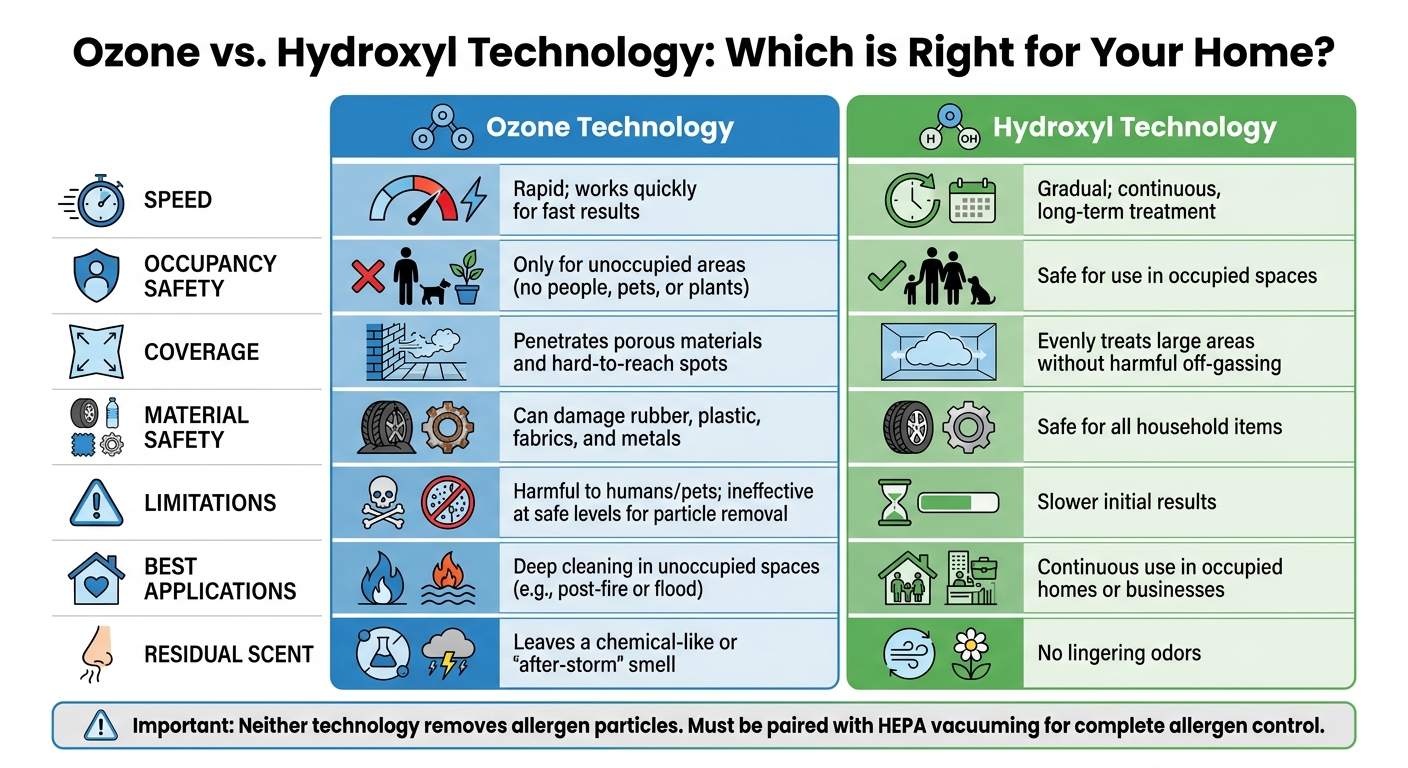
Ozone vs Hydroxyl Technology for Pet Allergen Control Comparison Chart
Ozone and hydroxyl technologies both offer pet allergen control without relying on chemicals, but they differ in how they operate, their safety levels, and the speed at which they work. Knowing these differences can help you pick the best option for your home and lifestyle. Below, you’ll find a detailed breakdown to guide your decision.
Ozone is fast-acting but requires complete evacuation during use because it can irritate lungs. The U.S. Environmental Protection Agency (EPA) cautions that "whether pure or mixed with other chemicals, ozone can be harmful to health". When using ozone, you’ll need to remove everyone, including pets and even plants, from the treated area. On the other hand, hydroxyl generators produce radicals naturally found in the atmosphere, making them safe for use in occupied spaces. You can run a hydroxyl generator in your living room or bedroom without disrupting your daily routine.
When it comes to speed, ozone works quickly, eliminating odors in hours or days, while hydroxyl technology takes up to three times longer to achieve results. If you’re tackling years of built-up pet dander in a vacant home, ozone might be the better choice. However, for ongoing allergen control in an active household, hydroxyl’s continuous operation makes it more convenient.
Material safety is another key consideration. Ozone is corrosive and can damage materials like rubber, plastic, fabrics, paint, and electronics over time. Sensitive items must be removed or covered before treatment. In contrast, hydroxyl generators are safe for all household items, so you can use them without worrying about damage to furniture, electronics, or personal belongings.
Technology Comparison Table
| Feature | Ozone Technology | Hydroxyl Technology |
|---|---|---|
| Speed | Rapid; works quickly for fast results | Gradual; continuous, long-term treatment |
| Occupancy | Only for unoccupied areas (no people, pets, or plants) | Safe for use in occupied spaces |
| Coverage | Penetrates porous materials and hard-to-reach spots | Evenly treats large areas without harmful off-gassing |
| Material Safety | Can damage rubber, plastic, fabrics, and metals | Safe for all household items |
| Limitations | Harmful to humans/pets; ineffective at safe levels for particle removal | Slower initial results |
| Best Applications | Deep cleaning in unoccupied spaces (e.g., post-fire or flood) | Continuous use in occupied homes or businesses |
| Residual Scent | Leaves a chemical-like or "after-storm" smell | No lingering odors |
This side-by-side comparison highlights the importance of choosing the right technology based on your home’s occupancy and allergen challenges.
Keep in mind, neither ozone nor hydroxyl technology removes allergen particles. Physical cleaning remains a critical step. The EPA emphasizes that "available scientific evidence shows that at concentrations that do not exceed public health standards, ozone has little potential to remove indoor air contaminants". For complete allergen control, pairing these technologies with HEPA vacuuming is essential.
Conclusion
Eliminating pet allergens without chemicals requires a detailed, multi-step approach involving preparation, advanced tools, and consistent upkeep. By preparing your home, utilizing ozone generators for deep cleaning in unoccupied spaces, applying hydroxyl technology for ongoing treatment, regularly vacuuming with HEPA filters, and seeking out professional services when needed, you can tackle both the molecular and physical components of allergen control. This is especially important given how persistent pet allergens can be.
Pet allergens are notoriously difficult to remove. For instance, cat proteins can linger in a home for up to four months, while dog dander often clings to upholstery and rugs. According to the Mayo Clinic, these allergens are particularly tenacious.
When household measures fall short, professional services can offer more intensive solutions. Companies like Ozonated Cleaning LLC (https://ozonatedcleaning.com) specialize in using industrial-grade ozone and hydroxyl equipment to treat homes in the Chicagoland area. Their residential services range from $600–$900, depending on the size of the space. Their trained technicians ensure treatments are conducted safely, with proper concentration levels, airing-out times, and precautions to protect your belongings and health. These services align with the comprehensive strategy outlined earlier.
It’s important to note that ozone and hydroxyl treatments address allergens at the molecular level but don’t remove physical particles like dander and hair. To fully resolve allergen issues, these treatments must be paired with HEPA vacuuming to capture the actual particles. This integrated method tackles both the odors and the allergens that cause symptoms such as sneezing, congestion, and itchy eyes.
Whether you choose to handle the process yourself or bring in professionals, consistency is key. A single treatment won’t provide a lasting solution. Regular upkeep, combined with these technologies, ensures a healthier and more comfortable living environment for both you and your pets.
FAQs
How long should I wait to re-enter after using an ozone generator?
It’s best to wait at least 2 hours after running an ozone generator before going back into the area. If the ozone levels are higher, you might need to wait 3–4 hours. During this period, make sure the space is well-ventilated to help the ozone break down into breathable oxygen, making it safe to re-enter.
Can hydroxyl generators run safely around kids and pets?
Hydroxyl generators can be safely used around children and pets when handled properly. These devices work to neutralize odors, pathogens, and volatile organic compounds (VOCs) without the need to evacuate the area. They are even approved for continuous use in spaces where people and animals are present. To ensure safe operation, it’s important to monitor ozone emissions (if the unit produces any) and keep up with regular maintenance. With ozone levels staying below OSHA’s permissible limits, hydroxyl generators are a practical choice for households with kids and pets.
What should I clean first to reduce allergens the most?
For the best results in reducing allergens, focus on cleaning areas where pet allergens – like dander, hair, and skin flakes – tend to build up the most. These include spots like upholstery, carpets, and bedding. According to the article, ozone and hydroxyl technology can help tackle allergens in these areas effectively, all without relying on chemicals.
Recent Comments