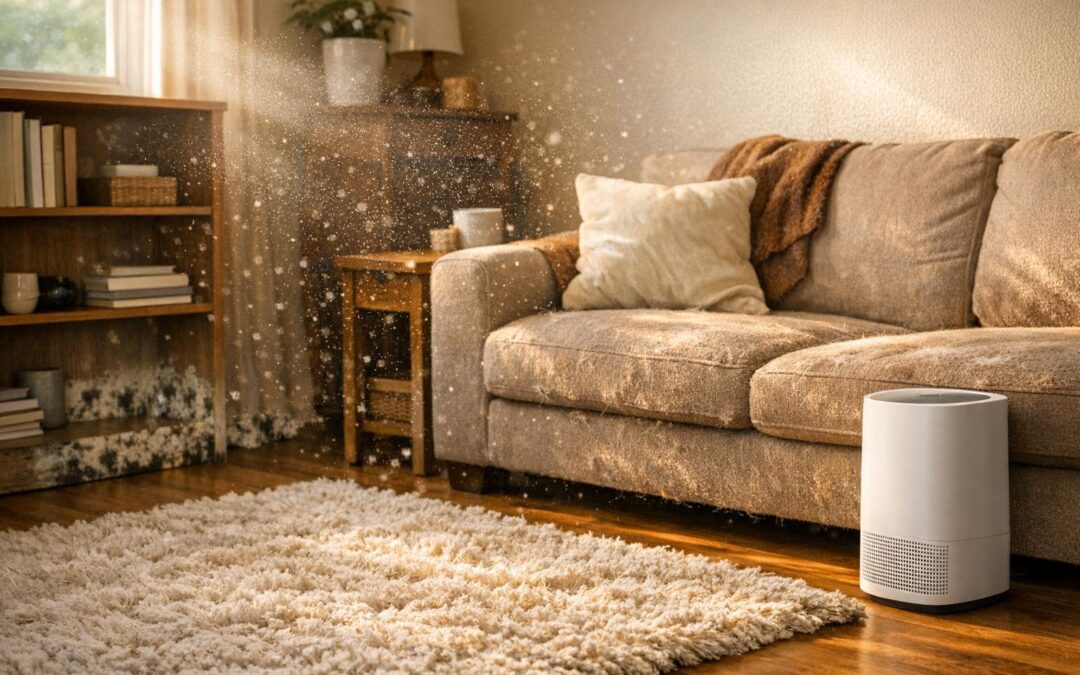
Indoor air is often 2–5 times more polluted than outdoor air, making it a major contributor to allergies. Common indoor pollutants include dust mites, mold, pollen, and volatile organic compounds (VOCs) from household items. These pollutants thrive in modern, energy-efficient buildings where air circulation is limited. Combined with outdoor pollutants like ozone and fine particulate matter, they can worsen symptoms for people with allergies or asthma.
Key Takeaways:
- Indoor allergens: Dust mites (in humid areas), mold (in damp spaces), pet dander, VOCs from furniture and cleaning products.
- Health impacts: Pollutants can trigger respiratory issues, amplify allergic reactions, and weaken the immune system.
- Solutions:
- Regular cleaning with HEPA vacuums and allergen-resistant covers.
- Maintain indoor humidity between 30%-50%.
- Improve ventilation and use HEPA filters or air purifiers.
- Advanced treatments like ozone and hydroxyl technology for deeper cleaning.
Ozonated Cleaning LLC offers professional ozone and hydroxyl treatments to address allergens in homes, vehicles, and commercial spaces. Prices range from $600–$900 for homes, $150 for cars, and $200 for semi-trucks. Hydroxyl treatments are safe for occupied spaces, while ozone requires temporary evacuation.
Indoor air quality directly affects allergy and asthma management. Simple measures like cleaning and advanced treatments can make a noticeable difference.
Indoor Air Pollutants vs Solutions: Complete Guide to Allergen Reduction
How Poor Air Quality Makes Allergies Worse
Outdoor Pollutants and Allergens
Ground-level ozone, commonly known as smog, doesn’t just harm your lungs – it also intensifies allergic reactions. The American Lung Association puts it this way:
"Ozone aggressively attacks lung tissue by reacting chemically with it."
This chemical reaction causes inflammation, making your body more sensitive to allergens like pollen.
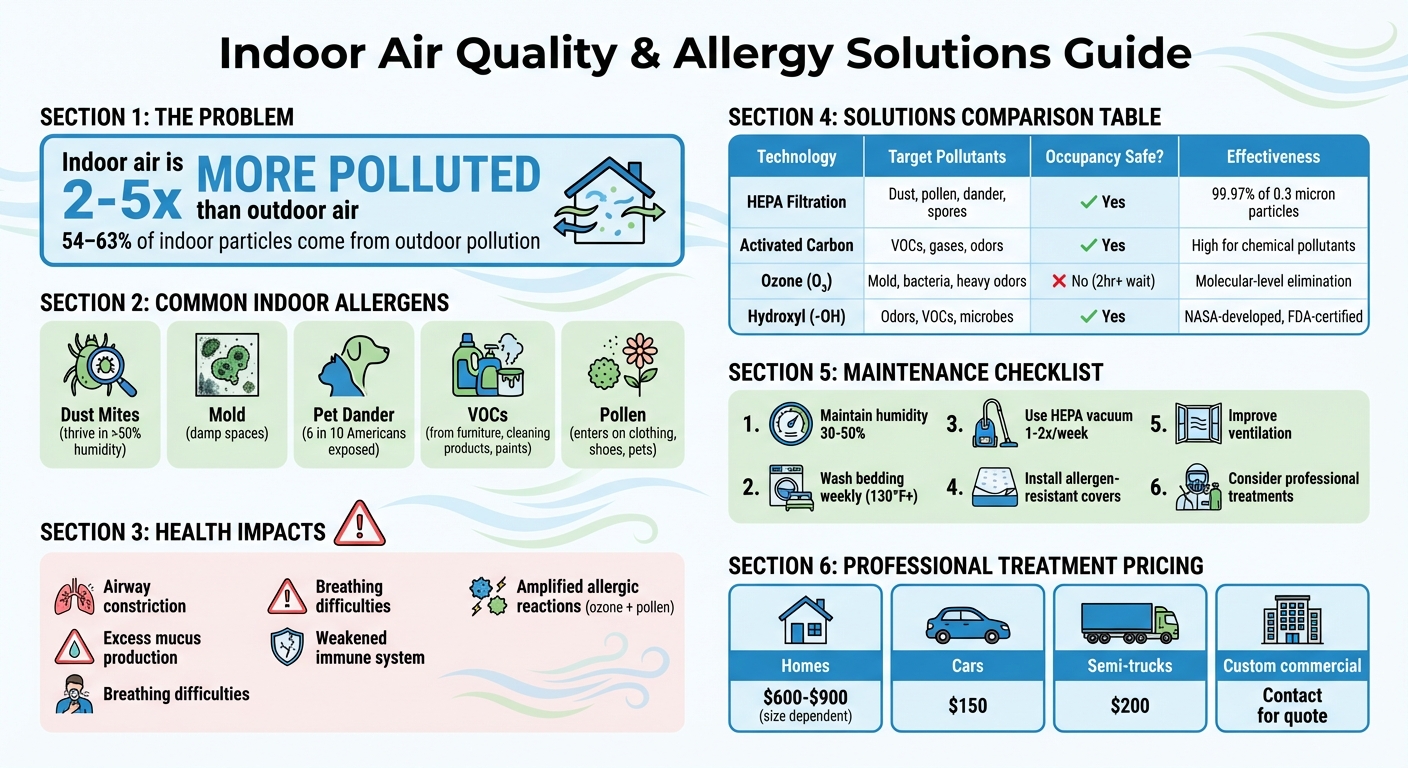
Another major culprit is fine particulate matter, which comes from sources like vehicle emissions and wood smoke. These tiny particles can bypass your body’s natural defenses and even enter your bloodstream, carrying allergens deeper into your system. Research shows that between 54% and 63% of the fine particulate matter found indoors originates from outdoor pollution. On top of that, pollen often makes its way inside on clothing, shoes, or pets, further increasing allergen levels.
While outdoor pollution sets the stage, indoor allergens can make symptoms even worse.
Common Indoor Allergens
Inside your home, hidden allergens may be contributing to your symptoms. Dust mites, for instance, thrive in humid conditions (above 50%), making places like bedding, carpets, and upholstered furniture their perfect habitat. On top of that, pet dander is a common issue, with about six in 10 Americans exposed to it.
Chemical pollutants are another concern. Volatile Organic Compounds (VOCs), released by everyday items like cleaning products, furniture, carpets, and paints, can degrade indoor air quality. Other sources, such as gas stoves, fireplaces, and areas prone to moisture, add to the mix of chemical and biological pollutants inside your home.
Health Effects on People with Allergies
If you have allergies or asthma, your airways are already sensitive, making you more vulnerable to pollutants. Even low levels of exposure can cause immediate symptoms like airway constriction, excess mucus production, and breathing difficulties.
The combination of pollutants can be particularly harmful. For example, being exposed to both ozone and pollen at the same time can significantly amplify allergic reactions. Poor air quality may also weaken your immune system, leaving you more prone to respiratory infections. For children in urban areas – 36% of whom are sensitized to cockroach allergens – these combined exposures can lead to more frequent asthma attacks and ongoing inflammation.
Ways to Improve Air Quality and Reduce Allergens
Cleaning and Source Control Methods
One of the most effective ways to improve air quality is by addressing the sources of pollutants. Start with your bedding: wash sheets, pillowcases, and stuffed toys weekly in hot water (at least 130°F) to eliminate dust mites. Protect mattresses, box springs, and pillows with zippered, allergen-resistant covers to create an extra layer of defense. When dusting, opt for a damp cloth instead of a dry one to prevent allergens from becoming airborne.
Vacuum regularly – ideally once or twice a week – using a vacuum cleaner equipped with a HEPA filter. This ensures allergens are trapped instead of being recirculated. Maintaining indoor humidity levels between 30% and 50% helps inhibit the growth of mold and dust mites. For pet owners, keeping animals out of bedrooms, washing their bedding and toys regularly, and replacing carpets with hard flooring can significantly reduce allergens.
Address mold issues promptly. Clean visible mold while wearing a mask, fix leaks, and use exhaust fans in bathrooms and kitchens to manage moisture levels.
Ventilation and Air Filtration
Bringing in fresh outdoor air is an effective way to dilute indoor pollutants. Open windows and doors when outdoor air quality is good, and use exhaust fans while cooking or cleaning to vent contaminants outside. During high pollen seasons, keep windows closed and run your air conditioner on recirculation mode to minimize pollen infiltration.
HEPA filters are highly effective, capturing 99.97% of particles as small as 0.3 microns, including dust, pollen, and pet dander. Certified air cleaners can remove nearly 98% of allergen particles from the air. Place portable air purifiers in heavily used rooms, such as bedrooms, for added protection. Additionally, upgrading your HVAC system with high-efficiency or electrostatic filters – and cleaning or replacing them regularly – helps reduce irritants.
"Most of the things that cause problems are odorless. So, in many cases there’s nothing to alert you to the problem." – Dr. Nicholas BuSaba, Harvard Medical School
When routine cleaning, ventilation, and filtration measures aren’t enough, advanced treatments can offer deeper allergen control.
Professional Ozone and Hydroxyl Treatments
For a more thorough approach, professional ozone and hydroxyl treatments can significantly reduce allergens. Ozone is a reactive gas that eliminates mold, bacteria, and odors at a molecular level. Its gaseous nature allows it to reach areas that traditional filters cannot, such as fabrics, wall cavities, and crevices.
| Technology | Target Pollutants |
|---|---|
| HEPA Filtration | Dust, pollen, dander, spores |
| Activated Carbon | VOCs, gases, odors |
| Ozone (O₃) | Mold, bacteria, heavy odors |
| Hydroxyl (-OH) | Odors, VOCs, microbes |
Occupancy Guidelines:
- HEPA filtration and activated carbon are safe for use in occupied spaces.
- Ozone treatments should only be performed in unoccupied spaces, with a minimum two-hour dissipation period afterward.
- Hydroxyl technology is safe for continuous use in occupied spaces.
Hydroxyl technology provides a safer, continuous cleaning option. Hydroxyl radicals act like "atmospheric detergents", breaking down pollutants without requiring evacuation. Using NASA-developed technology, advanced hydroxyl generators are safe even for sensitive environments like hospitals and neonatal units.
For professional services, Ozonated Cleaning LLC offers ozone and hydroxyl treatments in the Chicagoland area. Their trained technicians handle every step, from ensuring spaces are vacated for ozone treatments to post-treatment ventilation. Pricing starts at $600–$900 for homes (depending on size), $150 for vehicles, and $200 for semi-trucks. They also provide tailored solutions for larger commercial spaces, using both ozone and hydroxyl technology to eliminate allergens and pathogens comprehensively.
Ozonated Cleaning LLC: Professional Allergy Reduction Services
Home and Business Services
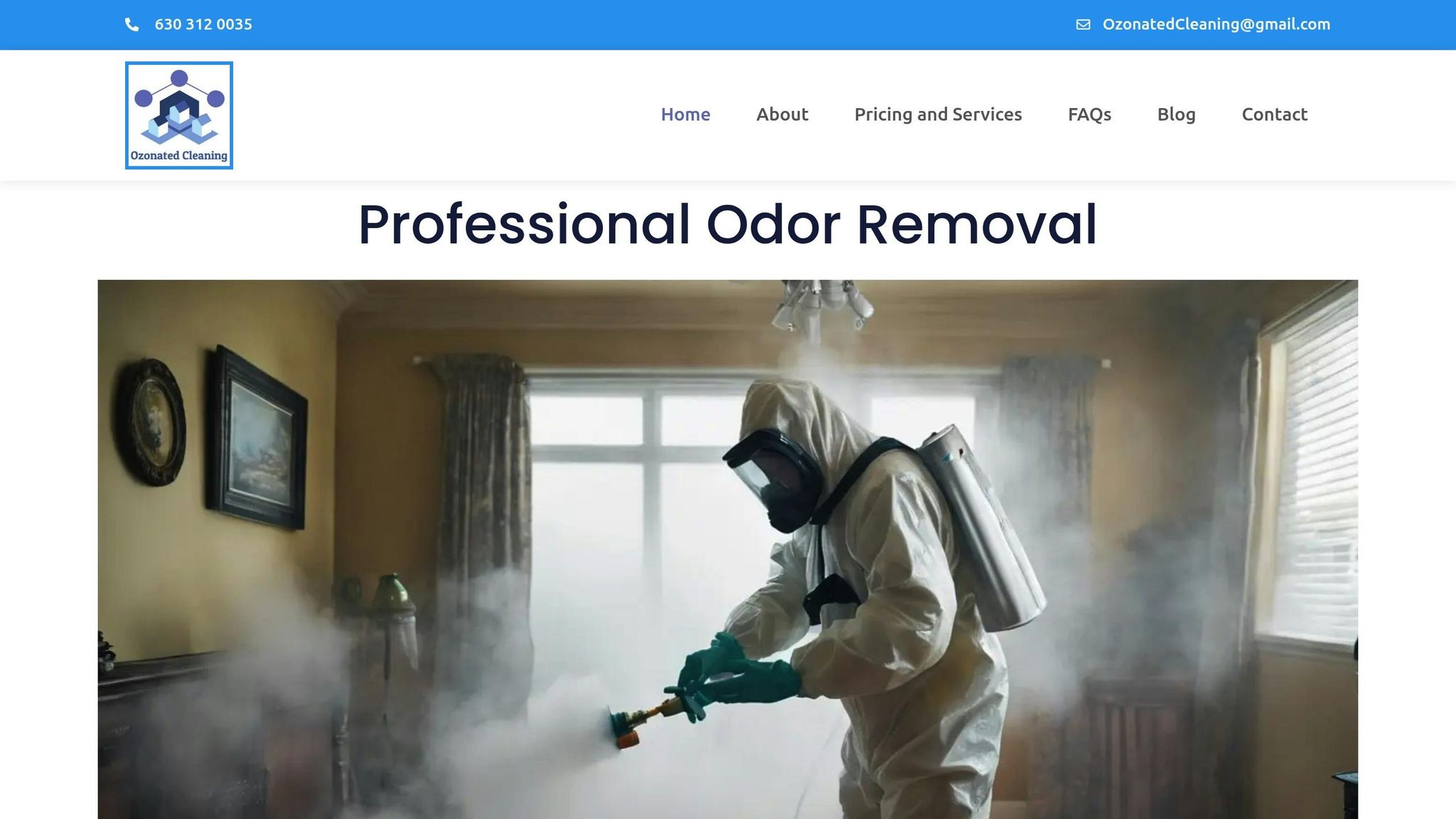
Ozonated Cleaning LLC offers specialized allergen reduction services for homes and businesses across the Chicagoland area. Using advanced ozone and hydroxyl technology, their team tackles allergen buildup in places traditional cleaning methods often miss. Since ozone is a free-floating gas, it can penetrate deep into fabrics, wall cavities, and other hidden areas where allergens like pet dander, mold spores, and volatile organic compounds (VOCs) tend to accumulate.
For residential properties, pricing ranges from $600 to $900, depending on the size of the space. Ozone treatments require the property to be vacant during the process, while hydroxyl treatments provide a safer, continuous cleaning option that allows for occupancy, making them especially practical for businesses that can’t afford downtime. This cutting-edge hydroxyl technology, originally developed by NASA, is FDA-certified as a Type 2 Medical Device and has been deemed safe enough for use in hospital neonatal units.
Their services also extend to confined spaces like vehicles, RVs, and boats, ensuring comprehensive coverage for all environments.
Vehicle, RV, and Boat Treatments
Enclosed spaces such as cars, RVs, and boats can present unique challenges when it comes to allergens. Ozonated Cleaning LLC specializes in treating these compact environments, addressing areas that traditional air filters can’t reach. Vehicle treatments are priced at $150 per car and $200 for semi-trucks.
"Ozone works effectively in odor removal and water damaged homes. We will use it in homes that have musty odors [that] have absorbed into that wood and you really just can’t remove it." – Britt Bridges, Owner and Operator, Ahold of Mold
Ozone treatments are particularly effective in combating moisture-related issues in marine and RV environments, where mold and mildew thrive. The ionization process also helps airborne particles like dust, pollen, and pet dander clump together and settle, making them easier to remove with a vacuum after treatment.
Custom and Chemical-Free Treatments
For spaces with unique challenges, Ozonated Cleaning LLC provides tailored treatment plans to meet specific needs. Since every property is different, their customized approach ensures effective allergen reduction for larger or more complex areas. Both ozone and hydroxyl treatments mimic natural atmospheric processes, offering chemical-free solutions that improve air quality without introducing harmful substances.
Their dual approach combines the deep-cleaning power of ozone for unoccupied spaces with the continuous, safe application of hydroxyl technology in occupied areas. This versatility allows them to handle a variety of issues, from severe smoke damage to lingering VOC concerns, without relying on liquid deodorizers or masking agents. Professional oversight ensures the equipment is used correctly, avoiding over-treatment while maximizing allergen removal.
sbb-itb-5fea4da
Indoor Allergy Survival Guide: Symptoms, Causes, and Prevention
Conclusion
Did you know indoor air can be 2–5 times more polluted than outdoor air? This makes it a hotspot for allergy triggers. To tackle this, the best approach combines three key actions: managing pollutant sources, improving ventilation, and using effective air filtration.
While daily cleaning is essential, it mostly handles surface-level allergens. Unfortunately, many contaminants – like those lurking in HVAC ductwork, wall cavities, or porous materials – require more intensive solutions. That’s where deeper interventions come into play.
Professional services can make a huge difference here. Ozonated Cleaning LLC steps in with advanced ozone and hydroxyl treatments that go beyond standard cleaning. These treatments target mold, bacteria, and odors in areas regular cleaning can’t reach. For residential spaces, services typically range from $600 to $900. Vehicle treatments are around $150 per car, and semi-truck services start at $200. Their hydroxyl technology is FDA-approved for disinfection, while ozone treatments offer powerful sanitization for unoccupied spaces.
"Allergy and asthma control begins at home." – AAFA National
FAQs
What can I do to improve indoor air quality and reduce my allergy symptoms?
Improving the air you breathe indoors can make a big difference in managing allergy symptoms. Dust, pollen, pet dander, mold, and volatile organic compounds (VOCs) often build up in enclosed spaces. These allergens can lead to sneezing, itchy eyes, and even exacerbate asthma. Fortunately, a few practical steps can help create a more comfortable environment for those dealing with allergies.
Start by tackling the sources of allergens. Use allergen-proof covers on mattresses and pillows, reduce the use of carpets and upholstered furniture, and promptly fix any water leaks to prevent mold from forming. Ventilation is another key factor – open windows on days when pollen levels are low, or rely on filtered mechanical systems if the outdoor air isn’t ideal. Routine cleaning is essential too. Use a vacuum with a HEPA filter, mop floors with a damp cloth, and wash bedding weekly in hot water (at least 130°F) to eliminate dust mites. Maintaining indoor humidity levels between 30% and 50% also helps keep dust mites and mold at bay.
For those looking for more advanced solutions, professional technologies like ozone and hydroxyl treatments can provide an extra layer of protection. Companies like Ozonated Cleaning LLC, serving the Chicagoland area, specialize in using these methods to neutralize allergens, remove odors, and disinfect spaces safely. Pairing these services with consistent cleaning habits can lead to noticeable improvements in air quality and much-needed relief from allergy symptoms.
How do ozone and hydroxyl treatments differ for reducing allergens?
Ozone treatments rely on ozone gas (O₃) to neutralize allergens, odors, and certain microbes in the air through a process called oxidation. While this method can be effective, it comes with a key limitation: ozone can irritate the respiratory system. For safety, these treatments must only be conducted in spaces where no people or pets are present. Afterward, any residual ozone needs to be properly vented or allowed to dissipate before the area is safe to re-enter.
Hydroxyl treatments, by contrast, generate hydroxyl radicals (OH·), which replicate the natural cleaning action of sunlight. These radicals can break down allergens, mold spores, bacteria, and other particles not only in the air but also on surfaces. Unlike ozone, hydroxyl generators are safe for use in occupied spaces and don’t leave behind harmful residues. This makes them a more flexible and safer choice for ongoing allergen control in both residential and commercial settings.
Simply put, while ozone offers strong cleaning power, it demands careful handling. Hydroxyl technology, on the other hand, provides a safer, user-friendly option for everyday air and surface purification.
Is it safe to use ozone treatments in my home?
Ozone treatments are known for their ability to tackle odors and disinfect spaces effectively, but they come with a critical caveat: safety must always come first. Ozone (O₃) is a powerful oxidizing agent that can cause irritation to the eyes, throat, and lungs. For individuals with respiratory conditions like asthma, exposure can exacerbate symptoms. Because of these risks, ozone treatments should only be conducted in unoccupied areas, with proper ventilation afterward to ensure the space is safe for re-entry.
For the safest experience, it’s wise to turn to professionals who are trained to manage ozone levels, control exposure durations, and ventilate spaces thoroughly post-treatment. Companies like Ozonated Cleaning LLC adhere to strict safety protocols, offering effective odor removal and allergy reduction services while keeping health risks to a minimum. By opting for their expertise, you can reap the benefits of ozone technology without worrying about potential hazards.
Recent Comments