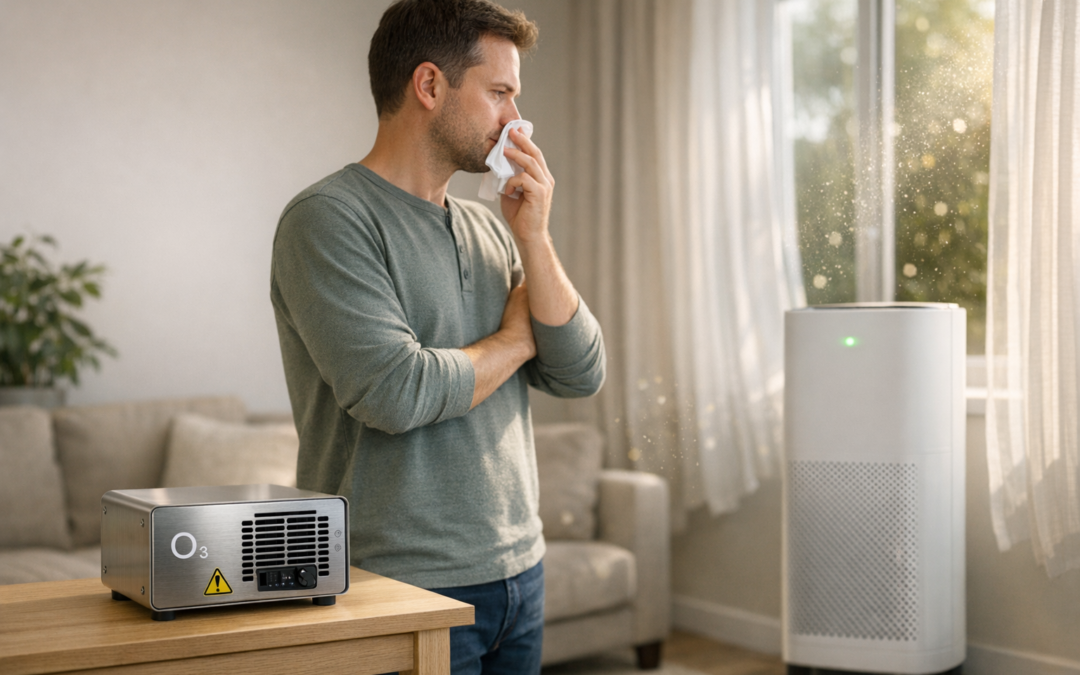
Ozone cleaning is often marketed as an effective way to eliminate odors and allergens, but it has notable limitations and risks for allergy sufferers. While ozone gas can neutralize odors and kill mold or bacteria, it does not remove allergens like dust, pollen, or pet dander from the air. Instead, it causes particles to settle, requiring additional cleaning to remove them. Moreover, ozone exposure can harm health, irritate lungs, and produce harmful by-products when reacting with indoor materials.
Key points:
- Effectiveness: Neutralizes odors but doesn’t remove allergens.
- Health Risks: Ozone exposure can exceed safe limits, posing respiratory risks.
- Cost: Consumer-grade devices are affordable but may damage materials; professional services range from $150 to $900.
- Alternatives: HEPA filters and better ventilation are safer, and comparing ozone vs hydroxyl methods can help identify even more effective options for allergy relief.
For those with allergies, ozone cleaning is better suited for odor removal rather than allergen control. Pairing it with HEPA filtration and proper ventilation is essential for a safer and more effective approach.
1. General Ozone Cleaning Technology
Effectiveness in Allergen Reduction
Ozone cleaning isn’t the best option for those dealing with allergies. The US EPA makes it clear:
"Ozone does not remove particles (e.g., dust and pollen) from the air, including the particles that cause most allergies".
This means allergens like dust mites, pollen, and pet dander remain in the air, continuing to irritate allergy sufferers even after ozone treatment. While ozone may kill mold or bacteria, the leftover spores and particles can still trigger allergic reactions. Plus, ion generators often included with ozone units aren’t very effective at capturing larger allergens like house dust and pollen. These shortcomings make it less than ideal for immediate or reliable allergy relief.
Health and Safety Considerations
The health risks of ozone cleaning are hard to ignore. According to the US EPA:
"Whether in its pure form or mixed with other chemicals, ozone can be harmful to health".
The levels of ozone needed to kill biological contaminants like mold exceed safe exposure limits by 5 to 10 times. This creates immediate health hazards. Additionally, when ozone reacts with indoor materials – like carpets or cleaning products – it can produce harmful by-products such as aldehydes and formaldehyde. These secondary pollutants can be even more irritating than the original contaminants.
Consumer-grade ozone generators often surpass recommended safety limits, further increasing risks. These hazards, combined with the potential for damage to household materials, add to the overall cost and complexity of using ozone cleaning.
Cost and Accessibility
While ozone generators are easy to find and often appear affordable, their true cost goes beyond the price tag. Health risks and potential damage to items like rubber, electrical wiring, fabrics, and artwork can add up. Professional ozone treatments also require everyone – including pets and plants – to vacate the space, which can lead to additional expenses for temporary relocation.
For allergy sufferers, there are safer and more effective alternatives. High-quality HEPA filters with strong Clean Air Delivery Rates (CADR) provide better results without the safety concerns or logistical challenges.
Environmental Impact
Ozone cleaning isn’t just a personal health concern – it has environmental consequences as well. While ozone in the stratosphere shields the planet from harmful UV rays, ground-level ozone is a pollutant and a major contributor to smog. The EPA’s National Ambient Air Quality Standard limits outdoor ozone concentrations to an 8-hour average of 0.08 ppm, but indoor ozone generators can easily exceed this threshold.
Using ozone indoors can degrade materials and generate secondary pollutants, worsening air quality. Since people spend about 90% of their time indoors, introducing ozone into homes essentially brings outdoor pollution inside. To improve indoor air quality without these risks, focusing on source control and better mechanical ventilation is a more practical approach.
sbb-itb-5fea4da
2. Ozonated Cleaning LLC Services
Effectiveness in Allergen Reduction
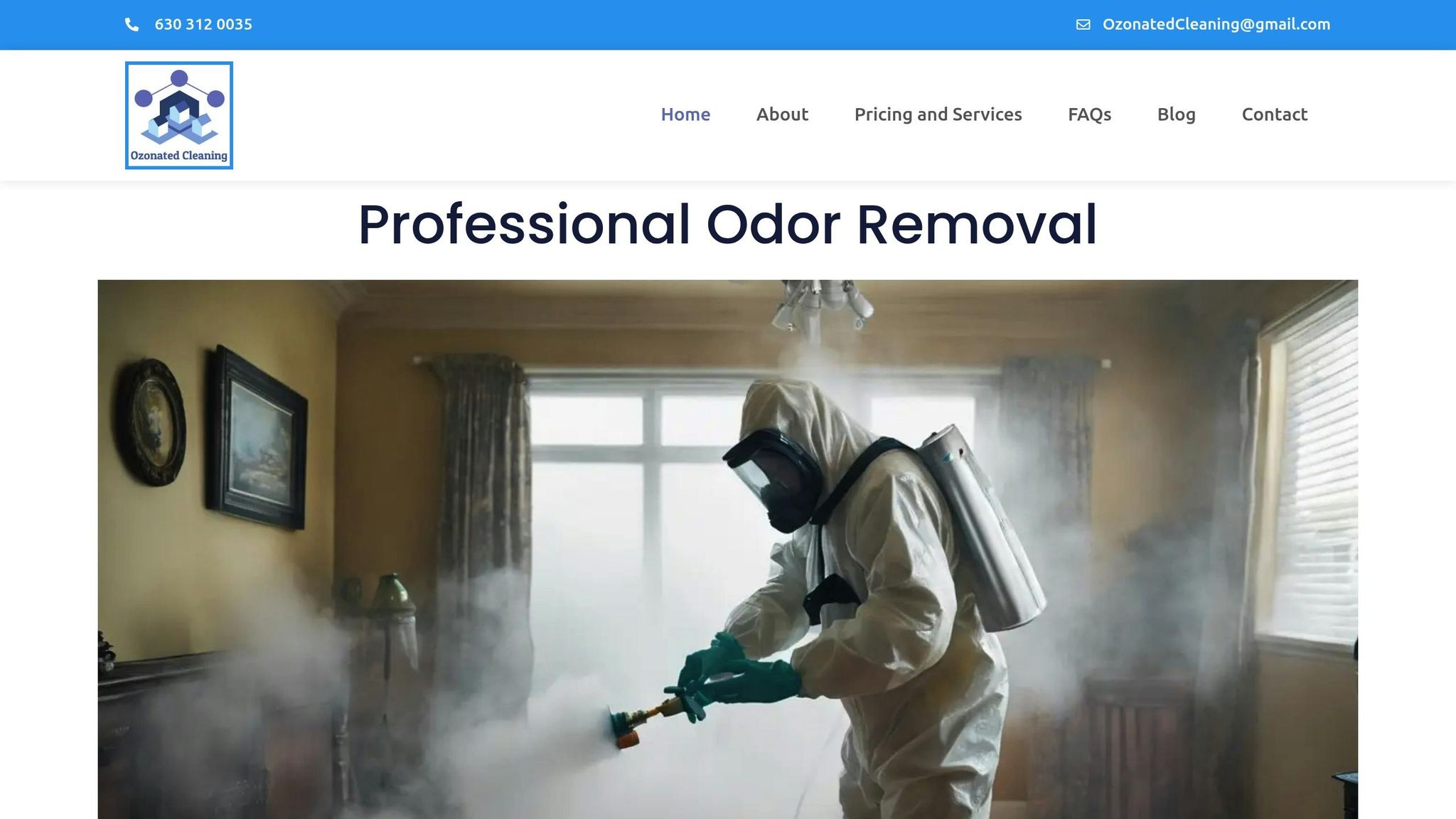
Ozonated Cleaning LLC specializes in using ozone to tackle odors and disinfect spaces throughout the Chicagoland area. While their process is effective at neutralizing odors, it has minimal impact on particulate allergens. For individuals with allergies, this means the treatment is unlikely to significantly address the primary triggers causing their symptoms.
Health and Safety Considerations
Ozone is classified as a lung irritant, so treatments are conducted only when spaces are unoccupied. The company emphasizes its no-chemical, FDA-approved methods, but it’s important to note that residential ozone levels are capped at 0.05 ppm. This limit is far below what’s required for comprehensive decontamination.
Cost and Accessibility
Pricing for Ozonated Cleaning LLC’s services varies depending on the type of space. Vehicle treatments start at approximately $150, home services range from $600 to $900 (depending on size), and semi-truck treatments cost around $200. Larger spaces require custom quotes. However, additional expenses may arise from temporary relocation during treatment and potential damage to sensitive materials. For those primarily looking for allergy relief, the investment may not fully meet expectations, especially if odor elimination is the main benefit. These factors highlight the need to weigh the costs against the potential outcomes when considering this service.
Dangers of an Ozone Generator
Advantages and Disadvantages
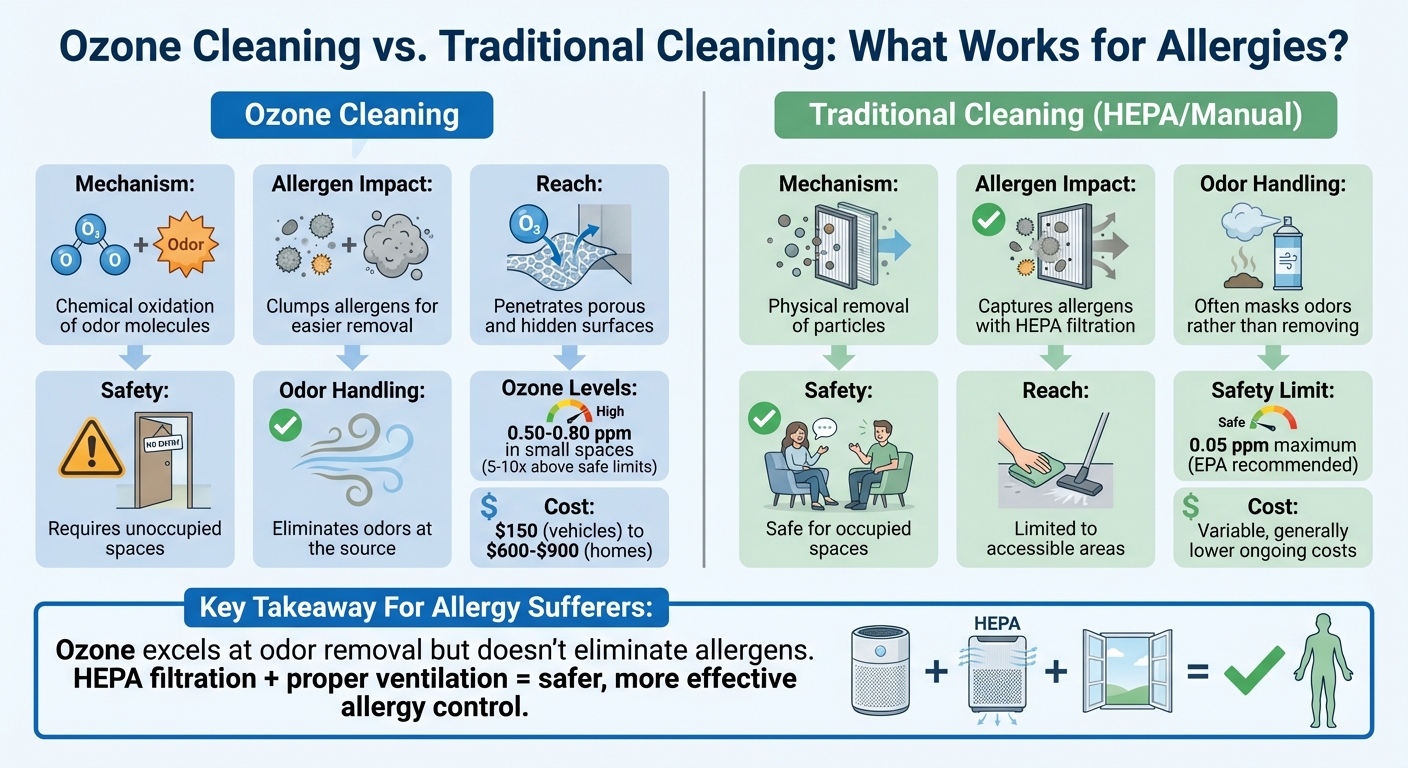
Ozone Cleaning vs HEPA Filtration: Safety and Effectiveness Comparison for Allergy Sufferers
Ozone cleaning for homes is highly effective at removing stubborn odors by causing allergens to clump together, making them easier to vacuum away. Its ability to penetrate fabrics and porous surfaces allows it to reach hidden areas that standard cleaning methods might miss. This sets it apart from traditional cleaning approaches and highlights its potential for professional applications.
However, ozone use comes with risks. Exposure to ozone levels above 0.05 ppm can harm health, and studies show that ozone generators in small spaces can produce concentrations between 0.50 and 0.80 ppm – 5 to 10 times the recommended public health limits. Ensuring a balance between odor removal and maintaining safe ozone levels is critical.
| Feature | General Ozone Cleaning | Traditional Cleaning (HEPA/Manual) |
|---|---|---|
| Mechanism | Chemical oxidation of odor molecules | Physical removal of particles |
| Allergen Impact | Clumps allergens for easier removal | Captures allergens with HEPA filtration |
| Safety | Requires unoccupied spaces | Safe for occupied spaces |
| Odor Handling | Eliminates odors at the source | Often masks odors rather than removing |
| Reach | Penetrates porous and hidden surfaces | Limited to accessible areas |
These differences influence how Ozonated Cleaning LLC structures its services. For instance, professional ozone treatments focus on thorough odor removal, while HEPA filtration can be used afterward to handle allergens. This dual approach is particularly appealing to those who prefer to avoid chemical detergents. Pricing for treatments starts at $150 for vehicles and ranges from $600–$900 for homes. However, safety precautions are essential – spaces must be evacuated during the treatment, and proper ventilation is required afterward.
Conclusion
From the analysis above, it’s evident that while ozone cleaning is excellent at eliminating odors, it falls short when it comes to addressing allergens. Ozone can neutralize smells effectively, but it doesn’t remove allergens like dust, pollen, or pet dander. In fact, ozone exposure may even increase sensitivity to common triggers such as dust mites and pet allergens. This highlights the need for additional approaches – like HEPA filtration, source control, and better ventilation – to manage allergies on a daily basis. For individuals with asthma or other respiratory conditions, ozone exposure poses risks, making traditional methods a safer and more practical option.
Ozonated Cleaning LLC offers controlled ozone treatments designed for tackling severe odor problems or mold remediation in spaces that are unoccupied. These treatments emphasize safety, requiring that all occupants leave the area and that thorough ventilation is conducted afterward. The golden rule is simple: never use ozone in occupied spaces. For ongoing allergy management, ozone cleaning should be paired with HEPA filtration and improved ventilation to create a safer and more effective solution.
FAQs
Is ozone cleaning safe for individuals with respiratory issues?
Breathing in ozone can cause lung irritation and make existing respiratory issues, like asthma, worse. This is why ozone cleaning is often not recommended for people with respiratory conditions.
If someone in your home has asthma, allergies, or any respiratory sensitivities, it’s essential to minimize exposure to ozone. Take extra care during and immediately after cleaning processes involving ozone. For safety, always consult a professional to ensure proper procedures are followed.
What’s the difference between ozone cleaning and HEPA filtration for reducing allergens?
Ozone cleaning and HEPA filtration address allergens in distinct ways. Ozone cleaning works by neutralizing biological allergens like mold and dust mites through oxidation, targeting bacteria, viruses, and odors. However, it doesn’t physically eliminate particles like dust or pollen from the air. In contrast, HEPA filtration physically captures airborne particles such as pollen, pet dander, and dust, effectively removing them from your environment.
While ozone cleaning can neutralize certain allergens, it requires professional expertise and strict safety precautions due to potential health risks, including lung irritation. HEPA filtration offers a safer, ongoing option for improving air quality, making it a favored choice for those seeking consistent allergy relief.
What safety measures should you follow when using ozone cleaning at home?
When using ozone cleaning at home, safety should always come first to prevent health risks. Ozone can be harmful in high concentrations, so it’s crucial to use it responsibly. Here are some key precautions:
- Only use ozone in unoccupied spaces: Exposure to high ozone levels can irritate the lungs and throat, worsen asthma symptoms, and with repeated exposure, potentially cause long-term lung damage.
- Ventilate thoroughly after treatment: Once the cleaning is complete, make sure the area is properly ventilated. Wait until ozone levels have returned to safe limits before re-entering the space.
- Follow the manufacturer’s instructions: Always adhere to the guidelines provided with your ozone generator. Misuse can increase risks.
- Keep people and pets away: Never use ozone generators in areas where people or pets are present.
By following these steps, you can ensure that ozone cleaning is both safe and effective.
Recent Comments