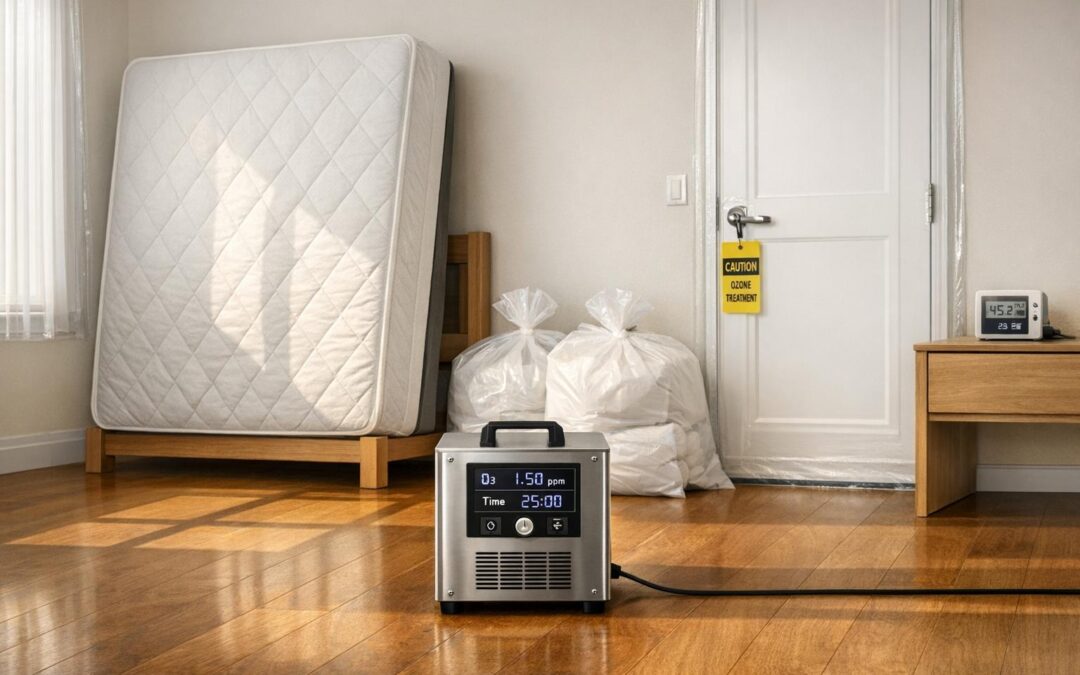
House dust mites are a common trigger for allergies, thriving in warm, humid environments like bedding and carpets. Ozone gas has been shown to effectively kill these mites and neutralize their allergens through oxidation. Research highlights that maintaining specific ozone levels (e.g., 30 mg/L for 3 hours) can achieve 100% mite mortality, while higher concentrations (40 mg/L or more) significantly reduce allergen levels. However, ozone treatments must be handled with care due to health risks from high concentrations. Professional services, such as those offered by Ozonated Cleaning LLC, provide safe and effective solutions for residential and commercial spaces, ensuring proper application and safety protocols.
What Ozone Can and Cannot Do
sbb-itb-5fea4da
Research on Ozone’s Effectiveness Against Dust Mites
Ozone Concentration Levels for Dust Mite Control and Allergen Reduction
Studies have shown that ozone effectively neutralizes house dust mite allergens. Research published in the Japanese Journal of Clinical Ecology in December 2010 highlights how ozone targets proteases – specific proteins found in dust mite feces and body fragments that trigger allergic responses.
How Ozone Concentration and Exposure Time Affect Dust Mite Mortality
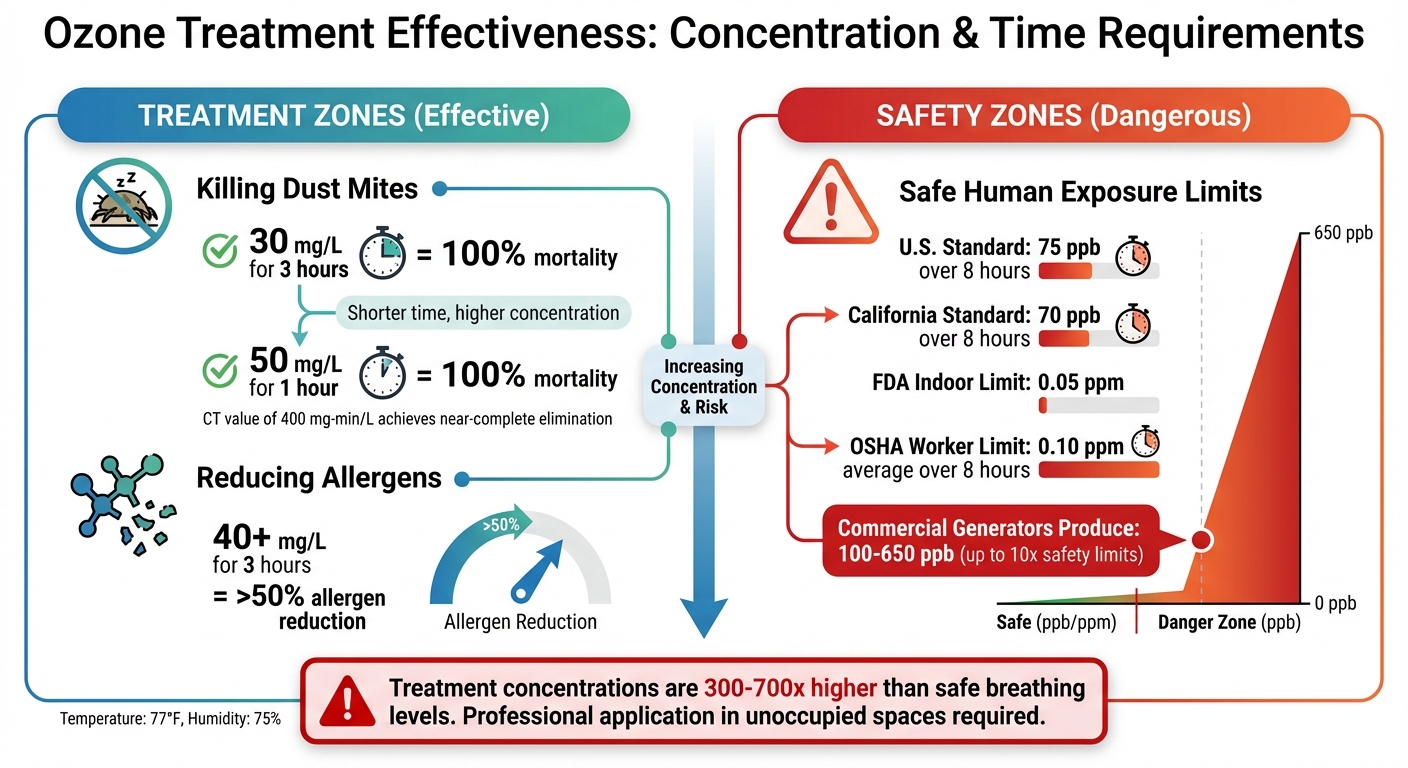
Laboratory experiments have pinpointed the conditions needed for ozone to eliminate dust mites. Findings reveal that maintaining ozone concentrations at 30 mg/L for 3 hours ensures 100% mortality of the European house dust mite (Dermatophagoides pteronyssinus) in controlled glass chamber tests. Jarongsak Pumnuan, a researcher from the Faculty of Agricultural Technology, emphasized:
"Exposure to 30 mg/L ozone for 3 hours eliminated house dust mites."
The effectiveness of ozone treatment depends on the CT value, which is the product of concentration and exposure time. These benchmarks have paved the way for identifying ozone levels that also reduce allergens effectively.
Best Ozone Levels for Reducing Allergens
Ozone doesn’t just kill mites – it also degrades the allergens they leave behind. Research indicates that ozone concentrations of 40 mg/L or higher, sustained for 3 hours, reduce allergen levels by over 50%. This dual action helps address both live mites and the allergenic residue that accumulates in household dust.
Ozone Performance on Different Surface Types
Ozone’s efficiency varies depending on the type of surface being treated. It performs best on open, exposed surfaces where the gas can directly reach mites. For instance, tests in glass chambers – representing surfaces like hard floors and curtains – showed complete mite eradication. However, dense materials such as mattresses, upholstered furniture, and carpets pose greater challenges. Mites burrow deep into fibers, limiting ozone penetration. The American Lung Association notes, "These allergens cling to bedding, mattresses, upholstered furniture, carpets and curtains". This explains why dust mite allergens are found in at least one bed in about 80% of U.S. homes. For effective treatment, surface type plays a key role in planning.
Using Ozone Technology for Dust Mite Control
Ozone Treatment in Homes
In homes, ozone treatments focus on areas where dust mites thrive – like bedrooms, living rooms, and upholstered furniture. The process works by ensuring consistent exposure of gaseous ozone to dust mite populations and allergens on surfaces. Studies show that achieving a CT value of 400 mg-min/L (at 77°F and 75% humidity) can nearly eliminate mites.
For residents in the Chicagoland area, Ozonated Cleaning LLC offers professional services for odor removal and allergen reduction. Their chemical-free treatments, priced between $600 and $900 depending on square footage, help homeowners tackle dust mites effectively. These residential solutions also serve as a foundation for broader use in commercial spaces.
Ozone Applications in Commercial Buildings
In commercial spaces like offices and hotels, ozone treatments improve indoor air quality and reduce allergens. Higher ozone concentrations can significantly cut down treatment times. For instance:
- 50 mg/L: Eliminates mites in just 1 hour.
- 30 mg/L: Requires 3 hours for the same results.
- 40 mg/L over 3 hours: Reduces allergen proteins by over 50%.
This method provides a practical alternative to chemical treatments and labor-intensive vacuuming. Professional services ensure precise ozone levels and treatment durations tailored to the building’s needs.
Professional Services from Ozonated Cleaning LLC
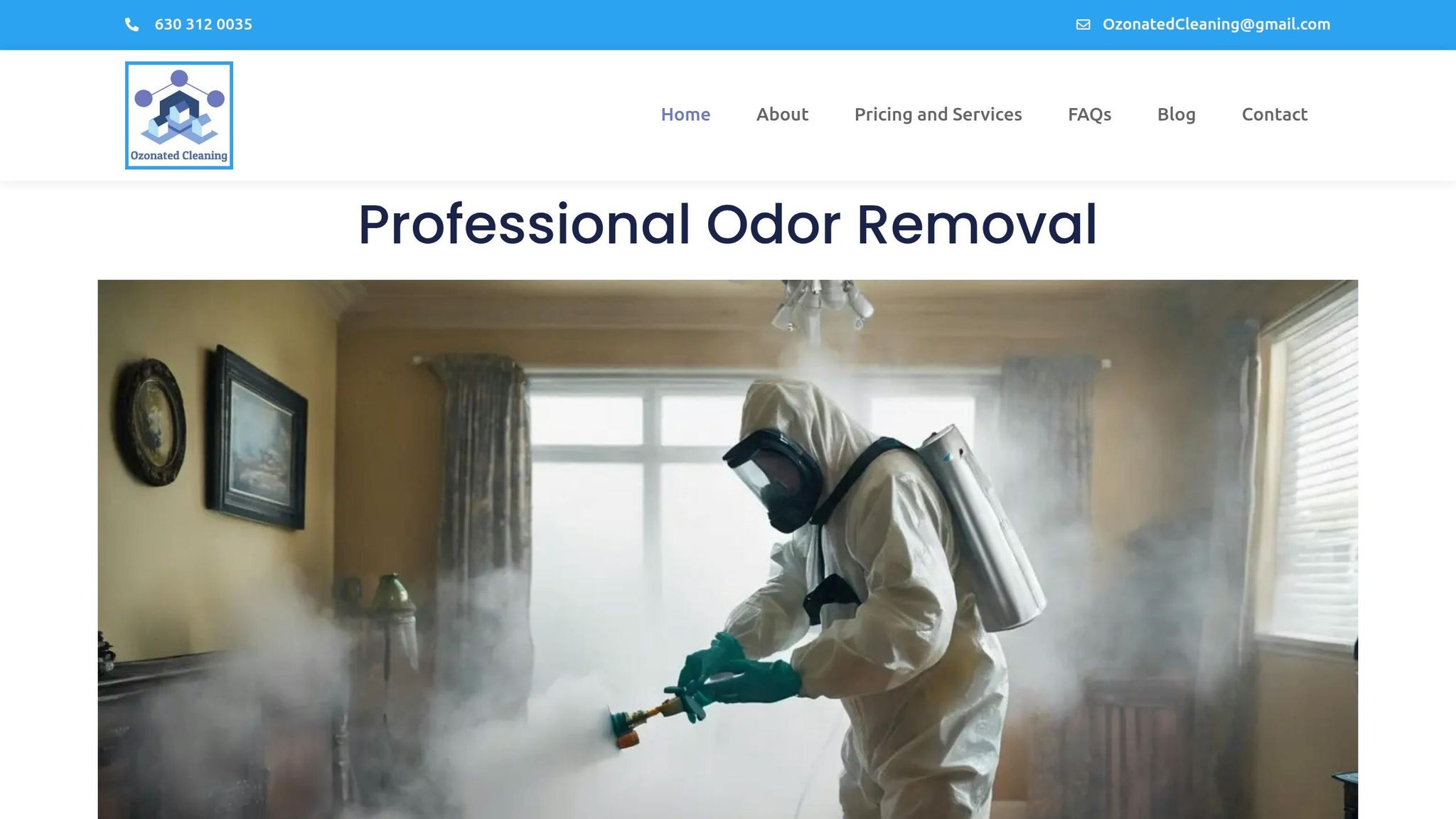
Ozonated Cleaning LLC uses advanced ozone generators to achieve the CT values necessary for effective mite control. Serving both residential and commercial clients in the Chicagoland area, their offerings include odor elimination, surface sanitization, and allergen reduction – all using FDA-approved, chemical-free methods.
Their expertise extends beyond homes and offices to vehicles, RVs, boats, and semi-trucks. Vehicle deodorization starts at $150, while semi-truck sanitization costs $200. For larger or specialized projects, they provide custom solutions and pricing after consultation. Every treatment adheres to strict safety protocols to ensure effective and safe results.
Safety Guidelines and Limitations of Ozone
Health Risks from Incorrect Ozone Use
Ozone can effectively combat dust mites, but its use requires extreme care. The concentrations needed to eliminate dust mites – ranging from 30 to 50 mg/L – are far beyond what is safe for humans to breathe. As Lawrence Berkeley National Laboratory points out, "The concentrations of ozone required to kill bacteria and mold on surfaces are far too high and at these concentrations the ozone poses immediate risks to health".
For context, the U.S. national standard limits ozone exposure to 75 ppb over eight hours, while California sets a stricter cap at 70 ppb. However, commercial ozone generators can produce indoor concentrations between 100 and 650 ppb – up to 10 times higher than these safety thresholds. Such elevated levels can lead to serious health issues, including chest pain, coughing, shortness of breath, and aggravated asthma, often resulting in more respiratory hospitalizations.
Adding to the risks, ozone can create harmful secondary pollutants like formaldehyde and ultrafine particles. These by-products don’t disappear immediately after ozone use, posing lingering health concerns. As the EPA explains, "The same chemical properties that allow high concentrations of ozone to react with organic material outside the body give it the ability to react with similar organic material that makes up the body".
How to Use Ozone Safely Indoors
To safely harness ozone’s benefits for reducing dust mites, strict safety measures are non-negotiable. First and foremost, ozone treatments should only be conducted in unoccupied spaces. Regulatory standards emphasize the need for caution: the FDA restricts ozone output for indoor medical devices to 0.05 ppm, and OSHA mandates that workers’ exposure not exceed an average of 0.10 ppm over eight hours.
Proper ventilation is crucial. After treatment, spaces must be thoroughly aired out with outdoor air before anyone re-enters. This step helps eliminate residual ozone and any harmful by-products. Professional oversight is also key to ensuring the correct concentration-time (CT) values are achieved without compromising safety.
For homeowners, ozone should never be the sole solution. Pairing ozone treatments with other proven methods – such as washing bedding in water at 130°F or higher and using dust-proof mattress covers – offers a more balanced approach to allergen control. By adhering to these guidelines, ozone can be used effectively while minimizing risks to health.
Conclusion
Ozone as a Proven Method for Reducing Dust Mites
Studies show that ozone technology is highly effective at eliminating live house dust mites and neutralizing their allergens. A CT value of 400 mg-min/L has been shown to nearly eradicate mites. Because there’s a clear linear relationship between CT values and mite mortality rates, ozone treatments – when properly calibrated – can consistently reduce allergen levels in indoor spaces.
This two-pronged approach of killing mites and inactivating allergens makes ozone a powerful tool for improving indoor air quality. Considering that about 80% of homes have dust mite allergens in at least one bed, this technology provides a practical solution for many households.
Why Professional Oversight Is Key for Safe Ozone Use
While ozone is effective, its application requires careful handling. The concentrations needed to eliminate dust mites far exceed safe levels for human exposure. That’s where professional services come in. Experts can determine the exact CT values needed, adjust equipment for different surfaces, and ensure ozone reaches deep into mattresses, carpets, and furniture where mites hide.
Professional services also follow strict safety protocols, such as performing treatments in unoccupied spaces and ensuring proper ventilation afterward. For example, Ozonated Cleaning LLC offers residential ozone treatments in the Chicagoland area, with prices ranging from $600 to $900. Their approach combines scientific accuracy with a focus on safety, making it possible to reduce allergens without risking occupant health. By relying on professionals, homeowners can safely and effectively benefit from ozone’s dust mite-reducing capabilities.
FAQs
How long should I wait before re-entering after an ozone treatment?
It’s best to wait at least 30 minutes before going back into a space after an ozone treatment. To make the area safer and more comfortable faster, you can open windows to help the ozone dissipate more quickly.
Will ozone reach dust mites inside mattresses and carpets?
Yes, ozone can seep into mattresses and carpets to target dust mites effectively. Studies indicate that ozone fumigation can drastically reduce or even eliminate house dust mites and their allergens in confined areas. This approach can help improve indoor air quality and minimize allergens in your living space.
Can ozone create harmful chemicals indoors?
Ozone has the ability to interact with indoor materials and airborne volatile organic compounds (VOCs), leading to the formation of harmful pollutants. These byproducts can present health risks, making it crucial to ensure proper ventilation and cautious use of ozone in indoor environments.
Recent Comments