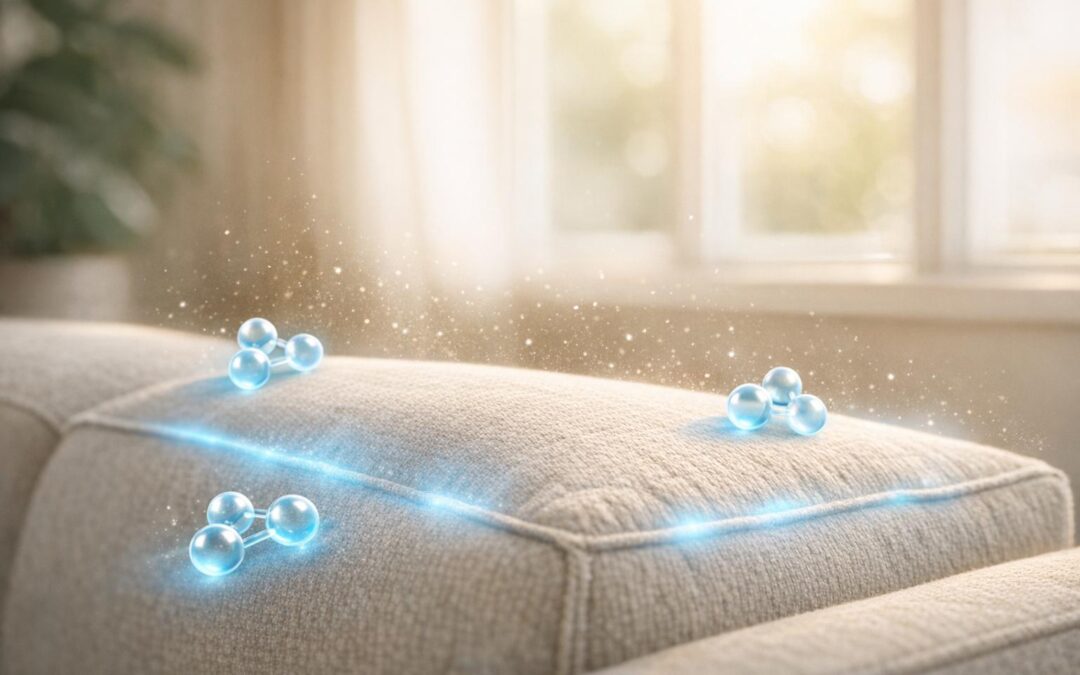
Surface allergens like dust mites, mold spores, and pet dander can trigger allergies, causing sneezing, itching, and respiratory issues. Ozone technology offers a natural, residue-free solution by using ozone gas (O₃) to neutralize these allergens at the molecular level. It eliminates dust mites, bacteria, and mold while improving indoor air quality and reaching hard-to-clean areas like carpets, upholstery, and HVAC systems.
Key Points:
- What it does: Ozone oxidizes and neutralizes allergens, bacteria, and mold without leaving harmful residues.
- Effectiveness: A CT value of 400 mg-min/L can nearly eliminate dust mites. Ozone also inactivates bacteria like E. coli and Salmonella.
- How it works: Ozone penetrates porous surfaces and hidden spaces, breaking down allergens into harmless substances.
- Safety: Proper ventilation and precautions are critical, as high ozone levels can be harmful to humans, pets, and plants.
This method is ideal for thorough allergen control, particularly in spaces where traditional cleaning falls short.
How Ozone Technology Eliminates Allergens
How the Oxidation Process Works
Ozone works at the molecular level to neutralize allergens through a process called oxidation. When ozone (O₃) comes into contact with surfaces, it breaks apart into highly reactive oxygen atoms. These atoms target and dismantle organic pollutants, breaking them down into simpler substances like saturated aldehydes and organic acids. For biological allergens, such as house dust mites, ozone’s high oxidative power can damage the DNA within their cell nuclei and compromise their cellular structure. Unlike chemical cleaners that often leave behind residues, ozone naturally converts back into breathable oxygen (O₂) within about 30 minutes, making it a cleaner alternative. This unique oxidation capability allows ozone to interact differently with various allergen types.
How Ozone Affects Different Allergen Types
Ozone’s impact on allergens varies depending on the type. For example, a study found that exposing dust mites to a 1.18% ozone concentration for just 30 minutes led to their complete inactivation. It’s also effective against mold, fungi, and bacteria like E. coli, Salmonella, and Pseudomonas aeruginosa; however, the results can differ based on the species and ozone concentration. Some organisms, such as Bacillus subtilis, show greater resistance to ozone treatment. Similarly, larger dust mites (those over 3.0 mm x 2.1 mm) require longer exposure to achieve the same results.
Penetrating Hard-to-Reach Surfaces
One of ozone’s standout qualities is its ability to reach areas that traditional cleaning methods often miss. As a gas, ozone flows with air currents, allowing it to penetrate porous materials like carpets, curtains, upholstery, and clothing where allergens tend to accumulate. It can also seep into cracks, crevices, cupboards, and other hidden spaces that harbor dust mites and pet dander.
"Ozone is the most effective way to destroy allergens in the indoor environment because it is a reactive gas that reaches everywhere air currents travel." – SanusAer
Ozone’s reach extends even further when used with a building’s HVAC system. By setting the fan to the ON position, ozone circulates through ductwork, targeting allergens that build up in ventilation systems. This gas’s ability to diffuse into materials depends on their chemical composition, with reaction probabilities ranging from 10⁻⁸ to 10⁻⁴. This makes ozone an effective solution for thoroughly addressing allergens in hard-to-access spaces.
What Ozone Can and Cannot Do
Step-by-Step Guide to Ozone Surface Treatment
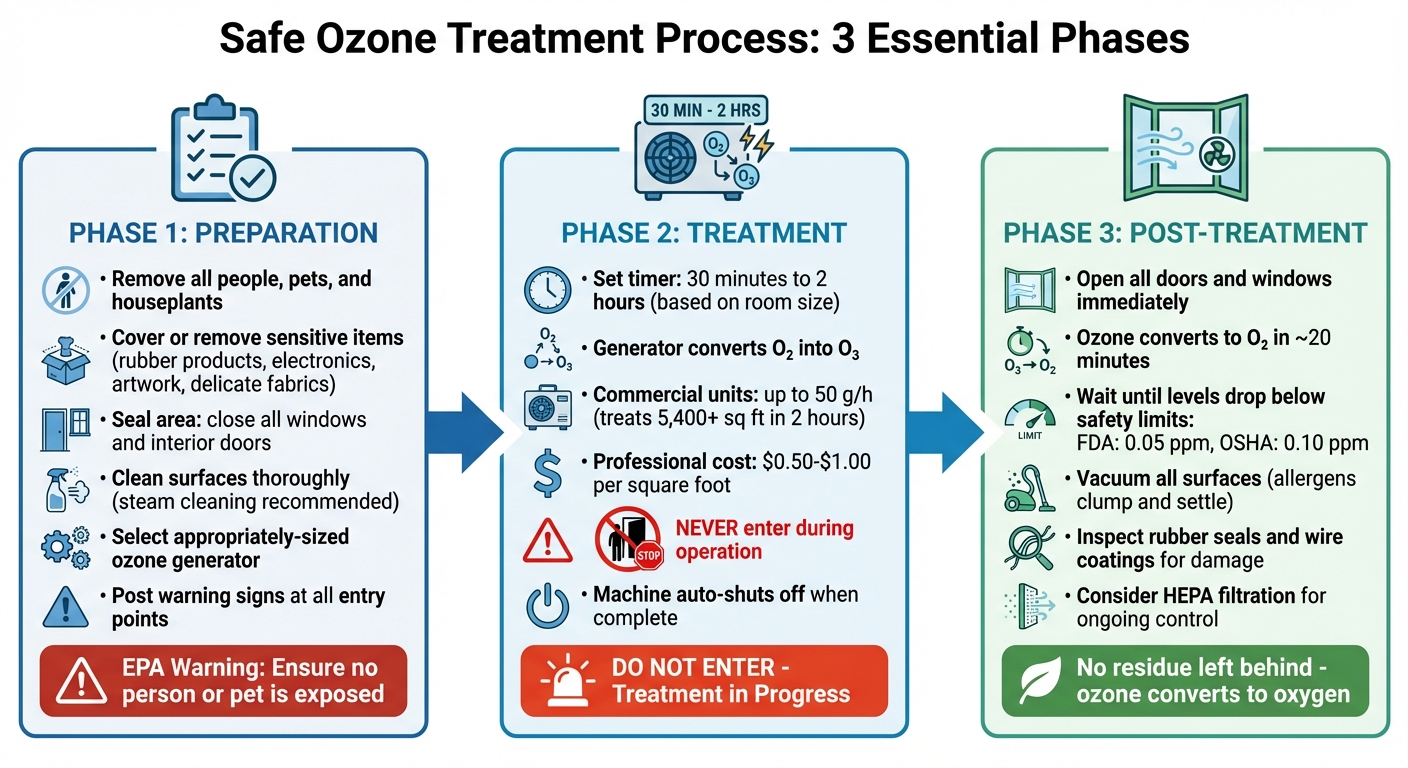
Step-by-Step Guide to Safe Ozone Surface Treatment for Allergen Removal
Preparing the Space for Ozone Treatment
Before starting an ozone treatment, make sure the area is completely cleared of people, pets, and houseplants. Ozone is a strong oxidizing agent that can irritate lungs and harm plant tissues. Additionally, remove or cover items that could be sensitive to ozone exposure, such as rubber products, delicate electrical equipment, artwork with fragile dyes, and certain fabrics that might degrade under ozone’s effects.
"Ensure no person or pet is exposed." – US EPA
Seal the area by closing all windows and interior doors to keep the ozone contained within the treatment zone. Select an ozone generator that matches the size of the space – using one that’s too powerful for a small room can cause unnecessary damage to materials. For the best outcome, clean surfaces thoroughly beforehand, such as using steam cleaning, to remove dirt and grime. This step helps ozone penetrate more effectively to tackle embedded allergens. Lastly, post visible warning signs at all entry points to prevent anyone from accidentally entering during the treatment process.
Running the Ozone Treatment
Once the area is prepared and sensitive items are protected, you can begin the ozone treatment. Set the timer on your ozone generator following the manufacturer’s guidelines – this typically ranges from 30 minutes to 2 hours, depending on the size of the room and the severity of contamination. Ozone generators work by converting oxygen (O₂) into ozone (O₃). For reference, professional ozone treatment services usually charge between $0.50 and $1.00 per square foot. Some commercial-grade units can produce up to 50 g/h of ozone, which is enough to treat spaces over 5,400 square feet in just two hours.
Never enter the room while the ozone generator is running. The machine should automatically shut off once the cycle is complete. Afterward, it’s critical to follow the next steps to safely clear the ozone from the space.
After the Treatment
When the treatment cycle ends, open all doors and windows to ventilate the area as much as possible. Ozone naturally reverts to oxygen within about 20 minutes. However, wait until ozone levels drop below the recommended safety thresholds (FDA: 0.05 ppm, OSHA: 0.10 ppm) before re-entering the space.
Once the area is ventilated, vacuum all surfaces immediately. Ozone causes allergen particles to clump together and settle on floors and furniture, so physically removing them is essential. Unlike chemical cleaners, ozone doesn’t leave behind any residue – it simply converts back into oxygen. Finally, inspect rubber seals and wire coatings for any potential damage caused by ozone exposure. To maintain long-term allergen control, consider pairing periodic ozone treatments with HEPA filtration, which helps capture any remaining particles.
sbb-itb-5fea4da
Benefits of Using Ozone for Allergen Control
Chemical-Free and Eco-Friendly
Ozone offers a natural alternative to chemical cleaners, thanks to its powerful oxidation process. Once its job is done, ozone reverts back to oxygen, leaving no residue behind. This makes it a practical choice for those with sensitivities to chemicals or anyone aiming for a greener, more sustainable cleaning option. Unlike traditional methods, ozone works through oxidation, providing an effective yet environmentally responsible solution.
Complete Allergen Removal
Studies highlight ozone’s ability to tackle allergens at their source. For instance, a CT value of 400 mg-min/L has been shown to nearly eliminate live house dust mites. Further research reveals that 1.18% (v/v) ozone gas can inactivate house dust mites within just 30 minutes by penetrating deeply into fabrics.
"Ozone, a strong disinfectant and oxidant, has been used in a variety of industries for the purpose of decoloration, deodorization and for producing structural changes in organic compounds." – Jae-Hyuk Han, Department of Pediatrics, Yonsei University College of Medicine
This deep-cleaning capability ensures a significant reduction in allergens, creating a healthier indoor environment.
Better Indoor Air Quality
Ozone doesn’t just eliminate allergens – it also improves overall air quality. By neutralizing a range of contaminants, ozone treatment promotes healthier living spaces. Concentrations between 0.3–0.9 mg/L are effective at killing pathogens such as E. coli, Salmonella, and Staphylococcus. It also reduces surface bacteria and mold to undetectable levels. Beyond that, ozone eradicates stubborn odors caused by tobacco smoke, pet urine, burnt food, and mold. For individuals dealing with asthma, allergic rhinitis, or atopic dermatitis triggered by house dust mites, this approach addresses root causes rather than just covering up symptoms.
Safety Considerations for Ozone Treatments
Ensuring the safe use of ozone is just as important as its ability to eliminate allergens. Without proper precautions, its benefits could come at the cost of health risks.
Proper Ventilation Requirements
Ozone, being heavier than air (with a density of 2.14 kg/m³), tends to settle near the floor during treatment. This makes effective ventilation critical, as natural aeration alone often falls short. In one study, natural ventilation reduced ozone levels from 16 mg/L to 0.8 mg/L within 45 minutes – a concentration still above safe limits.
To speed up the process and ensure safety, mechanical ventilation or catalytic converters are often necessary. U.S. workplace safety standards require ozone concentrations to drop below 0.10 ppm before anyone can re-enter the treated area. Tools like fans or HVAC systems help disperse ozone that accumulates near the floor, ensuring it clears out entirely. These precautions highlight the importance of professional oversight during ozone treatments.
Professional vs. DIY Ozone Treatments
Hiring professionals for ozone treatments brings a level of safety and precision that DIY methods often lack. Trained technicians calculate the exact CT values (concentration multiplied by time) needed to address specific allergens, such as house dust mites, while safeguarding delicate materials. They also use commercial-grade ozone generators equipped with safety features, like catalytic converters, to neutralize residual ozone after treatment.
DIY approaches, however, can pose serious risks. Many consumer-grade devices lack precise controls, and research shows that some can produce ozone concentrations between 0.50 and 0.80 ppm in typical rooms – five to ten times higher than public safety limits. Without proper training, users might either apply insufficient doses or create hazardous environments by neglecting proper ventilation.
"An ozone generator should only be used by trained personnel as high concentrations of ozone are dangerous to humans and pets." – Ozone Disinfection Australia
Safety Rules During Treatment
Even with proper ventilation and professional expertise, strict safety rules must be followed during ozone treatments.
All humans, pets, and plants must be removed from the treatment area while ozone is being generated and dissipated. Indoor plants, in particular, are highly sensitive to ozone and may be damaged or killed. The area should also be sealed to maintain effective ozone levels and prevent leakage into adjacent spaces.
Relying on smell to determine safety is highly unreliable, as humans are inconsistent at detecting ozone. Additionally, certain materials – like natural rubber, latex, nitrile, leather furniture, and some electronics – can degrade when exposed to high ozone concentrations. Professionals use calibrated meters to confirm ozone levels are safe before allowing re-entry.
| Organization | Ozone Exposure Standard | Limit Type |
|---|---|---|
| FDA | 0.05 ppm | Medical Device Output |
| OSHA | 0.10 ppm | 8-hour Average |
| NIOSH | 0.10 ppm | Ceiling Limit (Never Exceed) |
| EPA | 0.08 ppm | 8-hour Outdoor Average |
Conclusion
Key Takeaways
Ozone technology provides a chemical-free and highly effective way to tackle surface allergens that traditional cleaning methods often miss. As one of the most potent oxidizers, ozone works by breaking down the molecular structure of allergens, effectively neutralizing house dust mites, pet dander, pollen, and mold spores right at the source. Its gaseous form allows it to penetrate deeply into fibers, crevices, and hidden areas, ensuring a thorough allergen removal process.
Beyond allergen elimination, ozone technology offers clear environmental advantages. The process leaves no residue behind, making it a cleaner, greener option. Studies also show that ozone can quickly inactivate allergens, making it a swift and reliable solution.
Another significant benefit is the improvement in indoor air quality. Ozone neutralizes tough odors at their source, avoiding the need for artificial fragrances. Additionally, its ionizing effect causes tiny airborne particles – like dust, dander, and pollen – to clump together and settle, making them easier to remove with post-treatment vacuuming. Considering that Americans spend about 90% of their time indoors, this comprehensive approach to allergen control can greatly enhance both health and comfort.
These advantages highlight why ozone treatments are a smart choice for creating healthier indoor environments.
Why Choose Ozonated Cleaning LLC
Ozonated Cleaning LLC brings these benefits to life with specialized allergen reduction and disinfection services across Chicagoland, North Western Indiana, and South Eastern Wisconsin. By combining ozone and hydroxyl technology, they create spaces that are sterile and allergen-free.
Their team of trained technicians carefully calculates the precise CT values (concentration multiplied by time) required to eliminate allergens completely while safeguarding your belongings and ensuring safe re-entry – usually within 24 hours. Pricing is tailored to the size of the space, ranging from single vehicles to large commercial properties. To ensure safety, the company adheres to strict protocols, requiring the removal of people, pets, and plants during treatment, and provides detailed instructions for preparation and post-treatment ventilation.
For effective and safe allergen control, visit Ozonated Cleaning LLC or reach out to them for a customized treatment plan tailored to your needs.
FAQs
How does ozone technology help remove allergens compared to traditional cleaning methods?
Ozone technology tackles allergens at their core, breaking them down on a molecular level. It’s particularly effective against common irritants like dust mites, mold spores, and pet dander. Unlike surface-level cleaning methods, ozone gas seeps into carpets, upholstery, HVAC systems, and other hidden spots, ensuring a deep and thorough clean that doesn’t leave behind any residue. The results can last for weeks or even months, offering a long-term solution for allergen control.
Traditional cleaning methods, like vacuuming or wiping down surfaces, only provide a short-term fix and often require constant upkeep. While these approaches are safe for spaces that are currently in use, they don’t address the allergens lurking in hard-to-reach places. Ozone treatment, by contrast, delivers more lasting results, though it does require the area to be vacant during the process for safety reasons. In the long run, ozone technology not only reduces allergens more effectively but also improves indoor air quality with less ongoing maintenance.
What precautions should I take during an ozone treatment?
To stay safe during ozone treatment, ensure the area is completely empty of people and pets. Start by eliminating the source of odors, such as garbage or mold, and thoroughly clean the space. Open all doors, drawers, and cabinets to help the ozone circulate more effectively. If you’re treating a basement, keep the humidity level below 45% for the best results.
While the treatment is running, keep an eye on the equipment to prevent excessive ozone production, which can cause irritation. Once the process is complete, ventilate the area by opening windows and using fans for at least 12–24 hours before anyone enters. Always stick to the manufacturer’s guidelines, and if you’re unsure, consider hiring professionals like Ozonated Cleaning LLC to handle the process safely and correctly.
Is ozone treatment safe for household items and electronics?
When applied correctly in unoccupied areas and followed by proper ventilation, ozone treatment is typically safe for household items and electronics. The important part is sticking to the recommended safety guidelines to avoid any potential harm during the process. By taking these steps, you can effectively use ozone technology to reduce allergens and enhance indoor air quality without worry.
Recent Comments