
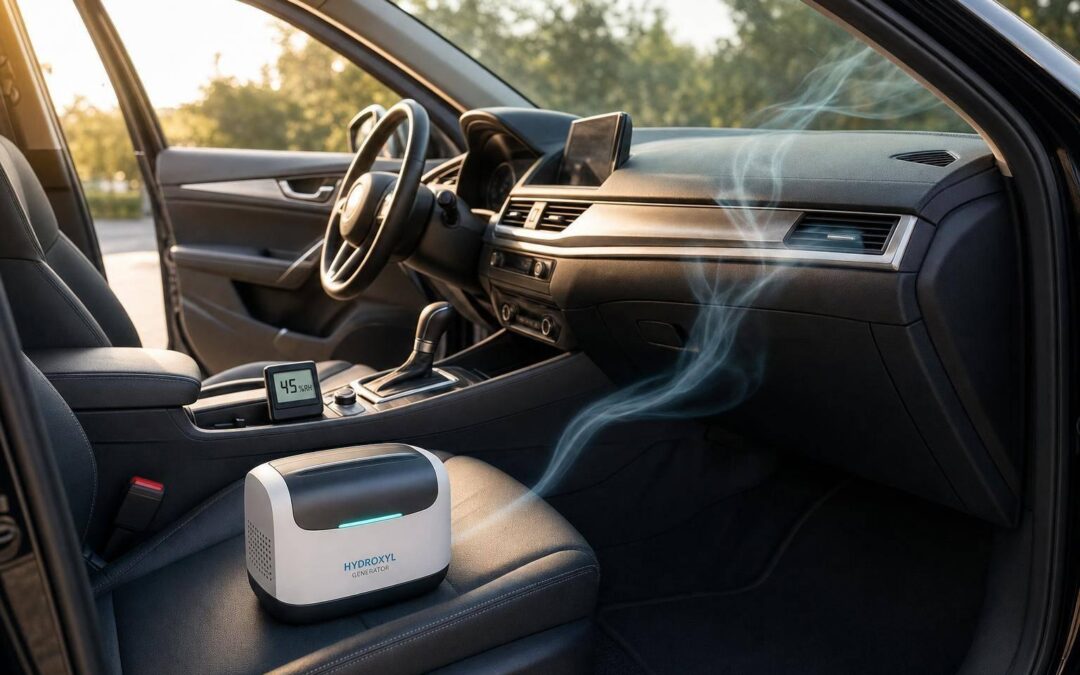
If a car, RV, or boat still smells after cleaning, hydroxyl treatment can help by breaking down odor gases in the air and moving through vents and soft materials. I’d sum it up this way: it works best on lingering odors, it helps inside HVAC paths, and it does not fix wet padding, mold growth, or dirt that was never cleaned out.
Here’s the short version:
- What it does: breaks down odor-causing compounds and some VOCs instead of masking them
- Where it works: cars, SUVs, RVs, campers, and boats
- What areas matter most: seats, carpets, headliners, trunks, vents, cabin cushions, lockers, and storage spaces
- Why odors come back: smoke particles, moisture, and HVAC buildup can stay deep in fabric, foam, and ductwork
- What improves results: cleaning first, good airflow during treatment, and moisture control after
- What to expect: one treatment may cut stale air and day-to-day odor, but heavy smoke or long-set odors may need another round
A few facts stand out. Smoke odor is made of tiny particles and gases that settle into fabric, insulation, and vents. In many vehicles, HVAC smells also start at the evaporator when condensation builds up. And for vent treatment, service guidance often calls for 1–2 passes per vent plus extra attention at the intake area.
I’d read hydroxyl treatment as a deeper odor-control step, not a substitute for cleanup. If you want the best shot at lasting results, clean spills first, dry damp materials, replace a dirty cabin air filter, and use fresh-air mode more often than recirculate.
That’s the core idea of the full article below.
Hydroxyl Generators and Ozone Generators and their many Uses
sbb-itb-5fea4da
How Hydroxyl Radicals Clean Vehicle Interiors
Hydroxyl radicals oxidize airborne odor compounds as cabin air moves through the system. In plain English, they react with odor molecules in the air and help break them down. That makes this approach useful for odor control in cabins with fabric surfaces, vents, and those hard-to-reach airflow paths where smells tend to hang around.
What Hydroxyl Technology Targets Inside a Vehicle
Inside a vehicle, hydroxyl technology targets airborne contaminants and odor-causing compounds and odor-causing compounds that linger in the cabin, vents, and other airflow paths. Since air moves through the cabin in a similar way across many vehicles, the same method can be used in different vehicle types.
Why Enclosed Spaces Support Better Treatment Coverage
Because the cabin is enclosed, HVAC circulation distributes treated air more evenly throughout the interior.
Where Hydroxyl Treatment Works: Cars, RVs, and Boats
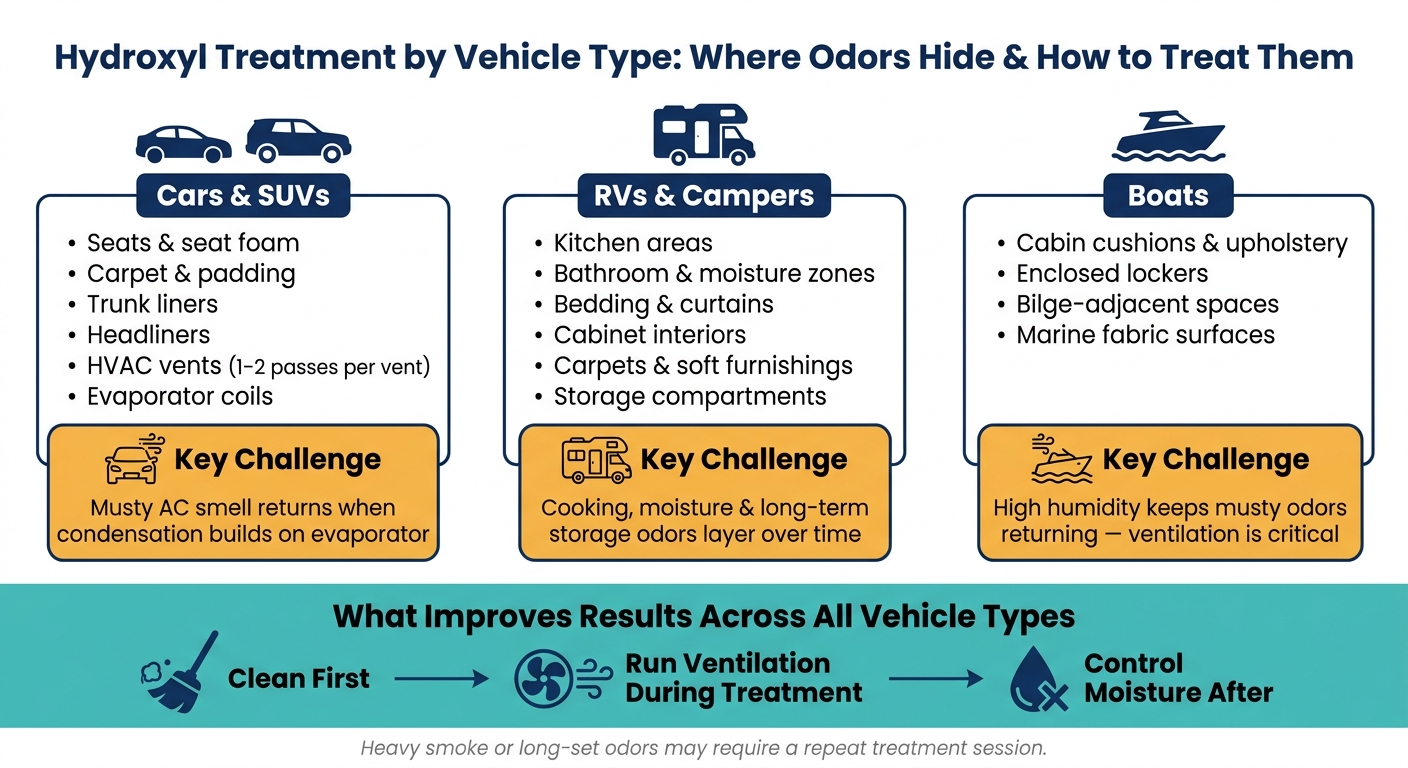
Hydroxyl Treatment by Vehicle Type: Where Odors Hide & How to Treat Them
Different vehicle types hold odors in different spots, but the basic problem stays the same: enclosed air, porous materials, and tight airflow paths. This technology is particularly effective against the 5 odor types hydroxyl technology eliminates most frequently in confined spaces.
Cars and SUVs: Seats, Carpets, Vents, and Trunks
Cars and SUVs tend to hold odors in seats, carpet, trunk liners, and vents. Smoke, pet smells, food spills, and moisture can sink into seat foam, carpet padding, trunk liners, headliners, and HVAC vents. A National Highway Traffic Safety Administration service bulletin for vehicle odor elimination recommends treating carpeting, upholstered seats, headliners, trunks, and vents, including 1–2 passes per vent and extra treatment of the intake area.
Consumer Reports also notes that musty HVAC odors often start with condensation inside the evaporator. That’s why a stale smell can come back when the AC kicks on.
RVs bring in another layer: they’re part vehicle, part living space. That changes where odors settle and what needs attention.
RVs and Campers: Living Areas, Storage, and Soft Surfaces
RVs and campers combine living space, storage, and soft surfaces in one enclosed interior. Cooking smells, bathroom moisture, and long-term storage odors can settle into bedding, curtains, cabinet interiors, and carpets.
In practice, the main trouble spots are usually:
- Kitchens
- Bathrooms
- Soft furnishings
- Storage areas where moisture and odors settle
It also helps to dry out damp materials before treatment. Hydroxyl systems safely treat airborne compounds and exposed surfaces, but it does not replace source removal when you’re dealing with soaked padding or active moisture.
Boats run into a lot of the same issues, but humidity and low airflow can make musty odors hang around longer.
Boats: Cabins, Lockers, Bilges, and Marine Upholstery
Boats trap moisture and odors in cabins, lockers, and upholstery. Common problem areas include cabin cushions, seat upholstery, enclosed lockers, and bilge-adjacent spaces.
If humidity stays in the mix, odors in these areas can come back. That’s why ventilation and moisture control matter just as much as the treatment itself.
Treatment Setup, Safety, and Expected Results
How a Vehicle Is Prepared and Treated
Once the problem spots are clear, preparation and airflow play a big part in how far the treatment can reach. Preparation comes first. Remove trash, then clean up visible spills, mud, and other surface mess before treatment starts. Hydroxyl works best when the interior is already clean.
After that, a technician places the generator where it can move air well through the cabin. The aim is simple: push treated air into closed-off areas like under the seats, into the trunk, and through the HVAC vents. Running the vehicle’s ventilation system during treatment helps move treated air into the evaporator coils and ductwork, which are common places for odors to stick around. If the odor is strong or has been there for a long time, like heavy tobacco smoke, a repeat treatment may make sense.
Safety and Operating Considerations
Setup also affects safety and how evenly the treatment spreads. Hydroxyl technology is safe for most vehicle interiors when used as directed. Here are the main points:
- Upholstery and fabric: safe when used as directed
- Electronics and vents: suitable for vehicle interiors and airflow paths
- Occupied-space use: safer for use in occupied spaces than ozone vs hydroxyl treatments, but follow equipment instructions
What Results Vehicle Owners Can Realistically Expect
Results depend on the source of the odor and how long it has been there. In many cases, one treatment improves day-to-day odors and leaves the interior smelling fresher, with less stale air and weaker odor buildup. Heavy tobacco smoke or odors that have been sitting for a long time may need a follow-up treatment.
Maintenance: Keeping Vehicle Interiors Fresh After Treatment
Once odors go down, the next job is keeping them from creeping back in. A hydroxyl treatment breaks down odor compounds that are already there. But if moisture, food crumbs, or pet dander pile up again, new odors can settle in too. A few simple habits can help keep the interior fresh.
When Follow-Up Treatment Is Worth Considering
Some vehicles need repeat treatment more often than others. For boats and RVs, booking a hydroxyl treatment before and after seasonal storage can help stop that stale, musty smell from taking hold. For smokers’ vehicles, pet-heavy cars, and vehicles with frequent passenger turnover, follow-up treatment is a smart way to stay ahead of odors buried deep in fabric and padding that normal vacuuming may miss. High-use vehicles usually do better with more frequent treatment.
Between treatments, moisture control and HVAC care do most of the heavy lifting to improve indoor air quality.
Simple Habits That Help Results Last Longer
Replace a dirty cabin air filter as soon as you can. That alone can make a big difference. A few other habits also help results last longer inside enclosed vehicle interiors:
- Clean spills fast. Once foam gets soaked, it’s much harder to treat.
- Vacuum on a regular basis to clear out odor-causing debris.
- Use fresh-air mode instead of recirculate during normal drives.
FAQs
How long does hydroxyl treatment take?
Hydroxyl treatment usually takes 3 to 5 days to fully neutralize odors, although you may notice some improvement within just a few hours.
The exact timeline depends on the size of the vehicle, boat, or RV, along with how strong or deeply set the odor or contamination is. If the smell is more stubborn, the treatment may need extra time to do its job well.
Can hydroxyl treatment remove cigarette smoke smell completely?
Yes. Hydroxyl treatment can remove cigarette smoke odor completely by producing hydroxyl radicals that move into fabrics, carpets, and upholstery and break down smoke particles at the molecular level instead of just masking them.
That process turns odor-causing compounds into harmless water and carbon dioxide, which means the results are permanent. Ozonated Cleaning LLC offers professional hydroxyl treatment for cars, RVs, and boats.
When should a vehicle get a second treatment?
There’s no fixed timetable and no automatic need for a second treatment.
Because hydroxyl generators can run on an ongoing basis, they’re often used as part of regular air quality upkeep instead of a one-and-done fix.
If odors are strong or the vehicle may get contaminated again, Ozonated Cleaning LLC can look at the situation and tell you whether extra sessions or a routine cleaning plan make sense.
Recent Comments