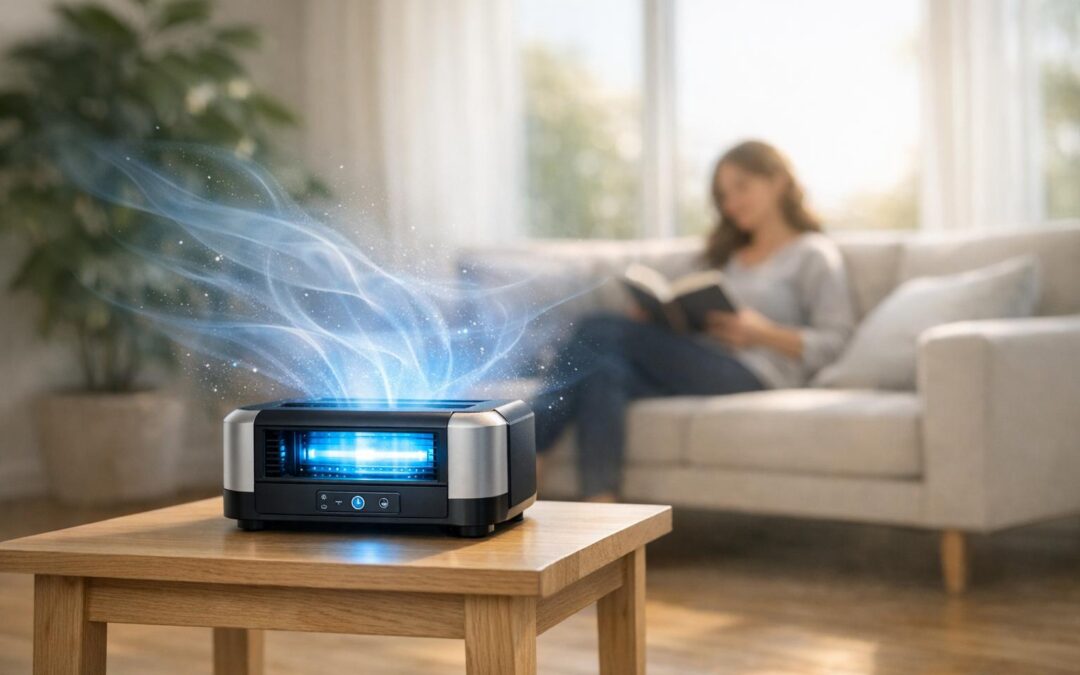
Hydroxyl technology replicates a natural process to clean air and surfaces by generating hydroxyl radicals (OH). These radicals, created using UV light, oxygen, and water vapor, break down odors, VOCs, bacteria, and viruses into harmless by-products like carbon dioxide and water. Unlike ozone treatments, hydroxyl generators are safe to use in occupied spaces and leave no chemical residues. They work quickly, neutralizing up to 99.99% of pathogens and improving air quality in homes, hospitals, offices, and vehicles.
Key points:
- Safe for occupied spaces: No evacuation needed.
- Odor elimination: Targets deep-seated smells in fabrics and surfaces.
- Pathogen neutralization: Effective against bacteria, viruses, and fungi.
- Eco-friendly: Mimics natural atmospheric cleaning without harmful by-products.
- Versatile applications: Used in homes, healthcare, transportation, and commercial spaces.
Hydroxyl technology offers a safe, chemical-free way to sanitize and deodorize spaces, making it a practical solution for continuous air purification.
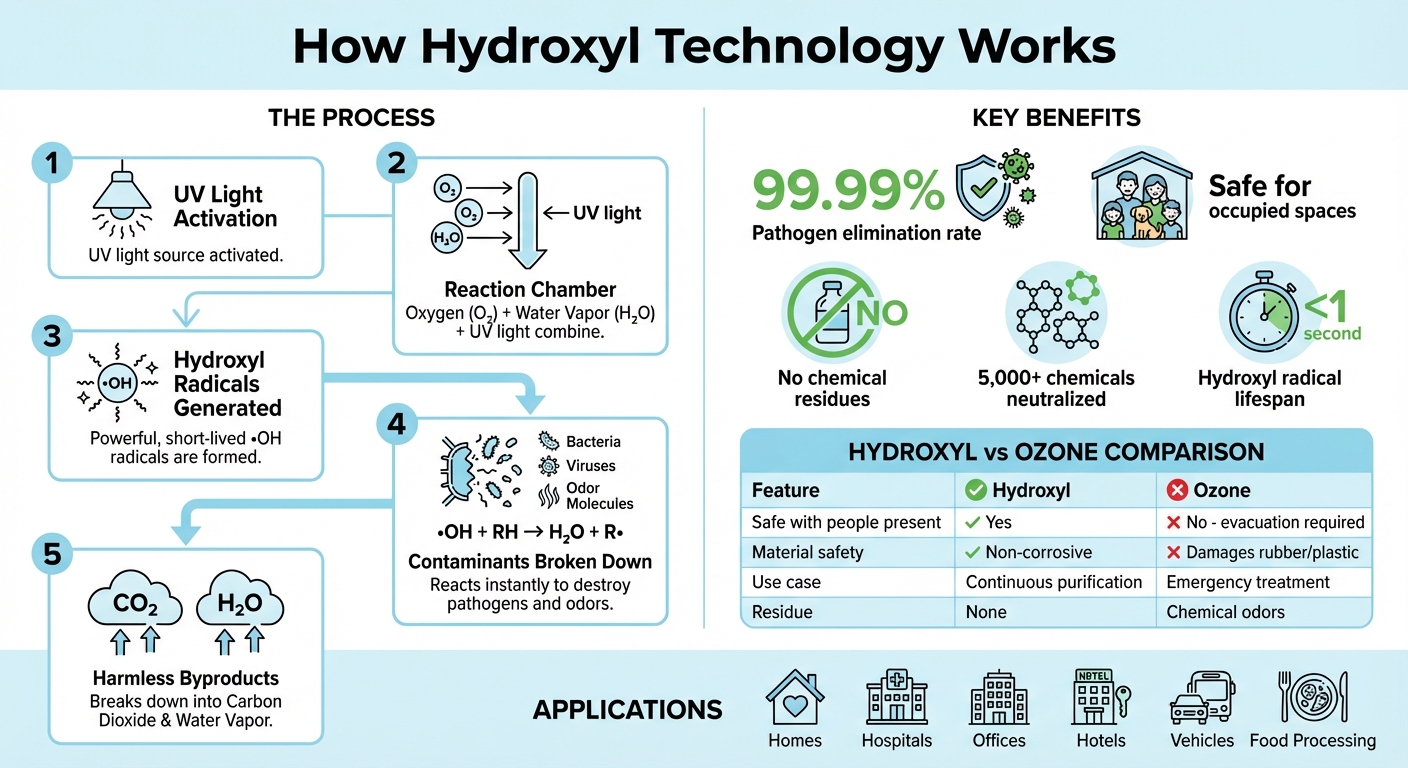
How Hydroxyl Technology Works: From UV Light to Clean Air
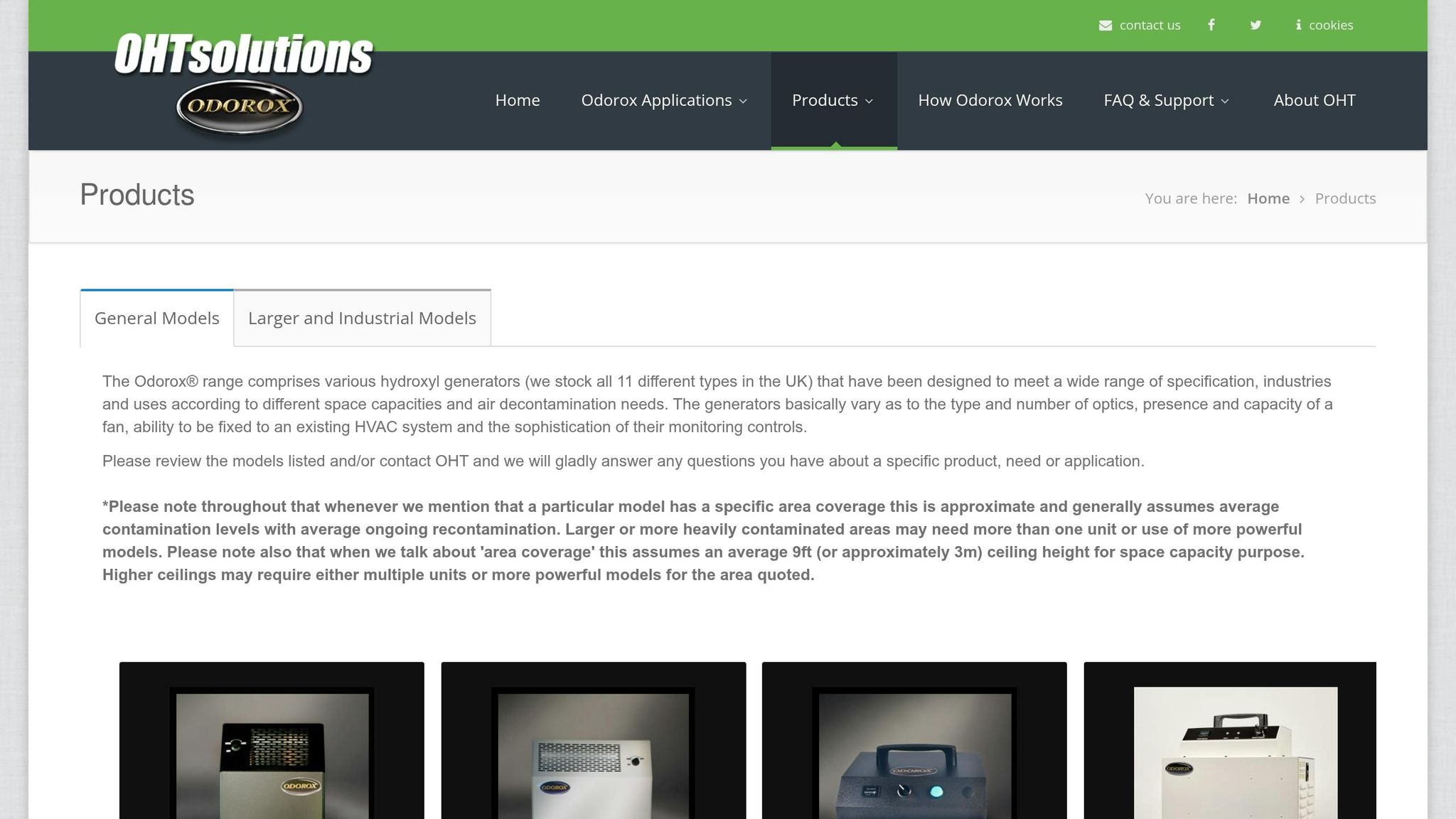
ODOROX® Hydroxyl Generator – The Basics of How it Works!
sbb-itb-5fea4da
How Hydroxyl Radicals Form
Hydroxyl radicals occur naturally in the Earth’s atmosphere and can also be produced artificially using specialized devices.
Natural Formation in the Atmosphere
Hydroxyl radicals are primarily formed in the atmosphere through sunlight-driven reactions. When sunlight with UV wavelengths under 320 nm interacts with ozone and hydrogen peroxide in the troposphere, it triggers chemical reactions that generate hydroxyl radicals. Even though their concentration is extremely low – around 10⁻¹³ of the total atmospheric oxygen – these radicals play a crucial role in breaking down pollutants. In fact, they are responsible for eliminating approximately 3.7 gigatons of trace gases, including methane and hydrofluorocarbons, every year.
This remarkable ability to cleanse the air has earned hydroxyl radicals the nickname "detergent of the troposphere." As the Intergovernmental Panel on Climate Change has stated:
"the atmospheric hydroxyl is responsible for cleansing the Earth’s atmosphere".
The natural processes that create hydroxyl radicals have inspired technologies designed to replicate these reactions indoors.
Artificial Generation in Hydroxyl Devices
Hydroxyl generators are engineered to mimic nature, producing these radicals in a controlled indoor environment. These devices use high-energy ultraviolet (UV) light at multiple wavelengths to initiate reactions between oxygen and moisture in the air within a reaction chamber. The UV light drives photolysis reactions similar to those occurring in the atmosphere, releasing hydroxyl radicals into the surrounding area.
While photocatalytic oxidation (PCO) systems – using UV-activated titanium dioxide – are effective for smaller spaces, they often produce higher levels of formaldehyde as a by-product. In contrast, systems utilizing multiple-wavelength UV light generate higher concentrations of hydroxyl radicals suitable for larger areas, without the same by-product concerns.
Because hydroxyl radicals react so quickly, they do not accumulate to harmful levels. This makes the technology safe for use in occupied spaces while continuously neutralizing odors, volatile organic compounds (VOCs), and pathogens.
Chemical Reactions in Hydroxyl Technology
The chemical reactions at the heart of hydroxyl technology highlight its ability to eliminate odors and pathogens effectively. These reactions use powerful oxidation processes to break down airborne contaminants quickly and efficiently.
How Hydroxyl Radicals Break Down Odors
Hydroxyl radicals neutralize odors through oxidation, breaking the chemical bonds in odor-causing compounds and volatile organic compounds (VOCs). A key process is hydrogen abstraction, where a hydroxyl radical (•OH) removes a hydrogen atom from an organic compound (RH). This reaction forms water (H₂O) and a reactive alkyl radical (R•):
•OH + RH → H₂O + R•
This reaction dismantles the molecular structure of contaminants, converting them into harmless byproducts like carbon dioxide (CO₂) and water vapor (H₂O). Hydroxyl radicals can interact with as many as 5,000 different chemicals and organic compounds.
Even though their lifespan is less than a second, hydroxyl radicals trigger a chain reaction where new radicals are formed, continuing the cleaning process. Beyond breaking down odor molecules, these radicals also damage microbial structures, enhancing their pathogen-neutralizing capabilities.
Effects on Bacteria and Viruses
Hydroxyl radicals are highly effective against microorganisms, thanks to their potent oxidizing properties. They target multiple components of bacteria and viruses simultaneously, delivering broad-spectrum antimicrobial effects.
For bacteria, hydroxyl radicals attack the lipid membranes, causing lipid peroxidation that disrupts the cell structure. For viruses, they damage the protective envelopes of certain types, along with essential macromolecules like carbohydrates, nucleic acids, and amino acids. This damage prevents pathogens from functioning or replicating.
Photocatalytic oxidation (PCO) systems that generate hydroxyl radicals can reduce airborne bacteria levels by up to 90%. They are also capable of eliminating up to 99.9% of pathogenic microorganisms, including viruses like influenza and herpes simplex.
Unlike ozone or harsh chemical disinfectants, hydroxyl radicals are safe for humans, animals, and plants. This is because living organisms have natural antioxidant defenses, such as melatonin and glutathione, allowing them to coexist with hydroxyl radicals in the atmosphere.
Where Hydroxyl Technology Is Used
Hydroxyl technology offers solutions for odor control and sanitization in a variety of settings, making it suitable for both residential and commercial use.
Home and Residential Uses
Hydroxyl generators are particularly effective for eliminating stubborn odors in homes and apartments, such as lingering smells from aging structures or previous tenants. They work by breaking down odor-causing compounds deep within carpets, upholstery, and other materials, rather than simply masking the smells.
One major advantage over ozone treatments is that hydroxyl generators can be used while people, pets, and plants remain in the space. This means homeowners can continue their routines while the technology works to address odors, mold, fungi, and volatile organic compounds (VOCs). Michelle Blevins from Restoration & Remediation highlights this benefit:
"The technology allows contractors to run the generators while performing their normal physical cleaning instead of afterward and enables clients to stay in their home or business when possible."
However, it’s important to ensure proper ventilation in smaller rooms to prevent high concentrations of oxidants. For residential odor removal services, costs typically range from $600 to $900, depending on the size of the area.
Commercial Spaces and Vehicles
Hydroxyl technology is also widely used in commercial settings and transportation. In healthcare facilities, for example, it helps reduce healthcare-associated infections (HAIs), which impact about 7% of patients in high-income countries and 15% in lower-income ones. The World Health Organization estimates that 1.4 million patients globally are affected by these infections at any time, with 1 in 10 cases resulting in death.
In offices and retail spaces, compact devices – whether wall-mounted or placed on desktops – sanitize high-traffic areas without requiring occupants to vacate. Hotels, restaurants, and food processing facilities also use this technology to maintain sanitary conditions for food safety , while also providing effective restroom odor control, with its antimicrobial properties earning FDA recognition.
Hydroxyl treatments are effective in vehicles as well, including cars, RVs, and boats. The radicals penetrate fabrics and surfaces to neutralize odors caused by moisture, leaving no chemical residues behind. This makes it especially useful in damp environments. Professional deodorizing services typically cost around $150 per vehicle and $200 per semi-truck.
Reducing Allergens and Improving Air Quality
Beyond odor control, hydroxyl technology improves air quality by reducing allergens and airborne pathogens. It breaks down common irritants like pollen and mold spores, lowering allergen levels and creating what manufacturers describe as a "fresh outdoor air" sensation.
Because humans, pets, and plants naturally coexist with hydroxyl radicals, these devices can operate continuously in homes, offices, and public transportation systems such as buses, trains, and airplanes – where allergen and pathogen levels often accumulate.
Hydroxyl Technology vs Ozone Technology
Hydroxyl and ozone technologies both work by oxidizing contaminants, but they differ significantly in how they operate and where they can be applied. Knowing these differences can help you decide which one fits your needs.
Main Differences Between Hydroxyl and Ozone
The biggest distinction is safety in occupied spaces. Hydroxyl generators are safe to use when people are present, while ozone machines require complete evacuation due to the potential respiratory risks they pose.
Ozone is best for quick, emergency treatments in unoccupied areas. On the other hand, hydroxyl systems are designed for ongoing air purification in spaces where people are living or working.
Another key factor is material safety. Ozone is corrosive and can harm materials like rubber, plastic, and metal. In contrast, hydroxyl radicals are much gentler, leaving no harmful residues or chemical odors behind.
At a molecular level, hydroxyl radicals are more reactive than ozone. This allows them to break down a wider range of odors, volatile organic compounds (VOCs), and pathogens. Studies even show that hydroxyl radicals achieve a 99.99% kill rate against viruses, bacteria, and fungi.
These differences are critical when deciding which technology suits a specific environment.
Choosing Between Hydroxyl and Ozone
The choice between these technologies depends on your goals and the setting. Ozone is a great choice for rapid restoration projects in unoccupied buildings where speed is the priority. However, when using ozone, it’s important to remove or protect sensitive materials like plastics, rubbers, and electronics to prevent damage.
Hydroxyl technology, on the other hand, is ideal for continuous air purification in occupied spaces such as homes, offices, hospitals, and hotels.
At Ozonated Cleaning LLC, the focus is on tailoring the solution to the unique needs of each situation. Professional restoration services, like those offered by Ozonated Cleaning (https://ozonatedcleaning.com), often combine both technologies. Ozone is used to quickly break down stubborn odors, while hydroxyl radicals neutralize pathogens and VOCs, ensuring thorough sanitization of both air and surfaces.
Conclusion
Hydroxyl technology offers a science-driven approach to eliminating odors and sanitizing spaces without the need for evacuation. Instead of merely masking odors, it works by breaking down contaminants at the molecular level.
One of its standout features is the ability to operate safely in occupied spaces. Unlike ozone treatments, which require people to vacate the area, hydroxyl generators can run continuously in homes, offices, hospitals, and hotels, allowing regular activities to continue uninterrupted. This makes them perfect for maintaining air quality over time and effectively sanitizing fabrics and surfaces where odors tend to linger.
The technology works quickly to neutralize pathogens almost entirely, providing thorough sanitization without leaving behind chemical residues or unpleasant aftereffects. Additionally, hydroxyl radicals are non-corrosive, making them safe for use on materials like rubber, plastic, leather, and electronics – something ozone treatments can’t always guarantee.
Essentially, hydroxyl technology harnesses the same natural processes that clean our atmosphere, delivering a safer and more efficient way to disinfect indoor environments.
Key Takeaways
Here’s why hydroxyl technology stands out:
- It’s ideal for continuous air purification in spaces where people are present, reaching deep into surfaces to remove stubborn odors at their source.
- The process is entirely chemical-free, relying on UV light, water vapor, and oxygen to create radicals that neutralize biological contaminants without harming people or animals.
For those in the Chicagoland area looking for professional odor removal and sanitization services, Ozonated Cleaning (https://ozonatedcleaning.com) combines hydroxyl and ozone technologies to provide customized solutions for residential, commercial, and vehicle spaces.
FAQs
How is hydroxyl treatment different from ozone?
Hydroxyl treatment offers a safer option for spaces where people are present. Hydroxyl radicals (OH•) effectively neutralize odors, bacteria, and mold without leaving behind harmful residues. This makes it ideal for continuous use in settings like homes or offices.
In contrast, ozone treatment relies on ozone (O3) for quick odor removal. However, it poses health risks, meaning the space must remain unoccupied during the process. While ozone works faster, it’s less practical for environments where people are present, making hydroxyl treatment the more versatile choice for ongoing use.
How long does a hydroxyl generator take to remove odors?
A hydroxyl generator typically needs around three to five days to remove odors. However, the exact time can differ depending on factors such as how strong the odor is and the size of the area being treated.
Will hydroxyl technology damage electronics or fabrics?
Hydroxyl technology is designed to be safe when used correctly, even around electronics and fabrics. It works by neutralizing contaminants without causing any damage and is approved for use in spaces where people are present. To maintain safety, it’s important to stick to the recommended usage guidelines.
Recent Comments