
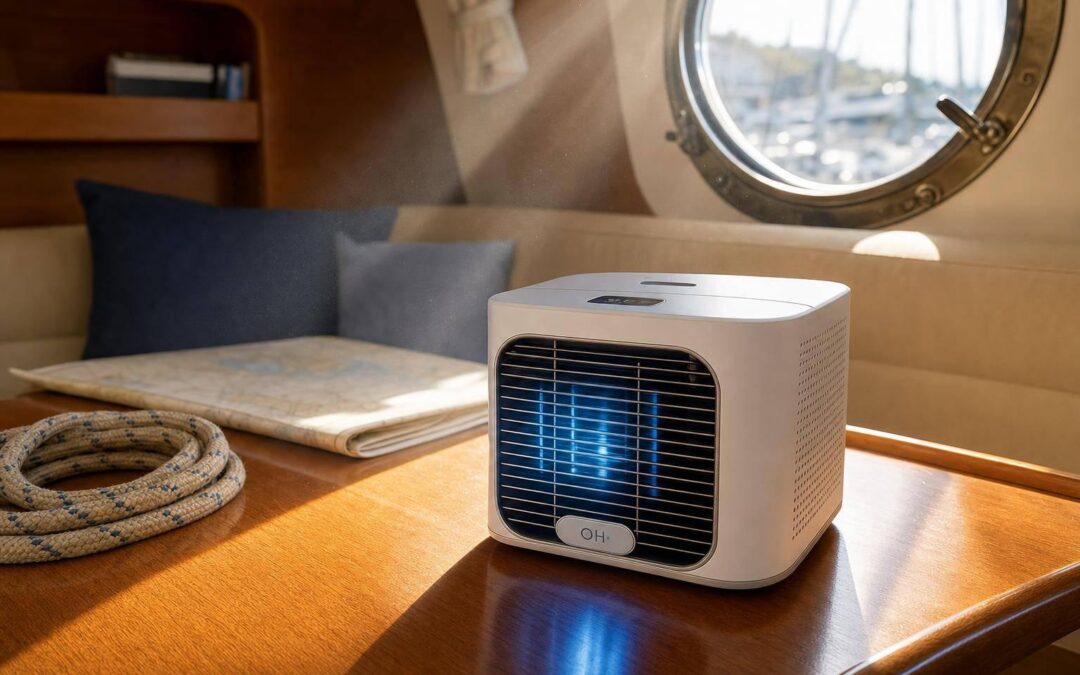
If your boat cabin smells musty, sour, or like fuel, a hydroxyl generator can help cut odor in the air – but it will not fix the source. That’s the main point.
I’d put it this way: hydroxyl units pull in cabin air, use UV light and a TiO₂ surface to make hydroxyl radicals, and those radicals react with odor-causing VOCs. In one ship-cabin study, VOCs reached 1,659 ppb, about 5x the recommended daily average of 333 ppb. That helps explain why closed-up marine spaces can smell so bad so fast.
Here’s the short version:
- What it does: breaks down airborne odor compounds instead of covering them up
- What affects results: humidity, cabin size, layout, airflow, and soft goods like cushions
- How to use it: clean first, dry wet areas, open lockers, place the unit in the cabin, then air out after the cycle
- What it won’t do: stop leaks, remove mold from soaked materials, or clean a dirty bilge
- When to get help: if odors keep coming back after cleaning, drying, and treatment
A few points matter most:
- Moderate humidity helps the reaction
- Fuel vapors and engine spaces are a no-go
- Runtime depends on the odor source, not just the cabin size
- If the smell returns, there’s usually an active source still on board
So if you want the plain answer, here it is: hydroxyl treatment works best as a cleanup step after you remove trash, moisture, leaks, and moldy items. That’s the frame I’d keep in mind while reading the rest of the article.
How Hydroxyl Generators Work on Boats
Main Components Inside a Hydroxyl Generator
A hydroxyl generator has four core parts: a UV lamp, a TiO₂ catalyst surface, a reaction chamber, and a fan that pulls cabin air through the unit. The fan keeps air moving into the chamber, where the treatment starts. Once those parts work together, the unit begins breaking down odor compounds.
From Cabin Air to Odor Breakdown: How the Process Works
As cabin air moves into the unit, it brings water vapor, oxygen, and odor-causing VOCs with it. Inside the reaction chamber, UV light activates the TiO₂ surface. That reaction uses the water vapor and oxygen in the moving air to create hydroxyl radicals (·OH).
Those radicals then react with VOCs and break them into simpler compounds, mainly carbon dioxide and water. Put simply, the unit doesn’t just cover up smells. It targets the compounds behind them.
How Marine Conditions Affect Treatment Results
Boat cabins have their own quirks, and those conditions shape how well hydroxyl treatment works. Moderate humidity helps the reaction, while very dry air can slow it down.
Cabin size and layout also play a big part. Larger salons dilute radicals faster, so they usually need more runtime. Thick upholstery and cushions can slow treatment too, since they block airflow and hold odors deep in the material.
To help the process along, open lockers, the head, and under-berth storage so airflow can reach trapped odors. It also helps to run the unit with the boat’s ventilation. That’s why placement and runtime matter so much in the next step.
sbb-itb-5fea4da
Ask Annissa: Hydroxyl and Deodorization
How to Use a Hydroxyl Generator in a Boat Cabin
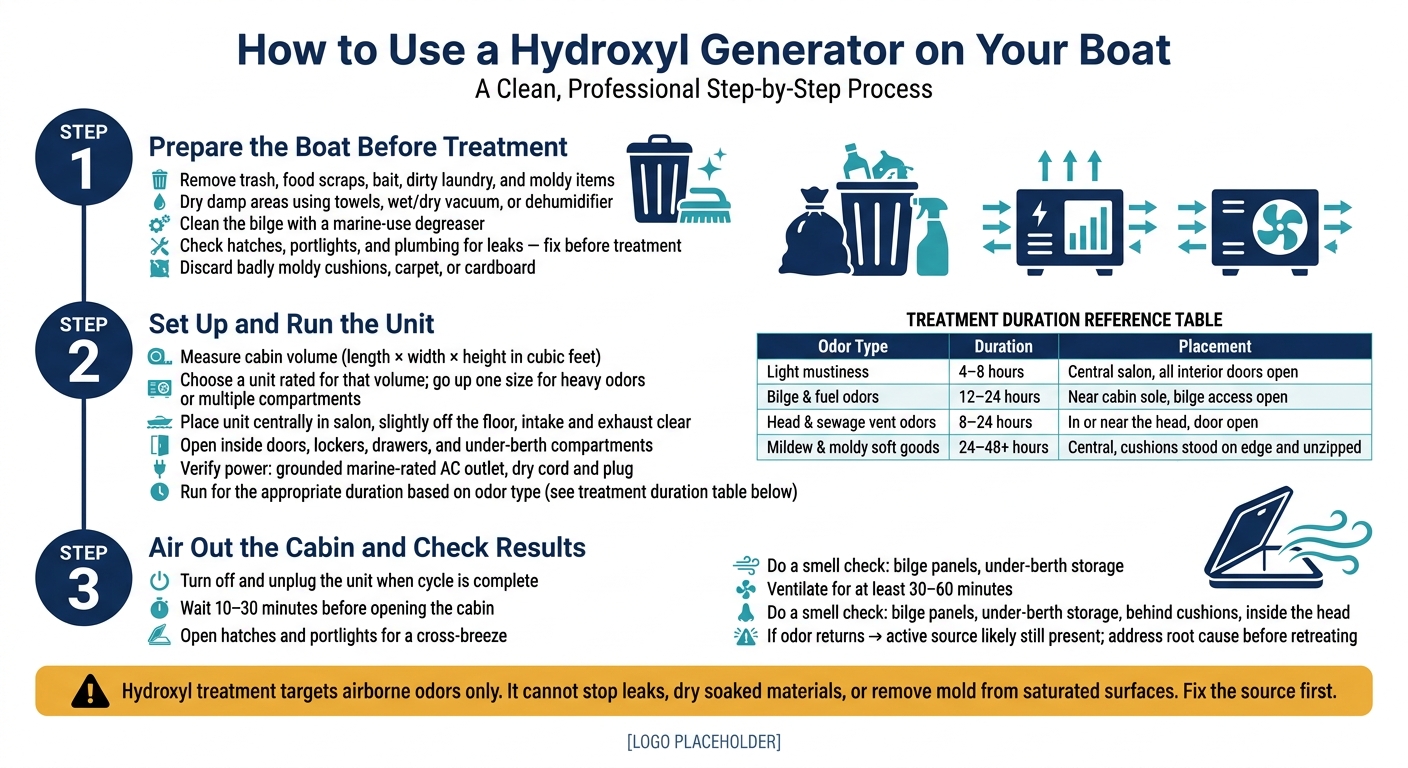
How to Use a Hydroxyl Generator on Your Boat: Step-by-Step Guide
Once you’ve picked the right size unit and set it in the right spot, get the cabin ready before you run a cycle.
Step 1: Prepare the Boat Before Treatment
The goal here is simple: make sure the treatment removes odors through oxidation, not odor sources that are still sitting there.
Before you turn the unit on, remove trash, food scraps, bait, dirty laundry, and any items that are clearly moldy or mildewed. If those things stay in the cabin, they can keep feeding the smell and make the treatment less effective.
Next, dry damp areas so the unit can get to the source of the odor. Use towels, a wet/dry vacuum, or a small dehumidifier on wet carpet, cushions, and locker interiors. Clean the bilge with a marine-use degreaser to get rid of fuel, oil, and organic sludge. Then check around hatches, portlights, chainplates, and plumbing for leaks. If you find a simple seal or hose problem, fix it before treatment starts. And if any cushions, carpet, or cardboard are badly moldy, throw them out instead of trying to save them.
Once the cabin is clean and dry, move on to setup.
Step 2: Set Up and Run the Unit
Start by estimating the cabin’s volume in cubic feet. Measure the length, width, and height of the main cabin and any connected spaces, like berths, the head, and the galley, then multiply those numbers together. Pick a unit rated for that volume. If the boat has several compartments or the odor is heavy, go up one size.
Place the unit in a central part of the salon, slightly off the floor if you can, so the intake and exhaust stay clear. Close outside hatches, portlights, and companionway doors to keep the treatment in the cabin. At the same time, open inside doors, lockers, drawers, and under-berth compartments so treated air can move into hidden odor pockets.
Before you plug it in, make sure shore power, an inverter, or a generator can handle the load. Check the amp draw on the nameplate and use a properly grounded marine-rated outlet.
Treatment time depends on the type and strength of the odor, plus the size of the cabin. Use the table below as a starting point. Then check your unit’s manual for its max continuous runtime and any occupancy rules.
Step 3: Air Out the Cabin and Check Results
When the cycle is finished, turn the unit off and unplug it. Wait 10–30 minutes before opening the cabin so any leftover oxidants near the unit can disperse. Then open hatches and portlights to get a cross-breeze going, and ventilate the cabin for at least 30–60 minutes. This helps clear loosened odors and any remaining byproducts.
After the cabin airs out, do a careful smell check. Go through the bilge access panels, under-berth storage, behind cushions, and inside the head. If the cabin smells neutral, the treatment probably did its job. If the odor is lighter but still hanging on in a few spots, you may need more runtime or better airflow. In that case, a follow-up treatment with better placement may help. If the smell keeps coming back, there’s probably an active source behind it, not just a short treatment time. Identifying the root cause is essential, much like detecting HVAC odor sources in a home.
| Odor Type | Typical Treatment Duration | Recommended Placement | Key Notes |
|---|---|---|---|
| Light mustiness (closed-up cabin) | 4–8 hours | Central in salon, all interior doors open | Open lockers; run a dehumidifier beforehand |
| Bilge and fuel odors | 12–24 hours | Near cabin sole with bilge access open | Degrease the bilge first; check for fuel leaks; follow fuel-vapor safety rules |
| Head and sewage vent odors | 8–24 hours | In or near the head with the door open | Inspect and replace permeated hoses; check vent filters |
| Mildew and moldy soft goods | 24–48 hours or longer | Central location with cushions stood on edge and unzipped | Clean with approved mold cleaner first; discard unsalvageable items |
Safe Operation and Practical Limits on the Water
Placement, Ventilation, and Power Checks
Once setup is done, safe use becomes the next job – especially in a tight marine cabin.
Placement matters just as much as runtime. Put the unit on a dry, stable, open surface. Don’t tuck it into a locker, press it against upholstery, or set it anywhere that blocks the intake or exhaust grille.
Keep it away from fuel vapors and away from the engine compartment. Do not place the unit in the engine compartment.
On the power side, plug the unit only into a properly grounded AC outlet that meets marine electrical standards. Before you connect it, check that the cord, plug, and outlet are completely dry. If you use an extension cord, make sure it’s marine-appropriate and routed so it won’t get pinched, tripped over, or splashed. Don’t run the unit if you spot damaged wiring or unstable power.
Ventilation is just as important as power and placement. If the manufacturer calls for ventilation, don’t set up the unit in a zero-airflow space. Follow the manual for any minimum air exchange, hatch position, or fan use.
Follow the label exactly, especially in cabins used by children, pets, or people with respiratory sensitivities. A small cabin with limited air exchange doesn’t behave like a big open room. If irritation starts or strong odors stick around, ventilate at once and wait before going back in.
What Hydroxyl Treatment Cannot Fix on Its Own
Even when you use the unit the right way, it can only deal with airborne odor. It does not replace source control.
Hydroxyl treatment can cut airborne odor compounds, but it cannot stop leaks, dry soaked materials, or remove mold from saturated surfaces.
Fix the source first, then treat the air. If the root cause stays put – like a leak under a berth, chronic bilge moisture, sewage residue, or moldy materials – the smell will come back. More treatment time by itself won’t fix that.
Professional Boat Odor Treatment and Final Takeaways
When to Call a Professional for Hydroxyl Treatment
If odors come back after source control and a DIY cycle, it’s time to bring in a pro. In plain terms: if you’ve already cleaned, dried, and run a DIY hydroxyl cycle, but the smell still returns, you’re probably dealing with a deeper issue.
Call a professional when:
- Musty or mildew odors come back within days of cleaning and drying.
- Smoke damage is present.
- Bilge odors return after repeated cleaning.
- Mold may be hidden behind bulkheads, under sole panels, or inside cushions.
- The boat has multiple cabins, long duct runs, or hidden lockers.
Professionals usually start by finding the source of the odor. Then they pair mechanical cleaning with moisture control and hydroxyl treatment. On large boats or heavily contaminated vessels, continuous treatment may run 5–10 days for longer-lasting results.
Ozonated Cleaning LLC for Chicagoland Boat Interiors
For boat owners in Chicagoland, Ozonated Cleaning LLC offers this kind of service. The company handles boat-cabin odor treatment, disinfection, and hydroxyl-based air treatment across the Chicagoland area. On larger vessels or boats with tricky layouts, the treatment plan is based on cabin count, odor severity, and access.
Conclusion: Key Points to Remember
Here’s the short version of how to use hydroxyl treatment on boats the right way:
- Hydroxyl generators use UV-driven oxidation to break odor compounds into simpler byproducts.
- Humidity, heat, and compartment layout affect treatment time and reach.
- Clean, dry, and position the unit properly before treatment.
- Fix leaks, saturated materials, and dirty bilges. Oxidation can’t replace source removal.
- For severe or recurring odors, professional treatment is more dependable.
FAQs
Are hydroxyl generators safe to use in a boat cabin?
Yes. Hydroxyl generators are made for safe use in occupied spaces, including boat cabins, so people usually do not need to leave during treatment.
When used as the manufacturer directs and within certification guidelines, they help break down odors, VOCs, and pathogens into harmless byproducts. They also leave no chemical residue and no lingering scent.
Will a hydroxyl generator remove fuel or sewage smells for good?
Hydroxyl generators do a strong job of neutralizing odor molecules, but they’re not a complete fix on their own.
If the source of the smell is still there, like a fuel spill or sewage spill, it needs to be physically cleaned up and removed first. Otherwise, the odor will keep coming back.
Once that source is gone, hydroxyl technology can help get rid of lingering odors and sanitize the space.
How do I know if my boat needs professional odor treatment?
Consider professional odor treatment if smells stick around after a deep clean, better airflow, or standard deodorizers.
A few red flags should put this on your radar:
- Mold on wood, soft overheads, or leather
- Odors after flooding, fire, or sewage issues
- Stale air, headaches, or respiratory discomfort on board
When you’re dealing with any of these, it’s smart to bring in a specialist instead of trying to mask the problem. In the Chicagoland area, Ozonated Cleaning LLC provides odor removal and sanitizing services for cases like these.
Recent Comments