
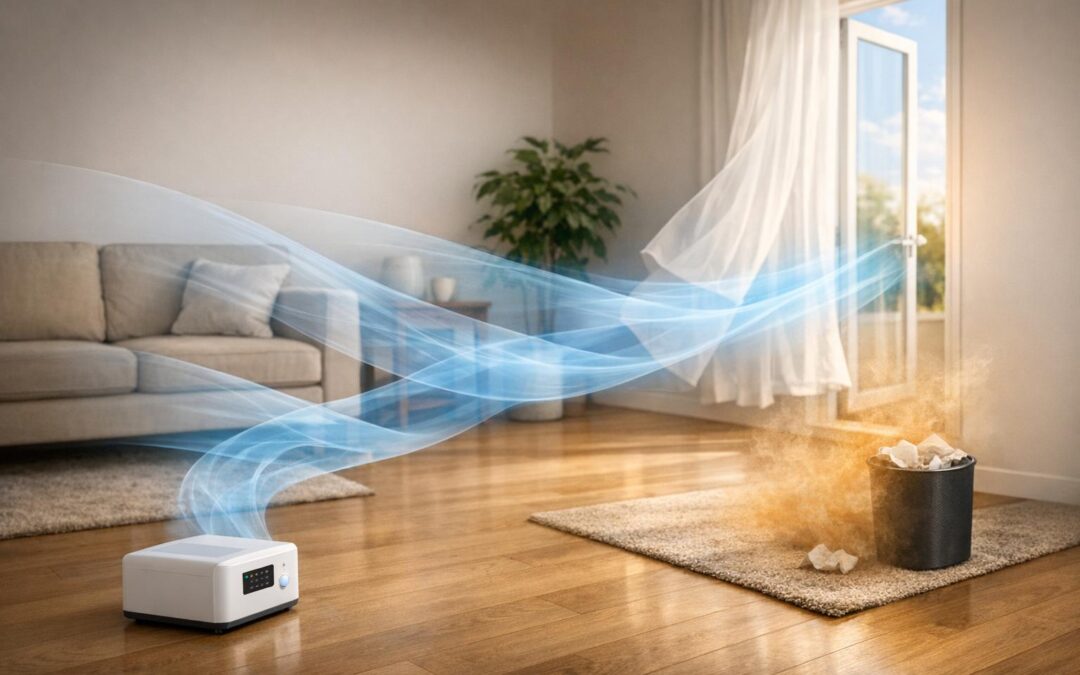
Ozone is a powerful tool for eliminating stubborn odors in apartments, such as smoke, pet smells, cooking aromas, and musty dampness. Unlike air fresheners that mask smells, ozone chemically breaks down odor-causing molecules through oxidation. It penetrates porous materials like carpets, drywall, and upholstery, addressing odors at their source.
Here’s what you need to know:
- How It Works: Ozone (O₃) releases an extra oxygen atom that reacts with odor molecules, dismantling them at a chemical level.
- Applications: Effective for odors from tobacco, pets, cooking, and mold.
- Safety: Spaces must be empty during treatment since ozone can irritate lungs and damage certain materials, unlike ozone vs hydroxyl comparisons which highlight safer alternatives for occupied spaces.
- Process: Clean the area, run an ozone generator, ventilate thoroughly, and wait at least 4–24 hours before re-entering.
- When to Call Experts: For severe cases, professionals use advanced equipment to handle embedded odors safely and effectively.
Ozone treatments are highly effective but require strict safety measures to avoid risks to health and property.
What Is Ozone and How Does It Remove Odors?
Ozone (O₃): What It Is and How It Works
Ozone, or O₃, is a molecule made up of three oxygen atoms. It’s often referred to as "activated oxygen" or "trivalent oxygen" because of its unique structure. The key to its effectiveness in removing odors lies in its instability – the third oxygen atom is loosely attached and highly reactive with other molecules.
When ozone encounters odor-causing compounds, like phenol gases from cigarette smoke or VOCs (volatile organic compounds) released during cooking, it reacts by releasing its extra oxygen atom. This process, known as oxidation, breaks apart the molecular structure of the odor-causing substances, leaving behind only regular oxygen (O₂). This means ozone doesn’t just mask odors – it chemically dismantles them.
Ozone is known as the second most powerful oxidizer globally, and it has a short half-life of about 20 minutes before it naturally breaks down. This quick degradation ensures that ozone works efficiently and then dissipates, making it an excellent choice for removing odors in spaces like apartments. Its reactive nature is the foundation for how ozone is generated and distributed, and how ozone removes odors safely, as explained below.
How Ozone Generators Produce and Distribute Ozone
Ozone generators mimic natural processes to create ozone. Most rely on high-voltage corona discharge, which splits oxygen molecules (O₂) into individual atoms that then recombine into ozone (O₃). Alternatively, some devices use UV light at a wavelength of 185nm, replicating the way sunlight produces ozone in the atmosphere.
Once created, ozone disperses as a gas, allowing it to penetrate deeply into porous materials like carpets, curtains, upholstery, drywall, and even HVAC ducts. This ability to infiltrate hidden spaces gives ozone an edge over surface-level cleaning methods like sprays and wipes. High-powered ozone generators can produce anywhere from 20,000 mg/h for a single room to over 100,000 mg/h for larger areas. For example, treating a small apartment (1,000–1,500 square feet) typically requires a generator output of about 40,000 mg/h over 4–6 hours. This effective dispersion allows ozone to neutralize odors at their source, even in hard-to-reach areas.
Ozone vs. Air Fresheners: Elimination vs. Masking
The difference between ozone and air fresheners boils down to chemistry. Air fresheners work by introducing a stronger scent that temporarily overpowers unpleasant odors. However, the original odor molecules remain in the space – they’re just masked.
Ozone takes a different approach. It reacts directly with odor molecules, breaking them apart at a chemical level so there’s nothing left to smell. This makes ozone especially effective for long-standing odors that have seeped into walls, floors, or furniture over time – situations where air fresheners or sprays fall short.
"Ozone (O₃) is a powerful oxidizer that breaks down odor-causing molecules and VOCs (volatile organic compounds) at the source." – Ozone Experts
sbb-itb-5fea4da
Ozone Generator – Why they work and how to use one
Types of Apartment Odors Ozone Can Remove
Apartment odors can range from mild and surface-level to deeply embedded smells that seem impossible to eliminate. This is where ozone treatment shines – it reaches places traditional cleaning methods can’t.
Tobacco and Smoke Odors
Cigarette and tobacco smoke release chemicals like PAHs and aldehydes, which cling to porous materials such as drywall, carpets, and upholstery. Even after repainting, smoke odors can persist if walls aren’t sealed properly. Ozone treatment works by breaking down these odor-causing compounds at their molecular level. It also penetrates hard-to-reach areas like wall cavities and HVAC systems, which are often missed during standard cleaning. For best results, clean surfaces thoroughly before using ozone to avoid odor recurrence.
Pet Odors
Pet odors come from sources like dander, fur oils, waste, and bacteria. Ozone neutralizes these organic compounds and the bacteria that contribute to unpleasant smells. Cat urine is particularly stubborn due to uric acid crystals that embed into carpets, padding, and even subfloors.
"Cat urine contains uric acid crystals that embed deep into carpet fibers, padding, and subfloors… Ozone molecules chemically react with these compounds, breaking them apart [and] neutralizing odors." – ozoneexperts.com
Because ozone is a gas, it can access areas that liquid cleaners can’t, leaving no chemical residue behind.
Cooking Odors
Cooking smells, especially from fried foods, curries, or spicy dishes, can linger in cabinets, walls, and soft surfaces over time. Ozone eliminates these odors by breaking apart the molecules responsible for the smell, rather than just masking them. For maximum effectiveness, open cabinet doors and drawers during the treatment and keep humidity levels below 45–50%.
Musty and Damp Odors
Musty smells, often found in older apartments or areas with moisture issues, are typically caused by MVOCs released by mold and mildew. Ozone neutralizes these compounds, reducing the stale, damp odor. However, it’s important to address the root cause – moisture and mold – since ozone only treats the odor itself. Removing mold is essential to prevent the smell from returning.
These examples highlight how ozone treatment can tackle even the most persistent apartment odors, making it an effective solution for a fresher living space.
Safety Guidelines for Ozone Treatment in Apartments
Ozone is a powerful tool for removing stubborn odors, but its use demands careful attention to safety. While it effectively neutralizes odors, ozone is a strong oxidizer that requires strict precautions to protect both health and property. Here’s how to use it safely in an apartment setting.
Why the Space Must Be Empty During Treatment
Ozone can irritate the lungs, even at low concentrations. Exposure might lead to symptoms like coughing, throat irritation, chest pain, or shortness of breath. For individuals with respiratory conditions such as asthma or COPD, the risks are even higher.
"Never operate an ozone machine in an occupied space. All people, pets, and plants must be removed from the apartment before the machine is turned on." – The Institute for Environmental Research and Education
To ensure safety, clear the apartment of all living beings and sensitive items before starting ozone treatment. Ozone can also react with indoor pollutants, potentially creating harmful byproducts like formaldehyde, a common issue in biological odor removal. Additionally, seal off areas such as the front door, bathroom exhaust fans, kitchen vents, and air returns with painter’s tape or towels. This prevents ozone from leaking into shared spaces or ventilation systems. Once the space is fully prepared, focus on post-treatment ventilation to ensure safe re-entry.
Ventilation and Re-Entry After Treatment
After the ozone generator shuts off, the gas lingers before naturally breaking down into oxygen (O₂). It’s critical to avoid re-entering the apartment for at least 4 to 6 hours after the machine stops running. For spaces treated heavily, some experts suggest waiting up to 24 hours.
When it’s time to re-enter, open all windows and doors to circulate fresh air throughout the apartment. You may notice a sharp, rainstorm-like scent as residual ozone dissipates. To speed up the process, use fans to enhance air circulation. For added peace of mind, consider using an ozone monitor to confirm that air levels have returned to a safe range.
Materials That Can Be Damaged by Ozone
Ozone’s strong oxidizing properties don’t just neutralize odors – they can also harm certain materials. Understanding what’s at risk can help you protect your belongings. According to the California Air Resources Board, ozone can degrade materials like rubber and elastomers and even cause some dyes or pigments to fade.
| Material Category | Items at Risk | Potential Damage |
|---|---|---|
| Elastomers | Rubber seals, gaskets, elastic bands | Cracking, brittleness, and loss of elasticity |
| Electronics | Wiring insulation, sensitive circuitry | Damage to protective coatings |
| Dyes & Pigments | Artwork, certain fabrics | Fading or color change |
Before starting treatment, remove or protect valuable items like artwork, electronics, and rubber-based products. If an item cannot be moved – such as built-in appliances – consult a restoration professional for advice on minimizing exposure. Proper ventilation after treatment is key to halting the oxidation process. The quicker you air out the space, the less exposure your belongings will have, allowing ozone to eliminate odors effectively while reducing potential damage.
How to Remove Apartment Odors with Ozone: Step by Step
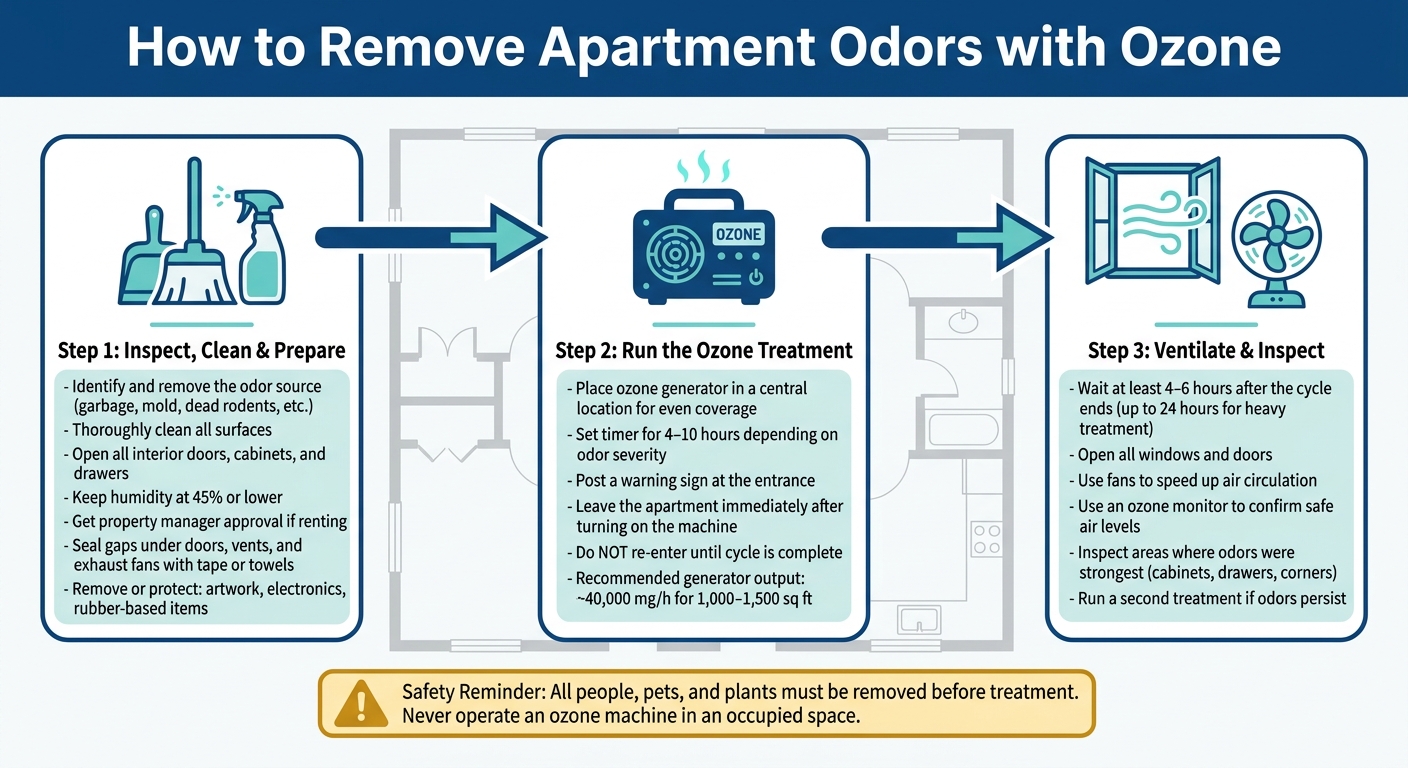
How to Use Ozone to Remove Apartment Odors: Step-by-Step Guide
Each step builds on the last, so skipping any could reduce the overall effectiveness.
Step 1: Inspect, Clean, and Prepare the Space
Before using any equipment, start by identifying and removing the source of the odor.
"If the odor source, such as garbage, mold, or dead rodents, is not removed, ozone alone may not fully eliminate these odors." – Ozonated Cleaning LLC
Thoroughly clean the area, and make sure to open all interior doors, cabinets, and drawers to ensure ozone reaches everywhere. Keep the humidity level at 45% or lower. Additionally, if you’re renting, get approval from your property manager. Ozone can seep into neighboring units through shared walls and ventilation systems. Once the space is clean and prepared, you’re ready to run the ozone generator.
Step 2: Run the Ozone Treatment
Position the ozone generator in a central location for even coverage, and set the timer for 4–10 hours, depending on how severe the odor is. Place a warning sign at the entrance to ensure no one enters during the treatment.
"Using an ozone generator in an apartment is an entirely different challenge. Apartments share ventilation systems, walls, and common areas. Ozone gas can easily seep through cracks, vents, and under doors, potentially affecting your neighbors." – Minhazul Abedin, Home Improvement Enthusiast
Turn on the machine and leave the apartment immediately. Do not return until the cycle has finished and the recommended waiting period has passed. Afterward, it’s time to ventilate the space.
Step 3: Ventilate and Check for Remaining Odors
Once the generator has completed its cycle, wait at least 4 to 6 hours before re-entering. Many experts recommend waiting up to 24 hours for added safety. Upon returning, open all windows to help clear out any lingering ozone. A sharp, sterile smell is normal and should dissipate within a few hours with proper ventilation.
After ventilating, inspect the apartment thoroughly, focusing on areas where odors were strongest, including inside cabinets and drawers. If you still detect odors, look for hidden sources you may have missed and consider running a second ozone treatment if necessary.
Why Hire a Professional for Apartment Odor Removal
Sometimes, DIY methods just don’t cut it. That’s where professional services step in, offering solutions for those stubborn, hard-to-tackle odors. While DIY ozone treatments might handle minor smells, more severe cases often demand expert intervention.
Handling Severe Odor Problems
Odors from heavy smoke, persistent pet issues, or those deeply embedded in walls and floors are beyond the capabilities of standard consumer treatments. These smells seep into porous materials like drywall, subfloors, and insulation – areas that basic ozone generators just can’t penetrate effectively.
Professional-Grade Ozone and Hydroxyl Equipment
Professionals use advanced equipment capable of generating higher ozone levels, treating spaces as large as 10,000 sq ft. By combining ozone with hydroxyl technology, these systems don’t just neutralize odors – they also eliminate bacteria, viruses, mold, and fungi with a 99.99% success rate. This approach allows professionals to adjust treatments based on the size of the apartment and the severity of the issue.
Ozonated Cleaning LLC‘s Apartment Odor Removal Services
For residents in the Chicagoland area and beyond, Ozonated Cleaning LLC offers specialized odor removal services. Their coverage includes cities like Aurora, Naperville, Elgin, Schaumburg, and Joliet, with extended service into northwestern Indiana and southeastern Wisconsin. Their treatments go beyond odor removal, providing surface disinfection, allergy reduction, and pathogen elimination – all without using chemicals or leaving harmful residues.
Here’s their pricing structure based on apartment size:
| Apartment Size | Price |
|---|---|
| 0–600 sq ft | $600 |
| 601–1,000 sq ft | $700 |
| 1,001–2,000 sq ft | $800 |
| 2,001–3,000 sq ft | $900 |
| 3,001+ sq ft | Contact for pricing |
Satisfied customers have praised the results. Jordan F. shared:
"They did more to remove some pet odors I’ve been dealing with than anything I’ve tried so far."
Most apartments are safe to re-enter within 24 hours after treatment, and in many cases, one session is all that’s needed.
Conclusion: Getting Rid of Apartment Odors with Ozone
Ozone works by breaking down the compounds that cause odors, reaching deep into areas that sprays and cleaners simply can’t. This makes it especially effective for persistent smells like smoke, pet urine, cooking odors, and musty dampness.
However, using ozone isn’t something to take lightly. In apartment settings, shared ventilation systems and thin walls can allow the gas to spread, creating potential risks. As Minhazul Abedin, a home improvement enthusiast, warns:
"The margin for error is zero. An improperly handled ozone treatment can create a health hazard for your entire building."
For odors that are deeply embedded, DIY methods might not be enough, and professional treatment becomes the safer and more effective choice.
If you decide to use ozone for home odor removal, follow strict safety measures: remove the source of the odor, clear the space of people and pets, seal any gaps, and wait at least 24 hours before re-entering. Skipping any of these steps can compromise both safety and the treatment’s success.
For stubborn odors, professional-grade ozone treatments are often the best solution. Many clients of Ozonated Cleaning LLC in the Chicagoland area have reported excellent results, highlighting the effectiveness of expert services that use advanced ozone and hydroxyl technology. (Hydroxyl generators are particularly effective for restroom odor control). When handled correctly, ozone can be a powerful tool for eliminating odors. For thorough and reliable results, professional treatments are the way to go.
FAQs
Will ozone remove odors inside walls and HVAC vents?
Ozone works well for tackling odors in HVAC ducts and systems. As the gas flows through the vents, it breaks down odor-causing particles, leaving the air fresher. When it comes to walls, ozone can only reach cavities if there’s an opening – it won’t pass through solid surfaces. For the best outcome, always deal with the source of the odor first. Ozone won’t remove physical issues like mold or moisture.
How do I know when it’s safe to go back inside after ozone treatment?
For safety, make sure everyone, including pets and plants, leaves the area during ozone treatment. Once the generator finishes its cycle, wait at least 2 hours before going back in. For larger treatments, extend this wait time to 12–24 hours. Afterward, ventilate the area by opening windows and doors for 30–60 minutes. If there’s a strong chlorine-like odor, keep ventilating. If you start coughing or feel chest tightness, leave the area immediately.
Can ozone treatment damage my furniture, electronics, or rubber items?
High ozone levels can indeed harm certain materials. For example, rubber can deteriorate over time, while delicate items such as electronics, artwork, and synthetic fabrics (like polyester, nylon, and spandex) may suffer if exposed directly. To safeguard these materials, it’s best to either remove them from the area or shield them with plastic sheeting before ozone treatment. If you’re looking for a reliable solution for odor removal, Ozonated Cleaning LLC provides professional services utilizing ozone and hydroxyl technology.
Recent Comments