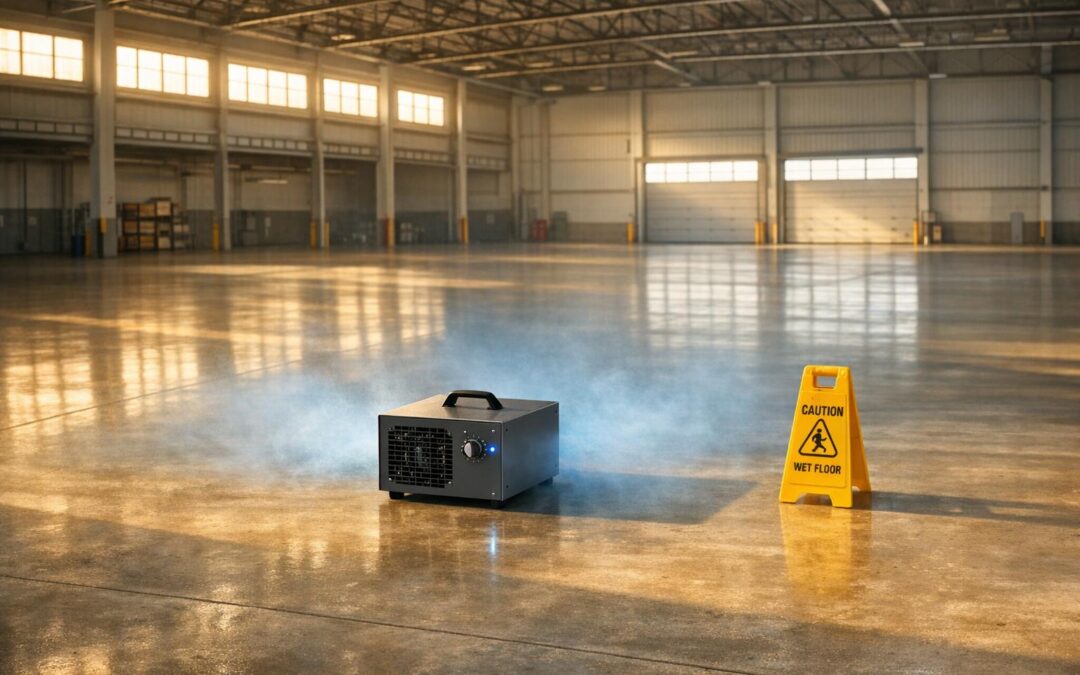
Ozone treatments are an effective way to eliminate tough odors in large spaces like warehouses, offices, or homes impacted by smoke, mold, or chemical smells. Unlike air fresheners that mask odors, ozone works by breaking down odor-causing molecules through oxidation. It can penetrate walls, ceilings, HVAC systems, and porous materials, making it ideal for addressing deeply embedded smells. Once ozone completes its job, it naturally reverts to oxygen, leaving behind no residue.
Key Points:
- How It Works: Ozone (O₃) reacts with odor molecules, dismantling them at a molecular level.
- What It Targets: Tackles odors from smoke, mold, pets, cooking, and industrial chemicals.
- Treatment Process: Requires space evacuation, proper cleaning, and controlled ozone generation.
- Safety: High ozone levels can be harmful; thorough ventilation is necessary after treatment.
- When to Call Professionals: For severe odors or complex spaces, experts can ensure effective and safe treatments.
Ozone treatments are a powerful solution, but preparation, safety, and proper equipment are essential for success.
The Science Behind Ozone and Odor Neutralization
What Is Ozone and How Does It Work?
Ozone (O₃) is a molecule made up of three oxygen atoms, unlike the oxygen we breathe (O₂), which has only two. This extra oxygen atom is loosely attached, making the molecule unstable but highly reactive. Thanks to its gaseous state, ozone can penetrate hard-to-reach areas like HVAC ducts, carpet fibers, wall cavities, and upholstery, making it effective in spaces where odors tend to linger.
How Ozone Breaks Down Odors at the Molecular Level
When ozone comes into contact with odor-causing molecules, its extra oxygen atom detaches and reacts with the pollutants. This process, called oxidation, breaks the molecules down into simpler, odorless substances such as carbon dioxide (CO₂) and water vapor (H₂O).
"Ozone doesn’t just mask or cover up a smell; it chemically dismantles the source of the smell at a molecular level." – Powerscale
This ability to chemically alter and neutralize odor molecules explains why ozone is so effective in tackling a wide variety of smells, especially in large spaces.
Take hydrogen sulfide (H₂S), for example – the compound responsible for the rotten egg smell. It’s detectable by the human nose at concentrations as low as 0.01 ppm. When ozone reacts with H₂S, it transforms the compound into sulfur dioxide (SO₂), which has an odor threshold 1,000 times higher than H₂S. This means the smell becomes virtually undetectable. Once the reaction concludes, any leftover ozone naturally reverts to breathable oxygen, leaving no harmful residue behind.
This oxidation process is the key to ozone’s effectiveness in neutralizing complex odor compounds.
Common Odor Sources in Large Spaces
Large spaces often harbor odors from a variety of sources, many of which seep into surfaces and linger over time. The table below lists some common odor-causing compounds and how sensitive the human nose is to each:
| Compound | Smell | Odor Threshold (ppm) |
|---|---|---|
| Methyl mercaptan | Decayed cabbage, garlic | 0.002 |
| Hydrogen sulfide (H₂S) | Rotten egg | 0.01 |
| Acetaldehyde | Fruity | 0.05 |
| Formaldehyde | Acrid, suffocating | 0.80 |
| Toluene | Sweet, pungent | 2.90 |
Ozone doesn’t stop at these compounds. It’s highly effective against odors from tobacco smoke, mold, mildew, pet-related smells, cooking odors like fish and garlic, and industrial volatile organic compounds. Its ability to neutralize both airborne odors and those embedded in porous materials makes it an invaluable tool for maintaining fresh and odor-free environments in large spaces.
sbb-itb-5fea4da
Ozone Generator – Why they work and how to use one
Planning an Ozone Treatment for Large Spaces
Proper preparation is key when using ozone to eliminate odors in large areas.
Measuring Space Size and Odor Severity
Start by calculating the space’s volume and assessing the severity of the odor. These factors determine how much ozone you’ll need and the concentration levels required.
Professionals often rely on the IICRC Odor Intensity Scale, which ranks odors from Level 0 (no detectable odor) to Level 4 (severe, deeply embedded odor that may require structural repairs). For example, a mildly musty warehouse might fall at Level 2, while fire-damaged spaces often rank at Level 4. This classification helps determine both the duration of the treatment and the ozone concentration needed.
| Odor Intensity Level | Description | Typical Requirement |
|---|---|---|
| Level 0 | No detectable odor | No intervention |
| Level 1–3 | Light to moderate penetration | Light ozone treatment |
| Level 4 | Severe, penetrating odor | Ozone shock treatment and/or structural intervention |
For ozone shock treatments, concentrations typically range from 1 to 10 ppm, which is far above OSHA‘s exposure limit of 0.1 ppm. Because of this, the area must be completely evacuated before treatment begins. Next, pinpointing the sources of the odor is crucial for effective results.
Finding Odor Sources and Problem Materials
In large spaces, odors often originate from porous materials like drywall, insulation, upholstery, or carpet padding. They can also spread through HVAC systems, carrying contaminated air throughout the building.
To address the problem, trace the odor back to its source – whether it’s a structural surface, HVAC duct, or hidden area like a crawlspace or attic. Moisture surveys are particularly helpful for identifying issues in basements or crawlspaces, as water damage is a common cause of lingering organic smells. Importantly, removing the odor source is a must before treatment begins. If mold, charred debris, or sewage remains, the odor will likely return within days.
Additionally, some materials – like rubber seals, certain metals, natural fibers, and electrical components – can degrade with high ozone exposure. These items should be removed or protected before starting the treatment.
Once you’ve assessed the space and identified the contaminants, you can choose equipment that matches the job’s requirements.
Choosing the Right Ozone Equipment
Selecting the right ozone generator depends on the size of the space and the severity of the odor. The two main types of generators are corona discharge and UV-based units.
- Corona discharge generators: These use high-voltage electrical discharge to produce large amounts of ozone, making them ideal for treating large spaces.
- UV-based generators: These rely on specific light wavelengths to create ozone. They are less powerful and better suited for smaller spaces or routine odor control.
The recommended ozone concentration varies depending on the odor type:
| Target Objective | Recommended Concentration | Typical Application |
|---|---|---|
| Light odor control | 2–3 mg/m³ | Office spaces, mild food smells |
| Standard disinfection | 4–6 mg/m³ | Post-water damage, pet odors |
| Heavy remediation | 8–10 mg/m³ | Fire/smoke damage, mold issues |
For large buildings, a single portable unit in the center of the room often won’t cut it. Spaces with extensive ductwork may require duct-mounted ozone systems or units integrated into the air handling unit (AHU) to ensure even distribution throughout all zones. Ozone shock treatments typically last 2 to 6 hours, followed by thorough ventilation to ensure the area is safe for re-entry.
Step-by-Step Ozone Odor Treatment Guide
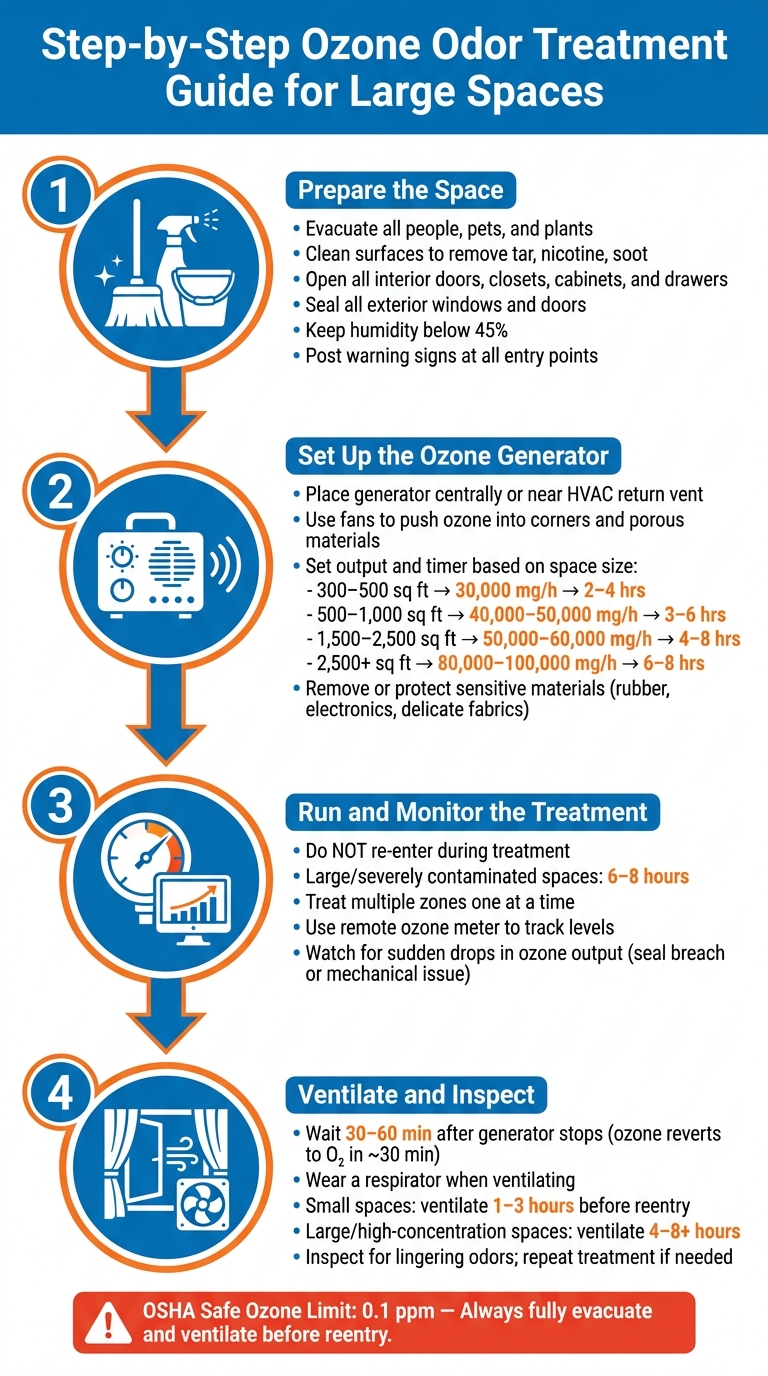
Step-by-Step Ozone Odor Treatment Guide for Large Spaces
Once you’ve got the right equipment and identified the odor sources, it’s time to take action. Each step is crucial, and skipping any of them could undermine the entire process.
Preparing the Space Before Treatment
Proper home odor removal preparation is key to making the treatment effective. Start by evacuating the area completely – ozone can irritate the respiratory system, and even short exposure at treatment levels can be harmful.
Next, clean all surfaces thoroughly to remove sticky residues like tar, nicotine, or soot, which ozone alone can’t eliminate. As Dennis Reed from BreatheBetterAir.org explains:
"Ozone works best after you clean the source."
Once cleaning is done, open all interior doors, closets, cabinets, and drawers. This allows the ozone to reach hidden spaces where odors tend to linger. Seal all exterior windows and doors tightly to maintain the necessary ozone levels inside. If the area is damp, ensure humidity stays below 45%, as levels above 50% reduce ozone’s effectiveness. Be sure to post clear warning signs at all entry points to prevent accidental reentry during the treatment.
After the space is prepped, the next step is to position the ozone generator correctly for maximum coverage.
Placing and Setting Up the Ozone Generator
Position the ozone generator in a central location to ensure the gas spreads evenly. Proper placement is essential to allow ozone to penetrate all areas, including HVAC ducts. For whole-building treatments, placing the generator near the HVAC return vent ensures the system distributes ozone throughout the building.
To push ozone into corners and porous materials, use the generator’s fan or an additional floor fan. Adjust the output level and timer based on the size of the space and the severity of the odor. Here’s a quick guide:
| Space Size | Recommended Output | Treatment Time |
|---|---|---|
| 300–500 sq ft | 30,000 mg/h | 2–4 hours |
| 500–1,000 sq ft | 40,000–50,000 mg/h | 3–6 hours |
| 1,500–2,500 sq ft | 50,000–60,000 mg/h | 4–8 hours |
| 2,500+ sq ft | 80,000–100,000 mg/h | 6–8 hours |
Before starting the treatment, double-check that the area is completely evacuated and that sensitive materials – like natural rubber, delicate electronics, or certain fabrics – are either removed or protected .
Running and Monitoring the Treatment
Once the generator is set up, the focus shifts to monitoring the process and maintaining consistent ozone levels. No one should re-enter the area during the treatment. For larger or more severely contaminated spaces, treatments typically last between 6 and 8 hours. If the building has multiple zones or floors, treat them one at a time rather than trying to cover everything at once with a single generator.
If possible, use remote monitoring tools or an external ozone meter to track levels. A sudden drop in ozone output could indicate a mechanical issue or a problem with the room’s seal, allowing ozone to escape.
Ventilating and Inspecting After Treatment
When the generator stops, ozone naturally breaks down into oxygen within about 30 minutes. After this, wait an additional 30–60 minutes before ventilating the area. Be sure to wear a respirator during this step.
For smaller spaces, 1 to 3 hours of ventilation is typically enough before reentry. Larger areas or those treated with higher ozone concentrations may need 4 to 8 hours or more of airing out. Once ventilation is complete, inspect the space carefully. If odors persist, you may need to repeat the treatment, particularly in areas with deeply embedded contamination in structural materials.
Getting the Most Out of Ozone Treatment in Large Spaces
Taking extra steps can make ozone treatment more effective in large areas with significant contamination.
Distributing Ozone Evenly Throughout the Space
Ozone is a reactive gas that naturally disperses to bond with odor-causing compounds, but in larger spaces, it often needs a little help to reach every corner. Commercial-grade ozone generators typically include built-in fans to aid in even distribution. To further enhance circulation, you can place floor fans in areas like corners, closets, and dead ends. Another important consideration is ensuring the space is properly sealed – any gaps in window seals or exterior doors can let ozone escape before reaching the necessary concentration for effective treatment.
These steps help ensure ozone reaches deeply embedded odors, especially in spaces resistant to a single treatment.
Dealing With Deep-Set and Persistent Odors
In cases where the source of the odor is heavily saturated, ozone treatment alone may not be enough. Porous materials like drywall, carpet padding, and upholstery often require additional intervention.
"Ozone can move through the air and reach spaces that are harder to treat by hand. That makes it useful in cases where odors have spread through multiple materials or linger after a major cleanup." – Affinity Bio Solutions
For materials like carpets or padding that are deeply saturated, removal and replacement may be necessary to fully eliminate odors. In some cases, persistent odors may require the physical removal of contaminated materials or multiple ozone treatments.
When repeated ozone treatments don’t fully resolve the issue, incorporating hydroxyl technology can provide a safe, continuous solution.
Using Hydroxyl Technology Alongside Ozone
While ozone is highly effective for tackling odors, its major drawback is that it requires the space to be unoccupied during treatment due to its strong oxidizing properties. hydroxyl systems are safe to use in occupied spaces because they use UV light and water vapor to neutralize odors and pathogens. Professionals often combine the two approaches – using ozone for deep, intensive treatments and hydroxyl generators for ongoing maintenance in spaces where people are present.
For example, Ozonated Cleaning employs both technologies in its professional odor removal services. This layered approach ensures rapid odor breakdown with ozone while maintaining air quality over time with hydroxyl technology, making it especially effective for stubborn or widespread contamination.
Safety and Best Practices for Large-Scale Ozone Use
Using ozone in large spaces demands strict adherence to safety measures. Skipping these steps can harm people, animals, and the overall air quality.
Health and Safety During Ozone Treatment
Before starting ozone treatment, ensure the area is cleared of all people, pets, and plants. Birds, in particular, are highly sensitive and must be removed well in advance. The Occupational Safety and Health Administration (OSHA) has set 0.1 ppm as the safe exposure limit for ozone. Exceeding this can be harmful, and at higher concentrations, ozone may react with indoor chemicals to form toxic byproducts like formaldehyde. This highlights the importance of proper dosing – using excessive ozone is not a solution.
"Ozone above 0.1 ppm is hazardous to humans, pets, and plants. Always vacate the treated area and ventilate thoroughly for at least 2 hours after treatment." – Tool Croze
Ventilation is critical after treatment. For moderate applications, such as in office spaces, 2–3 hours of ventilation is usually sufficient. However, more intense treatments – like those for fire damage – may require up to 8 hours. The table below provides guidance on ozone output and ventilation times based on the type of space and odor severity:
| Scenario | Volume (ft³) | Odor Level | Recommended Output (mg/hr) | Ventilation Time |
|---|---|---|---|---|
| Office Space | 4,000 | Moderate | 3,000 | 2–3 hours |
| Restaurant Kitchen | 3,200 | Heavy | 8,000 | 3 hours |
| Basement | 6,400 | Heavy | 12,000 | 4 hours |
| Fire Restoration | 15,000 | Shock | 30,000+ | 8 hours |
Once safety measures are in place, it’s equally important to meet regulatory standards and maintain equipment for effective ozone use.
Regulatory Compliance and Equipment Upkeep
Beyond safety, staying compliant with regulations and keeping equipment in good condition are essential for achieving consistent results in large spaces.
Always follow the manufacturer’s instructions to ensure equipment operates as expected. Environmental factors, such as humidity, can significantly affect ozone output. For instance, corona discharge generators may lose 40–70% of their output when indoor humidity ranges between 40% and 70%. On the other hand, UV-based generators tend to maintain steady performance, making them a better option when conditions are unpredictable.
Check equipment ratings thoroughly. The International Ozone Association (IOA) recommends using a NIST-accepted standard for milligrams-per-hour (mg/hr) output ratings, as this is the most reliable way to compare performance across brands. Avoid relying solely on square footage estimates when selecting equipment.
For larger jobs, using multiple smaller units instead of a single large system can enhance reliability. If one unit malfunctions, the others can continue operating, minimizing downtime.
When to Call a Professional Service
Some situations require expertise beyond what in-house treatments can provide. Complex challenges like biological odor removal, fire restoration, or severe biohazard contamination involve factors such as structural penetration and chemical interactions that demand professional handling.
Ozonated Cleaning specializes in tackling these challenges in the Chicagoland area. They use professional ozone and hydroxyl technology for residential, commercial, vehicle, and marine spaces. Hiring a trained provider ensures the treatment matches the specific needs of the space, ventilation is handled correctly, and the results are verified for effectiveness rather than assumed.
Conclusion: Using Ozone to Remove Odors in Large Spaces
Ozone works by oxidizing and breaking down the molecules responsible for odors. As one of the strongest oxidizers available, it can reach deep into porous surfaces like walls, fabrics, and even hidden corners – places that standard filters simply can’t address. After about 20 minutes of treatment, ozone naturally converts back into oxygen, leaving no residue behind. For particularly stubborn odors, professional services are often the best choice, as they use specialized equipment and follow strict safety protocols.
Effective odor removal starts with proper preparation. This includes eliminating the source of the odor, managing humidity levels, and ensuring interior spaces like cabinets and closets are open to allow the ozone to circulate fully.
While DIY ozone treatments can handle minor odors, more persistent or deeply embedded smells often require professional intervention. Experts can calibrate equipment precisely and ensure the process is both safe and effective.
"Ozonated Cleaning did a great job – they completely eliminated the horrible smell in my unit caused by the previous tenant." – Ray L.
Ozonated Cleaning offers services throughout the Chicagoland area, using a combination of ozone and hydroxyl technology to customize treatments for homes, businesses, and even vehicles. Professional treatments provide a reliable way to achieve a clean, odor-free environment.
FAQs
Will ozone remove odors trapped inside walls and HVAC ducts?
Ozone is effective at removing odors embedded in walls and HVAC ducts. As a gas, it disperses throughout the space, penetrating materials such as fabrics, carpets, walls, and air ducts. It works by breaking down odor-causing molecules through a process called oxidation. However, treatments must be conducted in unoccupied and sealed areas, with the HVAC system turned off to stop ozone from spreading to other parts of the building.
How long should I wait before re-entering after an ozone treatment?
It’s best to wait at least two hours after an ozone generator has completed its cycle before going back into the space. Ozone naturally dissipates over time, with a half-life of about 30 minutes. For larger spaces or more intensive treatments, waiting 12 to 24 hours might be a better option. For shorter treatments, re-entry might be possible after 30 to 60 minutes, but sticking to the two-hour guideline is the safest approach.
What items can ozone damage during a whole-building treatment?
Ozone has the potential to damage specific materials during whole-building treatments. Items like paint, chemicals, and other delicate surfaces can be affected. To avoid any issues, it’s crucial to evaluate the space and the materials involved before starting the process.
Recent Comments