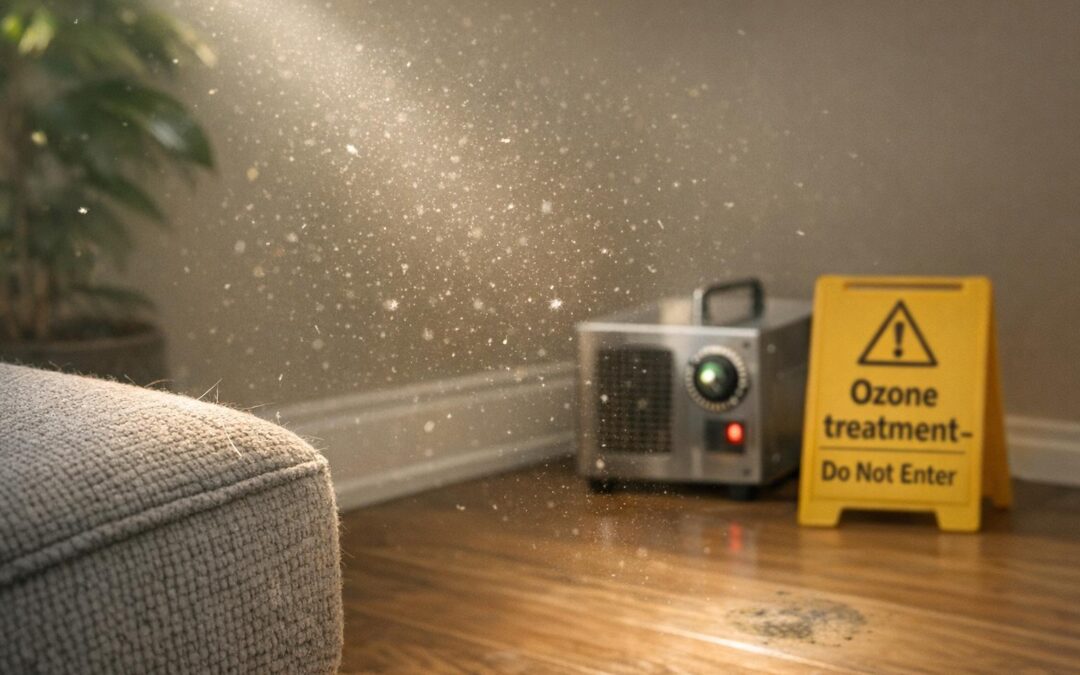
Ozone disinfection is a cleaning method that targets allergens like dust mites, mold, and pet dander in your home. By using ozone gas, it oxidizes and breaks down these contaminants at a molecular level, offering a deeper clean compared to traditional methods. However, it has limitations, as it struggles to penetrate porous materials and doesn’t remove physical particles like dust or pollen.
Here’s what you need to know:
- Common allergens: Dust, mold, pet dander, and pollen can cause respiratory issues like asthma and allergies.
- How it works: Ozone reacts with organic materials, neutralizing allergens and odors. It leaves no chemical residue but requires high concentrations to be effective.
- Safety concerns: Ozone levels needed for disinfection exceed public health limits, so spaces must be unoccupied during treatment.
- Usage tips: Professional services are recommended for proper application, with costs typically ranging from $600 to $900, depending on home size.
While ozone disinfection can reduce allergens, it’s most effective when combined with other measures like filtration, ventilation, and addressing moisture issues.
What Ozone Can and Cannot Do
sbb-itb-5fea4da
Common Indoor Allergens and Their Effects
Understanding how indoor allergens behave helps explain why specific approaches, like ozone disinfection, are so important for homes where allergies are a concern.
Dust, Pollen, and Mold
Dust and pollen are two of the most common indoor allergens. These tiny particles don’t just float around – they settle on walls, floors, furniture, and other surfaces in your home. What’s worse? Everyday activities like vacuuming or even walking can stir them back into the air.
Mold, on the other hand, presents a different kind of problem. Unlike dust, mold tends to burrow into porous materials like ceiling tiles or duct linings, making it much harder to remove through room-specific cleaning strategies. According to the U.S. Environmental Protection Agency:
"Even at high concentrations, ozone may have no effect on biological contaminants embedded in porous material such as duct lining or ceiling tiles".
This means mold can linger in hidden areas, even after cleaning, leaving behind not only allergens but also that telltale musty smell. These stubborn allergens create an ongoing challenge with serious health implications.
Health Problems from Long-Term Allergen Exposure
Living with these allergens can lead to more than just minor discomfort. Long-term exposure often results in chronic respiratory problems like coughing, throat irritation, and shortness of breath. Over time, these allergens can aggravate conditions such as asthma and weaken the body’s defenses against respiratory infections. For some, the damage can be even more severe, potentially causing permanent lung issues and increasing mortality risks, especially for those with pre-existing health conditions.
Children, older adults, and individuals with respiratory illnesses are especially vulnerable to the harmful effects of poor indoor air quality. Your home should be a safe haven – not a source of health risks. Understanding how ozone cleaning works can help you decide if it’s the right solution for your family.
How Ozone Disinfection Eliminates Allergens
The Oxidation Process
Ozone (O₃) is made up of three oxygen atoms, with the third atom being the key to its reactive nature. This extra oxygen atom can detach and bond with other molecules, changing their chemical structure. The US EPA explains:
"The third oxygen atom can detach from the ozone molecule, and re-attach to molecules of other substances, thereby altering their chemical composition."
This process, called oxidation, allows ozone to break down organic materials like bacteria and odor-causing compounds. As a gas, ozone has the advantage of reaching areas that liquid cleaners might miss, such as fabrics, small crevices, and ventilation systems. Once the oxidation process is complete, ozone naturally converts back into oxygen (O₂), leaving no chemical residue behind—a key factor when comparing ozone vs chemicals for allergy relief.
However, ozone’s effectiveness has its limits. The US EPA points out that ozone struggles to penetrate porous materials like ceiling tiles, duct linings, drywall, or upholstery. This limitation prevents it from reaching allergens deeply embedded in these surfaces. These factors influence how ozone reduces allergens indoors and interacts with different contaminants.
Ozone Performance Against Different Allergens
Ozone’s reactivity gives it the ability to chemically alter contaminants, but its success depends on the type and concentration of allergens. The US EPA highlights:
"Available scientific evidence shows that at concentrations that do not exceed public health standards, ozone has little potential to remove indoor air contaminants."
For ozone to effectively disinfect, concentrations must be 5 to 10 times higher than what public health regulations allow. Specifically, effective levels range from 0.50 to 0.80 ppm, but these exceed both the FDA‘s indoor medical device limit of 0.05 ppm and OSHA‘s workplace exposure limit of 0.10 ppm for an eight-hour period.
While ozone can chemically alter some contaminants, it does not remove the physical particles that are the primary triggers for allergic reactions.
Why Ozone Disinfection Works for Allergy Sufferers
Chemical-Free and Environmentally Safe
Ozone treatment offers a natural alternative to chemical disinfectants like bleach and chlorine. Instead of leaving behind potentially irritating residues, ozone relies on an oxidation process that breaks down contaminants without adding synthetic chemicals to your environment. This makes it a cleaner option for those sensitive to chemical residues, helping to reduce secondary allergic reactions and indoor air pollution.
Longer-Lasting Results
Ozone doesn’t just cover up odors or allergens – it eliminates them at their source. By breaking down allergens and microorganisms like mold spores and bacteria at the molecular level, utilizing a process that effectively eliminates bacteria and viruses ozone provides a deeper level of disinfection. This process helps reduce the overall allergen load in your home. However, it’s important to use ozone treatment alongside other measures, such as fixing leaks and using high-efficiency particle filters, for the best results.
Ozone vs. Chemical Cleaning Methods
| Feature | Ozone Disinfection | Chemical Cleaning Methods |
|---|---|---|
| Mechanism | Uses natural oxidation to break molecules | Relies on synthetic chemical reactions |
| Residue Levels | Leaves no residue, reverts to oxygen | Often leaves behind chemical residues |
| Allergen Impact | Destroys allergens at the molecular level | May only mask odors or partially remove them |
| Environmental Impact | Minimal; eco-friendly | Can lead to chemical runoff and indoor pollution |
| Cost Structure | Requires one-time equipment purchase | Involves ongoing costs for cleaning supplies |
How to Use Ozone Treatment Safely at Home
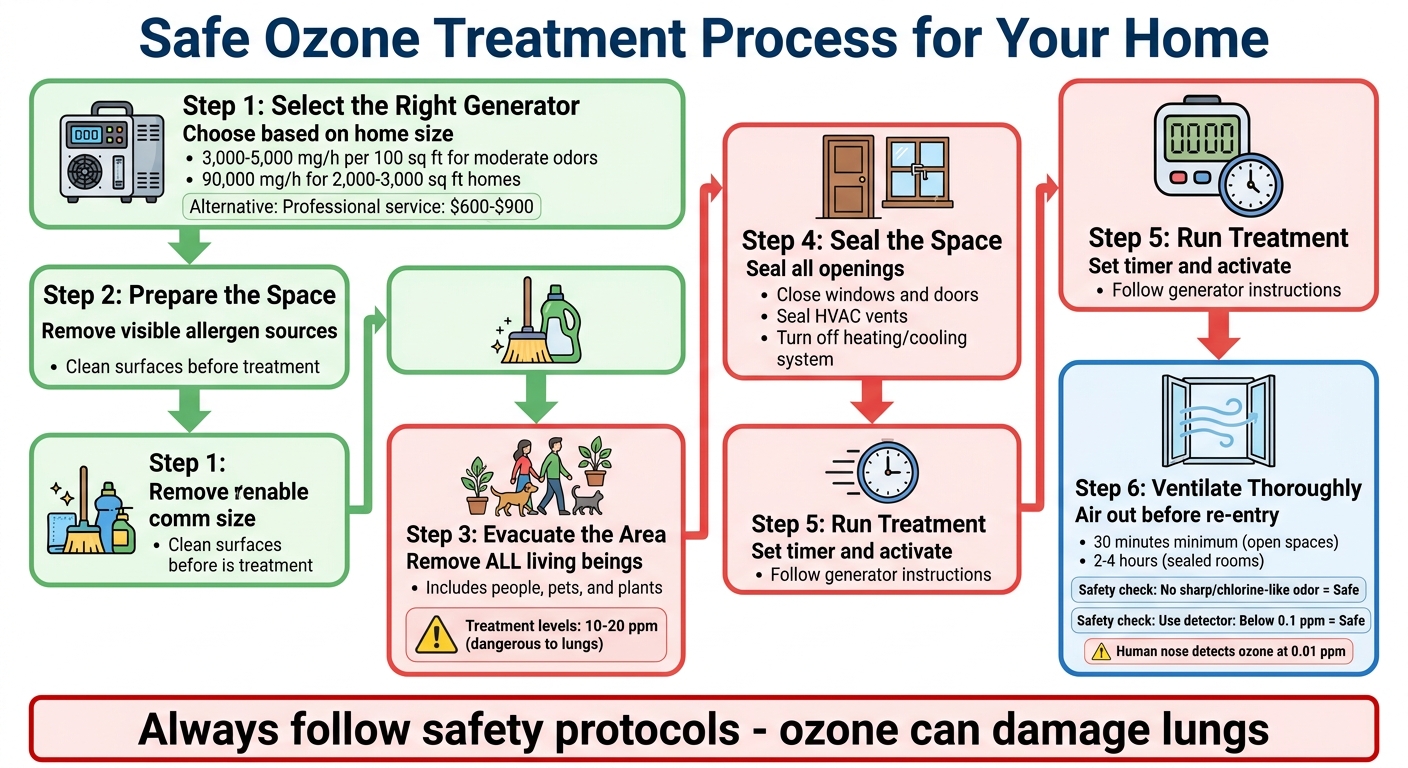
Safe Ozone Treatment Process for Allergy-Prone Homes
Selecting an Ozone Generator for Your Home
When choosing an ozone generator, consider the size of your home. For tackling moderate odors and allergens, aim for 3,000–5,000 mg/h of ozone output per 100 square feet. For larger homes, such as those between 2,000 and 3,000 square feet, you’ll need a generator capable of producing around 90,000 mg/h. If buying equipment feels overwhelming, many homeowners opt to hire professionals. For instance, Ozonated Cleaning offers home odor removal services priced between $600 and $900, depending on the size of the property. This ensures that the equipment is properly sized, and safety protocols are followed. Once you’ve secured the right generator, you’re ready to safely treat your home.
Step-by-Step Treatment Process
After selecting your generator, follow these steps for a safe and effective treatment:
- Prepare the space: Start by removing any visible sources of allergens. (Consult an allergy-free indoor checklist for thorough preparation.)
- Evacuate the area: Make sure the treatment zone is completely unoccupied – this includes people, pets, and even plants.
- Seal the area: Shut all windows and doors, seal HVAC vents, and turn off your heating or cooling system to prevent ozone from spreading to other parts of the house.
- Set the timer: Adjust the generator’s timer based on the treatment requirements.
Once the ozone cycle ends, ventilate the area thoroughly. Keep windows open for at least 30 minutes (or 2–4 hours for sealed rooms) until ozone levels are safe for re-entry.
Safety Guidelines During Treatment
Ozone is highly effective at neutralizing allergens, but it must be used cautiously to avoid health risks. Always operate ozone generators in spaces that are completely unoccupied. The concentrations needed for treatment – ranging from 10 to 20 ppm – are dangerous for living beings. As Powerscale explains:
"Ozone is powerful because it can oxidize organic material. Sadly, your lungs are composed of organic material".
To ensure safety after treatment, rely on your sense of smell. If you notice a sharp, chlorine-like or "electric" odor, ozone levels are still too high for safe occupancy. The human nose can detect ozone at concentrations as low as 0.01 ppm. For more precise monitoring, consider investing in a portable single-gas detector. These devices can confirm whether ozone levels have dropped below 0.1 ppm, ensuring the space is safe to re-enter.
Conclusion
Ozone disinfection offers a practical approach for allergy-prone households. By using high-concentration ozone, it targets and oxidizes biological contaminants like mold and bacteria at their source, contributing to better indoor air quality. However, the US EPA highlights an important limitation:
"Ozone concentrations would have to be 5 to 10 times higher than public health standards allow before the ozone could decontaminate the air sufficiently to prevent survival and regeneration of the organisms once the ozone is removed".
Because such concentrations are unsafe for occupied spaces, ozone treatments should only be handled by professionals.
While ozone effectively neutralizes biological allergens that can cause respiratory problems, it doesn’t remove physical particles like dust or pollen. For long-term benefits, ozone treatment works best when paired with source control measures – such as repairing leaks, removing visible mold, and ensuring proper ventilation. This is why professional application is so important.
For those in the Chicagoland area, Ozonated Cleaning LLC offers expert ozone disinfection services for residential properties. Treatments typically range from $600 to $900, with skilled technicians using calibrated equipment to disinfect unoccupied spaces effectively while protecting household materials.
Professional services not only ensure thorough treatment but also eliminate the risks associated with DIY methods. Ozone can dull your sense of smell, making it difficult to judge when a space is safe to re-enter.
If allergens persist despite regular cleaning, professional ozone treatment can be a chemical-free addition to a allergy-free home management plan. By combining ozone treatment with improved filtration, adequate ventilation, and consistent source control, you can create a healthier, more comfortable home.
FAQs
Will ozone treatment help if my allergies are triggered by dust and pollen?
Ozone treatment doesn’t address dust or pollen – two common culprits behind allergies. On top of that, ozone itself can be harmful to health, making it an unreliable option for tackling allergy issues caused by these particles.
How long should I wait before re-entering my home after ozone treatment?
You should wait at least 24 hours before going back into your home after an ozone treatment. This waiting period gives the ozone enough time to break down and return to safe levels, ensuring the environment is safe for you to occupy.
Can ozone treatment damage furniture, fabrics, or electronics?
Ozone treatment, if not managed properly, can cause damage to furniture, fabrics, and electronics. Since ozone is a highly reactive gas, it has the potential to break down certain materials and harm delicate items. Applying it with care is crucial to minimize these risks.
Recent Comments