
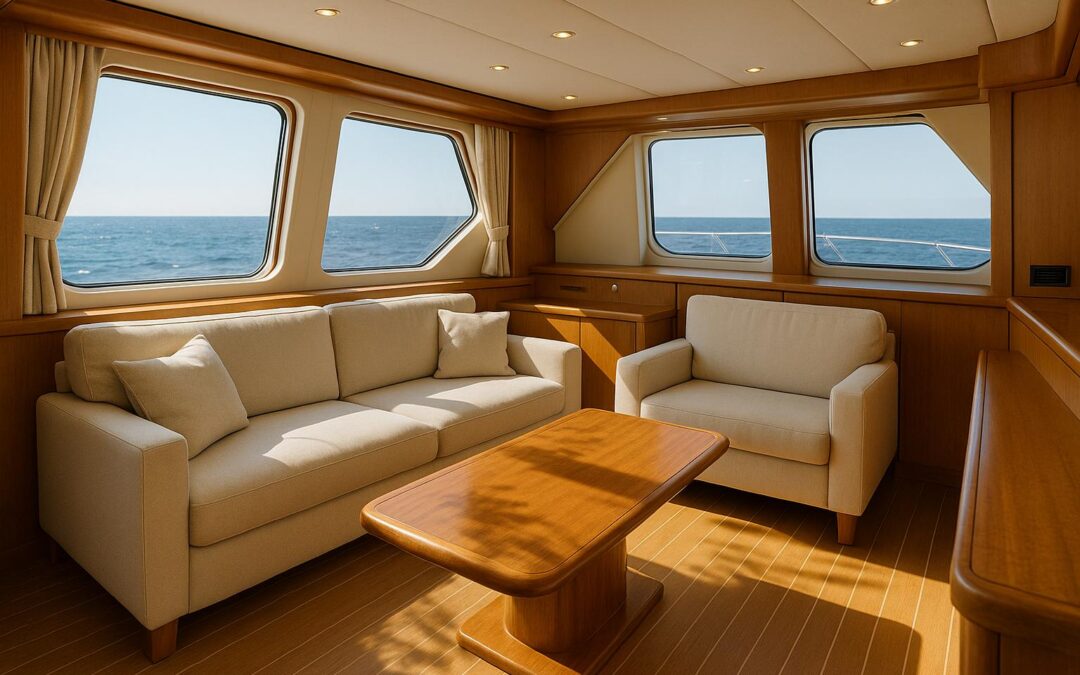
Ozone treatment offers a highly effective way to clean and purify air in boats and yachts, especially in moisture-prone, enclosed spaces where mold, odors, and contaminants thrive. By converting oxygen into ozone, this method neutralizes bacteria, viruses, mold, and allergens at a molecular level. It’s chemical-free, leaves no residue, and works faster than traditional cleaning methods like chlorine. Key benefits include:
- Odor elimination: Removes persistent smells from mold, fuel, smoke, and cooking.
- Mold prevention: Kills spores and reduces future growth risks.
- Healthier air: Removes up to 99% of pathogens and allergens.
- Eco-friendly: Breaks down into oxygen without leaving harmful by-products.
While ozone treatment is effective, it requires proper handling and safety precautions during use. Professional services are recommended for thorough results, especially for hard-to-reach areas like air ducts and deep fabrics.
How Ozone Eliminates Odors and Contaminants
The Science of Ozone Purification
Ozone’s effectiveness in marine environments comes down to its powerful oxidizing properties. At its core, ozone is an unstable form of oxygen, making it highly reactive and capable of breaking down odor-causing molecules. Ozone generators create this gas by applying electrical pulses, allowing ozone to actively seek out and neutralize these molecules. As David Hart, Founder and CEO of RamAir International, explains:
"Ozone reacts with odor molecules by transferring the ‘extra’ oxygen atom of the ozone molecule to the odor molecule, changing its composition so it no longer has the same chemical makeup. This chemical reaction is called oxidation."
Through oxidation, compounds responsible for unpleasant odors are permanently altered, effectively eliminating the smell. Ozone’s gaseous nature also enables it to penetrate deeply into surfaces and hidden spaces, making it ideal for marine applications.
How Ozone Works on Marine Upholstery and Air Systems
One of ozone’s most practical benefits is its ability to reach places standard cleaning methods simply can’t. In marine upholstery, ozone seeps into fabric fibers, neutralizing odors trapped deep within cushions and seating. It also circulates through ventilation systems, targeting confined areas like air ducts, behind panels, and inside wall cavities – spots where mold and bacteria often thrive.
Beyond upholstery and air systems, ozone plays a critical role in maintaining clean waterlines by preventing biofilm growth. It also eliminates mold, bacteria, viruses, and even pests, making it a versatile solution for marine environments. For boat owners concerned about COVID-19, ozone offers an added layer of protection by neutralizing virus hosts and reducing the risk of surface transmission.
Ozone vs Traditional Cleaning Methods
Ozone stands out when compared to conventional cleaning techniques, thanks to its unique chemical properties and ability to penetrate hard-to-reach areas. Studies reveal that ozonated water works 3,000 times faster than chlorine and is 50 times more effective. To put it simply, 1 ppm of ozonated water matches the oxidizing power of 50 ppm of chlorine-based disinfectants.
| Method | Pros | Cons |
|---|---|---|
| Ozone Treatment | Reaches deep fabrics and air systems; leaves no residues; permanently eliminates odors; works 3,000× faster than chlorine | Requires evacuation during treatment; needs specialized equipment; may leave a short-term ozone smell |
| Chemical Cleaners | Easy to apply; provides visible cleaning action | Leaves residues; cannot access hidden areas; may mask odors instead of removing them; potential health risks |
| Manual Cleaning | Offers full control; cost-effective for surface cleaning; no special tools needed | Time-consuming; limited ability to penetrate deep fabrics or air systems; less effective on embedded odors |
Ozone’s advantages have been recognized by organizations like the Woods Hole Oceanographic Institution. In 1996, they adopted ozone-based Water Quality Assurance systems for treating water in ship holding tanks. These systems were installed on research vessels such as the US Navy’s Knorr, Atlantis, Roger Revelle, and Melville, as well as more recent vessels like the R/V Neil Armstrong (commissioned in April 2014) and R/V Sally Ride.
K. D. Hughes from Delta Marine Environmental Technologies highlights its importance:
"Ozone can provide pure and safe potable water that is critical to vessel safety as pure water has an immediate impact on the health and morale of both crew and passengers."
Traditional cleaning methods often fall short in marine environments, where moisture and confined spaces present unique challenges. Chemical cleaners may leave behind residues and contribute to indoor air pollution, while manual cleaning struggles to address hidden contamination. Ozone, on the other hand, circulates as a gas, reaching every corner before naturally breaking down into oxygen, making it a practical and effective solution for boats and yachts.
Benefits of Ozone Treatment for Marine Vessels
Odor Removal and Mold Prevention
Marine environments often deal with stubborn odors and mold issues due to constant moisture, limited ventilation, and the presence of organic materials like food and fuel. These conditions create challenges that traditional cleaning methods often fail to resolve.
Ozone treatment targets the root causes of unpleasant smells by eliminating odor-causing microorganisms such as bacteria, mold, mites, spores, and viruses. Unlike air fresheners or other masking solutions, ozone neutralizes the compounds responsible for odors, whether they stem from smoke, cooking, fuel, or the musty scent of damp spaces.
Mold prevention is another standout benefit. Ozone penetrates deeply into fabrics and surfaces, killing mold and mildew spores while reducing the likelihood of future growth. However, to maintain these results, addressing the underlying moisture problem – such as by using dehumidifiers or moisture barriers – is crucial.
"Ozone is lethal to molds, including toxigenic, black mold, etc. Ozone will eliminate mold and mildew odor and make it safer for the removal process." – Sanusaer
By eliminating odors and mold, ozone treatment significantly improves onboard health and safety, making marine spaces more pleasant and hygienic.
Better Health and Safety
Beyond tackling odors and mold, ozone treatment enhances air quality and overall safety. It removes up to 99% of pathogens, viruses, and allergens, creating a fresher and healthier onboard environment.
The process is highly effective, with studies showing that ozone can eliminate up to 98% of microbial agents. Research from Nara University in Japan highlights ozone’s ability to combat COVID-19:
"Ozone is a strong oxidant that acts as a natural sanitizer…ozonated water can even neutralize the virus host of COVID-19, preventing potential contact infection." – Researchers at Nara University in Japan
This makes ozone treatment a powerful option for maintaining a safe and clean space on marine vessels.
Chemical-Free and Residue-Free Process
One of the biggest advantages of ozone treatment is that it’s completely chemical-free. Traditional cleaning methods often rely on chemical sanitizers, which can pose storage and handling risks and add to maintenance costs. Ozone eliminates the need for these chemicals, reducing exposure risks and simplifying onboard cleaning routines.
Because ozone naturally decomposes into oxygen, it leaves no harmful residues behind. This is especially important in marine environments, where chemical buildup can compromise safety and comfort. Additionally, ozone-treated water reverts to oxygen after use, ensuring no chemical traces pollute the ocean. Unlike chlorine-based disinfectants, ozone also preserves the natural taste and smell of food.
When used to treat desalinated potable water, ozone achieves a 99.999% elimination rate for bacteria and microbes, offering superior disinfection compared to traditional methods. The combination of effectiveness and the absence of chemical storage makes ozone treatment a convenient and safe choice for marine applications.
"After the ozone water treatment process, it simply reforms into oxygen molecules without emitting any harmful by-products. This means that yacht owners can use ozone water to clean surfaces without having to worry about breathing in potentially harmful chemicals." – BioSure Ozone
"Ozone treatment is a safe, effective, and environmentally friendly method to eliminate odors, bacteria, mold, and mildew, ensuring your yacht remains as luxurious as it looks." – A-Team Captains Yacht Management
Step-by-Step Ozone Treatment Process for Marine Spaces
Preparing Your Vessel for Treatment
Getting your vessel ready is a crucial first step in the ozone treatment process. Start by securing the vessel and removing any items that could be damaged or are sensitive to ozone exposure. Clean the exterior surfaces using an alcohol-based solution and sanitize the interior surfaces to eliminate contaminants. Once everything is clean, seal the vessel tightly by closing all hatches, windows, and doors. This ensures the ozone can effectively reach every corner of the space. With your vessel fully prepped and sealed, you can move on to running the ozone generator, keeping safety at the forefront.
Operating Ozone Generators Safely
Using ozone generators requires strict safety precautions. These devices are designed for use in spaces where no people or pets are present. Before turning the generator on, make sure the area is completely evacuated, put up clear warning signs, and position the generator to allow for even ozone distribution. Always follow the manufacturer’s instructions, monitor ozone levels during the process, and wear the appropriate personal protective equipment (PPE), including gloves, goggles, and respirators . Once the ozone generation is complete, the next step is to properly ventilate the space.
Post-Treatment Ventilation and Care
After the ozone treatment, it’s essential to ventilate the vessel thoroughly. Open all doors and windows, and use mechanical exhaust systems if available, to quickly bring ozone levels down to a safe range. Proper ventilation ensures that the space is safe to re-enter and helps maintain the effectiveness of the treatment.
sbb-itb-5fea4da
Professional Ozone Treatment Services for Marine Vessels
Why Hire Professional Services?
While it’s possible to attempt ozone treatment on your own, professional services bring a level of expertise and equipment that’s hard to match. Experts understand the unique challenges of marine environments and know how to select and size ozone machines for safe and effective use. They’re trained to handle ozone’s interaction with materials like leather upholstery and wood paneling, ensuring the process eliminates odors and contaminants without causing damage. Plus, professionals follow strict safety protocols and complete treatments more efficiently, making them a smarter choice for thorough results.
Ozonated Cleaning LLC: Marine Space Treatment
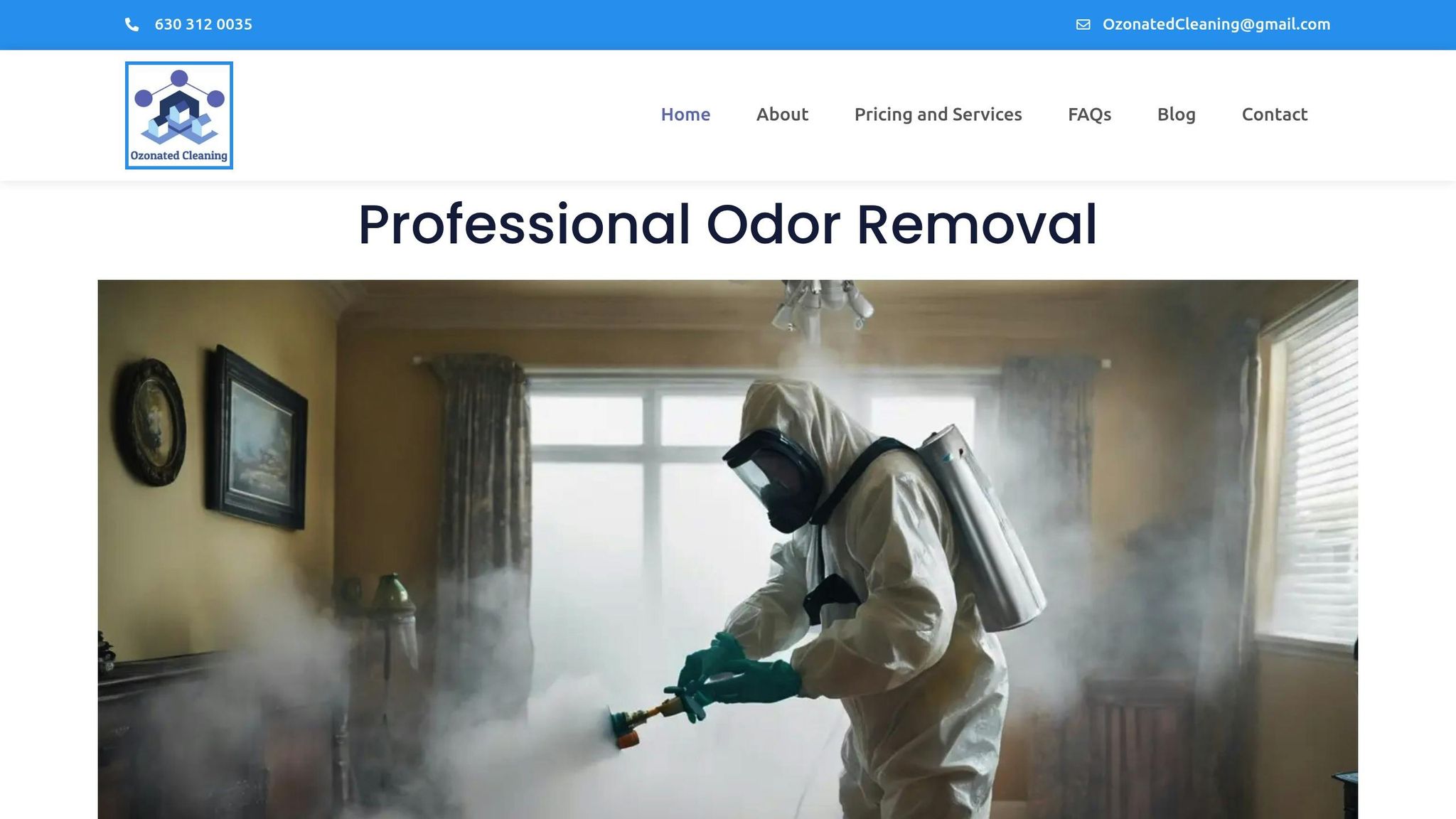
Ozonated Cleaning LLC offers specialized ozone treatment services for marine vessels in the Chicagoland area. Their approach combines ozone and hydroxyl technology to address odors and contaminants in boats and yachts. Whether it’s cigarette smoke, food odors, mold, or mildew, their process is designed to sanitize and deodorize interiors effectively, all without relying on harsh chemicals.
Ozone treatment’s ability to penetrate hidden areas and porous surfaces makes it particularly effective in spaces that traditional cleaning methods can’t reach. Pricing is tailored to the size of the vessel and the specific treatment requirements. Once the process is complete, the treated areas are immediately safe for humans and pets, with no chemical residues or waiting periods. These features highlight why professional services are often the best option for marine vessels.
When to Choose Professional Help
Knowing when to bring in the experts can make all the difference in maintaining onboard air quality. If odors persist despite thorough cleaning, improved ventilation, or the use of deodorizers, it’s probably time to consider professional ozone treatment.
Mold contamination is another red flag, especially when it has infiltrated wood surfaces, soft overheads, or leather components. Similarly, after incidents like flooding, fires, or sewage issues, professional ozone treatment is often necessary to address stubborn odors and contaminants.
If you or your passengers experience stale air, respiratory discomfort, or headaches during or after time on your vessel, these could be signs of air quality problems that require professional attention. Persistent or unexplained odors often indicate hidden contamination that only experts can effectively resolve.
Boat Ozonator – Why You Need an Ozonator Onboard and at Home | Captain German Exploring
Conclusion: Better Marine Air Quality with Ozone
Using ozone treatment is a powerful way to ensure clean, healthy air aboard boats and yachts. Unlike approaches that only mask odors or issues, ozone goes straight to the source, breaking down bacteria, viruses, mold, and mildew at the molecular level. This means you’re not just hiding problems – you’re getting rid of them entirely.
What’s more, ozone treatment is environmentally friendly. It leaves behind no chemical residue, which is a big plus for boat owners who care about protecting marine ecosystems while maintaining top-notch onboard conditions. This residue-free process also supports safer and longer-lasting equipment onboard.
Ozone sanitization is incredibly effective, eliminating up to 99% of pathogens and working 3,000 times faster than chlorine . That translates to fresher air, fewer allergens, and a healthier onboard environment for everyone.
Regular ozone treatments also make long-term maintenance much simpler. By preventing the buildup of mold, mildew, and biofilm, you can safeguard your investment and cut down on expensive repairs or replacements.
For boat and yacht owners in the Chicagoland area, Ozonated Cleaning LLC offers expert services to help you harness these benefits safely and effectively. Whether you’re tackling stubborn odors, addressing mold issues, or simply aiming for the highest air quality standards, ozone treatment provides a fast, chemical-free solution that keeps your vessel in peak condition and ready for adventure.
FAQs
How does ozone treatment improve air quality and ensure safety in boats and yachts?
Ozone treatment offers a practical solution for improving air quality in marine settings, effectively neutralizing odors, allergens, and harmful pollutants. By breaking down these contaminants at a molecular level, it leaves the air feeling fresh and sanitized – all without relying on harsh chemicals.
When used properly, ozone is safe since it naturally transforms back into oxygen. However, caution is essential, as inhaling high concentrations of ozone during treatment can be harmful. For this reason, ozone treatments are generally carried out in controlled environments, ensuring both safety and efficiency for use on boats and yachts.
What safety measures should I follow when using ozone generators on boats or yachts?
When using an ozone generator on boats or yachts, safety should always come first. Make sure the area is completely clear of people, pets, and plants during the treatment process, as ozone exposure can irritate the lungs. Once the treatment is finished, give the ozone enough time to dissipate and thoroughly ventilate the space before anyone re-enters.
Stick closely to the manufacturer’s guidelines to ensure proper use. Keep the generator away from water and avoid running it in confined areas with poor ventilation. By following these steps, you can enjoy cleaner, fresher air on your boat or yacht without compromising safety.
Can ozone treatment help improve air quality on boats and yachts, including concerns about viruses like COVID-19?
Ozone treatment works wonders in tackling odors and removing contaminants in marine settings, which is why it’s often used to improve air quality on boats and yachts. While ozone is effective in reducing airborne pollutants and sanitizing surfaces, its ability to combat viruses like COVID-19 hasn’t been definitively proven.
That said, for general air quality issues – like eliminating odors, addressing allergens, and disinfecting surfaces – ozone proves to be a strong option for creating cleaner, more comfortable marine environments.
Recent Comments