
If you need odor control without closing your business, hydroxyl generators are often the better fit. They can run in occupied spaces, help cut smoke, food, mildew, and chemical odors, lower VOCs, support cleaner indoor air, and trim downtime costs.
Here’s the short version:
- People can stay inside during treatment when the unit is made for occupied spaces.
- Odors are broken down at the source instead of being covered up.
- No chemical film or residue is left on surfaces.
- Whole-room treatment can cover about 1,000 to 3,000 sq. ft. per unit, with some units reaching 5,000 sq. ft. under the right conditions.
- Lower shutdown costs can matter more than daily machine price.
- A cited case study showed more than $10,000 per year saved on filter changes, with payback in under 6 months.
If I were comparing air treatment options for a store, hotel, office, or warehouse, I’d focus on one thing first: can the work happen without stopping business? That’s where hydroxyl systems stand out.
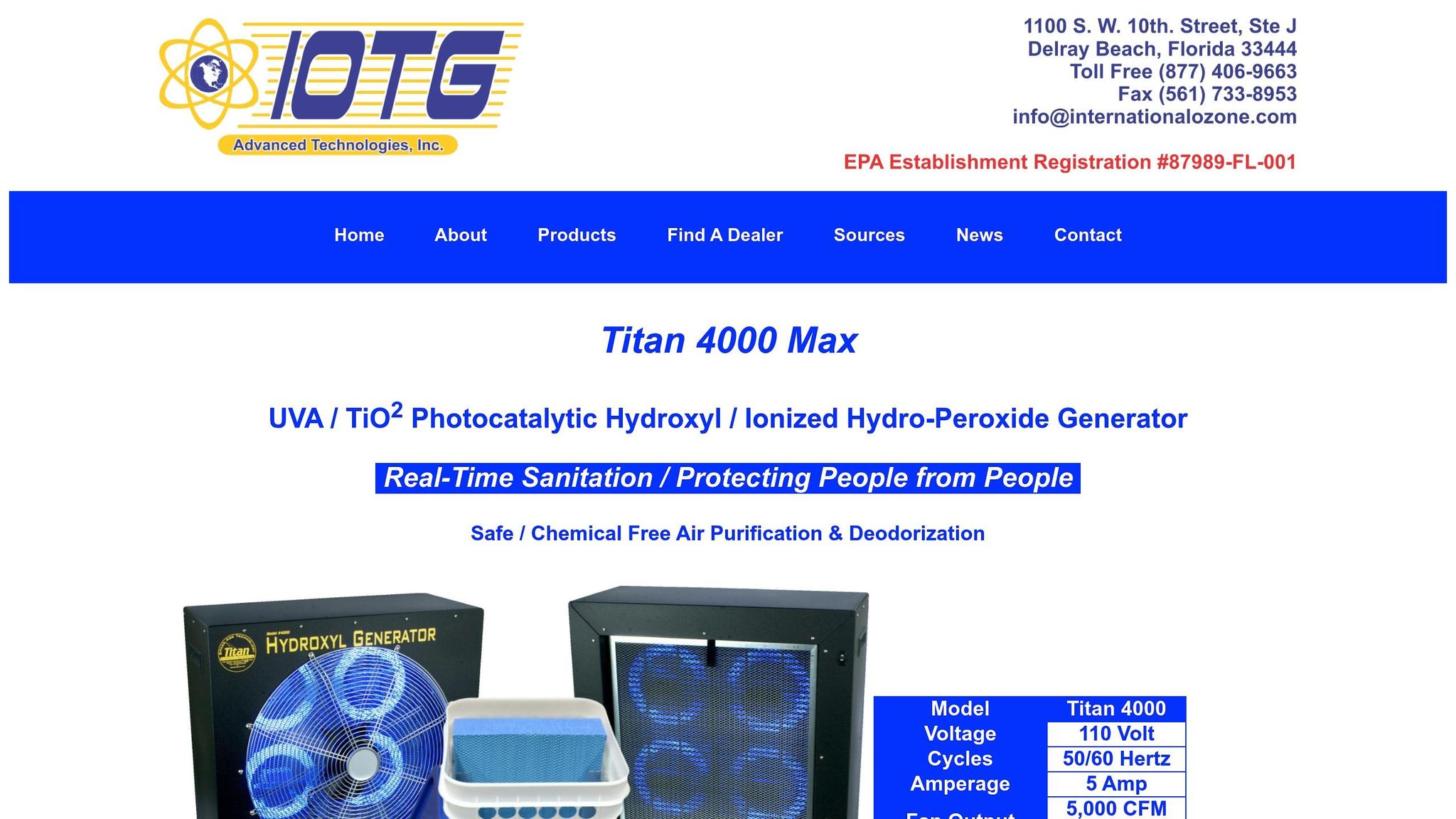
Titan Hydroxyl Generator Instructional Video
Quick Comparison
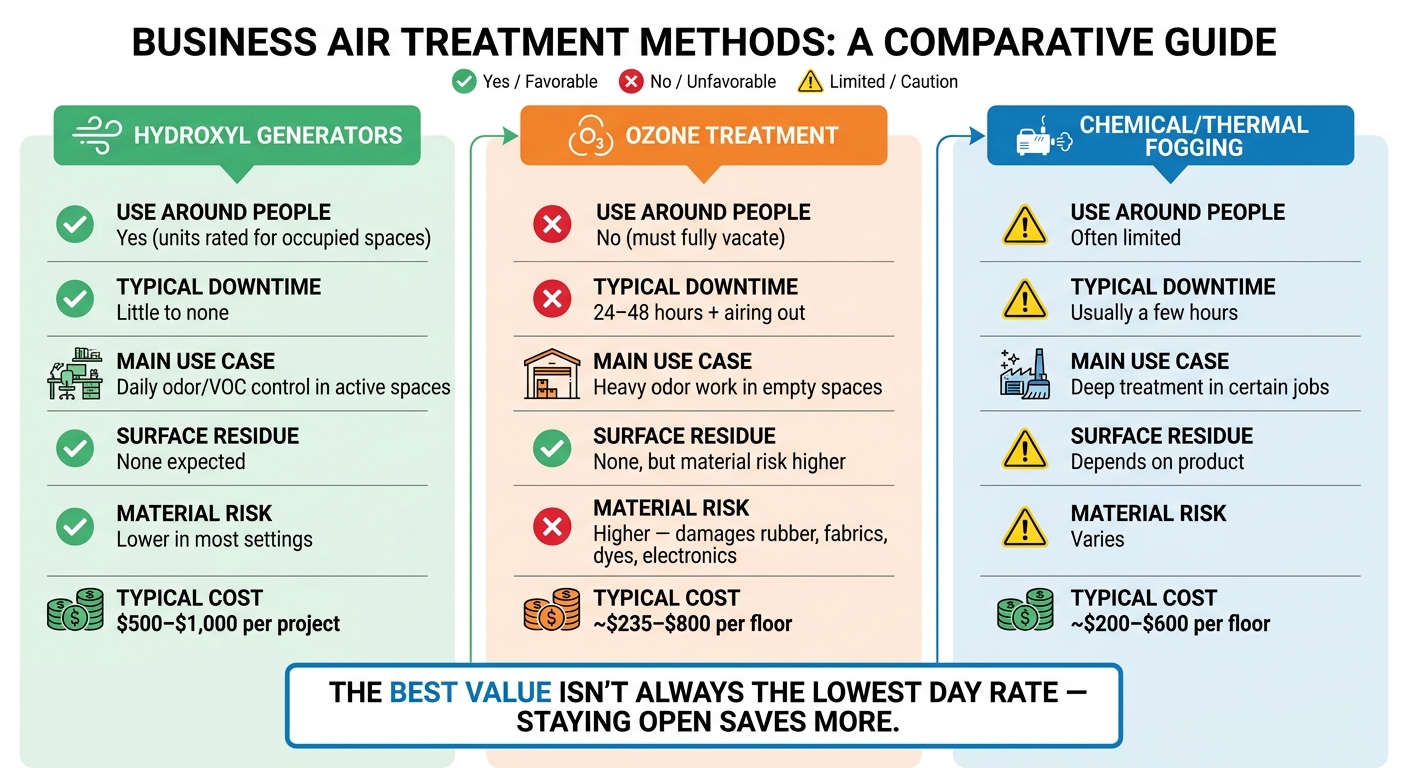
Hydroxyl Generators vs. Ozone vs. Chemical Fogging: Business Comparison
| Factor | Hydroxyl Generators | Ozone Treatment | Chemical/Thermal Fogging |
|---|---|---|---|
| Use around people | Yes, with units rated for occupied spaces | No | Often limited |
| Downtime | Little to none | Often 24–48 hours plus airing out | Usually a few hours |
| Main use | Daily odor/VOC control in active spaces | Heavy odor work in empty spaces | Deep treatment in certain jobs |
| Residue | None expected | None, but material risk can be higher | Depends on product used |
| Material risk | Lower in most settings | Higher for rubber, fabrics, dyes, and some electronics | Varies |
| Typical cost | Often $500–$1,000 per project | About $235–$800 per floor | About $200–$600 per floor |
What this means is simple: the best value is not always the lowest day rate. A machine that costs more per day can still save money if you stay open and avoid lost sales, staff changes, and delayed cleanup.
Why Businesses Are Switching to Hydroxyl Technology
Businesses often move to hydroxyl technology when smoke, food odors, or chemical smells keep coming back. At that point, it’s not just annoying. It can lead to customer complaints and make employees less comfortable at work.
Hydroxyl generators target odor-causing compounds and VOCs at the source. That’s why they can help with repeat smoke, food, and chemical odor issues instead of just covering them up. For many businesses, that day-to-day pressure is a big reason they make the switch.
Another big plus: hydroxyl treatment can fit into normal operations without forcing a shutdown. These systems work in occupied spaces, so businesses can stay open while treatment is underway.
For Chicagoland businesses, Ozonated Cleaning LLC offers hydroxyl-based odor removal and disinfection for occupied commercial and industrial spaces. That makes it a solid option for places that need odor removal and disinfection without clearing everyone out.
1. Safe to Use in Occupied Business Spaces
The first upside is simple and practical: businesses can treat the air without shutting down operations. Hydroxyl generators can run while staff and customers are still in the building, so you don’t have to stop work or clear the space just to handle treatment.
Independent testing found hydroxyl output safe for occupied areas at normal operating levels, with byproducts at trace levels below workplace limits.
That said, not every machine is the same. Some units can produce ozone, so it’s smart to choose equipment rated for occupied spaces and verify ozone output before using it around people. That’s a big part of why daily treatment works so well in active businesses.
For Chicagoland businesses, Ozonated Cleaning LLC provides hydroxyl-based odor removal and disinfection in occupied commercial spaces.
2. Wide-Range Odor Removal and VOC Reduction
There’s another big reason people use hydroxyl generators: they can deal with stubborn odors across an entire space, not just cover them up.
Instead of masking smells, hydroxyl generators break down the compounds that cause them. That’s a big deal in commercial spaces, where odors often come from smoke, food, mildew, sewage, pets, or chemicals. Standard cleaning may help on the surface, but those airborne pollutants often stick around.
Hydroxyl treatment can also reach spots that are hard to clean by hand. Think above ceilings, behind walls, and deep into porous materials like concrete. Those are the places where odors like to hang on. So if a facility is still in use, treating the full space becomes much more doable.
Smoke is one of the hardest odor problems to fix because it contains many compounds and tiny particles. That makes it one of the toughest odor issues in commercial odor-removal work.
3. Sanitization Without Chemicals or Residue
Commercial disinfectants can leave behind film, odor, or residue. Use them over and over, and they can dull surfaces, wear down finishes, and bother employees or customers with asthma or chemical sensitivities. Hydroxyl technology sidesteps that issue by breaking contaminants down in the air.
These radicals break down airborne contaminants and VOCs, then return to harmless byproducts. That means no film, no sticky residue on surfaces, equipment, or inventory. In places like restaurants, retail stores, offices, and healthcare waiting areas, that can make a big difference. Buildup on food-contact surfaces, electronics, or display materials isn’t just annoying – it can turn into a daily headache.
That edge shows up in testing and in day-to-day use. Studies and field use show hydroxyl treatment can support sanitization without chemical residue.
For businesses in sensitive settings – daycare centers, dental offices, gyms, and food prep spaces – this kind of continuous sanitization is a good fit. It doesn’t replace routine surface cleaning, but it can cut back the need for harsh sprays in some areas. That’s why hydroxyl treatment works well in spaces that need sanitation without downtime.
sbb-itb-5fea4da
4. Whole-Space Air Purification and Coverage
Once a system is safe to use around people, the next step is simple: how much space can it treat?
Hydroxyl generators work on the full air volume, not just the air right next to the machine. That matters because odors and airborne contaminants don’t stay in one spot. They move through the room, slip into corners, and hang around in places that spot cleaning can miss.
In occupied spaces, many commercial units cover about 1,000 to 3,000 sq. ft. per unit. Some higher-output models can treat up to 5,000 sq. ft. with 10-foot ceilings, or about 2,500 sq. ft. with 20-foot ceilings. For much larger buildings, HVAC-integrated systems can scale to cover hundreds of thousands of square feet.
Still, square footage alone doesn’t tell the whole story. Ceiling height, room layout, partitions, and airflow all shape how evenly treatment moves through a space. So if an area is large, chopped up into separate rooms, or has poor air circulation, it may need more than one unit.
A peer-reviewed chamber study helps show this in concrete terms. In a 120 m³ enclosed space, researchers measured a steady-state hydroxyl radical concentration of (3.25 ± 0.80) × 10⁶ cm⁻³. In plain English, that means the device was producing reactive oxidants across the room’s air volume rather than only at one fixed point.
Many commercial systems run all the time to keep coverage steady across active spaces. That kind of whole-area treatment is a big part of why these systems are often pitched not just as odor control tools, but as a longer-term operating play.
5. Long-Term Cost Savings and Return on Investment
Coverage matters, but ROI comes down to one simple thing: how much money the system saves after it’s installed. Hydroxyl generators can cut total odor-removal costs by lowering downtime, reducing repeat treatments, and trimming day-to-day operating costs.
The biggest savings often come from avoiding downtime. Since treatment can run while people stay inside the building, businesses don’t have to deal with evacuation, shutdowns, or long re-entry delays.
That’s only part of the picture. Hydroxyl systems can also reduce repeat spending on deodorizers and masking agents.
One casino lounge case study gives a clear example. An HVAC-integrated hydroxyl system saved more than $10,000 per year in HEPA and activated carbon filter replacement costs. It also cut energy use and had a payback period of less than 6 months.
Service pricing is fairly straightforward too. Smoke and odor removal usually runs $300–$600 per floor, and most projects land in the $500 to $1,000 range, depending on the size of the space and how severe the odor is. For businesses trying to plan ahead, that makes costs easier to forecast.
These cost factors make more sense when you look at them side by side.
Side-by-Side Comparisons for Business Decision-Makers
The table below focuses on the business details that tend to drive the call: uptime, treatment time, material risk, and total cost. That’s where hydroxyl often stands out for active commercial spaces. The point here isn’t just to compare treatment price. It’s to see which option fits the way the business actually runs.
| Factor | Hydroxyl Generator | Ozone Treatment | Chemical/Thermal Fogging |
|---|---|---|---|
| Occupancy during treatment | Can operate in occupied spaces | Must be fully vacated – people, pets, and plants need to leave | Typically restricted access; often done after hours |
| Typical downtime | Minimal to none | 24–48 hours per area, plus ventilation time | Hours, not days |
| Common use cases | Stores, restaurants, and hotels that can’t shut down | Severe smoke or flood odors in vacant units or during temporary closures | Commercial kitchens, industrial settings, and porous materials needing deep penetration |
| Material sensitivity | Safe around most contents | Can damage rubber, wire coatings, fabrics, dyes, pigments, and electronics | Varies by agent used |
| Typical service cost (per floor) | Comparable to ozone, but often lower overall in occupied spaces because treatment does not require shutdown. | About $235–$800 | About $200–$600 |
Typical ozone protocols require evacuation and ventilation before re-entry.
That last row is where many teams pause. On paper, a daily rental rate can make one option look cheaper. But that’s only part of the story. If a treatment forces a store, restaurant, or hotel floor to close, the business may lose sales, shift staff schedules, and slow down normal work.
Ozone generators average about $150/day, while hydroxyl generators run about $225/day. Even so, businesses that stay open during treatment can avoid the revenue hit and labor disruption that come with a full shutdown.
In severe smoke or fire cases, crews may use more than one method to deal with different odor layers. One tool may handle airborne odor, while another works deeper into porous materials. The key is matching the treatment to the space, the odor source, and whether the area can be vacated.
How to Put Hydroxyl Treatment to Work in Your Space
After weighing the upsides, the next move is simple: fit the system to the room. That means looking at the unit size, the odor source, and how long treatment needs to run – whether you’re dealing with a one-time cleanup or routine upkeep.
Sizing matters more than most businesses think. Most commercial units cover about 1,000–1,500 sq ft with ceilings up to 20 ft. But square footage doesn’t tell the whole story. High ceilings and chopped-up layouts usually need more output than an open room of the same size. If you’re working with hallways, separate rooms, or more than one floor, it’s better to place one unit in each main zone instead of asking one machine to handle the whole area.
Good sizing helps, but it shouldn’t be the first step. Hydroxyl generators tend to work best as part of a layered approach, not as a solo fix. Deal with the odor source first – smoke damage, spoiled materials, mold, or soaked carpet. Regular cleaning of floors, fabrics, trash areas, and restrooms also cuts down on recontamination between treatment sessions.
HVAC maintenance is a big deal. Dirty coils and clogged filters can keep pushing odors and particulates back into the air, which weakens results. Clean filters and balanced airflow help spread treatment more evenly. You can also improve distribution by placing units near return or supply vents, or by aiming them toward the center of the room so they treat the full air volume.
For post-fire cleanup, heavy pet odors, or stubborn kitchen smells, getting a professional assessment can make planning much easier. Services like Ozonated Cleaning LLC bring diagnostic know-how and can pair hydroxyl technology with other equipment to fit the space and the odor source – especially when the contamination is severe or it’s a one-time remediation job.
Conclusion
Hydroxyl generators give businesses five clear wins: they can be used in occupied spaces, cut down a wide range of odors and VOCs, sanitize without added chemicals, treat the whole room, and lower long-term operating costs. That matters most for businesses that need to keep the doors open.
The biggest plus is simple: they work without forcing a shutdown. That low-disruption setup is what makes hydroxyl technology a good fit for day-to-day business use. It also helps the numbers make more sense over time.
The cost case is straightforward. No evacuation means less downtime, fewer complaints, and less wear on carpets, furnishings, and HVAC systems. For Chicagoland businesses that want expert help, Ozonated Cleaning LLC offers hydroxyl-based odor removal and disinfection for commercial spaces. Hydroxyl generators give businesses a practical, science-backed way to keep air cleaner and odors under control without shutting down operations.
FAQs
How long should a hydroxyl generator run?
Hydroxyl generators are built to run continuously, which makes them a practical fit for occupied commercial and industrial spaces. In many cases, you may notice some odor reduction within a few hours.
For more complete odor neutralization, these units usually need to run for 3 to 5 days. In larger spaces, or when odors are more stubborn, nonstop operation tends to deliver the best outcome.
What types of businesses benefit most from hydroxyl treatment?
Businesses that need to keep their doors open during treatment tend to get the most out of hydroxyl technology. It helps clean the air and cut odors without clearing out staff or customers, which makes a big difference when shutting down just isn’t an option.
You’ll often see it used in places like healthcare facilities, nursing homes, childcare centers, hotels, restaurants, retail stores, office buildings, and for vehicle, RV, and boat cleaning.
When should I hire a professional for odor removal?
Bring in a professional if you’re dealing with heavy smoke damage, pet odors that won’t go away, or contamination that needs a trained eye.
It also makes sense to get expert help when you’re deciding between hydroxyl and ozone treatments. That choice affects both safety and whether people can stay in the space during treatment. In the Chicagoland area, Ozonated Cleaning LLC can build a safe, effective treatment plan around your situation.
Recent Comments