
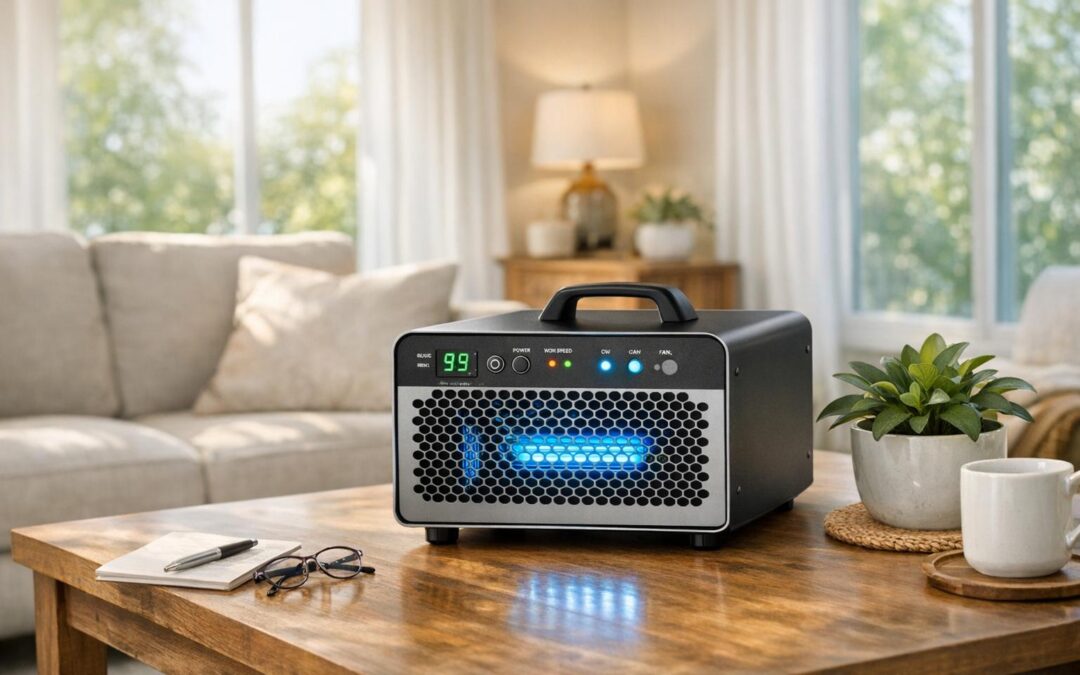
Hydroxyl generators are safe, effective tools for removing odors and pollutants in spaces where people are present. Unlike ozone generators, they don’t require evacuation and won’t damage sensitive materials. Choosing the right hydroxyl generator depends on your space size, odor severity, and specific needs. Here’s a quick guide:
- Space Size: Match the generator’s coverage to your square footage and ceiling height. For larger areas or severe odors, consider high-capacity units with stronger airflow.
- Technology: Opt for generators using UVA light and titanium dioxide catalysts for safety. Avoid units emitting ozone, especially in occupied spaces.
- Performance: Look for high hydroxyl output and strong air circulation to maximize effectiveness. Maintain humidity near 60% for optimal results.
- Portability: Choose lightweight, durable models with handles for easy movement.
- Maintenance: Replace UV bulbs after 4,000–5,000 hours for consistent performance.
- Cost: Prices range from $1,200 to $4,500. Professional units can be rented for ~$200/day, offering a quick return on investment.
Hydroxyl generators are ideal for homes, businesses, and restoration projects, providing a safe, efficient way to tackle odors and improve air quality.
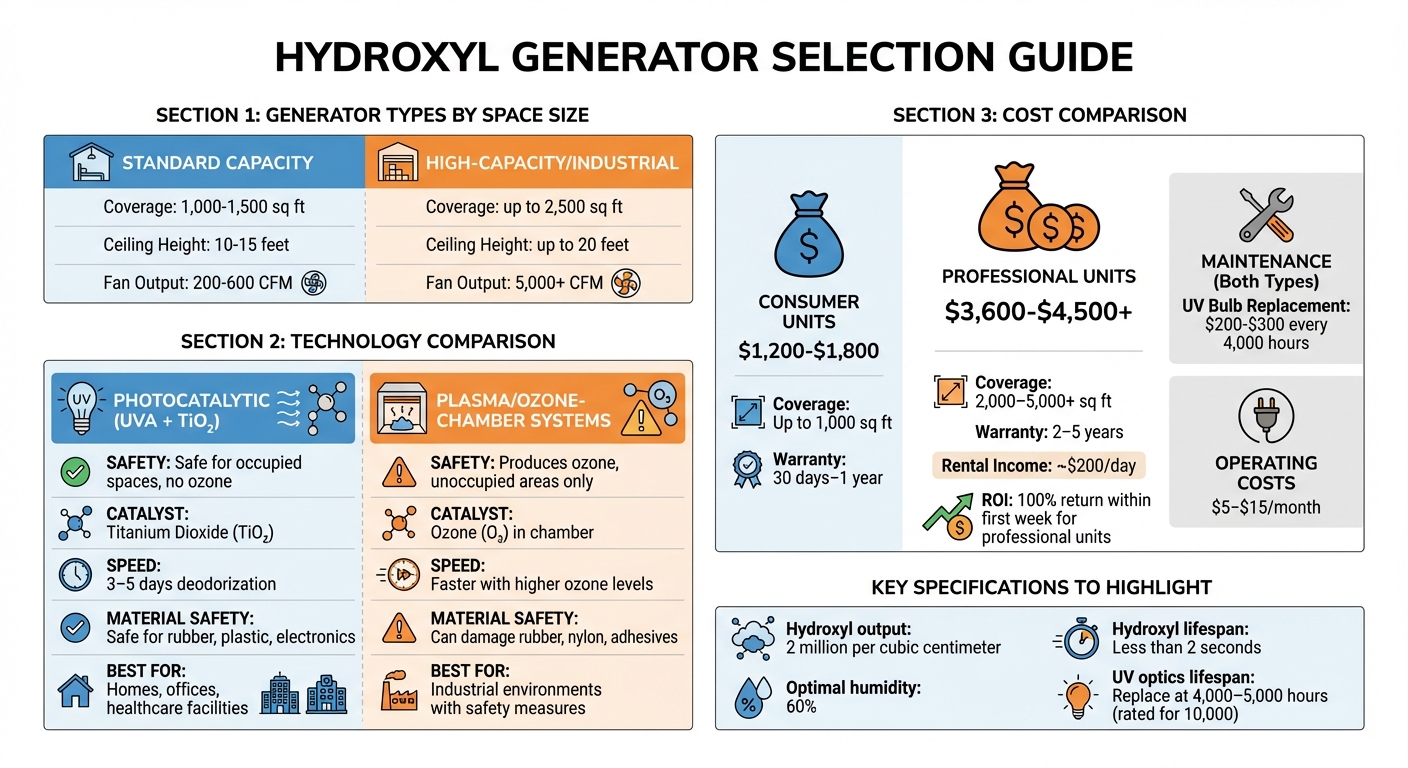
Hydroxyl Generator Selection Guide: Space Size, Technology Types, and Cost Comparison
Using a Hydroxyl Generator to Remove Odors
Space Size and Layout Requirements
Selecting the right hydroxyl generator starts with knowing your space. A unit that works well in a 1,000-square-foot open loft might not perform as effectively in a multi-room apartment of the same size. Room dimensions and layouts play a key role in how hydroxyl radicals circulate, as their effectiveness is limited by natural decay.
Understanding how to measure your space is the first step.
How to Measure Your Space
For a rectangular room, calculate the area by multiplying its length by its width (Area = L × W). For more complex spaces, like L-shaped rooms or those with alcoves, break the area into smaller rectangles, measure each section, and add them together. If measurements are in inches, convert them to feet (e.g., 6 inches = 0.5 feet).
Ceiling height is equally important. Measure the distance from the floor to the ceiling. If your ceiling is sloped, treat the wall area as a right trapezoid and use the formula: Area = 1/2 × width × (height 1 + height 2). Most manufacturers base their ratings on ceiling heights between 10 and 15 feet. If your ceilings are taller – say, 20 feet – you’ll need a generator with more output to effectively treat the same square footage.
Once you’ve measured your space, match the generator’s output to your specific needs.
Matching Generator Output to Your Space
For moderate to severe odors, a professional-grade hydroxyl generator typically covers 1,000–1,500 square feet .
Michelle Blevins, Editor-in-Chief at Restoration & Remediation, notes: "One hydroxyl generator can deodorize moderate to severe odors in a space that’s about 1,000 to 1,500 square feet, with 10 to 15-foot ceilings".
However, square footage alone doesn’t tell the whole story. Because hydroxyl radicals break down in under two seconds, air movement becomes a critical factor.
Russ McCubbin, President of International Ozone Technologies Group, explains: "Since hydroxyls live less than two seconds, it is necessary and beneficial to have as much air movement as possible to move the hydroxyls out of the machine and as far away as possible".
For larger spaces, opt for units with fan outputs exceeding 5,000 CFM, rather than standard models that provide 500–600 CFM.
The layout of your space also impacts coverage. Open floor plans allow hydroxyls to circulate freely, while walls, hallways, and closed-off rooms act as barriers. In partitioned spaces, place the generator in a central location and use additional air movers to distribute hydroxyls into adjoining rooms. Similarly, spaces filled with furniture or inventory will require more capacity than empty areas, as odors tend to absorb into materials. For severe odor issues, such as fire damage or biohazards, reduce the coverage area per generator to increase hydroxyl concentration.
| Generator Type | Coverage Area | Ceiling Height | Fan Output (CFM) |
|---|---|---|---|
| Standard Capacity | 1,000 – 1,500 sq. ft. | 10 – 15 feet | 200 – 600 CFM |
| High-Capacity/Industrial | Up to 2,500 sq. ft. | Up to 20 feet | 5,000+ CFM |
Performance and Technology Features
Once you’ve matched the generator’s capacity to your space’s needs, it’s time to dive into its performance and technology. The efficiency of odor elimination depends largely on output levels and the technology used to generate hydroxyl radicals.
Hydroxyl Radical Output Levels
High-quality hydroxyl generators typically produce around 2 million hydroxyls per cubic centimeter as they exit the machine. This level of output is usually sufficient to tackle moderate to severe odors in spaces ranging from 1,000 to 1,500 square feet with ceiling heights of 10 to 15 feet.
Given that hydroxyl radicals have a half-life of less than two seconds, achieving effective deodorization relies on combining high output with strong air circulation. This ensures the radicals can reach and neutralize contaminants on surfaces.
Humidity is another key factor. Hydroxyl production depends on water vapor, so maintaining a humidity level of about 60% near the generator’s intake is crucial. In drier environments, placing a humidifier near the intake can help boost production.
Additionally, UV optics in these machines typically last up to 10,000 hours, but their performance diminishes over time. Replacing the UV optics at the 4,000 to 5,000-hour mark – before they completely fail – can help maintain optimal output levels.
Balancing output levels, air movement, and environmental conditions is essential for effective odor removal.
Photocatalytic vs. Plasma-Based Systems
Hydroxyl radicals are produced using two main technologies, each suited for specific applications.
Photocatalytic Oxidation (PCO) relies on UV light – typically in the UVA range of 365nm to 385nm – to excite a titanium dioxide (TiO₂) catalyst. This method is widely regarded as the safest option because it doesn’t produce ozone as a byproduct.
Russ McCubbin, President of International Ozone Technologies Group, states: "The safest and most preferred technology to produce hydroxyl radicals is a version of the NASA developed process that utilizes UVA (black light) in the 365nm to 385nm wavelength to excite (irradiate) nano-sized Titanium Dioxide sol gel particles".
Plasma-based or ozone-chamber systems, on the other hand, generate hydroxyls by creating and then breaking down ozone inside a UVC chamber. These systems can emit residual ozone, making them suitable only for unoccupied spaces. If you notice a strong ozone smell from a hydroxyl generator, it may be using 185nm UVC lamps without a proper catalyst, which requires caution.
| Feature | Photocatalytic (UVA + TiO₂) | Plasma/Ozone-Chamber Systems |
|---|---|---|
| Safety | Safe for use in occupied spaces; no ozone emitted | Produces ozone; suitable for unoccupied areas only |
| Primary Catalyst | Titanium Dioxide (TiO₂) | Ozone (O₃) created and destroyed in chamber |
| Speed | Typically deodorizes in 3–5 days | Faster if higher ozone levels are allowed |
| Material Safety | Safe for rubber, plastic, and electronics | Ozone can damage natural rubber, nylon, and adhesives |
For spaces like homes, offices, or healthcare facilities where people are present, photocatalytic systems are the best option. However, for industrial environments where speed takes priority over occupancy safety, plasma-based systems can deliver quicker results – provided safety measures are in place.
sbb-itb-5fea4da
Portability, Power, and Safety Features
Mobility and Electrical Requirements
When it comes to portability, the weight of the unit is a key factor. Consumer models typically weigh between 8–15 lbs, residential units range from 15–35 lbs, and professional units can weigh 35–50 lbs. Take the Newaire HO3-2500 as an example – it weighs just 10.9 lbs and measures 17"L x 8.2"W x 10"H, making it a great choice for treating rooms one at a time.
If you plan on frequently moving the unit between floors or rooms, look for a mid-range model with built-in handles and a compact design that allows for easy one-handed carrying. These units are designed to operate sequentially in spaces for 24–72 hours, making them convenient for multi-room use.
Most portable generators are designed to work with standard 120V, 60Hz power systems. For instance, the Newaire HO3-2500 requires 132 Watts (1.10 Amps), which is compatible with standard 15- or 20-amp circuits. Be sure to check the length of the power cord – usually around 8 feet – to decide if you’ll need an extension cord. Once you’ve got the power needs sorted, it’s time to focus on the safety features, especially when the unit will be used in occupied areas.
Safe Operation Around People
The combination of portability and straightforward electrical requirements pairs well with the advanced performance features discussed earlier. One of the standout benefits of hydroxyl generators is their ability to operate safely in spaces where people are present, making them suitable for homes and businesses alike.
Russ McCubbin, President of International Ozone, emphasizes: "If a homeowner cannot leave or a store cannot shut down, hydroxyl generators are the way to go".
Unlike ozone-based systems, hydroxyl radicals are safe for materials such as rubber, plastic, leather, electronics, nylon, and even artwork, ensuring no damage occurs during use.
To operate safely, make sure the unit relies on UVA (365nm–385nm) or UVC (254nm) light combined with a titanium dioxide catalyst. Avoid models that use 185nm lamps, as these produce high levels of ozone, which can be hazardous. A true hydroxyl generator should emit no detectable odor – if you notice an ozone smell, the unit may not be safe for use in occupied spaces. For added peace of mind, look for units classified as FDA Class II medical devices or those incorporating NASA-developed Photocatalytic Oxidation (PCO) technology, as these are strong indicators of adherence to safety standards.
Maintenance, Durability, and Costs
Upkeep and Replacement Parts
Keeping your hydroxyl generator in top shape requires regular maintenance. This involves cleaning the exterior, interior, and especially the UV optics. Use latex gloves and a lint-free cloth with a solution of 1-part isopropyl alcohol to 10 parts distilled water to wipe surfaces clean. Even small smudges can impact performance, so it’s essential to maintain spotless optics.
The most important maintenance task? Replacing the UV optics. While these lamps can stay lit for 8,000 to 10,000 hours, their power diminishes well before they burn out.
Tom McArdle, Vice President of Odorox Hydroxyl Group, shares: "In the disaster restoration industry where you’re dealing with moderate to severe odors, and time is critical, 4,000 hours is the best time to replace them to guarantee optimal performance – do not wait for the optics to burn out".
Most professional units come equipped with a built-in hour meter to help you track usage and replace UV bulbs on time. Replacement bulbs typically cost between $200 and $300. Regular maintenance, paired with solid construction, ensures your unit delivers reliable performance over time.
Build Quality and Warranty Coverage
When you’re frequently moving a unit between rooms or job sites, the build quality matters. Look for models with metal or high-quality composite housings, as these hold up better than thin plastic casings. Many professional-grade units feature aluminum shells, offering added durability and protection .
Warranty coverage is another key indicator of quality. High-end units often come with 2 to 5 years of warranty, while cheaper models may only provide 30 days . Additionally, ensure the unit is sold through a network that offers local technical support, repairs, and access to replacement parts . A sturdy design and strong warranty make these units a more cost-effective choice in the long run.
Comparing Costs and Returns
Once you’ve considered maintenance and build quality, it’s time to weigh the costs and potential returns. Hydroxyl generators range in price from $500 to $4,500, depending on their features and coverage area.
- Consumer-grade portable units: $1,200–$1,800, covering up to 1,000 square feet.
- Mid-range residential units: $1,600–$2,750, for spaces between 1,000 and 2,000 square feet.
- Professional-grade units: $3,600–$4,500+ for areas over 2,000 square feet.
Professional units, in particular, can generate significant rental income – about $200 per day.
Russ McCubbin, President of International Ozone Technologies Group, Inc., remarks: "With the price of the hydroxyl generators on the market, there would be a 100% return on investment within the first week of use".
These units also save money by allowing people to remain in their homes or businesses during treatment, avoiding costs for temporary relocation, meals, and lost business .
| Cost Factor | Consumer Units | Professional Units |
|---|---|---|
| Purchase Price | $1,200 – $1,800 | $3,600 – $4,500+ |
| Coverage Area | Up to 1,000 sq ft | 2,000 – 5,000+ sq ft |
| UV Bulb Replacement | $200 – $300 every 4,000 hours | $200 – $300 every 4,000 hours |
| Warranty | 30 days to 1 year | 2 to 5 years |
| Daily Rental Potential | Not typically rented | ~$200 per day |
Conclusion: Selecting the Right Generator
When it comes to choosing a hydroxyl generator, it’s all about finding the right match for your space and odor challenges. Start by calculating your square footage and ceiling height, then consider sizing up if you’re dealing with persistent odors or high humidity. This ensures the generator can maintain consistent hydroxyl production.
Next, focus on technology and safety. The ideal unit should use UVA (365–385nm) with Titanium Dioxide – steer clear of 185nm UVC lamps, as they emit ozone. One of the biggest advantages of true hydroxyl generators is their safety for occupied spaces. That means no need to relocate people or pets during treatment, saving you time and money. Also, look for a generator with high-volume airflow – 5,000+ CFM is a good benchmark – to effectively distribute hydroxyl radicals throughout the space.
Durability and cost-efficiency are equally important. Consumer-grade models start around $1,200, while professional systems can exceed $4,500. Plan for maintenance by replacing UV bulbs every 4,000–5,000 hours and opt for units with sturdy metal or composite housings. A warranty of at least two years is a smart choice . On the bright side, operating costs are low – typically $5 to $15 per month.
Ultimately, choose a generator that balances capacity, safety, and durability with your budget. Whether you’re tackling occasional odors in a single room or need professional-grade equipment for large-scale restoration projects, focusing on these essentials will ensure reliable performance and excellent value for your investment.
FAQs
How can I choose the right size hydroxyl generator for my space?
Start by measuring your space. For a basic calculation, multiply the room’s length by its width to determine the square footage. If your ceilings are taller than the standard 8 feet, you’ll need to calculate the cubic footage by multiplying the square footage by the ceiling height. Once you have these numbers, compare them to the generator’s rated coverage area, which is usually listed in square feet or cubic feet.
- Small spaces (up to 800 sq ft): A compact unit will often be enough.
- Larger spaces (over 1,500 sq ft): You’ll likely need a more powerful generator or even multiple units.
Remember, spaces with heavy odors or lots of furniture may require higher-capacity models. If you’re not sure which size is right, companies like Ozonated Cleaning can provide professional assessments to guide your choice.
What safety features should I consider when choosing a hydroxyl generator?
When choosing a hydroxyl generator, it’s essential to focus on safety features that make it suitable for use around people, pets, and delicate materials. Opt for models that produce only hydroxyl radicals and avoid those that generate ozone, as ozone can be harmful in spaces where people are present. Units labeled as "safe for use in occupied areas" are a reliable indicator of their safety.
Other features worth considering include automatic shut-off timers, sensor-based controls to prevent overheating, and certifications like UL or CE, which confirm the unit meets U.S. safety standards. These safeguards not only protect health and property but also ensure efficient odor removal.
How often do UV bulbs need to be replaced in a hydroxyl generator?
For the best results, you should replace the UV bulbs in a hydroxyl generator roughly once a year if the unit operates nonstop. As time passes, the bulbs become less efficient, which can reduce the generator’s ability to eliminate odors and sanitize properly.
Be sure to check the manufacturer’s instructions for precise recommendations, as factors like how often the generator is used and the surrounding environment can influence when replacements are needed.
Recent Comments