
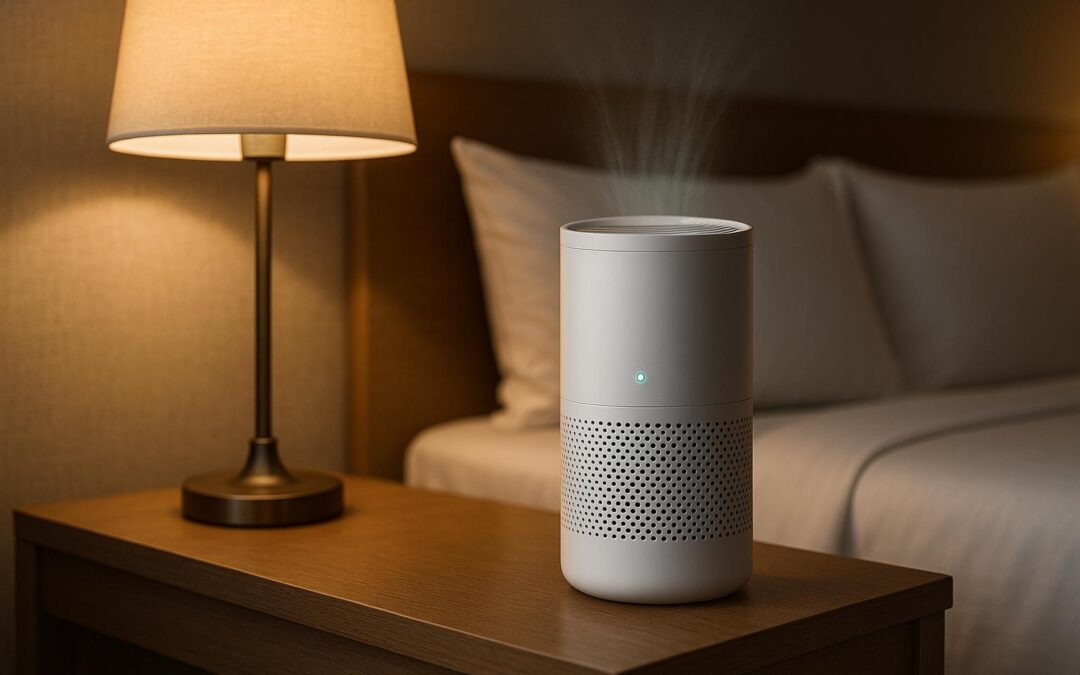
Portable HEPA air purifiers are an effective way to improve air quality while traveling. They filter out allergens, pollutants, and even viruses in confined spaces like hotel rooms, cars, and airplanes. These devices use advanced HEPA filtration to trap 99.97% of particles as small as 0.3 microns, improving comfort and reducing health risks, especially for those with respiratory conditions. Many models are lightweight, battery-powered, and easy to use, making them a practical travel companion.
Key Takeaways:
- Health Benefits: Reduce allergens, bacteria, viruses, and pollutants for better respiratory health and sleep quality.
- Compact Design: Lightweight and portable, ideal for use in cars, hotel rooms, or planes.
- Advanced Filtration: True HEPA filters capture tiny particles, while some models include activated carbon for odors and gases.
- Ease of Use: Simple setup, quiet operation, and long battery life make them convenient for travel.
For optimal performance, choose a model with True HEPA filtration, sufficient battery life, and coverage for your space. Pair with professional cleaning services for deeper disinfection when necessary.
TOP 5 Best Portable Air Purifier [ 2024 Buyer’s Guide ]
How Portable HEPA Air Purifiers Work
If you’re looking to improve air quality while traveling, understanding how portable HEPA air purifiers operate is key. These devices are designed to filter out harmful particles, creating cleaner, safer air in compact spaces like hotel rooms or cars.
HEPA Filtration Technology Explained
HEPA, short for High-Efficiency Particulate Air, is widely recognized as the gold standard in air purification. To qualify as a true HEPA filter, it must capture at least 99.97% of airborne particles measuring 0.3 microns or larger. For context, a single strand of human hair is about 70 microns wide, so these filters are targeting particles that are incredibly tiny.
The secret lies in the filter’s dense, fibrous mat, which traps particles through mechanisms like impaction, interception, and diffusion. Some advanced models even use electrostatic attraction. Interestingly, HEPA filters are tested with 0.3-micron particles because they are the hardest to catch. Larger particles are easier to trap through direct impact, while smaller ones, which move erratically, are captured through diffusion. This means HEPA filters are actually more effective at catching particles smaller than 0.3 microns, such as viruses that average 0.1 microns in size.
However, it’s important to note that HEPA filters alone don’t remove gases, odors, or chemical fumes. Many portable purifiers address this limitation by pairing HEPA filters with activated carbon filters, which handle these additional concerns.
The Air Purification Process with HEPA Filters
Portable HEPA air purifiers are designed to maximize particle removal through a multi-step process. Air enters the purifier through intake vents and often passes through a pre-filter first. This initial step captures larger debris like hair, lint, and dust, which helps prolong the life of the HEPA filter.
Once air reaches the HEPA filter, it traps a wide range of particles, including dust, pollen, pet dander, mold spores, bacteria, and viruses carried in aerosols. The purified air is then released back into the room, creating a continuous cycle of filtration. For travelers with allergies or sensitivities, this process can make a significant difference in air quality.
Research has shown that air purifiers can reduce particulate matter in indoor spaces by 12–52%, and by 29–53% when external pollution sources are present.
"For people with allergies, scientific studies have shown that air filtration reduces these airborne allergens and may provide some relief." – American College of Allergy, Asthma & Immunology
HEPA filters are also effective against microscopic threats. For example, COVID-19 particles, which range from 0.06 to 0.14 microns, fall within the size range that HEPA filters can capture. This makes portable HEPA purifiers particularly useful in confined travel spaces, offering peace of mind in environments like rental cars or hotel rooms.
HEPA vs. Other Air Purification Technologies
When selecting a portable air purifier, it’s helpful to compare HEPA technology with other options to ensure you’re making the best choice for your needs. HEPA filters are often recommended by medical professionals because they remove the vast majority of airborne contaminants, including microscopic particles.
Ionic purifiers, by contrast, are less effective at removing bacteria and small particles. They may also emit ozone, which can pose health risks in enclosed spaces.
"HEPA air filters greatly enhance air cleaning whenever it is seen as possible, especially when these types of filters are placed in higher-risk areas such as a doctor’s office or a medical building." – Centers for Disease Control and Prevention (CDC)
Activated carbon filters, while not designed to capture particles, excel at absorbing gases, odors, and chemical fumes. This is why many portable purifiers combine HEPA and activated carbon filters – each handles a different type of pollutant.
UV light purifiers, on the other hand, work by killing microorganisms but don’t remove solid particles, dust, or allergens. Also, be wary of products labeled as "HEPA-like" or "HEPA-style", as these don’t meet the same rigorous standards as true HEPA filters.
Benefits of Using Portable HEPA Air Purifiers During Travel
Traveling often exposes you to air quality challenges that can affect both your comfort and health. Portable HEPA air purifiers offer a practical way to address these issues by providing cleaner air wherever you go.
Better Air Quality in Confined Spaces
Confined travel spaces – like cars, buses, and airplanes – often have poor air circulation, leading to higher levels of pollutants. In fact, the United States Environmental Protection Agency notes that indoor air quality can be two to five times worse than outdoor air.
Portable HEPA air purifiers are designed to tackle this problem by filtering out contaminants such as dust, pollen, pet dander, mold spores, bacteria, and even viruses. The results can be impressive. For example, a study conducted on a bus with a volume of 62.5 cubic meters found that using three portable air purifiers reduced PM2.5 levels by 42–74%, bringing concentrations down from 400 μg/m³ to below 15 μg/m³.
This kind of improvement is especially valuable in vehicles, where outdoor pollution can easily seep inside. Air purifiers help maintain low levels of pollutants in the cabin, even when outdoor air quality is poor. Whether you’re navigating heavy traffic or traveling through areas with high pollution, a portable purifier ensures you’re breathing cleaner air.
By creating an environment free of allergens and pollutants, these devices contribute to a healthier and more comfortable travel experience.
Health Benefits for Travelers
For the 26 million Americans living with asthma, travel can introduce a host of challenges, from unfamiliar allergens to elevated pollutant levels. Portable HEPA air purifiers provide critical relief by trapping harmful particles before they can irritate your respiratory system.
"Air purifiers can drastically reduce airborne allergens like pollen, pet dander, and dust mites, allowing those with allergies to have noticeable relief." – Dr. Michael Chichak, Medical Director at MEDvidi
Cleaner air in confined spaces not only helps reduce allergy symptoms but also minimizes respiratory strain. According to Dr. Purvi Parikh of the Allergy & Asthma Network:
"HEPA air purifiers can basically filter out anything larger than 2 microns in particle size, so they can help prevent infections too by filtering out viral and bacterial particles."
This makes portable air purifiers especially useful in crowded travel hubs like airports and airplanes, where exposure to airborne pathogens is higher. Beyond protecting against illness, these devices also remove environmental pollutants like mold spores, smoke, and volatile organic compounds (VOCs), which can exacerbate respiratory conditions.
The White House has also highlighted the broader health advantages of cleaner indoor air:
"Improving indoor air has benefits beyond COVID-19: it will reduce the risk of getting the flu, a common cold, or other diseases spread by air, and lead to better overall health outcomes."
Convenience and Portability
Portability is a game-changer for travelers. Modern portable HEPA air purifiers are designed with mobility in mind. Many models weigh less than 2 lbs and feature batteries that last 6–12 hours, making them easy to carry and ideal for on-the-go use.
These devices are versatile enough to adapt to various travel scenarios. Whether you’re working in a shared office space, staying in a hotel room, or renting a vacation property, portable purifiers ensure consistent air quality. Thanks to their HEPA filters, they can remove 99.96% of small particles within the space.
Another bonus? Many models operate quietly, producing less than 30 decibels of noise. This makes them perfect for overnight use in hotel rooms or during long flights when noise levels matter. Plus, they’re incredibly easy to use – most are plug-and-play devices that require minimal setup. Just place the purifier in your space, turn it on, and let it do its job.
For frequent travelers, a portable HEPA air purifier is a worthwhile investment. It gives you control over your air quality, ensuring a healthier and more comfortable experience no matter where your journey takes you.
Tips for Choosing the Right Portable HEPA Air Purifier for Travel
When you’re traveling, having clean air can make a big difference, especially in confined spaces like hotel rooms or airplanes. Here’s how to pick the best portable HEPA air purifier for your needs.
Key Features to Look For
The first thing to prioritize is True HEPA filtration. This ensures the purifier can remove at least 99.97% of particles as small as 0.3 microns. Be cautious of "HEPA-type" filters, which may not meet the same rigorous standards.
Next, consider weight and size. For portability, aim for a device under 2.2 lbs. For example, the HA-D10 measures just 3.3 × 3.2 × 7 inches and operates for 3.5 hours on high speed, making it perfect for tight spaces.
Battery life and charging options are equally important. Look for a runtime of at least 2 hours, though some models can last up to 12 hours. USB-C charging is especially convenient since it works with many modern devices like smartphones and laptops.
Think about the coverage area and CADR (Clean Air Delivery Rate). A purifier’s CADR should ideally be about two-thirds of the room’s square footage. For instance, a 150-square-foot room would require a CADR of at least 100. The QT3 portable air purifier, with its CADR of 37 m³/h, delivers 75% cleaner air within a 30 cm radius. This exceeds the CADR of most portable purifiers, which typically range between 10–20 m³/h.
Additional Features for Better Performance
For added protection, look for purifiers with activated carbon filters. These are excellent for removing odors, smoke, and chemical vapors. They’re especially useful in vehicles, hotel rooms, or heavily polluted areas where standard HEPA filters might fall short.
Models with adjustable fan speeds allow you to balance cleaning efficiency with battery life while keeping noise levels low. For example, the QT3 offers 2-4 hours of operation depending on the fan setting, so you can adapt to your specific needs.
Ensure the purifier is compatible with U.S. power outlets or comes with USB charging capabilities. This makes it easy to charge using phone chargers, laptops, or portable power banks.
Some purifiers even include aromatherapy functionality, letting you add a calming scent while purifying the air. Sarah, a frequent business traveler, shared her experience with the HA-D10:
"Before, I’d always wake up congested and with a scratchy throat, even in supposedly ‘clean’ hotels. With the HA-D10, I slept soundly and woke up feeling refreshed and ready for my meetings. The subtle lavender scent I added also helped me relax after a stressful day."
Comparison of Top-Rated Portable HEPA Air Purifiers
Here’s a quick comparison of popular models to help you decide:
| Model | Weight | Battery Life | Noise Level | Coverage | Price Range | Key Features |
|---|---|---|---|---|---|---|
| Pure Enrichment PureZone Mini | Under 2 lbs | Up to 12 hours | 10 dB | 6 ft² in 12 min | $39.99 – $44.99 | Ultra-quiet, compact design |
| QT3 Portable Air Purifier | Lightweight | 2-4 hours | 32-40 dB | 75% clean air at 30 cm | $44.99 – $59.99 | No ionizer, ozone-free |
| HA-D10 | Under 2 lbs | 3.5 hours (high) | 35 dB (night) / 53 dB (turbo) | Personal breathing zone | Not specified | Aromatherapy compatible |
If you’re traveling long distances, the Pure Enrichment PureZone Mini stands out with its 12-hour battery life and ultra-quiet operation at just 10 dB. One user, Kelly Tusing, shared in July 2025 how it significantly reduced her coughing and sneezing after just a week of use in her shared work vehicle.
The QT3 Portable Air Purifier, on the other hand, offers a balanced option. With 5.0/5 stars from customer reviews, it’s a reliable choice for train and plane travel. Samantha, a user from August 2023, praised its lightweight design and quiet operation, noting it maintained charge for several hours and worked well even in the Library of Congress.
"The higher the CADR, the faster and more efficient the air purifier is."
For the best results, choose a model with enough capacity to handle sudden spikes in pollution or challenging environments. This ensures consistent performance, no matter where your travels take you.
sbb-itb-5fea4da
Best Practices for Using Portable HEPA Air Purifiers While Traveling
Making the most of your portable HEPA air purifier while traveling involves more than just switching it on. Strategic placement, consistent maintenance, and following safety tips can significantly improve the air quality in your temporary spaces.
Smart Placement for Travel Settings
Where you place your air purifier can make all the difference. Position it centrally to ensure air circulates evenly throughout the room.
Elevating the purifier – on a nightstand, desk, or dresser – can improve its ability to capture airborne particles, especially for smaller units. Avoid placing it directly on the floor, as this reduces its efficiency.
Make sure there’s enough clearance around the purifier. Leave 3–5 feet of open space around the unit to keep airflow unrestricted. Avoid corners or areas behind furniture, as these can block the intake and output vents, limiting its performance.
In hotel rooms, start by ventilating the space, if possible, by opening windows. For quick results, place the purifier on the bed when you first arrive to clean the air in your immediate sleeping area. Once the air feels fresher, move it further away to minimize noise and potential electromagnetic exposure during the night. You can also target pollution sources like doorways, windows, or high-traffic areas for better results.
For vehicle use, positioning is equally important. Place the purifier close to you and direct it toward yourself for the cleanest air in a confined space. This setup ensures you’re breathing filtered air directly, which is especially helpful during long drives.
These placement tips can help you get the best performance from your purifier while on the go.
Maintenance and Care Essentials
Once your purifier is in the right spot, regular upkeep is key to its effectiveness. Replace the main HEPA filter every 6–12 months, activated carbon filters every 3–6 months, and vacuum pre-filters every 1–3 months. If you travel frequently, it’s a good idea to carry spare filters for longer trips.
Clean the exterior every 2–4 weeks using a microfiber cloth and mild detergent. This prevents dust buildup, which can clog vents and reduce efficiency.
For the interior, disinfect it every 3–6 months using a bleach and water solution (1:1 ratio). This step is especially important in humid climates or older accommodations where mold can become an issue.
Check the purifier’s airflow regularly. Hold a tissue near the intake and vents to confirm proper circulation. If the tissue barely moves, it may be time to clean or replace the filters. For models with dust filters, clean them every 1–2 months by vacuuming or rinsing them with water. Just make sure they’re completely dry before reinstalling.
For HEPA filters in HP and HC models, reorient them every three months to balance particle distribution and extend their lifespan. Using filters specifically designed for your purifier model is essential, as generic options might not fit correctly or provide the same level of filtration.
Safety Tips for Travelers
Beyond placement and maintenance, staying safe while using your air purifier is crucial. Always avoid ozone-generating purifiers, especially in confined spaces. These can produce harmful ozone levels, which are unsafe in poorly ventilated environments. Stick to true HEPA purifiers for effective and safe air cleaning.
Ensure the purifier has enough ventilation by keeping it clear of curtains, furniture, or anything else that might block airflow. Don’t place it near existing air vents in hotel rooms or vehicles, as this could interfere with the HVAC system.
Before flying, check airline policies regarding portable air purifiers. Most airlines allow small, battery-powered units in carry-on luggage, but it’s always a good idea to confirm with your specific carrier.
For the best results, run the purifier on medium speed continuously while traveling. This ensures consistent filtration, which is especially important in environments where pollution sources can vary.
When replacing filters, wear gloves and a mask to avoid direct exposure to contaminants. Seal used filters in a bag before disposing of them to prevent contamination.
Keep an eye on the purifier’s performance. Listen for unusual noises, check airflow, and monitor indicator lights. Address any issues immediately to maintain clean air throughout your trip.
"You need to bring in more outdoor air to dilute those indoor pollutants." But in lieu of outdoor air, placing air purifiers near pollution sources is the next best thing. – Dr. Stephanie Taylor, Building4Health
Professional Odor Removal and Disinfection Services
Portable HEPA air purifiers are excellent for filtering airborne particles while on the go, but they fall short when it comes to tackling stubborn odors or disinfecting surfaces. For travelers who want a more thorough solution to air quality issues in vehicles, RVs, or other confined spaces, professional odor removal services can make a big difference. These services go beyond what HEPA filters can do, addressing odors and surface contaminants directly.
Ozonated Cleaning LLC, serving the Chicagoland area, specializes in odor removal and disinfection using cutting-edge ozone and hydroxyl technology. Unlike HEPA filters that trap particles, their methods target odor-causing compounds and pathogens at the molecular level, offering a deeper clean. Ozone, for instance, breaks down organic compounds into harmless byproducts like carbon dioxide, oxygen, and water, leaving no residue behind. Meanwhile, hydroxyl radicals achieve a 99.99% kill rate against viruses, bacteria, fungi, and other harmful microorganisms.
"Ozonated Cleaning is the superior choice for effective odor removal. By utilizing the power of ozone and hydroxyl, Ozonated Cleaning can penetrate deep into surfaces and fabrics, eliminating even the toughest odors at the source… providing a healthier and more pleasant environment for you and your guests."
This technology is especially useful in travel settings, as it neutralizes odors embedded in upholstery, carpets, and ventilation systems. While HEPA purifiers are great for capturing particles, ozone and hydroxyl treatments chemically eliminate odor sources that can linger even after filtration.
For those traveling in or around Chicago, Ozonated Cleaning offers specialized services tailored to mobile environments. Their vehicle odor removal service costs $150 per vehicle, and semi-truck sanitization is available for $200 per truck. These treatments effectively remove odors caused by smoke, pets, food spills, or moisture that often accumulate during long trips.
Ozone has been FDA-approved as a safe antimicrobial agent for food treatment since 2001. However, ozone treatments must be performed in unoccupied spaces to ensure safety.
To create a comprehensive air quality strategy while traveling, consider combining portable HEPA purifiers with professional ozone treatments. HEPA purifiers handle ongoing filtration when spaces are occupied, while ozone treatments tackle deep-seated odors and disinfect surfaces between trips. Before scheduling a treatment, clean the interior of your vehicle and allow any shampooed carpets or seats to dry completely.
Travelers can book services for vehicles, RVs, or other travel-related spaces by contacting Ozonated Cleaning LLC at 630-312-0035 or OzonatedCleaning@gmail.com. Their thorough approach to odor removal and disinfection ensures a cleaner, fresher travel environment, whether you’re on the road or parked at your destination.
Conclusion
Portable HEPA purifiers are a reliable way to ensure cleaner air in enclosed spaces, as they capture 99.97% of particles as small as 0.3 microns. Studies show these filters can decrease indoor particulate matter by 55% to 95%, making them especially helpful for travelers dealing with allergies, asthma, or other respiratory concerns.
To get the most out of your portable purifier, look for a compact, lightweight model equipped with both HEPA and activated carbon filters. Prioritize devices with dependable battery life and independent certifications to ensure quality and performance.
Keep in mind, portable purifiers excel at removing airborne particles but aren’t a catch-all solution for air quality. For a more comprehensive approach – particularly in the Chicagoland area – consider pairing your purifier with professional odor removal and disinfection services from Ozonated Cleaning LLC. Their ozone and hydroxyl treatments work at the molecular level to neutralize odors and reduce harmful microorganisms in vehicles, RVs, and other travel environments.
"Improving indoor air has benefits beyond COVID-19: it will reduce the risk of getting the flu, a common cold, or other diseases spread by air, and lead to better overall health outcomes." – The White House
FAQs
Are portable HEPA air purifiers effective and safe for improving air quality while traveling?
Yes, portable HEPA air purifiers are a reliable and safe way to improve air quality while traveling. These devices use High-Efficiency Particulate Air (HEPA) filters to trap 99.97% of airborne particles as small as 0.3 microns. This includes dust, allergens, bacteria, and even some viruses. Unlike certain other air purification methods, HEPA filters don’t emit ozone, making them a safer option – particularly in confined spaces like hotel rooms, vehicles, or airplane cabins.
When selecting a portable HEPA air purifier for travel, think about factors such as size, weight, noise level, battery life, and the cost of filter replacements. A smaller, lightweight model is easier to pack, while a quiet purifier won’t disturb your sleep. For those sensitive to odors or allergens, combining a HEPA purifier with professional cleaning services – such as those provided by Ozonated Cleaning LLC – can help eliminate lingering smells and allergens in your accommodations or vehicle, ensuring a more comfortable trip.
What should I consider when choosing a portable HEPA air purifier for travel, and how do these features affect its effectiveness?
When choosing a portable HEPA air purifier for travel, focus on one with a true HEPA filter. This type of filter is designed to trap 99.97% of airborne particles, including dust, pollen, and pet dander, making it a reliable choice for cleaner air. Opt for a compact, lightweight design that fits easily into your luggage, and consider models with multi-stage filtration, such as those that include activated carbon to help eliminate odors and harmful gases.
Other features to look for include quiet operation, so it won’t disturb your surroundings, and a long-lasting battery or USB compatibility to ensure it’s convenient to use wherever you are.
These features work together to enhance the purifier’s effectiveness, helping it remove allergens, pollutants, and odors while staying practical for travel. Whether you’re in a hotel room, car, or airplane, a thoughtfully selected air purifier can make your journey healthier and more comfortable.
Can portable HEPA air purifiers remove all odors and chemical fumes, or should they be paired with other solutions for better air quality?
Portable HEPA air purifiers do a great job of cutting down odors and filtering chemical fumes, but they might not remove them entirely. To maximize their effectiveness, pair them with activated carbon filters or make sure your space has proper ventilation. This combo can make your environment feel noticeably cleaner and fresher, whether you’re traveling or spending time in enclosed spaces.
Recent Comments