
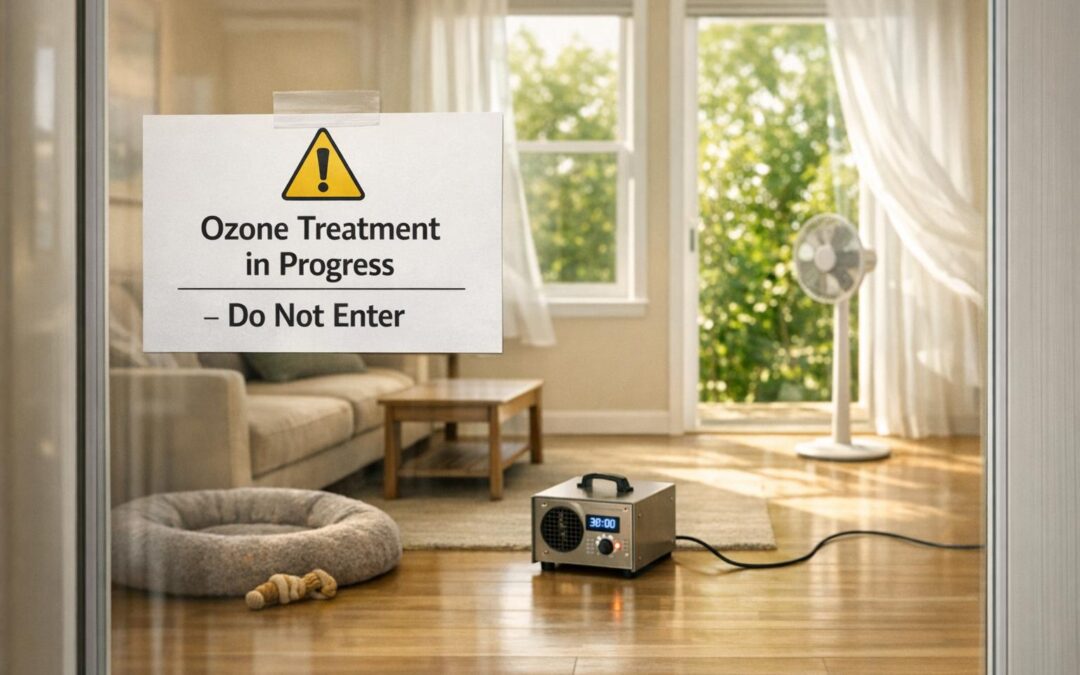
Ozone treatment is one of the most effective ways to remove pet odors from your home. Unlike sprays, candles, or surface cleaners, ozone works at the molecular level to break down odor-causing compounds deep within carpets, furniture, and even air ducts. This gas penetrates hard-to-reach areas, neutralizing smells permanently without leaving behind any residue.
Key Takeaways:
- Why odors persist: Pet odors come from organic compounds like fur oils, saliva, and urine, which embed deeply into surfaces and resist standard cleaning.
- How ozone works: Ozone (O₃) reacts with and breaks down these compounds, transforming them into harmless byproducts like water and oxygen.
- Steps for treatment:
- Clear the area of people, pets, and plants.
- Clean surfaces thoroughly to remove visible stains.
- Run an ozone generator for the recommended duration based on room size.
- Ventilate the space for 30–60 minutes after treatment.
- Safety first: Ozone can irritate lungs, so always follow safety guidelines and avoid exposure during treatment.
For complex cases or if you’re unsure about handling the process, professional services can ensure safe and thorough odor removal, with costs typically ranging from $600–$900 for homes or $150+ for vehicles.
The Science Behind Ozone Odor Removal
How Ozone Reacts with Odor Molecules
Ozone (O₃) is a molecule made up of three oxygen atoms, with one of those atoms being loosely attached and highly reactive. When ozone comes into contact with odor molecules – like those from pet dander or saliva – the extra oxygen atom detaches, bonds with the pollutant, and breaks it down. This process transforms complex, odor-causing molecules into simpler, odorless byproducts such as carbon dioxide and water vapor.
The U.S. Environmental Protection Agency (EPA) describes this process as:
"The third oxygen atom can detach from the ozone molecule, and re-attach to molecules of other substances, thereby altering their chemical composition."
Once this reaction occurs, the remaining ozone naturally reverts to oxygen (O₂), leaving no chemical residue or artificial scent behind . This method ensures a thorough and lasting solution to odor problems.
Advantages of Ozone Treatment
Ozone stands out because it doesn’t just cover up smells – it eliminates them at their source. As Powerscale explains:
"Ozone doesn’t just mask or cover up a smell; it chemically dismantles the source of the smell at a molecular level."
While ozone vs. traditional cleaning methods like enzyme cleaners, air purifiers, or sprays may only address surface-level odors or provide temporary relief, ozone goes deeper. It breaks down odor molecules embedded in surfaces, ensuring they’re gone for good.
Known as the second most powerful oxidizer globally, ozone is especially effective against organic compounds like those responsible for pet odors. Because it exists in a gaseous state, it can penetrate hard-to-reach areas. Its natural half-life of about 20 minutes means it quickly reacts and then breaks down into breathable oxygen, making the process both thorough and safe .
sbb-itb-5fea4da
How to Use an Ozone Generator to Remove Pet Odors
How to Perform Ozone Treatment for Pet Odors
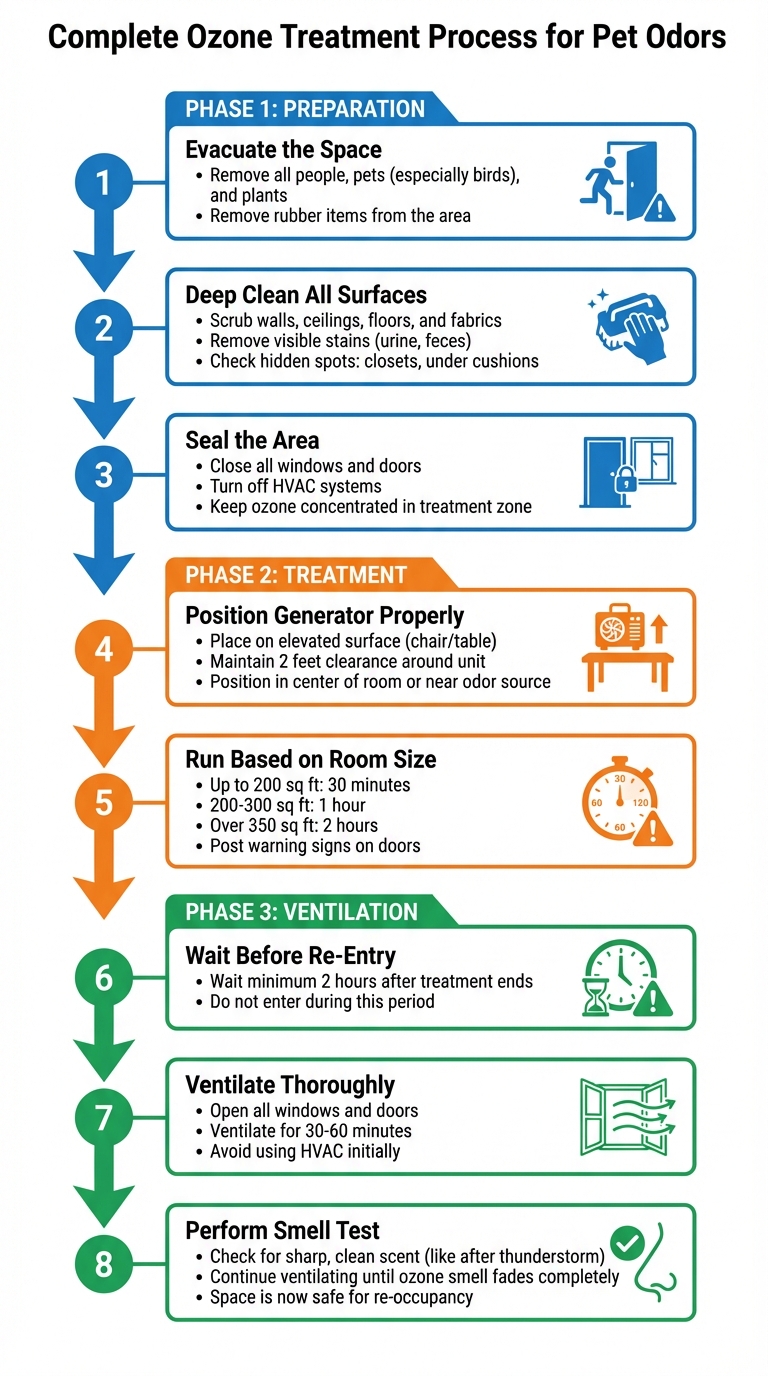
Step-by-Step Guide to Safe Ozone Treatment for Pet Odor Removal
Ozone’s chemical reactivity makes it a powerful tool for eliminating pet odors. Here’s how to use it effectively.
Preparing the Space Before Treatment
Before starting, make sure to evacuate all people, pets (especially birds), and plants to avoid harmful exposure to ozone . Also, remove rubber items from the area, as ozone can cause them to break down over time.
Begin by thoroughly cleaning the space. Scrub all surfaces – walls, ceilings, floors, and fabrics – to remove visible stains . This step is crucial because if odor sources like urine or feces remain, the smell may return after treatment. Pay extra attention to hidden spots like closets or under cushions to ensure ozone can reach everywhere.
Finally, seal the area by closing windows and doors, and turn off HVAC systems. This helps keep ozone concentrated where it’s needed most .
Once the space is ready, it’s time to set up the ozone generator.
Operating the Ozone Generator
Proper placement of the ozone generator is key for effective treatment. Since ozone is heavier than air and tends to sink, position the machine on an elevated surface like a chair or table. Ensure at least 2 feet of clearance around the unit for good airflow and place it in the center of the room or near the primary odor source (e.g., a urine-stained spot) .
Run the generator based on the size of the space:
- 30 minutes for areas up to 200 sq ft
- 1 hour for spaces between 200–300 sq ft
- 2 hours for rooms over 350 sq ft
For safety, post warning signs on entry doors to prevent anyone from entering during treatment. If odors persist, you can extend the treatment time in subsequent sessions.
After the generator has run its cycle, ventilation is critical to clear residual ozone.
Ventilating After Treatment
Once the treatment is complete, wait at least 2 hours before re-entering the space. Then, open windows and doors to allow for natural ventilation for 30–60 minutes . Avoid using HVAC systems right away, as they could circulate residual ozone to other parts of the building.
Finally, perform a "smell test." If you notice a sharp, clean scent similar to the air after a thunderstorm, continue ventilating until the smell fades completely. This ensures the space is safe and ready for re-occupancy.
Safety Precautions for Ozone Treatment
When performing ozone treatment, following strict safety measures is absolutely critical to protect both health and property.
Keeping People and Pets Away During Treatment
Ozone is a harmful gas that can damage lung tissue and lead to symptoms like chest pain, coughing, and throat irritation. Because of its ability to oxidize both odor molecules and living tissue, it’s vital to evacuate all people and animals from the treatment area. Birds, in particular, are extremely sensitive to changes in air quality and must be removed from the entire building – not just the treatment room.
Relying on your sense of smell to gauge ozone levels is not safe, as olfactory fatigue can make it difficult to detect dangerous concentrations. Always adhere to the recommended waiting period after treatment and ensure the space is thoroughly ventilated. If you experience symptoms such as coughing, chest tightness, or a burning sensation, leave the area immediately.
If managing these precautions feels overwhelming, professional ozone services can handle the entire process safely and effectively.
Using Professional Ozone Services
Without proper training, it’s easy to exceed safe ozone levels during treatment. Professional ozone services offer a safer and more reliable alternative. These experts use specialized equipment and follow established safety protocols to eliminate risks.
For example, Ozonated Cleaning LLC (https://ozonatedcleaning.com) provides expert odor removal services for homes and businesses in the Chicagoland area. Their trained technicians handle every step, from preparing the space and operating industrial-grade ozone generators to ensuring the area is fully ventilated before it’s safe to re-enter.
Costs for residential treatments typically range between $600 and $900, depending on the size of the space, while vehicle deodorizing starts at $150 per car. This all-inclusive service takes the guesswork out of ozone treatment, ensuring your environment is not only odor-free but also safe for everyone to enjoy.
Conclusion
Here’s a quick recap of the key details from the process explained above.
Main Points to Keep in Mind
Ozone treatment works by permanently removing pet odors through oxidation. It targets the root cause – odor-causing compounds – hidden in places like carpet padding, furniture, and HVAC ducts. The gas seeps into porous surfaces and neutralizes organic materials like pet saliva, urine, and fur oils that traditional cleaning methods can’t fully address.
For the treatment to be effective and safe, it’s crucial to clear the area entirely of people, pets, and plants before beginning. After the process, ventilate the space for at least 30 to 60 minutes. Only return once any lingering ozone smell has completely disappeared. This ensures the air is safe to breathe again, with no harmful residues left behind.
Why Professional Treatment Is Worth It
If safety and efficiency are priorities, professional ozone treatment is the way to go. Although DIY ozone generators are available, managing safe concentration levels can be tricky. Factors like room size, furniture, temperature, and ventilation all impact ozone levels. For instance, one study found that a generator designed for 3,000 sq. ft. produced ozone levels of 0.50 to 0.80 ppm in a 350 sq. ft. room – 5 to 10 times above public safety limits.
Professionals ensure safe ozone levels and thorough odor removal. Companies like Ozonated Cleaning LLC (https://ozonatedcleaning.com) use advanced equipment to handle every step – preparation, treatment, and ventilation. They offer reliable services at competitive rates, with residential treatments ranging from $600 to $900 and vehicle treatments starting at $150.
FAQs
Will ozone remove pet urine odor trapped under carpet padding?
Ozone isn’t particularly effective at tackling pet urine odors that have seeped into carpet padding. These smells often settle deep within porous materials, beyond the reach of ozone treatment. While ozone can help neutralize odors in the air and on surface levels, removing deeply embedded pet urine odors typically requires extra cleaning methods or even professional help.
How do I choose the right ozone generator size for my space?
To choose the right ozone generator, think about the size of the area you need to treat. Bigger or more contaminated spaces will need a generator with higher ozone output, while smaller areas require less. Always check the manufacturer’s recommendations for room size and the device’s output capacity.
Important: Ozone generators should ONLY be used in spaces where no people or pets are present, as ozone can be harmful. Prioritize safety and use the equipment properly to ensure effective odor elimination.
How long should I wait before pets can safely return after treatment?
Pets should stay out of the treated area for at least 2 hours after an ozone treatment. This waiting period gives the ozone enough time to break down into regular oxygen, ensuring the space is safe and free from any lingering risks to their health.
Recent Comments