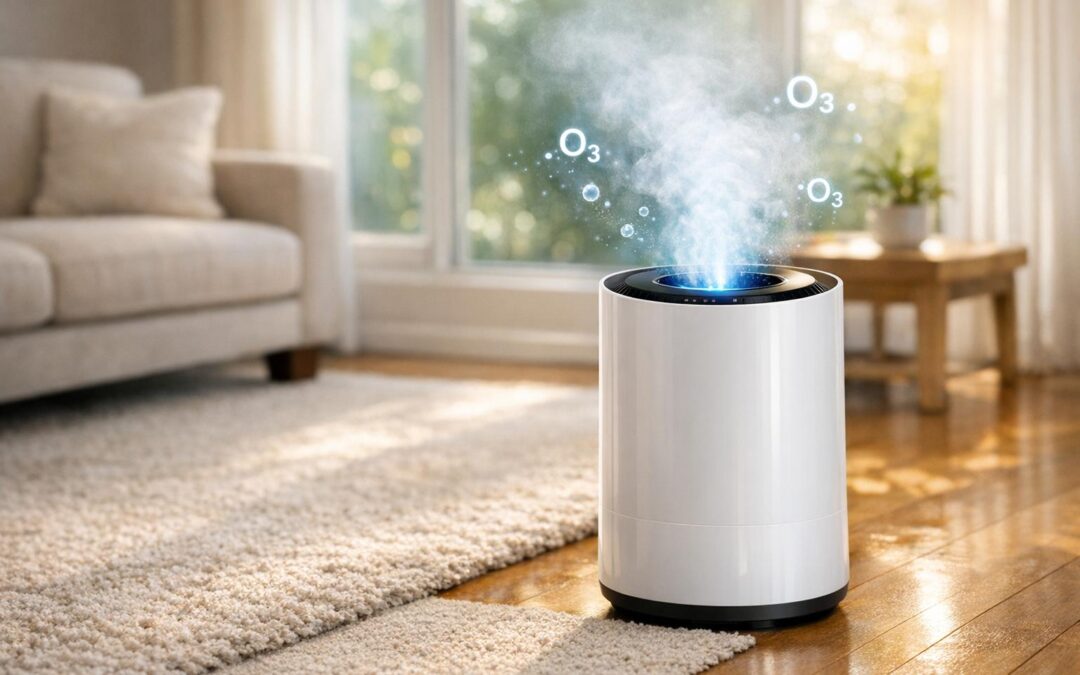
Ozone is a powerful, chemical-free way to eliminate bacteria, viruses, and mold in your home. It works by oxidizing and breaking down the molecular structures of pathogens, including hard-to-reach areas like carpets, upholstery, and air ducts. Unlike traditional cleaners, ozone leaves no residue and decomposes into oxygen within minutes. However, it must be used safely, as high concentrations can harm lungs and damage materials.
Key Points:
- What is ozone? A reactive oxygen molecule (O₃) that disrupts pathogens through oxidation.
- How does it work? It destroys bacteria, viruses, and mold by damaging cell walls, DNA, and proteins.
- Why use ozone? It reaches areas liquid cleaners can’t, leaves no residue, and eliminates odors.
- Safety tips: Use in empty spaces, ventilate thoroughly, and avoid overexposure.
For tougher jobs like smoke odors or severe mold, professional ozone services offer advanced solutions with industrial-grade equipment.
Sanitize Everything With Ozone
How Ozone Destroys Pathogens
How Ozone Destroys Pathogens: The Oxidation Process Explained
The Oxidation Process
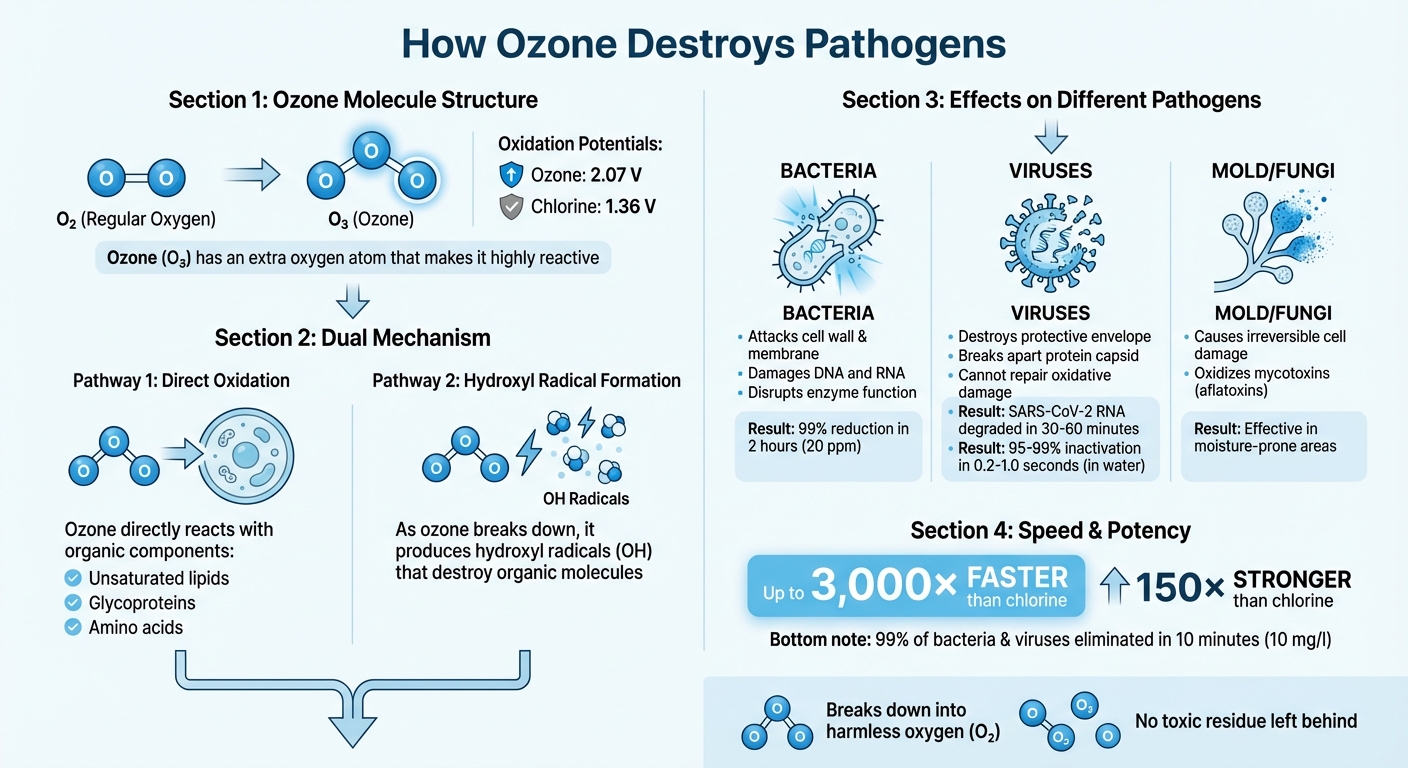
Ozone’s effectiveness lies in its molecular makeup. Unlike regular oxygen (O₂), ozone (O₃) contains an extra oxygen atom. This additional atom makes ozone highly reactive, as it easily bonds with other molecules. When ozone encounters bacteria, viruses, or mold, it triggers a process called oxidation, where it pulls electrons from their molecular structures. With an oxidation potential of 2.07 volts, ozone is much stronger than chlorine, which has an oxidation potential of just 1.36 volts.
Ozone works in two key ways. First, it directly reacts with organic components in pathogens, targeting molecules like unsaturated lipids, glycoproteins, and amino acids. Second, as ozone breaks down, it produces hydroxyl radicals (OH), which are highly reactive and capable of destroying almost any organic molecule they touch. This dual mechanism is what makes ozone so effective at eliminating harmful microorganisms.
How Ozone Affects Bacteria, Viruses, and Mold
Ozone’s oxidative properties disrupt the fundamental structures of pathogens. For bacteria, ozone attacks multiple targets. It oxidizes peptidoglycans and lipids in the cell wall and membrane, causing the cell to become permeable. This leads to leakage of cellular contents, effectively breaking down the bacteria’s structure. Additionally, ozone interferes with essential metabolic processes by attacking sulfhydryl groups in enzymes and damaging DNA and RNA. A study conducted in December 2022 at Weill Cornell Medical College demonstrated ozone’s power: a 20 ppm ozone treatment reduced viable bacteria, including E. coli and E. faecalis, by 99% in just two hours.
Viruses are particularly susceptible to ozone because they cannot repair oxidative damage. For enveloped viruses like SARS-CoV-2, ozone destroys the protective envelope, rendering the virus incapable of infecting cells. The same study showed that SARS-CoV-2 RNA degraded significantly within 30 to 60 minutes of ozone exposure. Non-enveloped viruses are also vulnerable, as ozone breaks apart their protein capsid, releasing genetic material and inactivating the virus. In water, ozone can inactivate 95% to 99% of viruses in as little as 0.2 to 1.0 seconds.
"Virus particles, unlike many other microorganisms, are unable to repair oxidative damage, and therefore would be expected to be more susceptible to oxidative antimicrobial action."
Mold and fungi are similarly affected. Ozone causes irreversible damage to fungal cells and oxidizes harmful mycotoxins, such as aflatoxins produced by Aspergillus species. This makes ozone especially effective in environments where mold thrives, like basements, bathrooms, and HVAC systems.
Ozone vs. Other Disinfectants
When compared to traditional disinfectants, ozone stands out for its speed and potency. According to Craig Westover from Weill Cornell Medical College, ozone can be "up to 3,000 times faster acting and 150 times stronger than chlorine for killing bacteria, fungi, and other pathogens under some conditions". At a concentration of 10 mg/l, ozone can eliminate up to 99% of bacteria and viruses within 10 minutes.
| Feature | Chlorine | Ozone |
|---|---|---|
| Oxidation Potential | 1.36 V | 2.07 V |
| Speed of Action | Slower | Up to 3,000× faster |
| Residue | Leaves halogenated by-products | Decomposes to pure oxygen |
| Mechanism | Protein/enzyme inhibition | Direct oxidation & hydroxyl radicals |
Unlike chlorine, which can leave behind toxic residues and form carcinogenic by-products like trihalomethanes, ozone breaks down into harmless oxygen. It also eliminates the need for storage and transportation of hazardous chemicals, reducing risks. However, ozone must be generated on-site and does not offer long-lasting residual protection once treatment stops.
Using Ozone in Your Home
Safe Ozone Treatment Steps
Before using an ozone generator, make sure to remove people, pets, plants, and any delicate materials like rubber or latex from the area. This helps prevent health risks and potential damage. Clean all surfaces – walls, floors, and fabrics – so the ozone can focus on breaking down contaminants rather than just cleaning surface dirt.
Position the generator centrally in the room, elevated off the floor, and ensure all doors and windows are closed. Set a timer, leave the area immediately, and allow 12–24 hours for the ozone to fully dissipate after the treatment. Proper ventilation is key, as ozone has a half-life of about 30 minutes in the air, though in enclosed spaces, it may take longer to clear.
"Never run an ozone generator in a room where people, pets, or plants are present." – Imperial Dade
When you return, open windows and use fans to ventilate the space thoroughly. If you notice any lingering ozone smell, continue ventilating until it completely fades.
By following these precautions, you can adjust your treatment cycle to suit the specific needs of your space.
Treating Specific Problem Areas
For targeted areas like kitchens, bathrooms, or vehicle interiors, run the generator for 15–30 minutes, then leave the space for several hours. For larger spaces like basements or rooms with water damage, a 4-hour treatment per room is recommended. To handle odors throughout an entire home, remove the HVAC filter, set the AC fan to "always on", and place the ozone generator near the air return vent. This allows ozone to circulate through the ductwork and reach multiple rooms over a 4-hour cycle.
For small items like shoes or sports gear, use a plastic tote with holes for the generator’s exhaust and excess gas. Run the treatment for 30 minutes or less. For vehicles, place the generator on the passenger floorboard, set the AC to "recirculation", and let it run for 15 minutes.
What Ozone Cannot Do
While ozone is effective at oxidizing pathogens, neutralizing odors, and addressing spores, it doesn’t fix underlying issues like moisture that causes mold. Structural problems need to be repaired separately . Ozone also won’t remove dust or particulates. Though it may cause particles to clump and settle during treatment, you’ll need to vacuum afterward to clean them up.
"Ozone should always be part of a broader cleaning and remediation plan, not a standalone or daily-use solution." – Imperial Dade
Excessive ozone exposure can harm electronics, paint, fabrics, and foam, so it’s essential to follow manufacturer guidelines carefully.
sbb-itb-5fea4da
Professional Ozone Services
When to Hire a Professional
Professional ozone treatments offer solutions to problems that DIY methods simply can’t handle. Whether you’re dealing with stubborn smoke odors, widespread mold, or lingering residues after renovations, these situations often require high-output ozone generators that outperform consumer-grade devices. For situations where quick re-occupation is necessary, professionals use catalytic scrubbers to safely and efficiently convert ozone back into oxygen. This makes professional intervention not just safer but also far more effective.
Experts manage ozone treatments with precision, using sealed environments, calibrated meters, and strict re-entry protocols. They handle ozone concentrations as high as 5,000 ppm – levels that can cause serious lung damage even with brief exposure.
"This concentration [5000ppm] is however capable of doing significant damage to the lungs, and this is why only our trained technicians should ever enter a space undergoing ozone treatment." – Joe Trasser, Owner, Joe’s AZ-Bio
Ozone’s effects aren’t limited to health risks; it can also degrade materials like natural rubber and nitrile at concentrations as low as 0.01 ppm. Professionals carefully evaluate and safeguard items such as rubber seals, foam cushions, and electronics to prevent damage during treatment.
Ozonated Cleaning LLC Services
Ozonated Cleaning LLC is a standout example of professional expertise in ozone treatments. Based in the Chicagoland area, they specialize in odor removal and disinfection using both ozone and hydroxyl technology. Their residential services, which start at $600–$900 depending on the size of the space, tackle persistent odors and pathogens that regular cleaning methods often leave behind.
What makes their approach unique is the use of dual technologies. For unoccupied spaces requiring thorough disinfection, they rely on industrial ozone generators combined with humidity control. For instance, a treatment delivering 25 ppm of ozone for 20 minutes at 90% humidity can eliminate over 99.9% of bacteria, including MRSA. For occupied spaces or sensitive settings, they turn to hydroxyl generators, a technology originally developed by NASA for safe use in environments like hospital neonatal units. This adaptability allows them to effectively eliminate pathogens without requiring lengthy evacuations.
Their services cover every step of the process, from sealing treatment zones to ensuring proper ventilation after treatment. They guarantee that ozone levels return to safe thresholds before allowing re-entry. Whether it’s addressing water-damaged basements, odors circulating through HVAC systems, or preparing commercial spaces for new tenants, their technicians handle it all with precision and care.
Conclusion
Ozone is a highly effective tool for tackling household pathogens. Its oxidation process can destroy bacteria, viruses, and mold, even in hard-to-reach areas, making it more effective than traditional liquid cleaners. In fact, the World Health Organization has identified ozone as one of the most efficient disinfectants for all types of microorganisms, with research showing it can eliminate 99.99% to 99.9999% of harmful pathogens.
What sets ozone apart is that it leaves no chemical residue. Within minutes, it naturally breaks down into oxygen, offering an environmentally friendly solution without toxic by-products.
That said, proper application is critical. Factors like concentration, contact time, humidity, and ventilation must be carefully managed. Misuse can lead to issues – low ozone levels can irritate the respiratory system of humans and pets, while high levels may damage materials like natural rubber. This is why professional handling is essential to ensure both safety and effectiveness.
For those in the Chicagoland area, Ozonated Cleaning LLC provides professional ozone and hydroxyl treatments for residential spaces, with pricing starting at $600–$900. Their trained technicians manage every step, from sealing off treatment areas to ensuring safe re-entry, so you can benefit from ozone’s powerful disinfection without the risks of a DIY approach.
When applied by experts, ozone treatment delivers exceptional pathogen elimination, helping to protect both your health and your home.
FAQs
How can I safely use ozone at home to eliminate pathogens?
To use ozone safely for disinfecting your home, start by clearing the area of people, pets, and plants. Close all windows and doors, and seal any gaps to keep the ozone contained. Place a residential ozone generator in the center of the room or inside a sealed container for smaller items. Carefully follow the manufacturer’s guidelines to set the appropriate ozone concentration and runtime – this is usually about 10–20 ppm for 30–60 minutes.
While the ozone generator is running, stay out of the area since ozone at these levels can be harmful to inhale. Once the disinfection process is finished, thoroughly ventilate the space by opening windows and using fans until the ozone level drops to a safe range (below 0.05 ppm). Afterward, you can wipe down surfaces if needed and return items to the room. If you’re dealing with a larger or more complicated project, you might want to reach out to professionals like Ozonated Cleaning LLC for expert ozone disinfection services.
Important: Ozone should never be used in spaces that are occupied. Keep children and pets out of the treated area both during and after the process until the space has been fully ventilated.
What are the potential risks of using ozone, and how can they be safely managed?
Ozone is a powerful tool for disinfection, but it must be handled with care. High levels of ozone can irritate the respiratory system, worsen asthma, and even impair lung function. Long-term exposure can be harmful to people, pets, and even household materials. On top of that, ozone can sometimes interact with certain substances, producing harmful by-products.
To use ozone safely, it’s crucial to vacate and seal off the area during treatment. Afterward, proper ventilation – like opening windows or using fans – helps lower ozone levels before anyone re-enters. For added safety, consider hiring professionals such as Ozonated Cleaning LLC, who use calibrated equipment and adhere to strict safety guidelines. By carefully managing exposure and allowing ozone to fully dissipate, you can harness its disinfecting power without unnecessary risks.
Why should I choose professional ozone treatments instead of DIY methods?
Professional ozone treatments offer a quicker, more efficient, and safer alternative to DIY methods. Using advanced equipment, specialists generate ozone at concentrations capable of eliminating 99.9% of pathogens in just one session. To put it into perspective, ozone disinfection works up to 3,000 times faster and 150 times stronger than chlorine.
What sets professional services apart is their ability to ensure ozone penetrates those tricky-to-reach spots, like air ducts, upholstery, and other hidden surfaces. Trained technicians also manage ventilation and adhere to strict safety protocols, minimizing risks and delivering unmatched results.
For homeowners in the Chicagoland area, Ozonated Cleaning LLC provides expertly managed ozone and hydroxyl treatments. These services sanitize and deodorize your home effectively – without the uncertainty or potential hazards of DIY kits.
Recent Comments