Yes – sometimes. But ozone alone usually does not make cigarette smoke smell stay gone for good.
If I had to boil the whole article down to a few lines, I’d say this:
- Ozone can knock down smoke odor in the air and on exposed surfaces
- It cannot pull tar, nicotine, and thirdhand smoke residue out of drywall, carpet padding, upholstery, insulation, or ducts
- If that residue stays, the smell can come back
- Light smoke cases may hold up after cleaning + ozone
- Heavy smoke damage often needs cleaning, HVAC work, sealing, and sometimes material removal
- People, pets, and plants must be out during treatment, and re-entry often takes about 4 to 8 hours
In other words: if you clean the source first, ozone can be the last step that helps finish the job. If you skip the cleanup, the odor often returns.
Quick comparison:
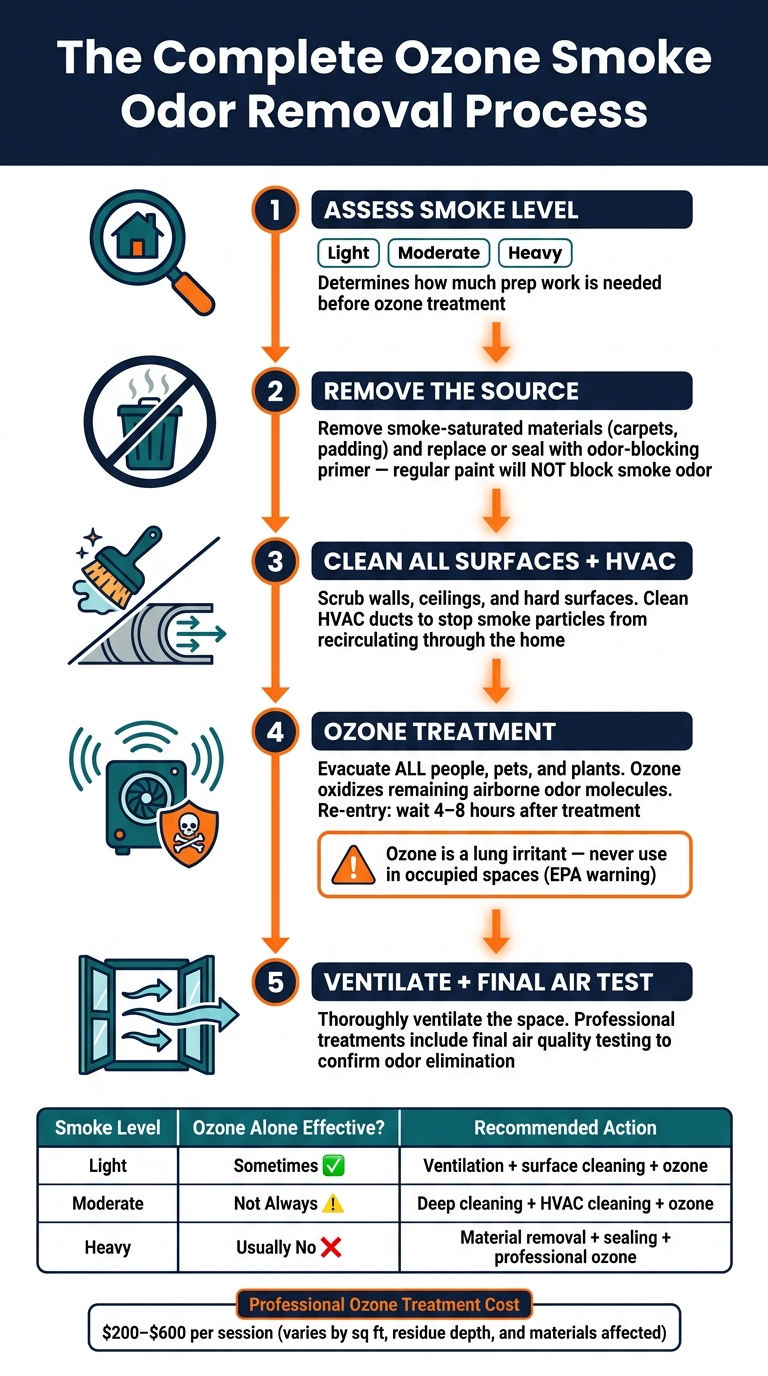
| Smoke level | Will ozone alone work? | What I’d expect |
|---|---|---|
| Light | Sometimes | Smell may stay gone after cleaning and ozone |
| Moderate | Not always | Odor can come back, especially through HVAC |
| Heavy | Usually no | Deep residue keeps off-gassing unless materials are cleaned, sealed, or removed |
So if you’re dealing with a home, apartment, or car, the main question is simple: is the smell still in the air, or is it soaked into materials? That answer decides whether ozone vs hydroxyl cleaning methods is enough – or just one part of the fix.
Will an Ozone Generator Remove Smoke Smell From My House?
Understanding how ozone machines remove home odors is the first step in determining if this method will work for your specific situation.
sbb-itb-5fea4da
How Ozone Removes Cigarette Smoke Smell
How to Permanently Remove Cigarette Smoke Smell with Ozone
Ozone Breaks Down Odor Molecules Through Oxidation
Ozone is a reactive gas. It removes cigarette smoke smell by oxidizing odor molecules and breaking them apart.
Put simply, it changes the chemical makeup of the compounds that cause the smell. That’s why ozone can help cut smoke odor instead of just covering it up.
Airborne Odor Is Easier to Treat Than Deep Residue
Ozone works best on odor that’s still in the air or sitting on exposed surfaces. But it can’t reach smoke trapped deep inside porous materials.
And that’s the catch. You may notice a short-term improvement, but if deep residue is still there, the smell can come back. That’s often the line between a temporary fix and a result that lasts.
Why Treatment Conditions and Empty Spaces Matter
This is why pre-cleaning matters. Ozone can finish the job only after residue has been removed from surfaces.
What decides how long the result lasts? How much smoke residue is left behind. Empty spaces matter too, because ozone treatment works best when it can move through the area without people, pets, or clutter getting in the way, following an ozone treatment safety guide.
When Results Last and When Odor Comes Back
The line between a fix that lasts and one that fades fast usually comes down to how much residue is still there.
When Ozone Can Lead to Lasting Results
Ozone is most likely to work for the long haul when smoke exposure was light or recent and the area has already been cleaned by hand before treatment.
That part matters more than many people think. If walls, ceilings, and HVAC parts still have smoke residue on them, ozone has less to work with. Pre-clean walls, ceilings, and HVAC parts before ozone treatment. If smoke particles are still moving through the air system, the odor can come back even after ozone treatment.
Why Ozone Alone May Not Fix Heavy Smoke Damage
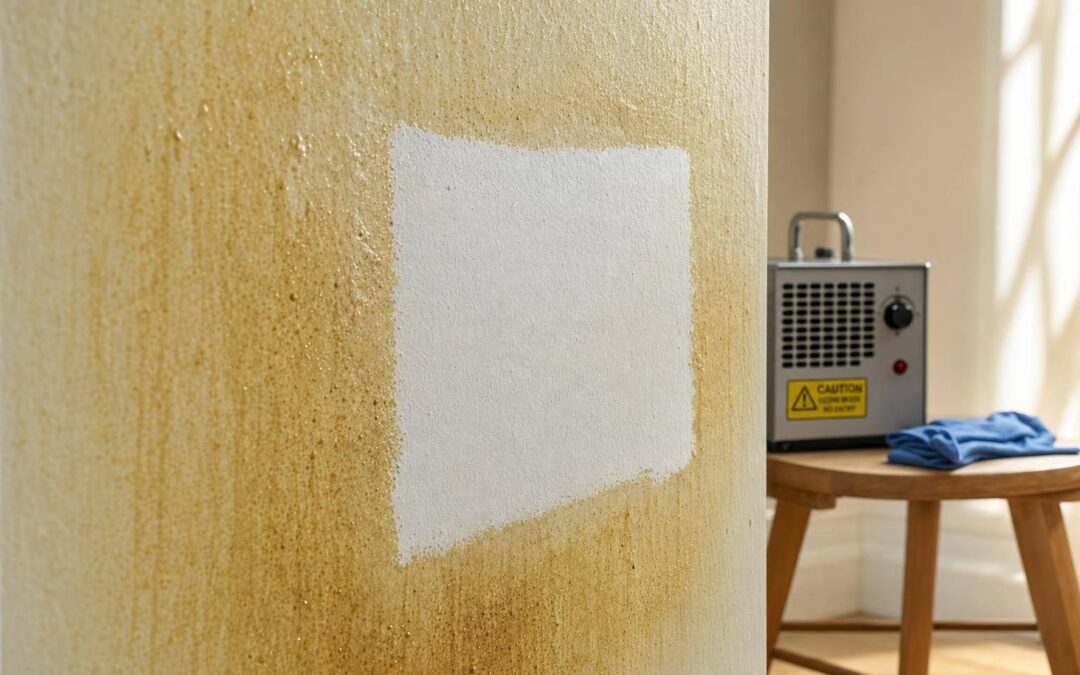
Years of indoor smoking leave behind more than a stale smell. Smoke particles are tiny enough to sink into porous materials like drywall, wood, and insulation. Once that happens, the residue bonds at a molecular level and keeps off-gassing long after the smoking stops.
That’s why ozone alone often falls short in heavy cases. Carpets and padding often need to be removed, and walls may need to be sealed with an odor-blocking primer before repainting. Regular paint will not block smoke odor. Skip removal and sealing, and the odor returns.
Odor Return by Contamination Level
How likely the smell is to come back depends on how deep the smoke has settled:
- Light (minor or short-term exposure) – odor usually does not return; ventilation, basic surface cleaning, and ozone are typically enough
- Moderate (persistent smoking, soot on vents) – odor may return if ducts aren’t cleaned; deep cleaning, HVAC duct cleaning, and professional ozone treatment are recommended
- Heavy (smoke residue in building materials) – odor is likely to return if ozone is used alone; material removal, odor-blocking primer, and professional ozone treatment are required
Once contamination gets heavy, safety and treatment planning matter just as much as odor removal. For more details on the process, see our odor removal FAQs.
Safety and Professional Treatment Planning
Once smoke damage gets heavy, safety and process matter just as much as odor removal.
Why People and Pets Must Leave During Ozone Treatment
Ozone is a powerful lung irritant. The EPA advises against using ozone generators in occupied spaces because exposure can trigger asthma attacks and respiratory distress.
That means the treatment area must be completely empty. No people. No pets. No plants.
If ozone is used the wrong way, it can also harm parts of the property itself. High ozone levels may damage rubber seals, electronics, and some plastic materials. After treatment, the space needs thorough ventilation, and re-entry may take 4 to 8 hours.
Safe use is only the first part of the job. If you want the smell gone for good, the full treatment sequence matters.
How Professional Service Improves Long-Term Results
A professional treatment follows a set sequence: source removal, surface cleaning, HVAC cleaning, deodorization, sealing, and final air testing.
Miss one step, and the whole job can fall apart. For example, if the source stays in place, the odor can keep coming back. If the HVAC system isn’t cleaned, smoke particles may keep moving through the house. And if sealing is skipped where needed, residue can keep bleeding through.
That’s why skipping any step is a warning sign.
Typical Costs and Decision Factors for Property Owners
Cost usually climbs with the level of damage. The more residue there is, and the more materials that have been affected, the more the job tends to cost.
A professional ozone treatment often runs $200 to $600 per session. Price goes up based on:
- Square footage
- Residue depth
- Whether materials need to be replaced or sealed
In plain terms, a light odor issue is one thing. Heavy smoke damage is a different animal.
Conclusion: Ozone Works Best as Part of a Complete Smoke Odor Removal Plan
The answer comes down to one thing: how much smoke residue is still there. Ozone can help, but it tends to work best after most of that residue has been removed. It does not remove tar and nicotine from embedded materials or ductwork. If residue is still left behind, ozone on its own often leads to only partial odor relief that doesn’t last long. That’s why ozone usually makes the most sense as the final step in a full smoke-odor plan.
Whether the smell stays gone often depends on what happened before the ozone treatment. Were surfaces cleaned well? Was the HVAC system dealt with? Were heavily saturated materials replaced or sealed? Those steps usually make the difference between a short-term fix and a result that holds up.
Key Takeaways for Homeowners and Property Owners
The practical rule is simple: remove the source, clean the surfaces, then use ozone. With heavy smoke damage, structural remediation needs to come first. That usually means:
- cleaning hard surfaces
- addressing HVAC
- replacing or sealing saturated materials
- using ozone as a finishing step
Safety is non-negotiable. No people, pets, or plants should be present during treatment, and the space should be fully ventilated before anyone goes back in. For extensive damage, professional remediation – such as the services offered by Ozonated Cleaning LLC in the Chicagoland area – can help improve results that last longer.
A complete plan matters more than ozone by itself.
FAQs
Can ozone reach smoke inside walls and carpets?
Yes. Since ozone is a gas, it can move into porous materials like carpets, upholstery, and curtains, where smoke particles tend to settle. It can also reach HVAC systems and small wall crevices to help neutralize smoke odors.
That said, ozone does not pass through solid surfaces like finished drywall. It may get into wall cavities only when there’s an opening. And while it can neutralize odors, it does not remove soot or other physical residue.
How do I know if smoke damage is too heavy for ozone alone?
If the odor sticks around or comes back soon after treatment, the smoke damage may be too heavy for ozone on its own.
That often means the source is still there – or buried deep inside porous materials like drywall, insulation, subfloors, or HVAC systems.
Ozone can neutralize odor molecules. But it doesn’t physically remove the root cause. For severe or large-scale smoke damage, contact a professional service like Ozonated Cleaning LLC.
What should be cleaned before ozone treatment?
Before ozone treatment, clean the space well and get rid of the odor source first. Wipe away any visible debris, dirt, grime, mold, and any smoke or soot residue on hard surfaces.
Vacuum the entire area, extract spills, and fix any active leaks or moisture problems. You should also remove or cover ozone-sensitive items, and make sure all people, pets, and plants are out of the area.
Recent Comments