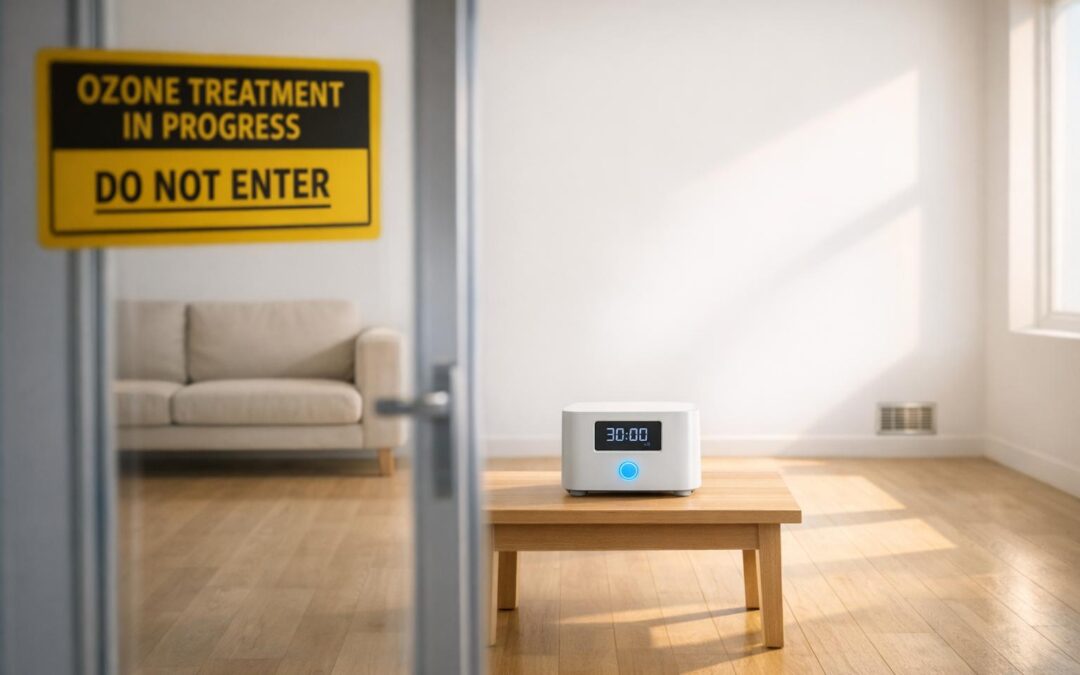
Ozone sanitization is an effective way to eliminate odors, bacteria, viruses, and mold without using chemicals. It works by oxidizing harmful substances at a molecular level, leaving no residue behind. This gas can penetrate hard-to-reach areas like cracks, upholstery, and HVAC systems, ensuring thorough cleaning. However, it must be used in unoccupied spaces due to safety concerns at high concentrations.
Key Points:
- How it works: Ozone breaks down pathogens and odor-causing molecules through oxidation.
- Applications: Ideal for odor removal, air purification, and surface sanitization in homes, vehicles, and businesses.
- Safety: High ozone levels are unsafe for humans, pets, and plants. Spaces must be ventilated post-treatment.
- Advantages: No chemical residues, bacteria can’t develop resistance, and it neutralizes odors at their source.
- Professional services: Experts use calibrated equipment for safe and effective treatments, often achieving results consumer-grade devices cannot.
Ozone treatments are a practical solution for deep cleaning, especially for stubborn odors and pathogens, but professional handling is recommended for safety and optimal results.
How Ozone Disinfects Air and Surfaces
The Oxidation Process
Ozone (O₃) is highly reactive, which makes it an effective disinfectant. When it comes into contact with bacteria, viruses, mold, or odor-causing molecules, it releases its third oxygen atom. This reaction, known as oxidation, changes the chemical makeup of these substances.
For bacteria, ozone breaks down key components of the cell wall, leading to cell lysis. This process ruptures the cell wall and membrane, killing the microorganism immediately. Unlike chemical disinfectants that work by poisoning pathogens, ozone physically destroys their cell structures, which means pathogens can’t build resistance to it.
When it comes to viruses, ozone attacks the protein envelope (capsid) and damages the RNA or DNA inside. This disruption halts the virus’s ability to reproduce, making it non-infectious. For fungi and mold, ozone interferes with cell organelles and prevents spores from germinating, effectively stopping colony formation.
These oxidation reactions are what make ozone so effective at eliminating pathogens quickly.
Pathogen Elimination Capabilities
Ozone has an oxidation potential of 2.07 volts, making it about 50% more effective than chlorine. It can eliminate bacteria and other pathogens up to 3,000 times faster than chlorine-based treatments.
However, achieving this level of disinfection requires ozone concentrations much higher than what is safe for occupied spaces. In fact, effective disinfection levels are 5 to 10 times higher than public health standards for occupied environments. For this reason, ozone treatments are always carried out in unoccupied areas. After treatment, it’s recommended to wait 30 to 60 minutes to allow the ozone to naturally break down into oxygen (O₂) before re-entering the space.
Because ozone is a gas, it can reach into porous surfaces, HVAC systems, upholstery, and tight spaces that are difficult to clean manually. This ensures thorough sanitization across the entire area. Its ability to disinfect without relying on harsh chemicals makes ozone a powerful option for deep cleaning and sanitization.
sbb-itb-5fea4da
Where to Use Ozone Sanitization
Air Purification and Odor Removal
Ozone sanitization works best in unoccupied spaces, where high concentrations can tackle tough odors and airborne pollutants. It’s particularly effective in fire restoration, eliminating smoke odors and volatile organic compounds by penetrating walls, furniture, and ventilation systems.
In homes, ozone treatments are often used to address persistent odors like tobacco smoke, pet smells, or chemical emissions from new carpets. Commercial spaces, vehicles, RVs, and boats also benefit, as ozone can reach deep into upholstery, air conditioning systems, and other hard-to-clean areas where traditional methods may struggle.
However, ozone doesn’t remove dust or pollen. For those allergens, HEPA filters or ozone purifiers offer different benefits depending on whether you need to remove particles or odors. The US EPA highlights:
High concentrations of ozone in air, when people are not present, are sometimes used to help decontaminate an unoccupied space from certain chemical or biological contaminants or odors (e.g., fire restoration).
In addition to purifying air, ozone is also used to disinfect various surfaces.
Surface Sanitization
Because ozone is a gas, it can reach areas that are challenging to clean manually. This includes upholstery, mattresses, carpets, curtains, and even the interiors of HVAC ducts. These qualities make ozone particularly useful for sanitizing soft surfaces and porous materials in homes, offices, hotel rooms, and medical facilities.
For hard surfaces like countertops, floors, and furniture, ozone provides deep disinfection by getting into crevices and textured areas. However, it’s important to remove or protect items sensitive to ozone, such as rubber, certain fabrics, wiring, and artwork, before starting treatment. Plants should also be taken out of the treatment area, as ozone can harm them. When deciding on long-term solutions, you might compare ozone and plants for ongoing air quality maintenance.
It’s worth noting that ozone isn’t effective against deeply embedded biological contaminants in porous materials like ceiling tiles or duct linings. For maintaining long-term indoor air quality, a combination of source control (eliminating pollutants at their origin) and proper ventilation is recommended. Ozone treatments are best reserved for specific decontamination needs rather than regular maintenance.
Sanitize Everything With Ozone
Advantages of Ozone Sanitization
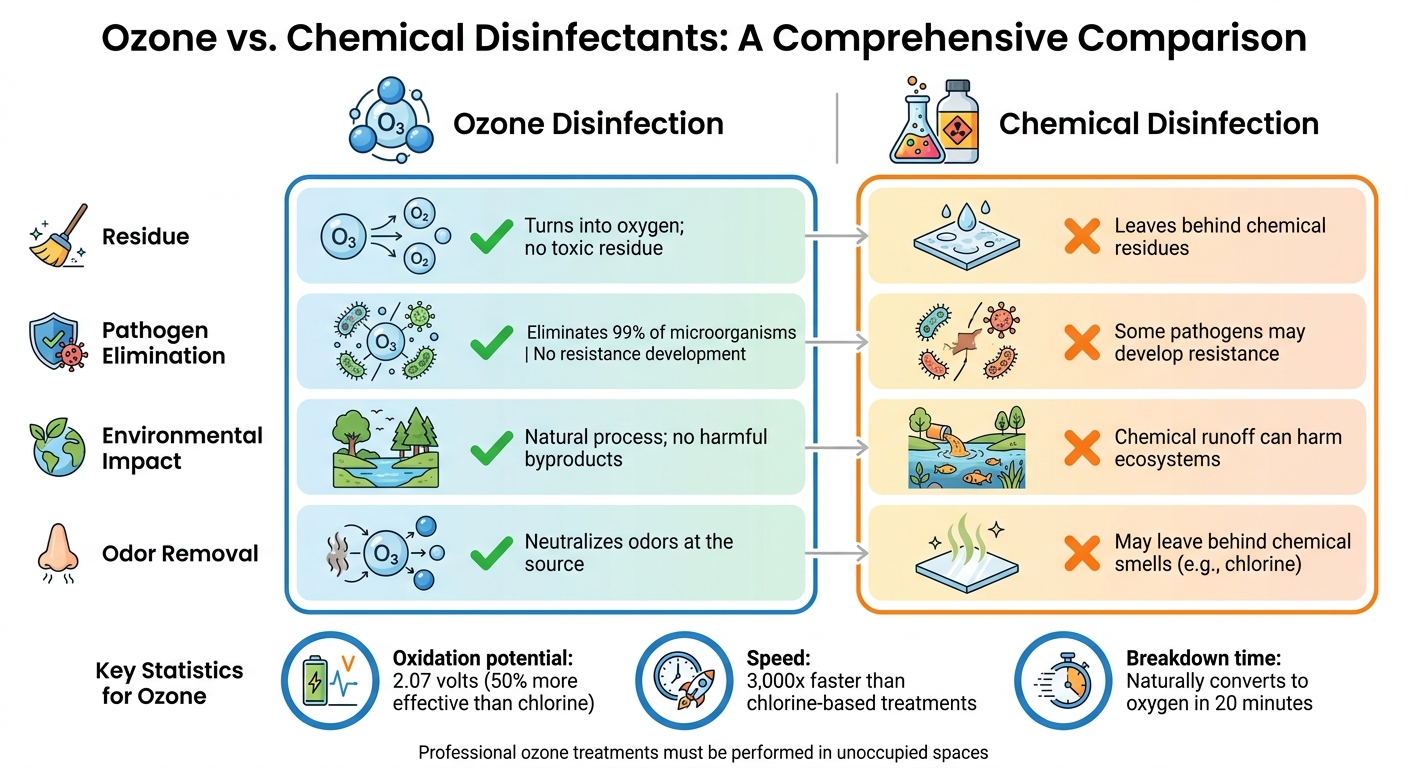
Ozone vs Chemical Disinfectants: Safety and Effectiveness Comparison
Ozone sanitization provides a way to disinfect without relying on chemicals, offering benefits for both health and the environment. This makes it an effective option for ozone cleaning for homes and surfaces.
Ozone vs. Chemical Disinfectants
Ozone stands out from traditional disinfectants like bleach or quaternary ammonium compounds because it naturally breaks down into oxygen within 20 minutes. It eliminates up to 99% of biological contaminants such as bacteria, viruses, mold, algae, spores, and yeast. Another key advantage? Bacteria cannot build resistance to ozone over time. As Damatajhiz notes:
Ozone destroys more germs in a shorter period of time than any other disinfectant. Ozone is currently the most powerful chemical disinfectant.
Here’s a quick comparison of ozone and chemical disinfectants:
| Aspect | Ozone Disinfection | Chemical Disinfection |
|---|---|---|
| Residue | Turns into oxygen; no toxic residue | Leaves behind chemical residues |
| Pathogen Elimination | Eliminates 99% of microorganisms | Some pathogens may develop resistance |
| Environmental Impact | Natural process; no harmful byproducts | Chemical runoff can harm ecosystems |
| Odor Removal | Neutralizes odors at the source | May leave behind chemical smells (e.g., chlorine) |
Data source:
Ozone is created on-site using electricity and ambient air, which eliminates the need for manufacturing, packaging, or transporting chemicals. This process reduces the overall environmental impact of cleaning operations.
But ozone isn’t just about effective disinfection – it also offers notable health and air quality benefits.
Health and Air Quality Improvements
Ozone contributes to better indoor air quality by breaking down organic pollutants instead of masking them. Since it doesn’t rely on added chemicals, there’s no risk of leaving behind residues that can irritate the skin, eyes, or lungs. It also penetrates deep into fabrics, upholstery, and ventilation systems, removing odor-causing compounds at their source. This makes it especially helpful for individuals sensitive to chemical cleaners or those aiming to minimize allergens in their homes.
That said, the US EPA has issued a caution:
Whether in its pure form or mixed with other chemicals, ozone can be harmful to health… When inhaled, ozone can damage the lungs.
For this reason, professional ozone treatments should always be performed in spaces where no one is present, ensuring safety while maximizing its benefits.
Safe Ozone Use Guidelines
Using ozone effectively and safely requires careful preparation and strict adherence to safety protocols. While ozone is a powerful tool for sanitization, exposure to high concentrations can pose serious health risks to people, pets, and plants. Following the right procedures ensures thorough disinfection while protecting everyone’s well-being.
Equipment Selection and Setup
Choosing between ozone and hydroxyl generators depends on the size of the space you’re treating. The generator’s output, measured in milligrams per hour (mg/h), should match the room’s dimensions. For example, a 1,000-square-foot room with 8-foot ceilings (8,000 cubic feet) typically requires a generator producing 5,000–10,000 mg/h for a treatment duration of 1–2 hours.
Opt for generators with adjustable output settings, built-in timers, and remote operation features. These functions allow you to start the process and leave the area immediately, minimizing exposure. Certifications like UL or ETL indicate compliance with established safety standards. Effective disinfection usually requires ozone concentrations between 1–10 ppm, but levels above 10 ppm can irritate the respiratory system, as noted by the EPA.
Position the generator in a central location, about 2–3 feet off the ground, to optimize airflow. Seal off doors and windows with plastic sheeting and tape to contain ozone within the treatment area. Using fans can help distribute ozone evenly, achieving up to 99.9% pathogen reduction within 30–60 minutes.
Once the equipment is set up, following strict safety measures is essential.
Safety Measures During Treatment
Before starting the treatment, ensure that all people, pets, and plants are evacuated from the space. Ozone concentrations above 1 ppm can irritate the lungs, and OSHA sets an 8-hour exposure limit at 0.10 ppm, while NIOSH considers 5 ppm immediately hazardous.
Post warning signs at all entry points and disable HVAC systems to prevent ozone from circulating into other areas. Use timers to control the treatment duration, adding a 10% safety buffer for extra precaution. Avoid re-entering the space during the treatment, even for a brief moment.
Once the treatment is complete, ventilate the area thoroughly by opening windows and doors and using exhaust fans to lower ozone levels to below 0.05 ppm. If you don’t have monitoring equipment, extend the ventilation period to at least 4 hours. Afterward, wipe down surfaces with a damp cloth, especially in areas where food is prepared or stored, to remove any residual ozone.
Ozonated Cleaning LLC follows these rigorous procedures throughout Chicagoland, ensuring both residential and commercial spaces are sanitized effectively and safely.
Professional Ozone Services
When it comes to ozone treatments, DIY ozone generators often fall short – both in safety and effectiveness. Consumer-grade devices either fail to reach the ozone levels needed for proper decontamination or exceed safe limits by 5–10 times, hitting concentrations of 0.50–0.80 ppm. This far surpasses the FDA‘s safety threshold of 0.05 ppm. Professional services eliminate these risks by using carefully calibrated, high-output equipment in controlled, unoccupied environments.
What sets professional services apart is their ability to manage property-specific risks with precision. High ozone concentrations, while effective, can harm materials like rubber seals, electrical wire coatings, and certain fabrics if not handled properly. Experienced technicians understand how to protect these sensitive items during treatment while still ensuring ozone penetrates deeply to eliminate odors at their source, rather than just masking them.
Ozonated Cleaning LLC: Services Overview
Ozonated Cleaning LLC operates in the Chicagoland area, using a dual-technology approach that combines ozone with hydroxyl radicals. While ozone targets odor-causing compounds at the molecular level, hydroxyl radicals deliver a 99.99% effectiveness rate against viruses, bacteria, and fungi – a figure backed by research from Kansas State University. Best of all, this chemical-free process leaves no harmful residues, as ozone naturally breaks down into oxygen, carbon dioxide, and a small amount of water.
The company specializes in tackling stubborn issues that traditional cleaning methods can’t resolve, such as "old house" odors, tobacco smoke, pet smells, and contamination from previous tenants in rental properties. One client, Giedre G., shared their experience:
I tried many things but nothing was working. Googled odor removal near me and found this chemical free treatment… After 8 hours the smell is eliminated.
Ozonated Cleaning LLC also extends its services beyond residential spaces to vehicles ($150 per vehicle), semi-trucks ($200 per truck), RVs, boats, and commercial properties. Residential treatments typically range from $600 to $900, depending on square footage.
Custom Solutions for Different Spaces
Every treatment plan is tailored to the specific needs of the space and the type of odor or contaminant involved. For example, removing cigarette smoke from a small vehicle requires a different ozone concentration and treatment duration than addressing mold in a 2,000-square-foot home. In some cases, specialized 8-hour treatments are used to eliminate deeply embedded "old house" odors that have seeped into carpets and upholstery.
Jordan F., another satisfied client, shared:
They did more to remove some pet odors I’ve been dealing with than anything I’ve tried so far. Polite, punctual, and professional.
This level of customization ensures that treatments are effective without overexposing or damaging the property.
Conclusion
Ozone sanitization stands out as a chemical-free way to tackle odors, bacteria, viruses, and fungi. Unlike ozone vs. traditional cleaning methods that often just mask smells or leave residues behind, ozone works by penetrating deeply to target and neutralize contaminants at their source. The FDA has classified ozone as "generally recognized as safe" (GRAS) for use in bottled water and food contact applications since 1995. In fact, more than 3,000 cities globally rely on it to purify water.
The effectiveness of ozone, however, depends heavily on achieving the right concentration. At levels safe for occupied spaces (below 0.05–0.10 ppm), ozone cannot effectively kill pathogens. True decontamination requires much higher concentrations – 5 to 10 times greater – which means treatments must be done in unoccupied areas. This is where professional services become crucial, as consumer-grade devices often fail to deliver the necessary results or pose safety risks.
Professional ozone treatments go beyond simply neutralizing contaminants – they also protect property. High concentrations of ozone can damage materials like rubber seals, wiring coatings, and fabrics if not handled correctly. Skilled technicians mitigate these risks while ensuring thorough sanitization.
For those in Chicagoland dealing with tough odors caused by smoke, pets, mold, or tenant residues, Ozonated Cleaning LLC offers customized, chemical-free solutions. Their services combine ozone and hydroxyl technology (see how hydroxyl technology works against pathogens), with residential treatments priced between $600 and $900, and vehicle treatments starting at $150. These methods achieve results that traditional cleaning methods simply cannot match.
Whether it’s your home, vehicle, or commercial space, professional ozone sanitization provides an effective and deep-cleaning solution for even the most stubborn odors and contaminants.
FAQs
How long do I need to stay out after an ozone treatment?
You should stay out of the treated area for at least 2 hours after an ozone treatment. This gives the ozone levels enough time to drop to safe levels. Make sure the space is well-ventilated before going back in.
Can ozone damage rubber, fabrics, or electronics in my home or car?
Yes, ozone can harm materials like rubber, fabrics, and electronics because of its highly reactive nature. For instance, it can lead to ozone cracking in rubber, causing it to weaken and degrade over time. Similarly, prolonged exposure to ozone may deteriorate fabrics and damage electronic components. To reduce these risks, it’s best to limit the exposure of such sensitive materials to environments with high ozone levels.
When should I hire Ozonated Cleaning LLC instead of using a DIY ozone machine?
Hire Ozonated Cleaning LLC for expert sanitization and odor removal services. While DIY ozone machines might seem like a convenient option, improper use can pose serious health risks to people, pets, and even plants. Ozonated Cleaning LLC uses advanced ozone and hydroxyl technology to safely and effectively disinfect both air and surfaces. This is especially important for larger or more challenging spaces – like homes, vehicles, or boats – where DIY solutions often fail to deliver the same level of thoroughness.
Recent Comments