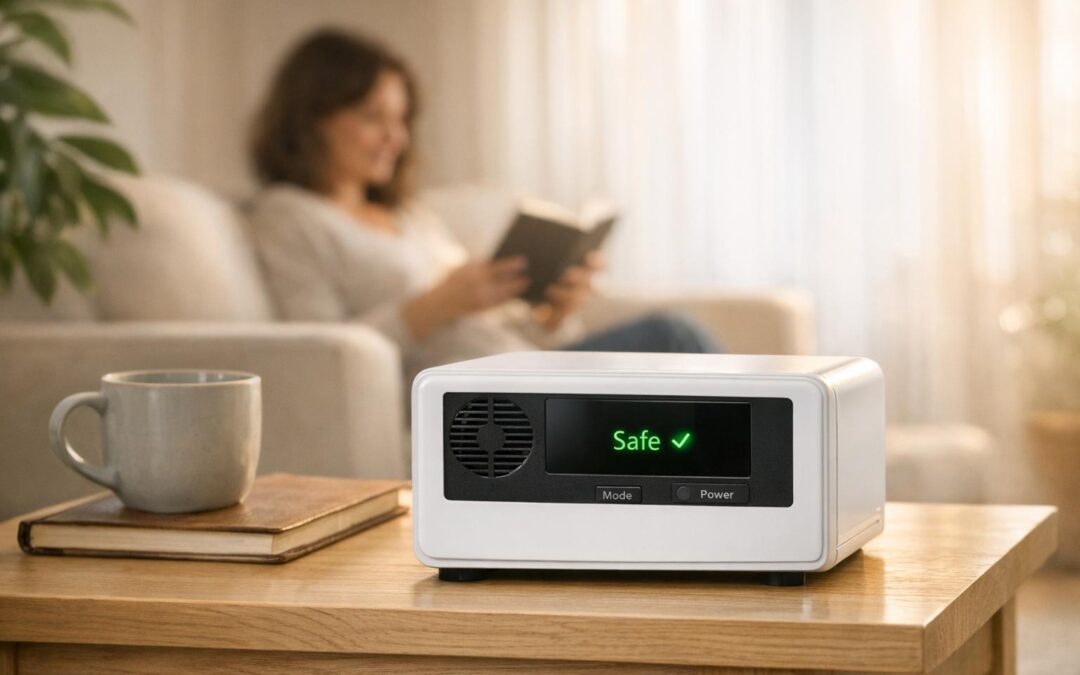
Hydroxyl technology is a safe and effective method for eliminating odors and sanitizing spaces, even when people, pets, and plants are present. Unlike ozone treatments, hydroxyl generators produce molecules that break down bacteria, viruses, mold, and VOCs without harmful byproducts. This technology, originally developed by NASA, is now widely used in homes, healthcare facilities, and businesses.
Key Points:
- Safe for Occupied Spaces: Hydroxyl generators emit minimal ozone (0.016 ppm) and hydrogen peroxide (0.64 ppm), staying within OSHA and WHO safety limits.
- How It Works: Hydroxyl radicals oxidize contaminants, converting them into carbon dioxide and water.
- Applications: Used for odor removal, air purification, and sanitization in homes, vehicles, and commercial spaces.
- Comparison to Ozone: Ozone requires evacuation due to respiratory risks, while hydroxyl systems are safe for continuous use.
Hydroxyl technology offers a practical solution for maintaining clean air without disrupting daily activities. For professional services, companies like Ozonated Cleaning LLC provide tailored solutions in the Chicagoland area.
Using a Hydroxyl Generator to Remove Odors
sbb-itb-5fea4da
How Hydroxyl Technology Works
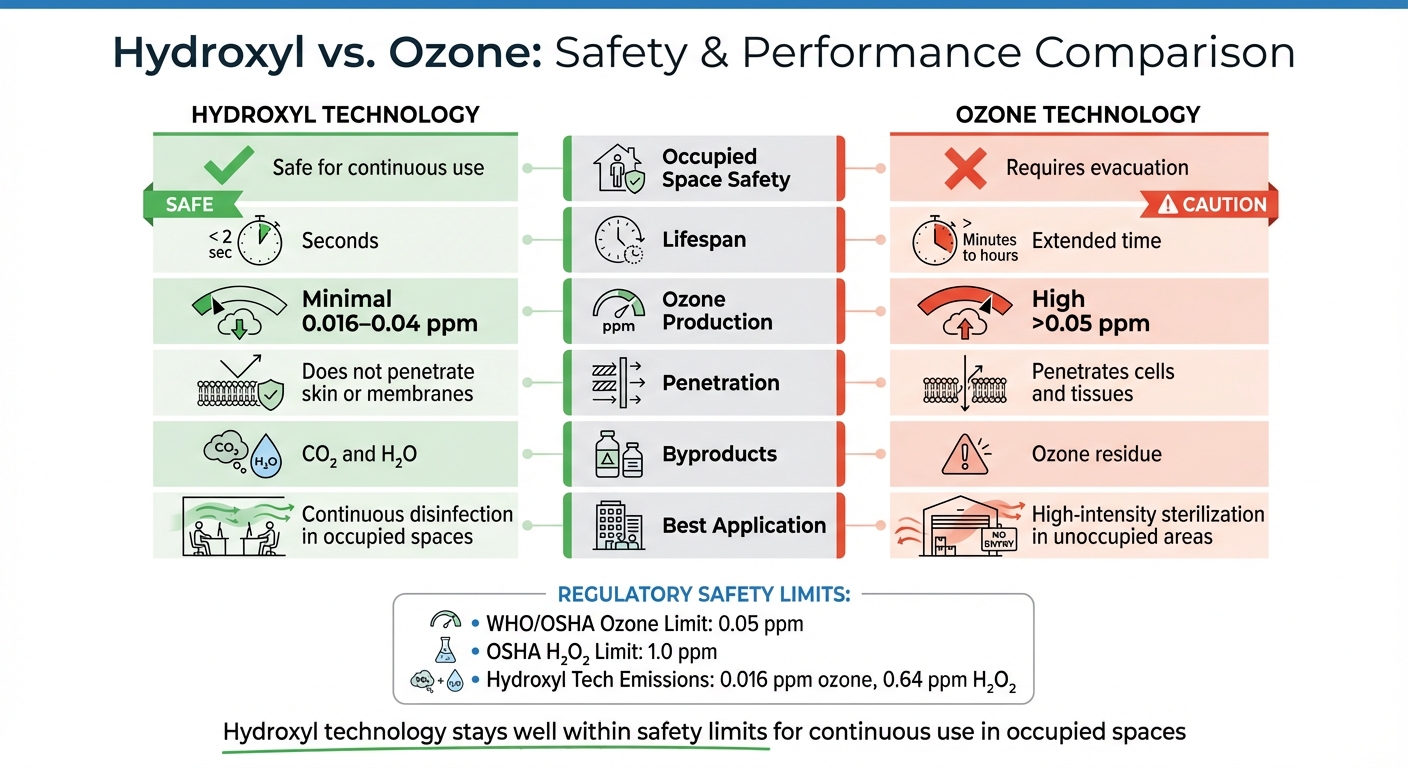
Hydroxyl vs Ozone Technology Safety Comparison Chart
Hydroxyl generators create OH· radicals through various methods, including photocatalytic oxidation (PCO), reactions involving ozone and plant terpenes, and processes using hydrogen peroxide or ions.
For instance, Panasonic‘s nanoe technology releases hydroxyl radicals contained in water droplets. These radicals have a 600-second lifespan, allowing them to penetrate deeply into fabrics and surfaces without reacting with oxygen or nitrogen in the air.
The effectiveness of hydroxyl technology depends significantly on concentration levels. Airora technology, for example, can produce up to 2 million hydroxyl radicals per cubic centimeter, which is about half the outdoor air levels typically found in Northern Europe. By comparison, outdoor air concentrations in regions like North America, India, and Central Africa average around 20 million hydroxyl radicals per cubic centimeter. These numbers highlight the efficiency of hydroxyl technology in controlled environments before diving into its role in contaminant neutralization.
How Hydroxyl Radicals Neutralize Contaminants
Once generated, hydroxyl radicals actively break down contaminants. They oxidize proteins, membranes, volatile organic compounds (VOCs) like formaldehyde and methane, as well as bacteria, viruses, mold, and allergens, converting them into harmless carbon dioxide and water.
The impact of this process is measurable. Research shows hydroxyl technology can reduce colony-forming units (CFUs) by 76.9% on surfaces and by 66.7% to 71.4% in the air, targeting molds, yeasts, and Staphylococcus. When it comes to allergens like pollen and mite feces, hydroxyl systems can inhibit 88% of allergens within 8 hours, reaching deep into fibers. Additionally, UV-PCO purifiers produce charged particles from humidity and oxygen, continuously reducing bacteria and VOCs without creating harmful byproducts. This makes them suitable for 24/7 operation in spaces where people are present.
Hydroxyl vs. Ozone: Understanding the Differences
To understand where hydroxyl technology fits best, it’s helpful to compare it with how ozone removes odors safely. Hydroxyl radicals are short-lived, lasting only seconds, and they don’t penetrate human skin, mucous membranes, or plant barriers due to the body’s antioxidant defenses. Humans have natural enzymatic and non-enzymatic systems that neutralize these radicals, making them safe for continuous use in occupied spaces.
Ozone (O₃), on the other hand, lasts longer – minutes to hours – and can penetrate cells, which is why spaces must be vacated during ozone treatments. Regulatory bodies like the World Health Organization, OSHA, and FDA cap safe ozone levels at 0.05 ppm. OSHA also limits hydrogen peroxide exposure to 1 ppm over a 10-hour workday. Hydroxyl purifiers stay well within these limits, emitting only 0.016 ppm ozone and 0.64 ppm hydrogen peroxide at maximum levels. For example, the Pyure Dynamic Protection hydroxyl generator produces between 0.03 and 0.04 grams of ozone per hour, keeping oxidant levels below 50 parts-per-billion, which is comparable to natural outdoor ozone levels.
| Feature | Hydroxyl Technology | Ozone Technology |
|---|---|---|
| Occupied Space Safety | Safe for continuous use | Requires evacuation |
| Lifespan | Seconds | Minutes to hours |
| Ozone Production | Minimal (0.016–0.04 ppm) | High concentrations (>0.05 ppm) |
| Penetration | Does not penetrate skin or membranes | Penetrates cells and tissues |
| Byproducts | Carbon dioxide and water vapor | Ozone residue |
| Application | Continuous disinfection in occupied spaces | High-intensity sterilization in unoccupied areas |
Hydroxyl technology stands out as a practical choice for continuous disinfection in occupied spaces, effectively targeting odors and pathogens without interrupting daily life. Ozone, while powerful, is better suited for unoccupied spaces due to its higher concentrations and respiratory risks at levels above 0.05 ppm. For homes, businesses, and other spaces in the Chicagoland area where people remain present during treatment, hydroxyl systems provide a safer and more convenient solution. If you’re looking for professional cleaning services that prioritize safety and efficiency, check out Ozonated Cleaning LLC.
Safety for Humans, Animals, and Plants
Hydroxyl radicals are considered safe for humans, animals, and plants due to the natural antioxidant defenses developed through evolution. These defenses neutralize hydroxyl radicals at the surface, preventing harm while allowing them to eliminate mold, bacteria, and other contaminants to improve indoor air quality with an impressive 99.99% effectiveness against pathogens.
"Hydroxyl radicals are lethal to all living organisms except humans, plants, and animals, which have evolved to coexist with them." – Ozonated Cleaning
These radicals cannot penetrate skin, mucous membranes, or plant barriers, making hydroxyl technology an excellent choice for continuous use in homes, offices, and other spaces where people and pets are present.
Exposure Levels and Regulatory Standards
In nature, hydroxyl radicals occur at concentrations of around 0.05 ppm. Indoor hydroxyl generators are designed to produce levels within this natural range, ensuring safe usage.
The main safety consideration isn’t the hydroxyl radicals themselves but the byproducts some generators might produce, such as ozone and hydrogen peroxide, a key factor when comparing hydroxyl vs ozone for sensitive environments. Regulatory bodies, including the World Health Organization (WHO) and OSHA, recommend maximum ozone levels of 0.05 ppm. For hydrogen peroxide, OSHA limits exposure to 1.0 ppm over a 10-hour workday. Modern hydroxyl generators are designed to stay well below these limits, typically emitting about 0.016 ppm ozone and 0.64 ppm hydrogen peroxide.
| Substance | Natural/Outdoor Level | Safety Limit (OSHA/WHO) | Typical Tech Emission |
|---|---|---|---|
| Hydroxyl Radicals (OH·) | ~0.05 ppm | No specific limit (Non-toxic) | 100,000–1,000,000 molecules/cm³ |
| Ozone (O₃) | Varies | 0.05 ppm | ~0.016 ppm |
| Hydrogen Peroxide (H₂O₂) | Trace | 1.0 ppm | ~0.64 ppm |
These controlled emissions demonstrate that hydroxyl-based treatments are safe for all household members, including children, pets, and plants.
Safety for Children, Pets, and Plants
Hydroxyl technology is verified to be safe for children, pets, and indoor plants when used as directed. These organisms, like adults, evolved in an environment rich in hydroxyl radicals and possess natural antioxidant defenses that neutralize the radicals before they can penetrate skin or mucous membranes.
"Hydroxyl radicals are non-toxic to humans, animals, and plants, yet they kill bacteria, virus, and mold." – Tom Moriarty, President, Alidade MER, Inc.
For maximum safety, maintain ambient humidity levels above 40%, which supports optimal hydroxyl production. Opt for devices that comply with restrictions on harmful substances and meet Intertek or similar laboratory standards, ensuring ozone emissions remain below 0.02 ppm. This makes hydroxyl technology safe even for sensitive groups like children and pets. For professional odor removal and disinfection services in the Chicagoland area, Ozonated Cleaning LLC offers hydroxyl-based solutions suitable for homes with children, pets, and plants.
Safe Operation Guidelines
Operating Procedures and Safety Protocols
Adhering to proper safety measures is crucial for ensuring both effectiveness and compliance with regulatory standards. Regularly check ozone and hydrogen peroxide levels. Modern systems typically maintain emissions at 0.016 ppm ozone and 0.64 ppm hydrogen peroxide, which are well below established safety thresholds.
It’s important to confirm that the unit employs a TiO₂-based photocatalytic process and holds an FDA Type 2 Medical Device certification, especially for sensitive environments. Be cautious with systems using UVC lamps without a catalyst, as they may produce excessive ozone, making them unsuitable for spaces where people are present.
Hydroxyl generators can cause airborne particles to settle on surfaces, so regular cleaning is essential. This includes vacuuming floors and wiping down surfaces to remove dust and allergens that may accumulate during operation.
These steps are essential for maintaining safety and maximizing the benefits of hydroxyl technology in various settings.
Common Applications and Safety Requirements
Hydroxyl technology offers effective solutions for a wide range of uses, from eliminating odors in homes to sanitizing commercial spaces. It neutralizes odors by breaking down phenol gases and VOCs (volatile organic compounds). Unlike traditional filters, hydroxyl radicals can reach areas that might otherwise be missed.
For residential applications, hydroxyl generators are safe to use while occupants are present. They can effectively remove pet odors, smoke damage, and mold. For example, Ozonated Cleaning LLC provides odor removal services in the Chicagoland area, with pricing ranging from $600 to $900, depending on the home’s size. They also offer vehicle deodorizing for $150 per vehicle and semi-truck sanitization for $200 per truck, showcasing the flexibility of this technology.
In commercial environments, hydroxyl systems ensure continuous air purification in offices, restaurants, and healthcare facilities. NASA-developed systems using 254nm UVC light with titanium dioxide are safe for occupied spaces, including neonatal units. The extremely short half-life of hydroxyl radicals – less than two seconds – means they neutralize contaminants almost instantly, without lingering in the air.
| Application Type | Occupancy During Treatment | Primary Safety Protocol | Treatment Effectiveness |
|---|---|---|---|
| Residential Odor Removal | Fully occupied | Confirm TiO₂ catalyst use | Destroys odors at the molecular level |
| Vehicle/RV Deodorizing | Unoccupied during treatment | Ensure proper ventilation | Eliminates embedded odors |
| Commercial Sanitization | Fully occupied | Monitor emission levels | Effective pathogen control |
| Healthcare Facilities | Fully occupied | FDA Type 2 certification | Continuous air purification |
Conclusion
Hydroxyl technology offers an effective way to eliminate odors and sanitize environments safely. These airborne hydroxyl radicals, which occur naturally, are neutralized by antioxidant defenses, ensuring they don’t penetrate skin, fur, or plants. With a half-life of less than two seconds, they quickly break down volatile organic compounds (VOCs), bacteria, and viruses.
To ensure safety, it’s crucial to choose certified devices. Look for equipment that uses a TiO₂-based photocatalytic process and adheres to strict emission limits – ozone levels below 0.05 ppm and hydrogen peroxide under 1 ppm, as outlined by WHO, OSHA, and FDA guidelines. Independent testing confirms that compliant systems operate well within these limits, making them safe for use in occupied spaces.
This technology provides continuous purification for a variety of settings, including homes, businesses, and healthcare facilities, without causing any interruptions. Originally developed with safety principles established by NASA researchers in the 1990s, hydroxyl technology has consistently proven its reliability across these applications. For those in the Chicagoland area seeking expert odor removal and sanitization services that meet these high safety standards, Ozonated Cleaning LLC offers tailored professional solutions.
FAQs
How long should a hydroxyl generator run?
A hydroxyl generator usually needs to operate for 3 to 5 days to effectively neutralize odors. The exact time required can vary based on how strong the odors are. For optimal results, make sure the generator runs continuously throughout this period.
Will hydroxyl treatment remove smoke and pet odors permanently?
Hydroxyl treatment is a great option for tackling smoke and pet odors, often reducing or even eliminating them. However, for lasting results, it’s important to address the root cause of the odors. Regular application and proper upkeep can help maintain a fresher environment over time.
What certifications should I look for in a safe hydroxyl unit?
Make sure the hydroxyl unit meets recognized safety and performance standards. Check for compliance with industry regulations and ensure it’s approved for use in spaces where people are present. Reliable resources, such as guidelines from Ozonated Cleaning, can help confirm its appropriateness.
Recent Comments