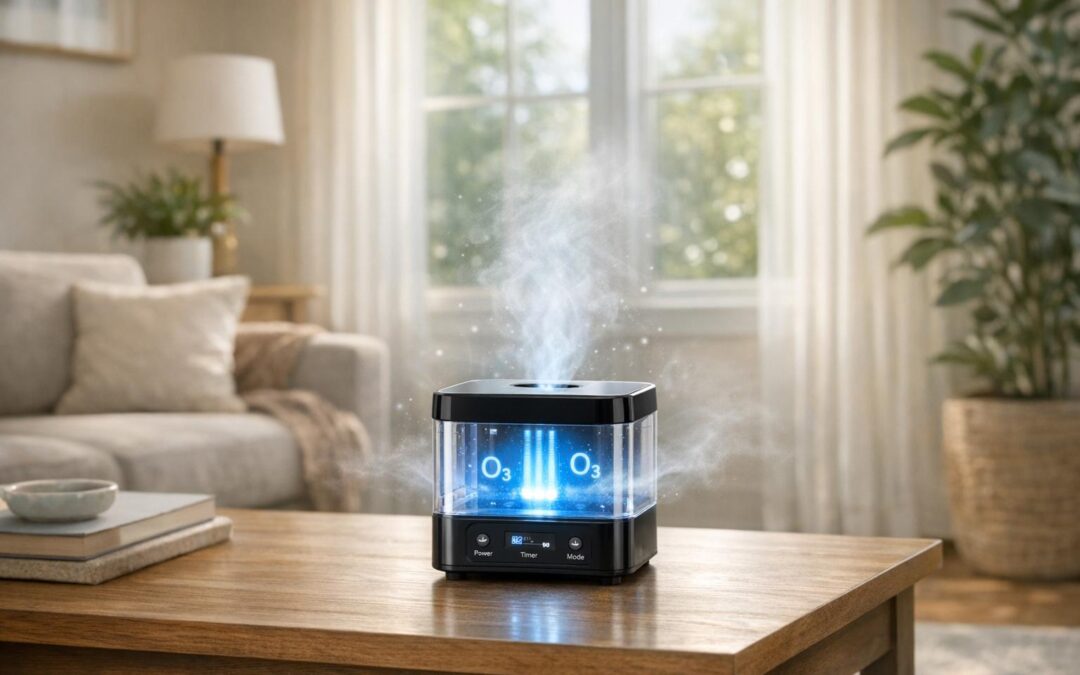
Ozone is a powerful tool for eliminating odors by breaking down odor-causing molecules at a chemical level. Unlike air fresheners that mask smells, ozone neutralizes odors from smoke, pets, mold, and cooking by oxidizing and transforming them into harmless substances. However, ozone must be used carefully, as it can irritate the respiratory system if inhaled.
Key Takeaways:
- What is Ozone? A reactive molecule (O₃) that breaks down into oxygen (O₂) after neutralizing odors.
- How It Works: Ozone oxidizes odor molecules, altering their structure and eliminating smells.
- Common Uses: Removes pet odors, cooking smells, smoke, and mold.
- Safety Precautions: Always use in unoccupied spaces; ventilate thoroughly after treatment.
- DIY vs. Professional: DIY ozone generators work for minor issues, while professionals handle severe cases like fire damage or mold.
Using ozone effectively involves proper preparation, equipment, and safety measures. For severe odors, professional services may be more efficient and safer.
How Ozone Removes Odors: The Science
What Is Ozone?
Ozone (O₃) is a molecule made up of three oxygen atoms, unlike the oxygen we breathe (O₂), which has only two. Sometimes referred to as "activated oxygen" or "heavy oxygen", ozone is highly reactive and unstable. Its half-life is short – about 20 to 30 minutes – after which it breaks down and turns back into regular oxygen. The third oxygen atom, which is loosely bonded, is what gives ozone its strong ability to neutralize odors. In fact, ozone is ranked as the second most powerful oxidizer in the world. This natural reactivity is the key to its odor-eliminating process.
How Oxidation Breaks Down Odor Molecules
When ozone interacts with odor molecules, that extra oxygen atom attaches to them and changes their structure. This oxidation process doesn’t just cover up bad smells – it chemically alters the molecules, often turning them into substances that are either less smelly or completely scent-free.
"Oxidation simply refers to the process of an atom of oxygen attaching itself to a receptive molecule, which changes its structure. Oxidation essentially turns something into something else; oftentimes the change is dramatic."
– David Hart, Founder and CEO, RamAir International
Because ozone is a gas, it can travel into hard-to-reach places like carpets, upholstery, curtains, and even small cracks in walls – areas that standard cleaning methods might overlook. Once the oxidation process is finished, ozone naturally breaks down into oxygen (O₂), leaving no chemical residue behind.
| Property | Ozone (O₃) | Oxygen (O₂) |
|---|---|---|
| Stability | Unstable/Reactive | Stable |
| Atoms | 3 Oxygen Atoms | 2 Oxygen Atoms |
| Function | Oxidizer/Sanitizer | Supports Life/Respiration |
| Half-life | ~20–30 Minutes | N/A |
| Residue | None (Reverts to O₂) | N/A |
HOW TO REMOVE ODORS WITH AN OZONE TREATMENT
Types of Household Odors Ozone Can Remove
Ozone works by breaking down odor molecules at a chemical level, rather than simply covering them up. Here’s how ozone tackles common household odors.
Cooking and Food Odors
Ozone is particularly effective at neutralizing strong food smells, such as the sharp aroma of blue cheese or the sour scent of spoiled milk. It even addresses VOCs (volatile organic compounds) from cooking oils and the lingering "toasted" odors from foods like popcorn. Beyond just smells, ozone also helps eliminate bacteria, toxins, and other byproducts left behind from cooking.
Pet Odors
Pet odors can be notoriously stubborn, as they often seep into carpets, furniture, and other soft surfaces. Ozone gas can reach areas traditional cleaning methods miss, such as inside HVAC ducts or deep within furniture padding. During the ozone generation process, ions cause pet dander particles to clump together, making them easier to remove from the air. While ozone is effective at breaking down many pet-related smells, it may not fully oxidize urea, a key component of pet urine, especially when it’s deeply absorbed into porous materials. For pet odors, shorter treatment cycles of 4 hours or less are often sufficient.
Mold, Mildew, and Smoke Odors
Ozone’s oxidizing properties make it a powerful tool against musty mold and mildew odors. It works by attacking mold spores and breaking down their cell walls. When it comes to cigarette or fire smoke, ozone penetrates into porous surfaces like upholstery, carpets, and HVAC systems, where smoke particles often settle. It eliminates phenol gases and other compounds associated with smoke odor. However, ozone works best when the source of the odor – such as burnt debris or water damage – has been addressed beforehand.
Here’s a quick guide on treatment times for different odor types:
| Odor Type | Recommended Treatment Time | Key Action |
|---|---|---|
| Light Cooking/Pet Smells | 15–60 Minutes | Focus treatment in specific areas, like the kitchen |
| Pet Urine/Furniture | 30–60 Minutes | Cover affected furniture with a tarp to trap ozone gas |
| Heavy Smoke/Tobacco | 4+ Hours | Use an HVAC fan to distribute ozone through ducts |
| Flood/Water Damage | 4+ Hours | Multiple cycles may be needed for mildew removal |
Step-by-Step Guide to Using Ozone at Home
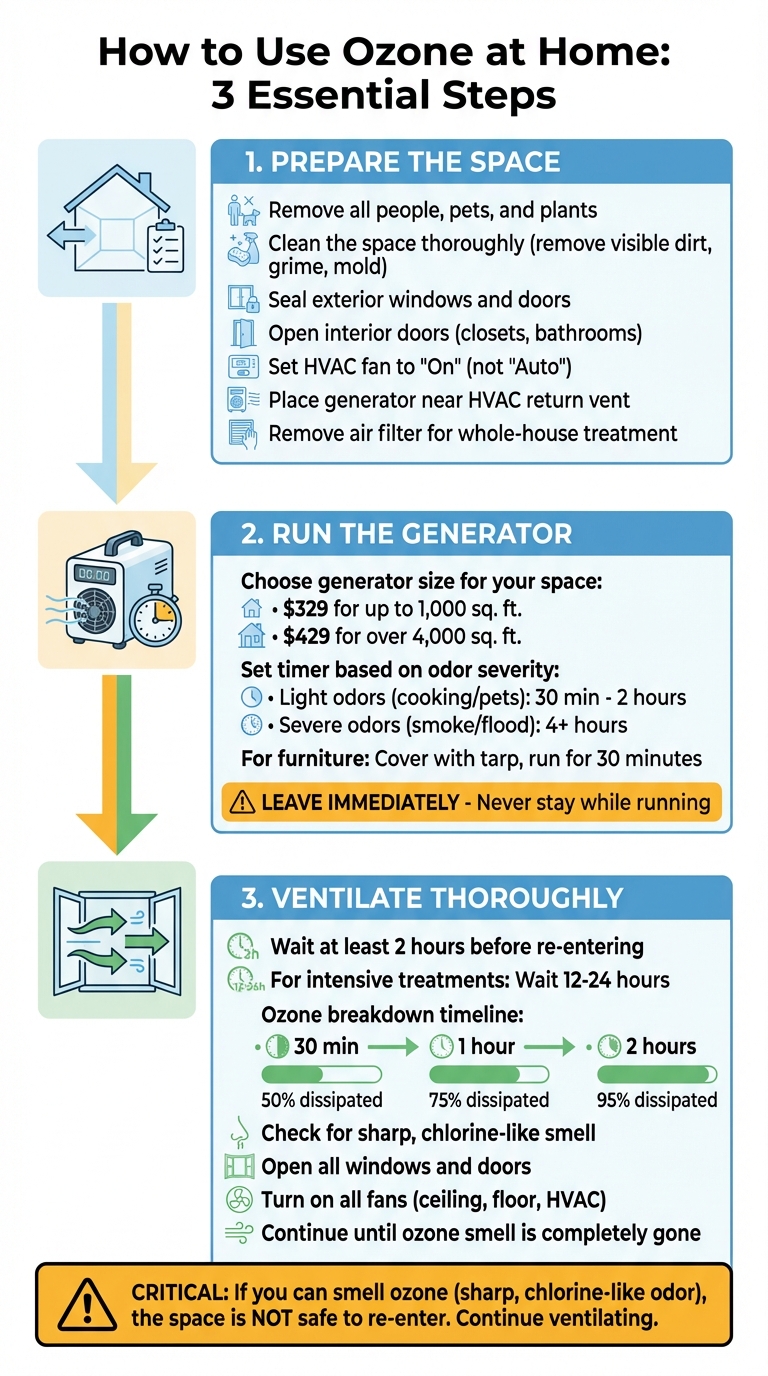
3-Step Guide to Safe Ozone Treatment at Home
Using an ozone generator at home requires careful planning and strict attention to safety. The process is broken into three main steps: preparing the space, running the generator, and ventilating the area afterward.
Preparing the Space for Treatment
Before turning on the ozone generator, make sure to remove all people, pets, and plants from the area being treated. Ozone is a strong oxidizer, and while effective in unoccupied spaces, it can irritate the respiratory system if inhaled.
Start by thoroughly cleaning the space to eliminate visible sources of odors, like dirt, grime, or mold. This allows the ozone to focus on breaking down deeper, embedded odor molecules. Seal the area by closing all exterior windows and doors, but leave interior doors (like those to closets and bathrooms) open for better air circulation. Set your HVAC fan to "On" (not "Auto") to help distribute the ozone through your home’s ductwork and vents. For whole-house treatments, place the generator near the HVAC return vent and remove the air filter to let the gas flow freely through the system.
Using an Ozone Generator
Select an ozone generator that matches the size of your space. Consumer models typically range from $329 for areas up to 1,000 sq. ft. to $429 for spaces over 4,000 sq. ft.. Adjust the timer based on the severity of the odors you’re addressing. For light odors, such as those from cooking or pets, a 30-minute to 2-hour cycle should suffice. For more severe issues, like smoke or flood damage, you may need 4 hours or longer.
If you’re deodorizing specific furniture, cover the item with a heavy tarp and position the generator’s exhaust underneath for a focused 30-minute treatment. Once the generator is running, leave the area immediately. Never stay in the space while the machine is active. After the cycle ends, the next step is ventilation.
Ventilating After Treatment
Ozone naturally breaks down over time, with a half-life of about 30 minutes. This means that half of the ozone dissipates after 30 minutes, 75% after one hour, and roughly 95% after two hours. Wait at least two hours after the generator finishes before re-entering the area. For more intensive treatments, such as whole-house applications, some manufacturers recommend waiting 12 to 24 hours to ensure safety.
When you return, check for any lingering ozone odor, which smells sharp and chlorine-like. If you notice this, open all windows and doors to create a cross-breeze and turn on fans – including ceiling fans, floor fans, and your HVAC system – to speed up air circulation. As Powerscale advises, "As a general rule, if you can still smell ozone (a sharp, chlorine-like odor), the space is not yet safe to re-enter". Continue ventilating until the smell is completely gone.
sbb-itb-5fea4da
Safety Tips for Using Ozone at Home
When using ozone at home, it’s crucial to prioritize safety due to its potential health risks. Ozone’s strong oxidizing properties can irritate the respiratory system. As the Environmental Protection Agency explains, "Ozone is a harmful gas with very different chemical and toxicological properties than oxygen". For this reason, every ozone treatment must be carried out with strict safety measures in place.
Avoiding Direct Exposure
One of the most important rules is to avoid being in the room while the ozone generator is running. The treatment area should always remain unoccupied (refer to the "Preparing the Space for Treatment" section for details). Use a timer or remote control to operate the machine from outside the room. If you’re treating a vehicle, use an extension cord through a slightly cracked window to manage the generator without entering the space. To further ensure safety, post a warning sign on the door to alert others and prevent accidental entry.
Following Manufacturer Guidelines
Always adhere to the manufacturer’s instructions to minimize health risks and prevent damage to materials. Prolonged ozone exposure can harm surfaces and even create secondary pollutants like formaldehyde when it reacts with household chemicals. According to MaxBlaster Ozone Generators, "Our ozone machines should be operated in spaces that are unoccupied during the treatment. Make sure the treatment area has been aired out prior to reoccupying".
Follow the recommended run-time charts based on the size of the area and the severity of odors. For optimal results, place the machine at counter height or higher since ozone tends to settle lower to the ground. Regular maintenance, such as cleaning the internal plates with compressed air, can help prevent mechanical issues and extend the life of the machine. After completing the treatment, proper ventilation is essential to clear out any leftover ozone.
Ensuring Proper Ventilation
After the treatment ends, allow at least two hours for ventilation, or follow the specific instructions provided by the manufacturer for more intensive cycles. When you return to the space, open all exterior windows and doors immediately and use fans to help disperse any remaining ozone. If you notice a strong, bleach-like smell upon re-entry, leave the area again and ventilate for at least another hour.
When to Hire Professional Ozone Services
DIY ozone generators can handle light odors, but when it comes to more severe problems – like fire damage, mold, or sewage backups – you’ll need industrial-grade equipment. This is where professional ozone services come in, offering two major advantages: access to advanced tools and customized treatment plans.
Benefits of Professional Services
Professional services bring expertise and equipment that go far beyond what DIY methods can achieve. Using high-output ozone generators, trained technicians can reach deep into porous materials like carpets, walls, and furniture to eliminate odors effectively. They also have access to hydroxyl technology, which allows for safe, ongoing air purification in spaces where people are present. As Susan Duffy, Founder of Queenaire Technologies, explains:
"Hydroxyl Generators are safe to use in occupied spaces whereas Ozone Generators are safe to operate in unoccupied spaces".
Professionals also understand how to handle stubborn odors that resist oxidation, such as those caused by pet urine (urea). In cases of severe contamination, like Category 3 water damage – which can escalate within just 48 hours – professional-grade sanitization becomes critical. Zona Restoration emphasizes the importance of this approach:
"Professional treatment is the most thorough and fastest way to get rid of tough odors that might be making it difficult to live in your home".
About Ozonated Cleaning LLC
When dealing with challenging odor issues, professional services ensure a thorough and effective solution. In the Chicagoland area, Ozonated Cleaning LLC stands out as a trusted provider.
Ozonated Cleaning LLC offers specialized odor removal and disinfection services for residential, commercial, vehicle, RV, and boat spaces. They use a combination of ozone and hydroxyl technology to address odor problems comprehensively. Their services include odor elimination, sanitization, allergy reduction, and surface disinfection, all performed with FDA-approved, chemical-free methods. For homes, pricing generally ranges from $600 to $900 depending on square footage, while vehicle deodorizing starts at $150 per vehicle. Their dual-technology approach allows them to handle unoccupied spaces with high-concentration ozone treatments and safely purify air in occupied areas using hydroxyl generators. For more details or to explore customized solutions, visit ozonatedcleaning.com.
DIY Ozone Treatment vs. Professional Services
If you’re considering ozone treatment for odor removal, the choice between doing it yourself and hiring professionals often comes down to cost, effectiveness, and safety. Consumer-grade ozone generators typically range from $329 to $429 for spaces between 1,000 and 4,000 square feet. However, DIY methods often require multiple treatments to tackle stubborn odors, which can add up over time. In contrast, professional services cost approximately $0.50 to $1.00 per square foot and often achieve results faster and more efficiently.
DIY vs. Professional Equipment
DIY ozone generators are designed for surface-level odors, like mild cooking smells or minor pet odors. These machines are suitable for isolated, less severe cases, but lack the power to tackle deeply embedded contaminants. Professionals, on the other hand, use industrial-grade ozone generators and thermal foggers that can penetrate carpets, walls, and even HVAC systems. These tools are capable of generating ozone levels 5–10 times higher than public health standards – levels necessary for thorough decontamination.
Safety Considerations
Safety is a major factor that separates DIY and professional ozone treatments. The EPA warns that ozone is a "potent lung irritant" and can lead to respiratory problems, even at low exposure levels. When using DIY equipment, strict precautions are necessary: people, pets, and plants must be removed from the area, and re-entry is only safe 12–24 hours after treatment. Professionals, however, are trained to follow IICRC standards, use proper protective gear, and can even utilize hydroxyl generators, which are safe for use in occupied spaces.
Here’s a quick comparison to help you weigh your options:
Comparison Table
| Feature | DIY Ozone Treatment | Professional Services |
|---|---|---|
| Cost | $329–$429 for a machine | $200–$800 per treatment |
| Equipment | Consumer-grade generators | Industrial ozone generators, hydroxyl units, and foggers |
| Effectiveness | Targets surface-level, mild odors | Deep penetration and molecular odor elimination |
| Safety Risk | High if instructions aren’t followed | Low; handled by trained technicians |
| Time Required | Multiple sessions over days/weeks | Often resolved in a single visit |
| Best For | Light pet smells and small spills | Smoke, mold, fire damage, or sewage odors |
When Professional Help Becomes Essential
For severe cases – like fire damage requiring thermal fogging (which can cost $1,200 to $3,000+) or Category 3 water damage – professional intervention is a must. DIY efforts in such situations can sometimes do more harm than good, as improper techniques may seal odor particles into surfaces, making future removal even harder. For serious contamination or when you need guaranteed results, professional services are the more dependable choice.
Conclusion
Ozone works wonders in tackling household odors by breaking down and neutralizing the molecules responsible for unpleasant smells. Its ability to seep into carpets, upholstery, HVAC systems, and even tiny wall crevices makes it particularly effective against tough odors like pet urine, smoke, mold, and lingering cooking smells.
That said, safety is non-negotiable. Ozone is a powerful lung irritant, which means strict precautions are a must. During treatment, no people, pets, or plants should be present. Additionally, proper ventilation and waiting 12–24 hours post-treatment are crucial to minimize risks. As highlighted by the American Lung Association:
"ozone is a potent lung irritant and any form of exposure to elevated levels of ozone in the air will be a major contributor to the exacerbation of lung diseases".
Once safety measures are in place, the next step is choosing the right treatment based on the severity of the odor. For minor issues in smaller spaces, DIY ozone generators can be effective – as long as you follow the manufacturer’s instructions carefully. However, for more serious problems like fire damage, black water flooding, or widespread mold, it’s best to call in professionals. They bring industrial-grade equipment and expertise to ensure the job is done thoroughly and safely.
If you’re in the Chicagoland area, Ozonated Cleaning LLC offers professional ozone and hydroxyl treatments for homes, vehicles, RVs, and commercial spaces. Their chemical-free approach to odor removal is ideal when DIY solutions don’t cut it. Home treatments typically cost between $600 and $900, while vehicle services start at $150.
FAQs
How is ozone better than traditional cleaning methods for removing odors?
Ozone takes a different approach to cleaning compared to traditional methods – it doesn’t just cover up odors; it eliminates them right at the molecular level. Air fresheners, surface cleaners, and even ventilation might temporarily improve the smell of a space, but they often leave behind the compounds causing the odors. This means those unpleasant smells can creep back over time. Ozone (O₃), on the other hand, chemically breaks down these odor-causing compounds – like volatile organic compounds, bacteria, and mold spores – leaving behind nothing but oxygen and no lingering chemical residue.
What makes ozone especially effective is its ability to tackle persistent odors like smoke, pet smells, or musty mold. It can even reach areas that are often hard to clean, such as HVAC systems, carpets, and insulation. While ozone treatment does require the space to be empty for safety reasons, it provides a long-lasting, residue-free solution that traditional cleaning methods simply can’t achieve. Companies like Ozonated Cleaning LLC use advanced ozone technology to neutralize odors at their source, ensuring a professional and thorough odor removal process.
What precautions should I take when using an ozone generator at home?
Using an ozone generator at home comes with some important safety precautions to keep in mind. First, make sure the space you’re treating is completely empty – this means no people, pets, or plants should remain in the area. Seal off the room by closing all doors, windows, and vents to keep the ozone contained and working efficiently.
Stick to the recommended operating time, usually between 30 and 60 minutes, to avoid creating too much ozone. After the generator finishes its cycle, it’s crucial to ventilate the space thoroughly. Open windows, turn on fans, and let fresh air circulate for at least 15 to 30 minutes before stepping back in.
When handling the generator, take extra care. Wear gloves and safety glasses if necessary, and always place the device on a stable, non-flammable surface, keeping it away from any heat sources. By following these guidelines, you can safely and effectively tackle unwanted odors in your home.
When should I hire a professional ozone service instead of using a DIY ozone generator?
When you’re facing stubborn, deeply ingrained odors, it’s worth considering a professional ozone service. This is especially true for challenging situations like odors from fire and smoke damage, mold, flood-related contamination (such as "black water"), or other persistent smells that affect significant portions of your home.
While DIY ozone generators might handle minor odor problems, professional services are the go-to choice for large-scale treatments. They’re equipped to handle the entire home and ensure the process is both safe and effective. Plus, they adhere to strict safety guidelines to minimize any risks associated with ozone exposure during the treatment.
Recent Comments