
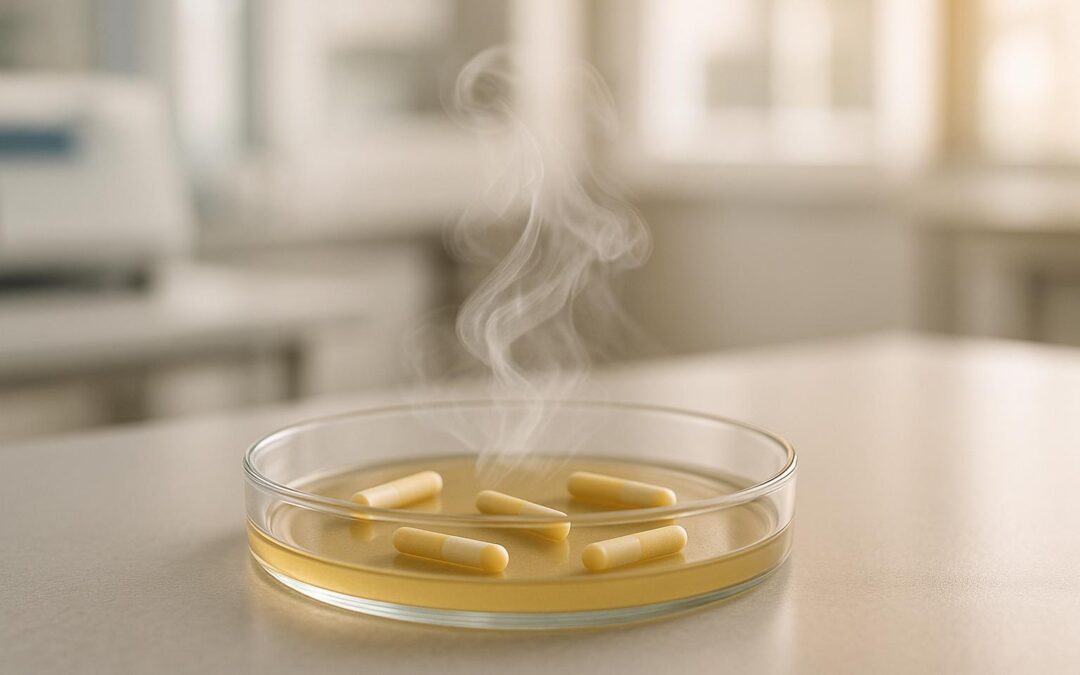
Ozone disinfection is a chemical-free method that uses ozone gas (O₃) to eliminate pathogens by oxidizing their cellular structures. To confirm its effectiveness, biological indicators (BIs) are used. These are test systems containing highly resistant spores, like Geobacillus stearothermophilus, which are harder to destroy than most pathogens. If these spores are inactivated, it indicates the process was successful.
Key points:
- Ozone disinfection breaks down pathogens and odors without leaving harmful residues.
- Biological indicators provide a pass/fail result ("growth" or "no growth") to verify disinfection.
- Indicators are strategically placed in hard-to-reach areas to test ozone penetration.
- Standards like ISO 11135 and ANSI/AAMI/ISO 11138 ensure reliable testing.
While BIs are highly accurate, they require incubation periods (up to 48 hours) and can be costly. To complement BIs, tools like chemical indicators and ozone sensors offer real-time monitoring, ensuring thorough validation. Ozonated Cleaning LLC follows these rigorous protocols to ensure safe and effective disinfection services.
Biological indicators (BIs) and chemical indicators (CIs) working together for VH2O2 sterilization.
How Biological Indicators Test Ozone Disinfection
Testing the effectiveness of ozone disinfection involves a thorough process that challenges the system with microorganisms known for their resistance. Biological indicators play a key role in this evaluation, using spores that are harder to eliminate than typical pathogens.
Using Resistant Microorganisms as Test Subjects
Research identifies Geobacillus stearothermophilus as the microorganism most resistant to ozone among tested Bacillus species, making it the preferred choice for validating biological indicators. While Bacillus subtilis is occasionally used, G. stearothermophilus remains the gold standard due to its resilience. These spores are prepared at a concentration of 1×10⁶ viable spores per indicator, ensuring a tough challenge for the disinfection process. They are typically applied as spore strips or carriers, which are strategically positioned throughout the treatment area. Often, these indicators are wrapped in materials similar to those being disinfected to mimic real-world conditions. The testing protocol is designed to ensure a thorough and reliable evaluation.
Testing Procedures for Biological Indicators
Biological indicators are placed in areas where ozone penetration might be limited, such as equipment crevices or spots with restricted airflow. During testing, the indicators are exposed to controlled ozone levels, temperature, and humidity (up to 95% RH) for specific durations. Depending on the equipment and application, the process may include multiple ozone pulses with precise vacuum and pressure cycles. Every parameter is closely monitored and recorded to ensure the test can be replicated and meets validation standards.
Once the ozone exposure is complete, the indicators are removed and incubated under conditions ideal for the test organism’s growth – typically 48 hours at 56°C (133°F) for G. stearothermophilus. Survival of spores is determined through a color change system. For instance, in a study validating ozone sterilization of PLGA nanofiber scaffolds, spore strips of G. stearothermophilus were wrapped inside the scaffolds and subjected to pulsed ozone cycles. After incubation, only the untreated controls showed a yellow color change (indicating bacterial growth), while all ozone-treated samples remained purple, signaling successful disinfection.
Following Industry Standards
Strict standards guide the use of biological indicators in ozone disinfection validation. Organizations like AAMI and ISO have established detailed protocols, including ISO 14937 for sterilization processes. Compliance with USP <55>, the ANSI/AAMI/ISO 11138 series, and ISO 14937 ensures that testing meets regulatory requirements and produces reliable results. These guidelines also address challenges like uneven ozone distribution by requiring indicators to be placed in multiple locations to identify potential "cold spots" where disinfection might be incomplete. Companies like Ozonated Cleaning LLC rely on these protocols to deliver effective disinfection validation services for homes, businesses, and specialized facilities across the Chicagoland area.
Reading Results from Biological Indicator Testing
Interpreting biological indicator (BI) results is key to confirming that treated spaces are safe. As mentioned earlier, the absence of growth in BI testing serves as clear evidence of successful ozone disinfection. These results provide tangible proof that the disinfection process has been effective throughout the treated area.
Standards for Successful Disinfection
A critical measure of ozone disinfection success is the log reduction value (LRV), which indicates how much the population of viable microorganisms has decreased after treatment. For example, a 3-log reduction means 99.9% of microorganisms have been neutralized, while a 6-log reduction – commonly regarded as the benchmark for sterilization in healthcare and other sensitive environments – represents 99.9999% inactivation. These results are evaluated against industry standards, such as the ANSI/AAMI/ISO 11138 series and ISO 11135. These guidelines not only define the criteria for effective disinfection but also provide a framework for applying these principles across various settings.
Practical Applications of Test Results
The findings from biological indicator testing directly relate to the removal of harmful pathogens in real-world environments. When highly resistant microorganisms like Bacillus subtilis ATCC9372 and G. stearothermophilus ATCC12980 are effectively neutralized, it strongly suggests that less resistant pathogens – such as common bacteria, viruses, and fungi – have also been eliminated.
Consider a real-world scenario: a commercial beef processing facility used ozone treatment to achieve up to a 3.26 log CFU/cm² reduction in aerobic bacteria and E. coli on food contact surfaces. For service providers like Ozonated Cleaning LLC, such results offer documented evidence of effective ozone treatment across diverse environments. Whether disinfecting a home, sanitizing an office, or treating an RV, biological indicator data confirms that the ozone process has worked as intended. By placing indicators in multiple locations, including areas where ozone might have limited penetration, the testing ensures there are no untreated pockets.
Using BI Data to Confirm Safety
Beyond proving disinfection effectiveness, BI data plays a crucial role in verifying safety for occupants after treatment. The successful inactivation of resistant biological indicators offers objective assurance that less resistant pathogens have also been neutralized, significantly lowering the risk of infection or exposure to harmful microorganisms.
This confirmation is especially critical in settings such as healthcare facilities, schools, and homes with vulnerable individuals. For thorough validation, biological indicator testing is often paired with real-time, multi-point monitoring using advanced ozone detection tools. This approach helps address challenges like uneven ozone distribution. Additionally, factors such as humidity and temperature can influence ozone’s effectiveness, so these conditions must be accounted for during treatment. When biological indicators confirm successful inactivation, facility managers and service providers can confidently declare spaces safe for re-entry, ensuring that all disinfection objectives have been met.
sbb-itb-5fea4da
Benefits and Drawbacks of Biological Indicators
Biological indicators (BIs) have become the go-to method for validating ozone disinfection processes, offering unmatched precision in confirming microbial inactivation. However, like any tool, they have their strengths and limitations. Understanding these can help facility managers and service providers make smarter choices when it comes to disinfection validation.
Main Benefits of Biological Indicators
One of the standout strengths of BIs is their ability to directly confirm microbial inactivation. Unlike chemical tests that merely measure ozone concentration, BIs use live microorganisms that must be destroyed during the sterilization process, providing concrete evidence of sterilization success. This makes them the most reliable option for verifying disinfection outcomes, as they assess the actual effectiveness of the process rather than just its conditions.
BIs are also highly consistent. They adhere to strict standards for purity, population (over 1×10⁶ spores), and D-value, ensuring reliable results across different testing scenarios. This standardization eliminates guesswork, delivering clear pass/fail outcomes.
Another major advantage is their use of highly resistant spores, which ensures that the disinfection process is effective against even the toughest pathogens. Research has shown that the ozone exposure levels indicated by BIs align closely with actual bacterial inactivation, reinforcing their reliability.
On top of all this, BIs meet rigorous international standards such as ISO 11135 and the ANSI/AAMI/ISO 11138 series, which is critical for regulatory compliance. For professional services like Ozonated Cleaning LLC, this means they can provide documented proof of effective disinfection that meets industry requirements.
Problems and Limitations
Despite their strengths, BIs come with some drawbacks. One of the biggest challenges is the time required to get results. BIs typically need an 18-hour incubation period when using dry-bath incubators before results are available. This delay can be a bottleneck in fast-paced environments like hospitals, hotels, or busy commercial spaces, where immediate confirmation is often needed.
The costs associated with BIs are another concern. Each test requires a single-use device containing at least one million viable spores, along with specialized incubation equipment and trained personnel . These recurring expenses can add up, especially for facilities that conduct frequent testing.
BIs also have a limited range of coverage. They are designed to measure ozone exposure at specific endpoints, making it difficult to monitor exposure at intermediate stages during the disinfection process. This can be problematic since different microorganisms have varying sensitivities to ozone.
Additionally, improper placement or handling of BIs may result in false negatives. A single BI designed for one type of microorganism may not accurately represent the kill kinetics for others, which can lead to incomplete validation.
Additional Monitoring Methods
To address the limitations of BIs, other monitoring tools can provide valuable real-time feedback. Chemical indicators, for example, use color-changing dyes like bromophenol blue to show ozone exposure instantly. Newer two-color indicators even allow for monitoring at multiple time points, offering a more detailed view of the disinfection process.
Electric ozone concentration meters and sensors take this a step further by continuously monitoring ozone distribution and concentration throughout the treatment area. This is especially useful for ensuring even gas distribution, as ozone can sometimes disperse unevenly in a space. While these sensors can be pricey when used for multi-point monitoring, chemical indicators remain a more affordable option for routine checks.
| Method | Response Time | Cost | Primary Function | Best Application |
|---|---|---|---|---|
| Biological Indicators | 18+ hours | High | Confirms microbial kill | Validation & compliance |
| Chemical Indicators | Immediate | Low | Shows ozone exposure | Real-time monitoring |
| Ozone Sensors | Real-time | Medium-High | Measures concentration | Process control |
Best Practices for Using Biological Indicators in Ozone Disinfection
Following established best practices ensures reliable disinfection results, regulatory compliance, and customer confidence. Professional disinfection services that adhere to these protocols can consistently meet safety and quality standards.
Industry Guidelines for BI Use
To ensure effective biological indicator (BI) testing, it’s crucial to follow industry standards. The ISO 11135 and ANSI/AAMI/ISO 11138 series offer detailed guidance on using biological indicators in sterilization, including ozone disinfection. These standards cover everything from how often to validate processes to proper documentation, ensuring consistent testing and reliable results. They also align seamlessly with broader validation methods discussed earlier.
BI testing should be conducted during process setup and incorporated into quality assurance programs. Key details like testing date, organism used, exposure conditions, and results must be recorded to meet regulatory requirements. These records are invaluable during audits and demonstrate a commitment to maintaining safety standards.
Using resistant test organisms is essential. For instance, Bacillus stearothermophilus ATCC12980 is often used to challenge the process due to its high resistance. Meanwhile, Bacillus subtilis ATCC9372, commonly found in everyday environments, is frequently used in practical applications.
Ozonated Cleaning LLC‘s Use of BI Protocols
Ozonated Cleaning LLC follows these guidelines to ensure effective and consistent disinfection. The company incorporates BI testing into its quality control measures to validate the success of its ozone disinfection services across the Chicagoland area. Their approach adheres to industry standards, covering everything from testing procedures to proper documentation, ensuring reliable results for residential, commercial, and vehicle applications.
By using resistant microorganisms like Bacillus subtilis and Bacillus stearothermophilus, Ozonated Cleaning LLC confirms that ozone levels are sufficient to achieve effective disinfection across various environments. This practice is especially important for diverse applications, including odor removal in homes and sanitization of vehicles.
Through rigorous BI protocols, the company provides clients with clear evidence of disinfection success. For commercial customers, this documentation is particularly valuable, as it helps them demonstrate compliance with health and safety regulations. This commitment to quality and safety fosters trust and confidence among their clients.
Improving BI Testing Methods
Advancements in BI testing are helping to refine validation processes and enhance the overall safety and effectiveness of ozone disinfection. Researchers are exploring new test strains and improved methodologies to address current challenges, such as long incubation periods that delay result confirmation.
Emerging technologies, such as advanced ozone sensors and more efficient biological indicator systems, are being developed to complement traditional testing methods. These innovations provide real-time feedback while biological indicators confirm the final outcomes, creating a more robust validation process.
For professional disinfection services, staying informed about these advancements is essential. Regular training and adopting new BI technologies can help resolve challenges like ensuring even ozone distribution and maintaining indicator viability during testing. Combining established protocols with cutting-edge developments ensures ozone disinfection remains effective and compliant with safety standards.
The key to success lies in balancing proven practices with innovation. By doing so, professional services can meet regulatory requirements while continuously improving their processes and delivering better outcomes for their customers.
Conclusion: Testing Ozone Disinfection with Biological Indicators
Biological indicators (BIs) play a crucial role in validating ozone disinfection processes. By using highly resistant microorganisms like Bacillus stearothermophilus, these tests provide a clear benchmark for success. If the most resilient spores are inactivated, it’s a strong indication that weaker pathogens have also been eliminated.
Key Points About Biological Indicators
BI testing offers straightforward results – either "growth" or "no growth" – making it a reliable way to confirm disinfection effectiveness. Standards like ISO 11135 and ANSI/AAMI/ISO 11138 back this method. These binary outcomes help service providers prove that their ozone treatments meet strict safety and regulatory requirements across various applications. For instance, studies in commercial beef processing facilities have demonstrated the real-world impact of ozone treatments, showing reductions in E. coli levels by up to 1.25 log CFU/sample on treated surfaces. This highlights the importance of BI testing as a cornerstone of effective disinfection.
Ozonated Cleaning LLC’s Approach
Practical application of these principles is what sets leading providers apart. Ozonated Cleaning LLC, serving the Chicagoland area, offers disinfection solutions that adhere to rigorous safety and quality standards. While the company’s specific testing protocols remain proprietary, they utilize advanced ozone and hydroxyl technologies to deliver effective odor removal, sanitization, and surface disinfection for homes, businesses, vehicles, and more.
FAQs
How do biological indicators confirm the effectiveness of ozone disinfection, especially in hard-to-reach areas?
Biological indicators play a key role in confirming the success of ozone disinfection, especially in areas that are hard to reach. These indicators are designed with microorganisms that have a known resistance to ozone. After the disinfection process, experts evaluate whether these microorganisms survived or were neutralized to gauge the effectiveness of the treatment.
Using biological indicators ensures that ozone has thoroughly covered all targeted surfaces and spaces. This method provides a dependable way to verify that even hidden or inaccessible spots have been properly sanitized, boosting confidence in the quality of the disinfection process.
Why are biological indicators preferred over chemical indicators for validating ozone disinfection?
Biological indicators are widely favored because they offer a dependable way to determine if ozone disinfection is truly effective in eliminating harmful microorganisms. While chemical indicators merely confirm the presence of ozone, biological indicators go a step further – they verify that the process has successfully neutralized specific pathogens.
These indicators rely on live microorganisms that are particularly resistant to ozone, providing a strong standard for evaluating disinfection performance. This approach ensures safety and adherence to health regulations across various settings, including homes, workplaces, and vehicles.
How do the incubation time and cost of biological indicators affect their use in high-demand environments like hospitals?
Biological indicators play a key role in confirming the success of ozone disinfection, particularly in busy settings like hospitals. However, two factors – incubation time and cost – can affect how practical they are to use.
Incubation time is the duration needed to verify that harmful microorganisms have been completely eliminated. In high-pressure environments, where every second counts, quicker results are essential to reduce downtime and maintain patient safety. On the other hand, cost becomes a concern, especially in larger facilities where frequent testing can quickly add up.
The challenge lies in finding the right balance – ensuring the indicators are reliable, fast, and affordable enough to meet the demands of these critical environments.
Recent Comments