
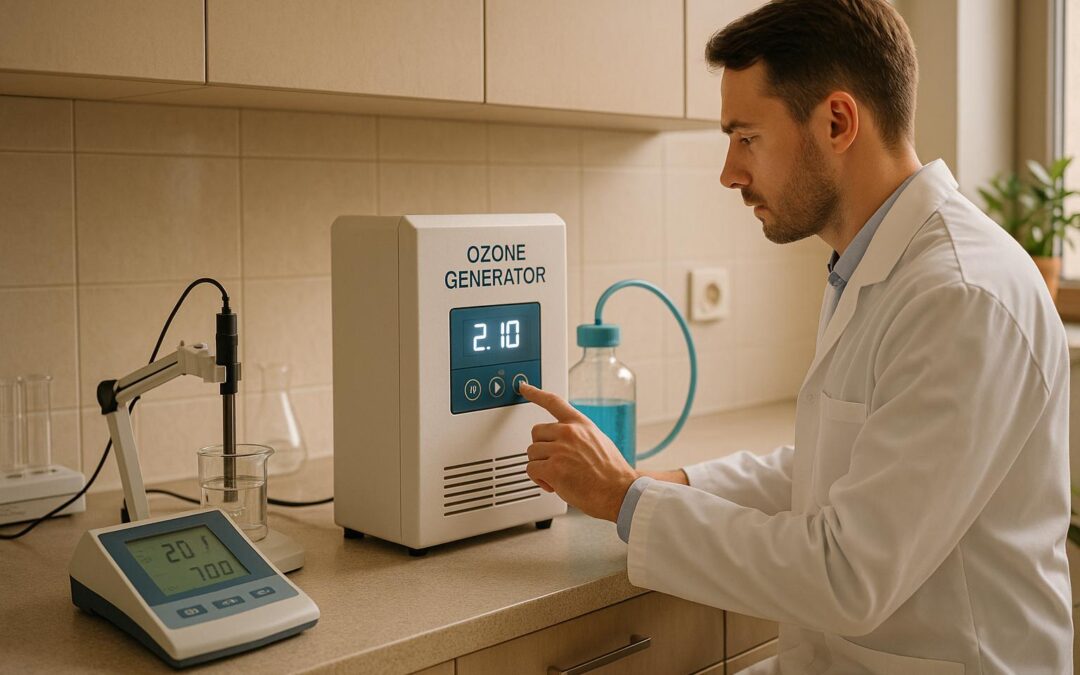
Monitoring ozone treatment is all about balancing effectiveness and safety. Proper tools and techniques ensure odors and contaminants are eliminated without creating unsafe conditions. Here’s what you need to know:
- Key Focus: Achieving the right ozone concentration is crucial. Levels that are too low won’t work, while excessive ozone can delay safe reentry.
- Tools: Use portable ozone monitors for real-time readings, fixed monitoring systems for large areas, and colorimetric methods for spot checks.
- Steps to Monitor:
- Calibrate equipment regularly.
- Maintain safe ozone levels based on regulations.
- Use real-time data to adjust treatment for optimal results.
- Applications: Ozone treatment is used in homes (e.g., smoke, pet odors), commercial spaces (e.g., restaurants, gyms), vehicles, and water damage restoration.
- Safety: Follow OSHA and EPA standards, ensure proper ventilation, and document all processes.
How Ozone Treatment Works and Where It’s Used
How Ozone Removes Odors and Contaminants
Ozone (O₃) is a highly reactive molecule, thanks to its extra oxygen atom. This reactivity makes it effective at breaking down odors and contaminants through a process called oxidation. When ozone comes into contact with odor-causing molecules, bacteria, viruses, or mold spores, it reacts at the molecular level, breaking these substances apart. This not only eliminates stubborn odors but also tackles contaminants that traditional cleaning methods might miss.
To achieve the best results, ozone levels need to be carefully controlled. Too little ozone won’t fully neutralize contaminants, while excessive amounts can pose safety risks and delay the safe use of the treated area. The ideal conditions for ozone treatment include temperatures that enhance its reactivity, humidity levels between 40–60% to maximize its effectiveness, and proper air circulation to ensure even distribution.
Real-time monitoring is essential during ozone treatment. It ensures the oxidation process is effective while maintaining safety for those reentering the space. A clear understanding of how ozone interacts with contaminants is critical for applying this treatment in different environments.
Where Ozone Treatment Is Used
The versatility of ozone treatment allows it to be used in a wide range of settings, each with its own specific requirements and challenges. Whether addressing odors in homes, commercial properties, vehicles, or during water damage restoration, proper monitoring is key to achieving safe and effective results.
In residential settings, ozone treatment is often used after events like house fires, flooding, or to combat persistent pet odors. It can also be applied to basements dealing with mold, kitchens with lingering cooking smells, or rooms affected by cigarette smoke. Each scenario requires careful monitoring to ensure ozone is evenly distributed and maintained at safe concentrations.
Commercial applications are equally diverse, spanning restaurants, hotels, offices, gyms, and healthcare facilities. These larger spaces often have more complex ventilation systems, making real-time monitoring crucial to ensure effective treatment. Ozone is used not only to eliminate odors but also to improve indoor air quality in these environments.
Vehicles, including cars, trucks, RVs, and boats, present unique challenges due to their confined spaces and limited air circulation. Without proper monitoring, ozone levels can build up too quickly, risking over-treatment. Precise control ensures odors are removed effectively while maintaining safety.
In water damage restoration, high humidity levels can significantly impact ozone’s effectiveness and safety. Professionals must continuously monitor conditions and adjust treatment parameters as the environment changes during the drying process.
Each application demands specific ozone concentrations and treatment durations, highlighting the importance of using advanced monitoring tools to adapt the process to different environments. By understanding how ozone behaves in various settings, professionals can ensure successful outcomes.
Ozonated Cleaning LLC uses cutting-edge monitoring technology to provide safe and effective ozone treatments across residential, commercial, vehicle, and water restoration applications.
How Is Ozone Measured? – Chemistry For Everyone
Tools and Methods for Monitoring Ozone Treatment
Monitoring ozone treatment effectively requires the right tools and techniques to ensure safety and precision. The choice of equipment often depends on the application, the size of the treatment area, and the level of detail needed. Professionals typically rely on three main approaches, each offering unique benefits for maintaining control and achieving optimal results.
Portable Ozone Monitors for Real-Time Readings
Portable ozone monitors play a central role in ozone treatment. These handheld devices provide instant readings of ozone levels, enabling technicians to make on-the-spot adjustments. Many advanced models use electrochemical sensors to detect even trace amounts of ozone, which is essential for maintaining safety.
What sets portable monitors apart is their mobility and adaptability. Technicians can walk through the treatment area, checking ozone distribution, identifying areas with insufficient coverage, and ensuring levels stay within safe limits. These devices are built for continuous use during treatment sessions, offering real-time data with frequent updates – perfect for dynamic environments.
In addition to their portability, many monitors include data logging features, recording readings with timestamps for documentation and quality checks. Some models also feature alarms that alert operators if ozone concentrations exceed safety thresholds. For added convenience, certain devices offer wireless connectivity, allowing real-time monitoring and data transmission to smartphones or tablets.
For larger or more complex areas, portable monitors are often paired with fixed systems to provide comprehensive oversight.
Fixed Monitoring Systems for Continuous Oversight
Fixed monitoring systems are ideal for large or intricate treatment spaces. These systems use multiple sensors strategically placed throughout the area, all connected to a central control unit. This setup ensures full coverage, even in facilities with challenging layouts or multiple zones.
Compared to portable monitors, fixed systems often deliver greater accuracy and stability. Many are designed for frequent or even automatic calibration to maintain consistent performance. They also account for environmental factors like temperature and humidity, ensuring reliable readings under varying conditions. Some advanced systems can even adjust ozone generation automatically based on real-time measurements, reducing the need for manual intervention.
Fixed systems also excel in documentation. They generate detailed records of treatment conditions, durations, and safety compliance, which is invaluable for quality assurance and regulatory purposes.
Colorimetric Methods for Spot Checks
Colorimetric methods provide a simple yet effective way to verify ozone levels, making them a useful backup to electronic systems. The most common technique involves using indigo trisulfonate, a chemical that reacts with ozone and changes color based on the concentration. Air is drawn through a solution containing this reagent, and the resulting color change indicates the ozone level.
This method is particularly useful in water treatment applications, where ozone is dissolved for disinfection. It offers accurate measurements of dissolved ozone and serves as a reliable secondary check to electronic monitors. However, colorimetric tests only provide spot measurements rather than continuous data.
When used alongside electronic monitoring, colorimetric techniques add an extra layer of reliability. Many professionals combine these methods to ensure thorough coverage and accurate verification, creating a well-rounded approach to ozone treatment monitoring.
sbb-itb-5fea4da
Step-by-Step Guide to Monitor and Improve Ozone Treatment
To get the best results from ozone treatment, it’s essential to combine careful monitoring, proper calibration, and data-driven adjustments. Here’s how you can fine-tune the process for better outcomes.
Calibrating Monitoring Equipment
Start by calibrating your monitoring equipment according to the manufacturer’s instructions. This typically involves two key steps: using ozone-free air for a zero-point calibration and a certified reference gas for span calibration. Keep a detailed record of the calibration process, including the date, time, and environmental conditions, to track how your sensors perform over time.
Setting Safe and Effective Ozone Levels
Ensure ozone concentrations stay within the limits set by regulations. For water treatments, check both dissolved ozone levels and oxidation-reduction potential (ORP). Adjust these levels as needed, taking into account factors like temperature and humidity, which can influence ozone’s behavior.
Using Data to Fine-Tune Treatment
Real-time data is a powerful tool for refining ozone treatments. Use this data to make precise adjustments, incorporating water quality metrics like chemical oxygen demand (COD), biological oxygen demand (BOD), pH, and conductivity. Advanced tools, such as predictive models and AI algorithms, can help you optimize dosing and treatment duration. Make changes gradually and document every adjustment to improve efficiency while minimizing energy consumption.
Safety and Compliance Requirements
Following safety standards and compliance protocols is critical to protecting both operators and occupants while ensuring effective ozone treatment. These protocols work hand-in-hand with the monitoring techniques mentioned earlier.
Regulatory Standards for Ozone Exposure
Agencies like OSHA and the EPA establish ozone exposure limits for workplaces and occupied spaces. Staying up-to-date with these regulations is essential to ensure compliance. After completing treatment, confirm that any residual ozone – impacted by factors like temperature, humidity, and air circulation – has returned to safe levels before allowing reentry. Environmental conditions can influence how quickly ozone dissipates, and in cases where it remains stable for longer, extended ventilation and additional monitoring may be required.
Documenting Ozone Treatment Processes
Thorough documentation of each ozone treatment is essential for regulatory compliance, evaluating effectiveness, and maintaining monitoring equipment.
Key details to record include:
- Initial conditions: Baseline ozone levels, temperature, humidity, and any odor concerns.
- Monitoring data: Real-time ozone levels with timestamps and locations throughout the treatment process.
- Ventilation and final checks: Duration of ventilation and final ozone readings before reoccupying the space.
- Equipment calibration: Dates, reference standards, and maintenance activities to ensure accurate measurements.
Store all records securely, following local regulatory requirements, and keep proper backups to safeguard data.
At Ozonated Cleaning LLC, prioritizing safety and adhering to these guidelines are at the core of our operations, ensuring every ozone treatment is carried out responsibly and effectively.
Conclusion: Getting the Best Results from Ozone Treatment
Achieving successful ozone treatment requires the right tools, strict safety protocols, and constant oversight. A well-coordinated approach ensures both effective results and a safe environment.
Modern automated ozone generators with built-in controls help avoid excessive ozone levels efficiently. Paired with real-time monitoring, these systems maintain consistent and safe treatment conditions.
Adhering to safety standards is non-negotiable. OSHA’s 0.1 ppm 8-hour exposure limit is designed to protect against both immediate health effects and long-term respiratory concerns.
Beyond safety, continuous monitoring provides valuable data that helps fine-tune treatment processes and improve air quality.
This combination of technology and regulation is already shaping industry practices:
"We have tried several other monitors, but the plug-and-play setup of Aeroqual’s system makes it very easy for us to install and use."
- Jannik K. Hansen, Project Sales Manager, JIMCO A/S
For businesses and homeowners in the Chicagoland area, Ozonated Cleaning LLC offers a practical application of these principles. Using advanced monitoring systems and years of expertise, they deliver exceptional odor removal and disinfection services. Their dedication to safety and compliance ensures that every treatment – whether for homes, commercial spaces, or vehicles – is carried out with precision and care.
FAQs
How can I monitor ozone levels to ensure safety during and after treatment?
To ensure ozone levels stay within safe limits during and after treatment, it’s crucial to use a dependable ozone detector for real-time monitoring. According to OSHA and NIOSH guidelines, the safe exposure limit is 0.1 ppm (100 ppb).
During treatment, make sure the area is completely unoccupied. No one should re-enter until the ozone concentration naturally drops to a safe level. Afterward, proper ventilation is key to speeding up this process. Using accurate sensors for ongoing monitoring can help avoid health risks like eye irritation or respiratory discomfort.
What tools can I use to accurately monitor ozone levels in my home, business, or vehicle?
To keep track of ozone levels in various settings, NIST-calibrated ozone detectors or portable ozone meters with high precision are excellent choices. These devices can measure ozone concentrations down to parts per billion (ppb), making them suitable for use in homes, commercial spaces, and even vehicles.
When selecting a device, prioritize features like portability, user-friendly operation, and the ability to calibrate for consistent accuracy. These tools play a crucial role in confirming the success of ozone treatments and ensuring that ozone levels remain safe in treated environments.
What should I do if ozone levels become unsafe during treatment?
If ozone levels go beyond the recommended safety limits during treatment, it’s crucial to act quickly to maintain a safe environment. Begin by immediately switching off the ozone generator. Then, ensure the area is well-ventilated – open all windows and doors or use fans to boost airflow. Keep an eye on ozone levels until they fall below the safe limit, typically around 0.1 ppm. Always put safety first and adhere to established guidelines when working with ozone treatments.
Recent Comments