
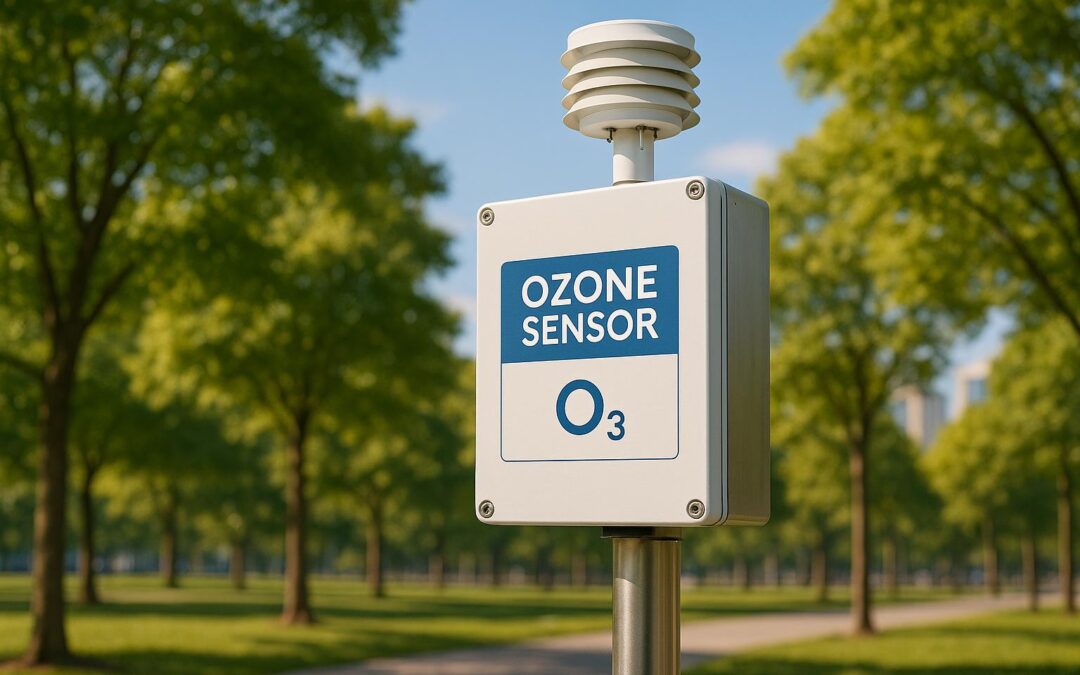
Ozone sensors are crucial tools for monitoring air quality, ensuring safety, and meeting regulatory standards. They measure ozone levels in real time, helping to protect public health and maintain safe environments in industrial, indoor, and outdoor settings. Here’s what you need to know:
- Health Risks of Ozone: Ground-level ozone can cause respiratory issues, especially for vulnerable groups like children and older adults. Even at low concentrations (0.2 ppm), it can harm tissues.
- Types of Sensors:
- Metal Oxide Semiconductor (MOS): Affordable, good for outdoor monitoring, but slower and less accurate in mixed-pollutant environments.
- Electrochemical (EC): Quick response, ideal for industrial use, but sensitive to other gases and requires frequent replacement.
- Reference-Grade Monitors: Highly precise, used for research and regulatory purposes, but expensive and complex.
- Applications: Used in workplaces, air quality networks, and disinfection services to monitor and control ozone exposure.
- Regulations: Agencies like OSHA and EPA enforce strict ozone exposure limits to protect workers and communities.
Ozone sensors provide essential data for health alerts, compliance, and safety, making them indispensable in various industries.
U.S. EPA Work on Developing Sensor Performance Testing Protocols & Targets for Ozone & PM2.5 AQM
Types of Ozone Sensor Technologies
Modern ozone sensors use different technologies, each tailored to specific needs and challenges. The three main types are Metal Oxide Semiconductor (MOS) sensors, Electrochemical (EC) sensors, and Reference-Grade Monitors (FRM/FEM). Knowing how they differ is essential for choosing the right tool for the job.
Metal Oxide Semiconductor (MOS) Sensors
MOS sensors work by detecting changes in the electrical resistance of a metal oxide surface when it interacts with ozone. These sensors need to be heated to function, which is why they’re often referred to as Heated MOS (HMOS) sensors.
HMOS sensors are capable of detecting ozone levels below 0.1 ppm. However, they take about 10 minutes to warm up and have a response delay of around 60 seconds. They are also highly sensitive to volatile organic compounds (VOCs), which can interfere with their accuracy in environments with mixed pollutants. Despite these limitations, HMOS sensors are the most affordable option, making them a popular choice for outdoor air quality monitoring networks.
Electrochemical (EC) Sensors
These sensors measure ozone by allowing it to pass through a membrane into a cell filled with an electrolyte and electrodes. This interaction generates an electron flow that can be measured.
EC sensors are known for their quick response times – just 1 to 2 seconds – making them ideal for applications like leak detection and scenarios requiring immediate ozone level alerts. They perform best at ozone concentrations above 0.1 ppm, which makes them suitable for industrial and indoor health and safety monitoring. While they are less affected by VOCs, they are particularly sensitive to gases like nitrogen dioxide (NO₂) and chlorine (Cl₂). Another drawback is their limited lifespan of 12 to 18 months, which means they need regular replacement to maintain accuracy.
Reference-Grade Monitors (FRM/FEM)
For the most precise ozone measurements, Reference-Grade Monitors are the top choice. These instruments, which include Federal Reference Method (FRM) and Federal Equivalent Method (FEM) devices, are widely used in healthcare, environmental research, and regulatory monitoring.
One example is the UV absorption sensor, which offers 1% accuracy with minimal interference from other gases. It maintains reliable performance across a broad range of ozone levels. These monitors are built to last with proper maintenance, but they come with significant downsides: they are expensive, complex to operate, and require specialized training. Their size and power needs also make them less practical for portable or distributed monitoring setups.
Each type of sensor has its strengths, making it suitable for different applications – from general air quality monitoring to precise scientific research.
| Feature | Electrochemical (EC) | Heated Metal Oxide (HMOS) | UV Absorption |
|---|---|---|---|
| Response Time | 1–2 seconds | ~60 seconds | Fast |
| Accuracy | Good, but reduced at low levels | Excellent at low levels | Very accurate (within 1%) |
| Cross-Sensitivity | High to NO₂, Cl₂ | High to VOCs | Minimal |
| Sensor Life | 12–18 months | Long, if stored properly | Excellent longevity |
| Cost | Moderate | Least expensive | Highest |
| Best Applications | Indoor/industrial monitoring, leak detection | Ambient outdoor monitoring | Regulatory compliance, research |
Selecting the right ozone sensor depends on the specific environment and application. Research shows that electrochemical sensors often outperform HMOS sensors, providing better insights into local pollution patterns and offering higher resolution for spatial monitoring. By understanding these differences, organizations can make informed decisions, whether they’re focused on workplace safety, regulatory compliance, or environmental studies.
Applications of Ozone Sensors
Ozone sensors play a crucial role across industries, from disinfection processes to monitoring community air quality. Their use highlights how these devices have become integral to maintaining safety and environmental standards in many aspects of daily life.
Real-Time Air Quality Monitoring
In industries where ozone levels fluctuate during various processes, real-time monitoring is essential for swift and effective responses.
Portable ozone monitors are particularly useful for detecting leaks and monitoring mobile operations on-site, offering flexibility for workers and safety managers alike. On the other hand, fixed ozone meters provide continuous, localized monitoring, allowing facilities to measure and control ozone levels, trigger alarms, and even interface with devices like ozone generators. These systems operate 24/7, eliminating the need for constant manual checks.
JIMCO A/S, a company specializing in air purification, has seen great results using Aeroqual S930 fixed ozone monitors. Jannik Kjær Hansen from JIMCO A/S shared:
"We have tried several other monitors, but the plug-and-play setup of the S930 makes it very easy for us to install and use."
Advances in technology, like gas-sensitive semiconductors, have made ozone detection more precise and affordable. These sensors can now detect concentrations as low as parts-per-billion (ppb), making them accessible even for smaller operations.
Real-time monitoring has also proven invaluable in situations like wildfire remediation. For example, during the cleanup of a British Columbia village destroyed by wildfire in 2021, real-time monitoring helped manage emissions and prevent worker exposure. Alan Lynch, Sr. Scientist, explained:
"The ability to remotely monitor real-time particulate matter concentrations enables management of site operations where standard monitoring identifies the ‘problem’ after it occurred. ESI’s technology enables real-time observations and decisions to be made to protect workers and the environment before an impact occurs."
These sensors not only support process control but also play a vital role in ensuring worker safety during tasks with high ozone exposure.
Workplace and Facility Safety
Ozone’s disinfecting power is unmatched, but its toxicity means strict monitoring is necessary to keep workers safe. Ozone disinfection often involves concentrations between 10–20 ppm, which are unsafe for human occupancy. This makes ozone sensors indispensable in maintaining workplace safety.
Regulations around ozone exposure are stringent. OSHA limits worker exposure to an average of 0.10 ppm over an 8-hour shift, while NIOSH sets the same limit and advises against exceeding it at any time.
| Agency | 8-Hour TWA | Other Limits |
|---|---|---|
| OSHA | 0.1 ppm | 0.3 ppm over 15 minutes |
| NIOSH | 0.1 ppm | 5 ppm IDLH (Immediately Dangerous to Life or Health) |
Ozone sensors ensure these limits are not exceeded, reducing health risks. They can trigger alarms, adjust ventilation systems, and are often installed near the ground, where ozone gas tends to settle, for accurate readings.
For companies like Ozonated Cleaning LLC, which provides ozone-based disinfection services in homes, commercial spaces, and vehicles, proper monitoring is critical. These sensors allow technicians to work safely while delivering effective odor removal and sanitization.
The cost of ozone detection equipment is modest compared to the safety benefits. Portable detectors range from $200 to $1,000, while advanced fixed systems like the PureAire Ozone Fixed Gas Detector are priced around $2,170. With sensors lasting for several years, they represent a practical investment in safety.
Regulatory and Public Health Applications
Beyond industrial and workplace uses, ozone sensors are key in regulatory frameworks designed to protect public health. For instance, the EPA updated the National Ambient Air Quality Standards (NAAQS) for ozone in 2015, setting the limit at 0.070 ppm. Meeting these standards requires robust monitoring networks equipped with reliable ozone sensors.
These networks serve multiple purposes, such as identifying pollution trends, supporting air quality forecasts, and assessing community exposure. The data they collect directly informs public health initiatives, including the Air Quality Index (AQI), which provides real-time air quality updates.
Globally, air quality monitoring is critical. According to the World Health Organization (WHO), air pollution causes 7 million premature deaths annually. The WHO emphasizes:
"Clean air is a basic human right."
Ozone sensors contribute to these efforts by supplying data to track progress toward cleaner air. Local monitoring networks are particularly important, as they provide region-specific data to address unique air quality challenges.
As technology advances and awareness of air quality grows, the applications for ozone sensors continue to expand. Whether protecting workers or entire communities, these devices are essential for managing ozone exposure and promoting healthier environments.
Benefits and Drawbacks of Ozone Sensors
Choosing the right ozone sensor requires a clear understanding of the strengths and weaknesses of different technologies. Each type of sensor has unique characteristics that make it more suitable for certain applications, depending on factors like accuracy, cost, and environmental conditions.
Metal Oxide Semiconductor (MOS) sensors are highly effective for detecting ozone concentrations below 0.1 ppm, making them a strong option for outdoor air monitoring. They deliver reliable and repeatable results and are generally unaffected by nitrogen dioxide interference. However, they come with some downsides, including a required warm-up period, higher power consumption, and slower response times. Their accuracy also declines for ozone levels above 1 ppm, which can limit their use in certain scenarios.
Electrochemical (EC) sensors are known for their quick response times and ability to measure ozone concentrations up to 20 ppm, making them ideal for controlled environments like industrial or indoor settings. These sensors are energy-efficient and provide consistent performance over time. On the downside, they are highly sensitive to nitrogen dioxide (100% cross-sensitivity), which can lead to false readings in outdoor conditions. Additionally, fluctuations in temperature and humidity can impact their accuracy, and their lifespan typically ranges from 12 to 18 months.
Reference-grade monitors stand out for their unmatched accuracy, making them the gold standard for long-term trend analysis and regulatory applications. However, their high installation and operational costs, coupled with the need for regular maintenance and technical expertise, make them less practical for widespread or budget-conscious use.
A 2023 study by the University of Colorado highlighted the challenges with low-cost ozone sensors. Researchers compared three affordable Chinese-manufactured sensors to the Thermo Scientific Model 49i Ozone Analyzer, a research-grade device. The study revealed that the low-cost sensors failed to detect ozone levels below 200 parts per billion (PPB). Even at levels as low as 100 PPB – common in outdoor environments like Shanghai – these sensors showed no response. This is a critical limitation for areas where accurate monitoring of lower ozone concentrations is essential.
Across all sensor types, temperature and humidity pose ongoing challenges. Extreme conditions can lead to inaccurate readings, and many sensors degrade over time, often requiring replacement within one to two years. Proper calibration and a thorough understanding of each sensor’s limitations are crucial for reliable performance.
Comparison Table of Sensor Technologies
Here’s a summary of the key differences among the main ozone sensor types:
| Feature | Metal Oxide Semiconductor (MOS) | Electrochemical (EC) | Reference-Grade Monitors (FRM/FEM) |
|---|---|---|---|
| Sensitivity | High (< 0.1 ppm) | Moderate (ppm levels) | Very High |
| Accuracy | Reliable at low levels | Good for indoor use | Highest available |
| Cost | Moderate | Low | High |
| Response Time | ~60 seconds | 1–2 seconds | Fast |
| Power Consumption | High | Low (<5 W) | High |
| Sensor Life | Long with proper storage | 12–18 months | Several years |
| Cross-Sensitivity | Affected by indoor VOCs | 100% to NO₂ | Minimal |
| Best Application | Outdoor air monitoring | Indoor/industrial use | Research and regulatory monitoring |
| Maintenance | Moderate | Low | High |
For businesses like Ozonated Cleaning LLC, which specialize in ozone-based disinfection, electrochemical sensors often strike the right balance between cost, accuracy, and usability. Their fast response times and ability to measure concentrations up to 20 ppm make them particularly useful during disinfection procedures. However, regular calibration and timely sensor replacements are necessary to maintain their effectiveness.
How Ozone Sensors Support Professional Disinfection Services
Professional disinfection services that rely on ozone technology depend heavily on precise sensor systems to ensure treatments are both effective and safe. Companies like Ozonated Cleaning LLC use these sensors as essential safety tools during their residential, commercial, and vehicle disinfection processes. By monitoring ozone levels in real time, sensors help keep concentrations within safe ranges, protecting technicians and property from harmful exposure.
The use of ozone sensors in disinfection isn’t just about safety – it’s also a regulatory requirement. Agencies like OSHA mandate that ozone levels be measured whenever ozone is generated to ensure worker safety. OSHA and NIOSH set strict exposure limits for workers, while the FDA regulates ozone levels for medical devices used indoors. Even when operators follow manufacturer guidelines, ozone levels can occasionally exceed these thresholds, making real-time monitoring a critical part of the process.
Maintaining Safe Ozone Levels
Achieving the right balance in ozone levels is key – too little ozone can compromise disinfection, while too much poses safety risks. Since ozone is heavier than air and tends to settle unevenly, sensors are often placed at lower levels to detect high concentrations. Adding to the challenge, humans are not reliable at detecting ozone by smell, so calibrated sensors are essential for ensuring safety.
Many professional ozone generators now come equipped with automated safety features that adjust their operation based on sensor readings. For example, some units are designed to automatically shut off or adjust output to ensure ozone concentrations stay within health standards.
Enhancing Service Quality
Ozone sensors don’t just enhance safety – they also improve the overall quality of disinfection services. By providing real-time data on ozone levels, these sensors help technicians fine-tune treatment protocols for different environments. For instance, Ozonated Cleaning LLC uses sensor data to tailor treatments for a variety of spaces, including homes (ranging from $600 to $900 depending on size), vehicles ($150 per vehicle), and semi-trucks ($200 per truck). This adaptability ensures that ozone treatments are optimized based on the size and ventilation of the space.
Additionally, sensors document ozone levels throughout the treatment process, offering a record for safety compliance and client reassurance. These records can be especially valuable for commercial clients who may need proof of proper disinfection for regulatory or insurance purposes. Post-treatment checks further confirm that ozone levels have returned to safe levels before the space is reoccupied.
To enhance safety even further, multiple sensor types are often used in tandem. Fixed ozone detectors continuously monitor areas where ozone is generated, while handheld monitors allow technicians to verify readings in different spots – especially at breathing level – to ensure comprehensive coverage. This multi-layered approach highlights the critical role ozone sensors play in both environmental monitoring and professional disinfection services.
sbb-itb-5fea4da
Conclusion: The Role of Ozone Sensors in Air Quality Management
Ozone sensors play a crucial role in safeguarding public health and ensuring safety in various applications. From monitoring air pollution levels to supporting professional disinfection services, these devices deliver real-time data that drives informed decisions and ensures compliance with regulatory standards.
Organizations like the EPA and WHO set strict ozone limits – 70 ppb (8-hour average) by the EPA and 30 ppb by WHO – highlighting the importance of accurate monitoring. These regulations directly influence operational practices across numerous industries.
For example, companies such as Ozonated Cleaning LLC rely on ozone sensors to maintain safe working conditions and meet compliance requirements. The ability to document ozone levels throughout disinfection processes not only ensures safety but also provides clients with valuable records for added confidence.
Ozone sensors also play an essential role in community air quality management. Their real-time monitoring capabilities make it possible to identify pollution hotspots, evaluate the success of air quality initiatives, and respond quickly to changing conditions. This adaptability is key to addressing air quality challenges in both urban and industrial settings.
To maintain their effectiveness, these sensors require regular calibration and maintenance. Public agencies and service providers must prioritize devices that meet high-performance standards and adhere to strict upkeep schedules. This attention to detail ensures reliable data and extends the lifespan of the sensors.
Whether it’s protecting communities from harmful ozone levels or ensuring the safety of disinfection treatments, ozone sensors represent a vital intersection of technology, health, and environmental responsibility. Their continued development and use are central to improving public health outcomes and advancing professional disinfection practices.
FAQs
How do ozone sensors help monitor and improve air quality in cities?
Ozone sensors are key in tackling urban air quality issues by delivering real-time data on ozone levels and other pollutants. This localized data pinpoints areas with high pollution, giving city planners and policymakers the insights they need to take targeted actions, like optimizing traffic flow or tightening emission regulations.
With the help of advanced technology, these sensors provide precise monitoring, which is crucial for safeguarding public health, minimizing environmental damage, and ensuring cities meet air quality standards in crowded urban spaces.
What are the key differences between Metal Oxide Semiconductor, Electrochemical, and Reference-Grade ozone sensors?
Metal Oxide Semiconductor (MOS) Sensors
MOS sensors work by detecting gases through changes in electrical resistance when ozone interacts with their metal oxide surface. These sensors are known for being durable and budget-friendly, making them a great choice for long-term use. However, they tend to be less precise when it comes to ozone-specific measurements.
Electrochemical Sensors
Electrochemical sensors measure ozone levels using chemical reactions at their electrodes. They are highly sensitive and accurate, which makes them ideal for applications like monitoring indoor air quality or environments where precise ozone detection is essential.
Reference-Grade Sensors
If precision is your top priority, Reference-Grade sensors are the go-to option. These sensors provide the most accurate readings and are often used in research or regulatory settings. That said, they come with a higher price tag and are more complex compared to other sensor types.
Comparing the Sensors
The key differences among these sensors boil down to their detection methods, accuracy, durability, and cost:
- MOS sensors: Robust and affordable, but less precise for ozone-specific tasks.
- Electrochemical sensors: Offer greater sensitivity and accuracy, ideal for precise monitoring.
- Reference-Grade sensors: Deliver unmatched precision, perfect for critical applications but more expensive and complex.
Why do professional disinfection services rely on ozone sensors, and how do they help ensure safety?
Ozone sensors are essential in professional disinfection processes, as they keep a constant check on ozone levels to avoid overexposure. These devices ensure that ozone concentrations stay within safe boundaries, safeguarding both the people involved and the environment being treated.
By providing real-time detection of dangerous ozone levels, these sensors can activate alarms or even initiate ventilation systems when needed. This makes the disinfection process not only safer but also more efficient, reducing the risks tied to excessive ozone exposure.
Recent Comments