
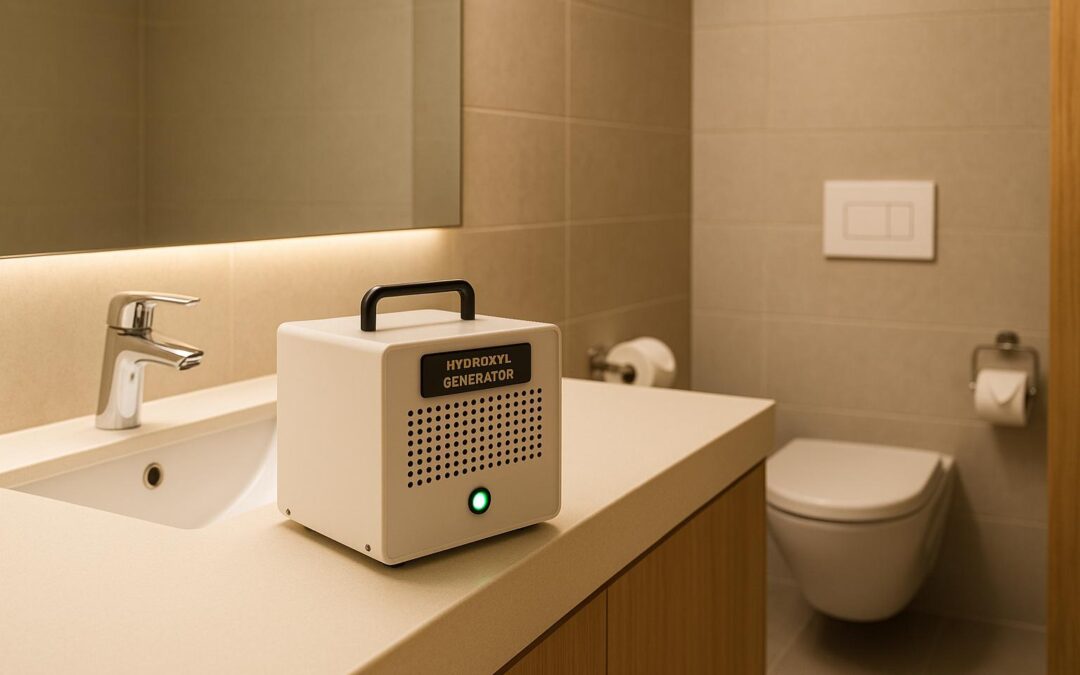
Restroom odors can drive customers away and damage a business’s reputation. While many solutions exist, hydroxyl generators stand out as a safe, effective, and long-term option for controlling odors in occupied spaces. Unlike ozone generators or chemical sprays, hydroxyl generators eliminate odors at their source without health risks or harmful byproducts.
Key Takeaways:
- Hydroxyl Generators: Safe for use around people, break down odors into harmless substances, and work continuously. Initial costs range from $500 to $4,500.
- Ozone Generators: Effective but require evacuation due to safety concerns. They can damage materials and produce harmful byproducts.
- Chemical Sprays: Only mask odors temporarily and release chemicals that may harm health and air quality.
For facilities prioritizing safety and thorough odor elimination, hydroxyl generators are the most practical choice.
What Is The Real Difference Between Hydroxyl and Ozone?
1. Hydroxyl Generators
Hydroxyl generators take restroom odor control to the next level by using naturally occurring hydroxyl radicals (OH). These radicals break down pollutants and odors, turning them into harmless substances like water and carbon dioxide.
Safety in Occupied Spaces
One of the standout features of hydroxyl generators is their safety for use in occupied restrooms. Unlike some odor control methods that require people to leave the area, these generators can run continuously without disrupting restroom use. However, proper installation is key – selecting the right size and ensuring adequate spacing helps avoid excess oxidants in small or poorly ventilated areas.
"Following the manufacturer’s operating instructions and safety labels will ensure ozone levels produced by the hydroxyl generators are always below the OSHA permissible exposure levels, and thus, safe for occupancy."
– Michelle Blevins, Former Editor-in-Chief, Restoration & Remediation
Hydroxyl radicals are a natural part of our atmosphere, and humans have adapted to live comfortably in environments containing these molecules. The National Institute of Environment Health Sciences (NIEHS) supports this, stating:
"[There is] no science or research indicating that hydroxyl radical generation is harmful to humans. This applies to both naturally occurring and man-made generation."
– National Institute of Environment Health Sciences (NIEHS)
This level of safety makes hydroxyl generators a reliable option for continuous odor control.
Effectiveness for Odor Removal
Hydroxyl generators tackle odors at their source. Thanks to the short half-life of hydroxyl radicals – less than one second – they react almost instantly with odor molecules, breaking them down into harmless byproducts. This ensures consistent odor control, even during peak restroom usage.
These generators are not only fast but also meet safety standards, with FDA/EU registration and minimal ozone production (just 0.03–0.04 g/hour). This combination of speed and safety makes them an excellent choice for keeping restrooms fresh without compromising health.
Environmental Impact
Hydroxyl generators stand out as an eco-friendly solution to odor control. By converting odor-causing compounds into water vapor and carbon dioxide, they eliminate the need for additional chemicals. Unlike some traditional methods, they don’t cause material damage, making them both effective and gentle on the environment.
At Ozonated Cleaning LLC, we use cutting-edge hydroxyl generator technology to provide safe, continuous, and efficient odor control for restrooms across the Chicagoland area.
2. Ozone Generators
Ozone generators create ozone (O₃), which interacts with odors, bacteria, viruses, and other pollutants commonly found in restrooms. While often marketed as air purification devices, their use comes with strict safety guidelines and notable limitations. These drawbacks make them a less practical choice for continuous restroom odor control, particularly when compared to safer alternatives like hydroxyl generators.
Safety in Occupied Spaces
A major concern with ozone generators is their safety in spaces where people are present. No federal agency has approved their use in occupied areas. Even small amounts of ozone exposure can lead to coughing, chest pain, and respiratory issues, especially for individuals with asthma or other respiratory conditions.
To minimize exposure risks, regulatory agencies have set strict limits on ozone levels. For example, the FDA caps ozone exposure at 0.05 ppm, OSHA at 0.10 ppm over an eight-hour period, and the EPA at 0.08 ppm for the same duration.
When using ozone treatments, the area must be completely evacuated, and a ventilation period of 2–4 hours is required before the space can be reoccupied. For restroom applications, the generator should run for only 20–30 minutes, depending on the severity of the odor, followed by thorough ventilation. These requirements make ozone generators highly impractical for spaces that need to remain accessible.
Effectiveness for Odor Removal
Ozone does react with odor-causing compounds, but the process is slow in indoor environments and requires high ozone concentrations to be effective. These high levels can lead to the formation of harmful byproducts, such as aldehydes, organic acids, and fine particles. In some cases, ozone may only mask odors, such as body odors, rather than eliminating them completely.
Despite these limitations, ozone generators have shown some success in addressing mold and mildew. Even stubborn species can be reduced through ozone’s oxidative effects. For sewage-related odors, ozone can be effective if all safety measures are carefully followed. However, its limited odor-removal capabilities and potential to negatively impact indoor air quality make it a less-than-ideal solution.
Environmental Impact
Ozone’s reactivity can lead to the formation of harmful pollutants, such as smog, when it interacts with other airborne chemicals. Additionally, its oxidative properties can damage materials like rubber, fabrics, and even indoor plants.
Because ozone generators require complete evacuation of the space during operation, they are not suited for continuous odor control in restrooms. This makes them an inconvenient and potentially hazardous option for maintaining air quality in occupied environments.
3. Chemical Sprays and Masking Agents
Chemical sprays rely on artificial fragrances to disguise odors rather than eliminating them, offering only a short-term fix. This approach presents safety concerns, limited effectiveness, and environmental drawbacks, particularly in spaces that are frequently occupied.
Safety in Occupied Spaces
Chemical air fresheners release volatile organic compounds (VOCs), which can lead to respiratory issues, skin or eye irritation, and even allergic reactions. These risks are especially concerning for vulnerable groups like children and individuals with asthma.
Cleaning staff face heightened exposure risks. In fact, cleaning workers are among the top 20 occupations with the highest rates of injuries and illnesses in the United States. Approximately 4% of these incidents are linked to harmful chemical exposure. A study revealed that 44% of patient-area cleaning staff reported experiencing chemical-related symptoms multiple times a month – compared to 36% of hospital custodians and 28% of campus custodians. Ingredients commonly found in these sprays, such as bleach, ammonia, chlorine, and sodium hydroxide, can cause serious harm through inhalation or skin contact.
Effectiveness for Odor Removal
The biggest drawback of chemical sprays is that they don’t neutralize odors; they simply mask them. Amanda Daluga, National Sales Director at OMI Industries, explains:
"Many odor management products ‘deodorize’ smelly areas by spraying chemical-based fragrances into the air. However, this will only mask odors and not eliminate them." – Amanda Daluga, National Sales Director at OMI Industries
Nicole Livingston, R&D Technical Manager at Rochester Midland, echoes this sentiment, noting that air fresheners provide only temporary relief and are effective only between cleanings. This masking effect can sometimes create an even more unpleasant environment as the artificial scent mixes with the existing odor.
Environmental Impact
Chemical sprays also come with environmental concerns. Unlike advanced technologies like hydroxyl generators, which operate without harmful emissions, chemical sprays release VOCs that degrade indoor air quality. This is particularly problematic in confined spaces like restrooms. Additionally, these sprays may trigger surface reactions that produce byproducts, which could be either more or less toxic than the original compounds. Over time, this can contribute to broader air quality issues.
Ease of Maintenance
While chemical sprays are easy to apply, their short-lived effects require frequent reapplication. This increases labor demands, raises costs, and necessitates additional safety measures – making them less practical for maintaining consistent and safe odor control in high-traffic areas like restrooms.
sbb-itb-5fea4da
Advantages and Disadvantages
Each odor treatment method comes with its own set of benefits and limitations, particularly when it comes to safety, effectiveness, maintenance, and cost.
Hydroxyl generators are known for their safety and adaptability. These devices replicate the natural production of hydroxyl radicals found in the atmosphere, which are safe for humans and pets. However, they require significantly longer treatment times – up to three times as long as other methods – and demand consistent upkeep, including cleaning and replacing optics every 4,000 hours.
Ozone generators deliver fast results but require stringent safety precautions. While ozone exposure hasn’t been linked to fatalities, high concentrations can lead to respiratory problems. Russ McCubbin, President of International Ozone Technologies Group, Inc., emphasizes:
"Ozone is only to be used in unoccupied areas with return to the area at least one hour after the machine has turned off. Ozone can bleach wet materials and damage natural rubber."
Additionally, ozone can harm materials like plastics, fabrics, and other sensitive surfaces, making it a less suitable option for restrooms with delicate fixtures or finishes.
Chemical sprays offer a quick fix but fall short in addressing the root cause of odors. Instead of eliminating odors, they mask them and often introduce additional chemicals into the environment, which could pose health risks to both cleaning staff and restroom users. Their temporary nature means odors tend to reappear, leading to frequent reapplications and higher labor costs over time.
Here’s a side-by-side comparison of the three methods:
| Method | Safety | Effectiveness | Environmental Impact | Maintenance | Cost Range |
|---|---|---|---|---|---|
| Hydroxyl Generators | Safe for use around people and pets | Slower but thorough odor elimination | Breaks down pollutants into harmless substances | Regular cleaning and optics replacement every 4,000 hours | $249–$4,999 equipment |
| Ozone Generators | Requires evacuation during operation | Rapid odor elimination | May produce harmful byproducts and damage materials | Minimal routine maintenance | $200–$2,000 equipment |
| Chemical Sprays | Risk of chemical exposure | Temporary odor masking | Introduces additional chemicals into the environment | Frequent reapplication needed | Low upfront, high ongoing costs |
Choosing the right method depends on your facility’s specific needs. Hydroxyl generators work well for continuous odor control in busy restrooms where safety is a priority. Ozone generators are better suited for unoccupied spaces that need quick treatment, while chemical sprays might serve as a short-term solution but lack the effectiveness for long-term odor management.
Cost considerations also play a role. Hydroxyl treatments typically range from $800–$1,200, while ozone treatments cost between $200–$1,000. These differences in cost and operation should be carefully weighed to select the best option for your situation.
Conclusion
When it comes to tackling restroom odors, hydroxyl generators stand out as a top choice for facilities focused on safety, efficiency, and long-term practicality. One of their biggest advantages? They’re safe to use in occupied spaces, which means no disruptions to daily operations or health risks. As Russ McCubbin, President of International Ozone Technologies Group, Inc., puts it:
"The main benefit of using a true hydroxyl generator is that they are safe to use in occupied areas for deodorization purposes. Insurance companies do not have to cover a homeowner’s hotels or meals. Business owners do not have to shut down and lose precious business."
This ability to keep things running smoothly highlights the practical and economic benefits of these systems.
While the initial investment for a hydroxyl generator can range from $500 to $4,500, the long-term savings are significant. There’s no need for costly relocations, and their odor elimination process is thorough, not just a quick cover-up. Although treatments typically take 3–5 days, the continuous operation and complete deodorization make up for the time required.
For facility managers looking for a solution that doesn’t just mask odors but completely removes them, hydroxyl generators are a solid pick. They work by mimicking nature’s air-cleaning process, similar to the fresh, clean scent after a thunderstorm. To get the best results, choose models with non-ozone UV lamps, strong airflow, and effective filtration. Keeping the humidity at 60% or higher also enhances their performance.
For expert support in the Chicagoland area, consider reaching out to Ozonated Cleaning LLC for professional guidance.
FAQs
What makes hydroxyl generators a safer and more effective choice for controlling restroom odors compared to ozone generators?
Hydroxyl generators offer a safer alternative to ozone generators for controlling restroom odors, as they can be used in areas where people are present without posing health risks. In contrast, ozone generators produce ozone levels that can be harmful to people, making them unsuitable for occupied spaces.
When it comes to performance, hydroxyl generators excel by continuously breaking down odors and volatile organic compounds (VOCs) over time. This makes them a great choice for maintaining long-term odor control in restrooms. Since they operate safely in occupied areas, they provide steady and consistent deodorization, ensuring the space remains fresh and pleasant.
What makes hydroxyl generators a more eco-friendly option for controlling restroom odors compared to chemical sprays?
Why Hydroxyl Generators Are a Smart Choice for Restroom Odor Control
Hydroxyl generators offer a natural and effective way to tackle restroom odors. They work by releasing hydroxyl molecules, which break down odor-causing compounds into harmless substances like water and carbon dioxide. The best part? This process doesn’t introduce any harmful chemicals or pollutants into the air.
Unlike chemical sprays that often release volatile organic compounds (VOCs) and other potentially risky substances, hydroxyl generators keep the environment clean without leaving behind any residues. This makes them a safer option for improving restroom air quality. Plus, they’re a more sustainable choice, helping to maintain a fresh and odor-free space without compromising the health of the planet or indoor air quality.
What should I consider when choosing and setting up a hydroxyl generator for restroom odor control?
When choosing a hydroxyl generator to tackle restroom odors, focus on safety and effectiveness. It’s essential to select a genuine hydroxyl generator that doesn’t emit ozone, making it safe for use in spaces where people are present. Also, ensure the generator is the right size for the restroom to efficiently eliminate odors without overwhelming the area.
During installation, stick closely to the manufacturer’s instructions to prevent generating excessive hydroxyl levels, which could be a health concern. Look for a model designed for steady, safe operation to provide reliable odor control while keeping restroom users safe.
Recent Comments