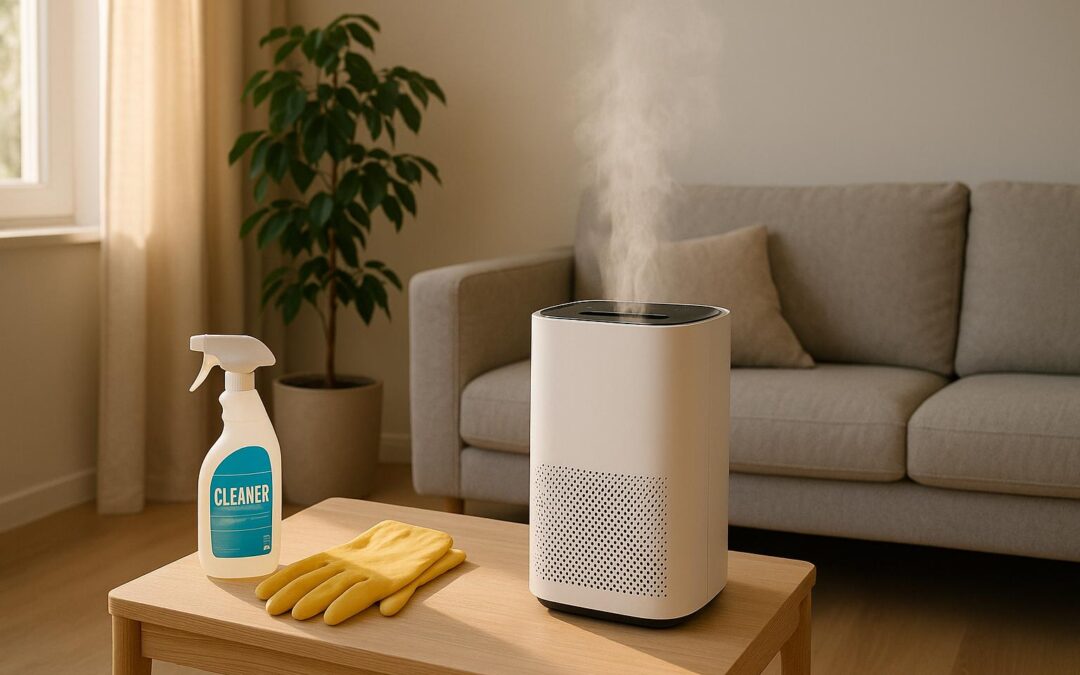
When it comes to managing indoor allergens, ozone-based sanitization and chemical cleaning methods each have strengths and weaknesses. Ozone is effective at neutralizing biological allergens like mold and dust mites, reaching hidden areas that cleaning products might miss. However, it doesn’t physically remove particles like dust or pollen and can produce harmful byproducts if not used carefully. On the other hand, chemical cleaning physically removes allergens from surfaces but may leave residues or release volatile organic compounds (VOCs), impacting air quality.
Key Takeaways:
- Ozone Treatment: Best for neutralizing biological allergens; requires professional handling due to safety risks.
- Chemical Cleaning: Effective for removing surface allergens; safer for immediate use but may leave residues.
- Safety: Ozone requires unoccupied spaces during treatment, while chemical cleaning needs proper ventilation and protective measures.
- Air Quality Impact: Ozone can degrade air quality temporarily; chemical cleaners may introduce VOCs.
Quick Comparison
| Factor | Ozone Treatment | Chemical Cleaning |
|---|---|---|
| Allergen Removal | Neutralizes biological allergens | Physically removes surface allergens |
| Dust & Pollen | Ineffective | Effective with wet cleaning methods |
| Residue | No chemical residue, but byproducts | May leave residues requiring rinsing |
| Safety During Use | Requires evacuation | Safe with proper precautions |
| Air Quality Impact | Can create harmful byproducts | May release VOCs |
Both methods can be part of an allergy relief strategy, but combining them with ventilation and source control often yields the best results.
How Ozone-Based Sanitization Works
How Ozone Neutralizes Allergens
Ozone works by oxidizing allergens at the molecular level, effectively altering their structure and neutralizing them. This process begins with ozone generators, which create ozone (O₃) from oxygen (O₂) using either electrical discharges or ultraviolet light. The resulting ozone molecules are highly reactive, and when they come into contact with allergens like mold spores, pollen, or dust mites, they release an extra oxygen atom. This reaction renders the allergens harmless. Research shows that ozone generators can reduce airborne mold spores by up to 90%, cut down dust mite allergens by 75%, and eliminate 99% of common allergens. What makes ozone particularly effective is its ability to reach areas that traditional cleaning methods often miss, such as behind furniture, inside air ducts, and deep within fabric fibers.
Where Ozone Treatment Is Used
Ozone treatment is used in a variety of environments. In homes, it’s particularly effective for tackling allergens in spaces like bedrooms, basements, and living rooms – especially in areas with carpeting, upholstery, or HVAC systems that tend to trap allergens. Vehicles are another area where ozone treatment is gaining popularity. For example, Ozonated Cleaning LLC in the Chicagoland area provides specialized services to deodorize and sanitize car interiors, RVs, boats, and even semi-trucks. On a larger scale, ozone is widely used in commercial settings such as hospitals, offices, and industrial facilities to control airborne microorganisms. In the dairy industry, it’s even replacing harsh chemical disinfectants for equipment sanitization. Given its powerful effects, proper standards and safety measures are critical.
Safety and Professional Application
Using ozone safely and effectively requires professional expertise and strict adherence to safety guidelines. Regulatory agencies like the FDA and OSHA have set limits to ensure safety: the FDA mandates that indoor medical devices emit no more than 0.05 ppm of ozone, while OSHA limits worker exposure to 0.10 ppm over an 8-hour period. It’s crucial to note that ozone generators should only be operated in unoccupied spaces. This is because the concentrations necessary for eliminating allergens far exceed safe levels for humans and animals. As the FDA explains:
for ozone to be germicidal, it must be present in a concentration far greater than that which can be safely tolerated by man and animals.
After treatment, proper ventilation is essential. Treated areas should be aired out for at least 30 minutes before anyone re-enters, and in most cases, spaces should remain unoccupied for 12 to 24 hours after the ozone generator has stopped to allow for complete dissipation. Professional ozone services follow these protocols meticulously. Technicians assess the size of the space, select appropriately sized ozone generators, and adjust treatment durations based on the room’s characteristics and allergen levels, ensuring both safety and effective results.
Ozone vs Common Disinfecting Products
How Chemical Cleaning Methods Work
Chemical cleaning methods take a direct approach to tackle allergens, unlike ozone-based sanitization. While they offer specific advantages, they also come with their own set of risks.
Types of Chemicals Used
Chemical cleaning agents vary widely and include chlorinated alkali cleaners, acid detergents, sanitizers with quaternary ammonium chloride, conventional detergents, and protease-enhanced formulas. Each is designed to target specific allergens, but their effectiveness depends on factors like temperature, surface type, and the nature of the allergen.
Sanitizers with quaternary ammonium chloride are commonly found in cleaning wipes, which are used to clean and disinfect surfaces. While these wipes are effective at removing cooked allergen particles, they can leave behind ATP residues, requiring additional rinsing to achieve thorough cleaning.
The performance of these cleaning agents also varies significantly. For example, detergents enhanced with proteases – enzymes that break down proteins – have shown superior results in reducing allergenic residues compared to standard detergents. A study conducted in school kitchens highlighted their effectiveness, although working with such compounds requires careful handling due to potential health risks.
Health and Safety Risks
Using chemical cleaning products comes with certain health and safety concerns. One of the most dangerous risks is mixing incompatible cleaning agents, such as bleach with ammonia or acids. This combination produces toxic chloramine gases, which can cause severe irritation to the eyes, nose, and throat – or worse, can be fatal. Jason Marshall, Director of the TURI Laboratory, stresses:
Never mix bleach and ammonia cleaners. This brew creates gases called chloramines, which can quickly cause eye, nose and throat irritation, and even death.
Even when used as intended, these cleaners pose risks. Low-level chlorine gas exposure can irritate mucous membranes, leading to coughing and breathing difficulties, while skin contact may result in pain, swelling, and blistering. Additionally, individuals with allergies may experience sinus irritation, rashes, or respiratory discomfort when exposed to certain products.
Allergy UK also advises taking protective measures when using cleaning products:
Whilst our Allergy Friendly and Seal of Approval products are very unlikely to cause an allergic reaction, Allergy UK advises that you always wear protective gloves when using cleaning products so as to avoid direct contact with your skin, particularly if your skin is extremely sensitive.
How Well Chemicals Work for Allergies
The effectiveness of chemical cleaning methods for managing allergens is inconsistent. Wet cleaning methods generally outperform dry ones. For example, a school kitchen study found that conventional detergent protocols left 30% of food contact surfaces contaminated, suggesting that quick cleaning routines often fail to remove allergenic residues completely.
A thorough cleaning process – washing with detergent, rinsing, sanitizing, and air drying – yields better results. On the other hand, scraping alone is the least effective, often leaving behind significant contamination.
| Chemical Cleaning Agent | Effectiveness | Notes |
|---|---|---|
| Chlorinated Alkali Cleaners | Effective for removing milk residues | Performance varies depending on surface type and level of soiling |
| Acid Detergents | Requires high temperatures for peanut allergens | Less effective than water alone in some cases |
| Sanitizers (Quaternary Ammonium) | Effective for cooked allergen particles | May leave ATP residues, requiring additional rinsing |
| Conventional Detergents | Inconsistent results | 30% failure rate in a school kitchen study |
| Protease-Enhanced Detergents | Best allergen reduction | Most effective chemical option available |
The cleaning process’s success also depends on the allergen type, surface material, and cleaning method used. For instance, wet terry cloths soaked in sanitizing solutions effectively removed peanut powder and small amounts of cream cheese from surfaces like stainless steel, plastic, and wood. However, this method struggled with tougher residues like peanut butter, non-fat dry milk powder, larger amounts of cream cheese, fluid milk, or whole egg powder.
Chemical cleaning methods can also impact indoor air quality. Studies show that 90% of household dust contains harmful chemicals, and indoor pollutant levels can be 2 to 5 times higher than outdoor levels – sometimes spiking to 100 times higher during cleaning activities. These limitations and risks often make chemical cleaning less effective and less safe compared to ozone sanitization.
sbb-itb-5fea4da
Effectiveness: Ozone vs. Chemicals
The effectiveness of ozone-based sanitization compared to chemical cleaning depends on the type of allergen and how the method is applied.
Which Method Removes More Allergens
Chemical cleaning, especially using wet techniques like presoaked terry cloths or sequential quaternary ammonium chloride wipes followed by rinsing, is highly effective at removing surface allergens. On the other hand, dry wiping may simply move allergens around rather than eliminate them.
Ozone-based sanitization shines when it comes to eliminating dust mites under specific conditions, though it struggles with dust and pollen. Studies indicate that under controlled settings, a CT value of 400 mg-min/L can achieve nearly 100% eradication of dust mites. For instance, exposing dust mites to ozone at a concentration of 0.48% (v/v) for 40 minutes at 77°F and 75% relative humidity was shown to eliminate live mites effectively. However, ozone treatment does not physically remove dust or pollen.
"Available scientific evidence shows that at concentrations that do not exceed public health standards, ozone has little potential to remove indoor air contaminants".
While chemical cleaning physically removes allergens, ozone works by oxidizing biological contaminants. Each method serves a specific purpose, making them complementary in an overall allergy management plan. Next, let’s look at how these methods affect indoor air quality.
Effects on Indoor Air Quality
The impact on indoor air quality varies significantly between the two methods. Chemical cleaning removes allergens by physically wiping them away without adding reactive substances to the air. In contrast, ozone treatment involves releasing ozone gas, which the Environmental Protection Agency (EPA) identifies as toxic. Commercial ozone generators can emit ozone at levels exceeding outdoor health standards, sometimes surpassing 5,000 mg per hour. Additionally, ozone can react with airborne chemicals, creating byproducts like formaldehyde, aldehydes, and 4-oxopentanal, which may further degrade air quality.
Professional services, such as Ozonated Cleaning LLC, follow strict protocols to ensure safety. They require complete evacuation of treated spaces and thorough ventilation before reentry to minimize risks. These precautions highlight the stark differences between the two approaches, which are summarized in the table below.
Comparison Table: Ozone vs. Chemicals
Here’s a side-by-side look at how ozone treatment and chemical cleaning compare:
| Factor | Ozone Treatment | Chemical Cleaning |
|---|---|---|
| Dust & Pollen Removal | Ineffective at removing particles | Effective with wet cleaning methods |
| Surface Allergen Removal | Limited effectiveness | Highly effective when properly applied |
| Dust Mite Elimination | Nearly 100% elimination under controlled conditions | Variable effectiveness |
| Residue Left Behind | No chemical residue, but potential toxic byproducts | May leave cleaning residues that require rinsing |
| Speed of Treatment | ~40 minutes for dust mite elimination | Immediate surface cleaning |
| Safety During Use | Requires evacuation due to ozone exposure risks | Safe with proper protective measures |
| Professional Application Required | Yes – to manage ozone exposure risks | Recommended for thorough cleaning |
| Air Quality Impact | Potential to worsen air quality by forming secondary pollutants | Minimal direct impact when properly rinsed |
Each method has its own strengths and limitations. Chemical cleaning is highly effective at removing surface allergens and particles, while professional ozone treatment can target dust mites and other biological contaminants in controlled environments.
For the best results, experts recommend combining proven methods for managing indoor air pollution. A comprehensive allergy relief plan should include source control, adequate ventilation, and targeted treatments tailored to the specific allergens in your home.
Safety, Regulations, and Practical Use
Understanding the safety and regulations surrounding allergen removal methods is essential for making informed choices. Both ozone-based sanitization and chemical cleaning come with their own health risks and regulatory guidelines that must be carefully considered.
Safety Risks for Each Method
Ozone exposure poses serious health risks. It can damage lung cells, leading to coughing, chest tightness, shortness of breath, and even long-term breathing issues. For individuals with asthma, ozone can worsen symptoms and may even trigger the onset of asthma. Prolonged exposure can cause permanent lung damage and increase the risk of mortality in vulnerable groups. It has also been linked to neurological effects over time.
Ozone doesn’t just affect people. It reacts with airborne chemicals to produce harmful byproducts like formaldehyde and ultrafine particles. Additionally, it can harm indoor plants and degrade materials such as rubber, electrical wiring, fabrics, and artwork containing sensitive dyes or pigments.
Chemical cleaning methods, on the other hand, often involve the use of toxic substances that can pollute the environment. While the immediate danger of ozone exposure is more severe – levels reaching 5 parts per million (ppm) in ambient air are considered life-threatening – chemical cleaning products also carry risks that require careful handling.
Government Guidelines
To protect public health, federal agencies have established strict limits on ozone exposure. Notably, no federal agency has approved ozone generators for use in occupied spaces, and the Environmental Protection Agency (EPA) does not endorse or certify air cleaning devices.
Here are some key exposure limits:
- FDA: Limits ozone output from indoor medical devices to 0.05 ppm.
- OSHA: Restricts workplace ozone exposure to an average of 0.10 ppm over an 8-hour shift.
- NIOSH: Sets a maximum ozone exposure limit of 0.10 ppm, not to be exceeded at any time.
- EPA: Caps outdoor ozone concentrations at an 8-hour average of 0.08 ppm under the National Ambient Air Quality Standards.
In France, regulations are even tighter, with occupational limits of 0.1 ppm for an 8-hour day and 0.2 ppm for short-term (15-minute) exposure.
California has taken a leading role in regulating ozone. The California Air Resources Board (CARB) introduced regulations in 2007 to limit indoor ozone emissions from air cleaning devices. CARB strongly discourages their use in occupied spaces and maintains a regularly updated list of potentially hazardous ozone generators marketed as "air purifiers". For chemical cleaning products, CARB’s Consumer Products Program oversees the levels of volatile organic compounds (VOCs) in these items.
Dr. William H. Maisel, director of the FDA’s Office of Product Evaluation and Quality, highlights the risks:
"Exposure to high levels of ozone gas may worsen a patients’ existing chronic respiratory diseases or increase the chance of a respiratory infection".
When to Use Ozone Treatment
Ozone treatment should only be used under highly controlled conditions due to its risks. Many commercial generators produce over 5,000 mg of ozone per hour, far exceeding outdoor health standards of 90 parts per billion (ppb) for a 1-hour exposure and 70 ppb for an 8-hour exposure.
Professional ozone treatment is appropriate in specific scenarios:
- When the space can be completely evacuated for an extended time.
- If contamination requires ozone’s powerful oxidizing capability, which is 52% more effective than chlorine and up to 3,000 times faster at neutralizing bacteria, fungi, and other pathogens.
- When other methods have failed to eliminate persistent biological contaminants.
- If strict safety protocols can be implemented and followed.
Professional services, such as Ozonated Cleaning LLC, adhere to rigorous safety standards. These include evacuating the space, ensuring thorough ventilation before reentry, and using portable single-gas detectors to monitor ozone levels. Safety gear for ozone applications typically includes full-face gas masks with specialized filter cartridges or self-contained breathing apparatuses for high concentrations. All equipment must undergo inspection after exposure to ozone environments.
Ultimately, improving indoor air quality requires a combination of strategies. Government agencies recommend prioritizing source control, increasing outdoor air ventilation, and using proven air cleaning methods. For most allergy relief situations, these measures, paired with proper chemical cleaning practices, offer safer and more reliable results than relying solely on ozone generation.
Conclusion: Choosing the Right Allergy Relief Solution
Main Points
When comparing ozone-based and chemical cleaning methods for allergy relief, it’s clear that each has its limitations. Ozone-based methods don’t tackle particulate allergens like dust or pollen and may even generate harmful byproducts when reacting with organic materials. On the other hand, chemical cleaning targets surface contaminants but might introduce toxic substances into your living space.
The best approach to managing allergies typically involves a combination of strategies: reducing or eliminating pollutant sources, improving outdoor air ventilation, and using air cleaning methods that have been thoroughly tested. These considerations help clarify when professional ozone treatment might be a suitable option.
Why Consider Professional Ozone Treatment
Although federal guidelines restrict ozone treatments to unoccupied spaces, professional ozone services can be effective when handled with care. Companies like Ozonated Cleaning LLC follow strict safety protocols, ensuring spaces are fully evacuated during treatment, ventilated thoroughly afterward, and monitored using specialized equipment. In the Chicagoland area, these treatments typically range from $600 to $900, depending on the size of the home.
For most people dealing with allergies, the safest and most effective approach combines source control, better ventilation, and proven cleaning techniques. However, for persistent allergen issues, professional ozone treatment – when applied with proper precautions – can be a valuable additional tool.
FAQs
What safety steps should I follow when using ozone treatment for allergy relief?
To safely carry out ozone treatment, it’s essential to ensure the space is entirely empty – this includes removing pets. Ozone can be dangerous if inhaled. Once the treatment is complete, air out the area thoroughly to let the ozone levels drop before anyone goes back in. Always stick to the manufacturer’s guidelines and think about using protective gear to prevent any respiratory discomfort. Taking these steps will help you use ozone treatment effectively while prioritizing safety.
How does ozone treatment compare to chemical cleaning when it comes to indoor air quality?
Chemical cleaning methods often introduce volatile organic compounds (VOCs) and other pollutants into the air. These substances can hang around long after cleaning, potentially worsening indoor air quality and triggering allergies or respiratory problems over time.
On the other hand, ozone treatment offers a different approach. It neutralizes allergens, odors, and pollutants without leaving behind any harmful chemical residues. This makes it an effective way to improve air quality while reducing irritants, creating a healthier environment for your home or workplace.
When should you choose professional ozone treatment instead of chemical cleaning to manage allergens?
Professional ozone treatment is a solid option when tackling severe allergies, persistent odors, or when aiming for a lasting way to minimize allergens. Unlike traditional chemical cleaning methods, ozone treatment works to neutralize allergens without adding harsh chemicals that could irritate sensitivities.
This approach is particularly helpful for those with respiratory conditions or sensitivities to chemicals. It cleans the air and surfaces thoroughly without leaving any residue or overpowering smells. It’s a smart choice for improving indoor air quality – whether at home, in the office, or even inside your car.
Recent Comments