
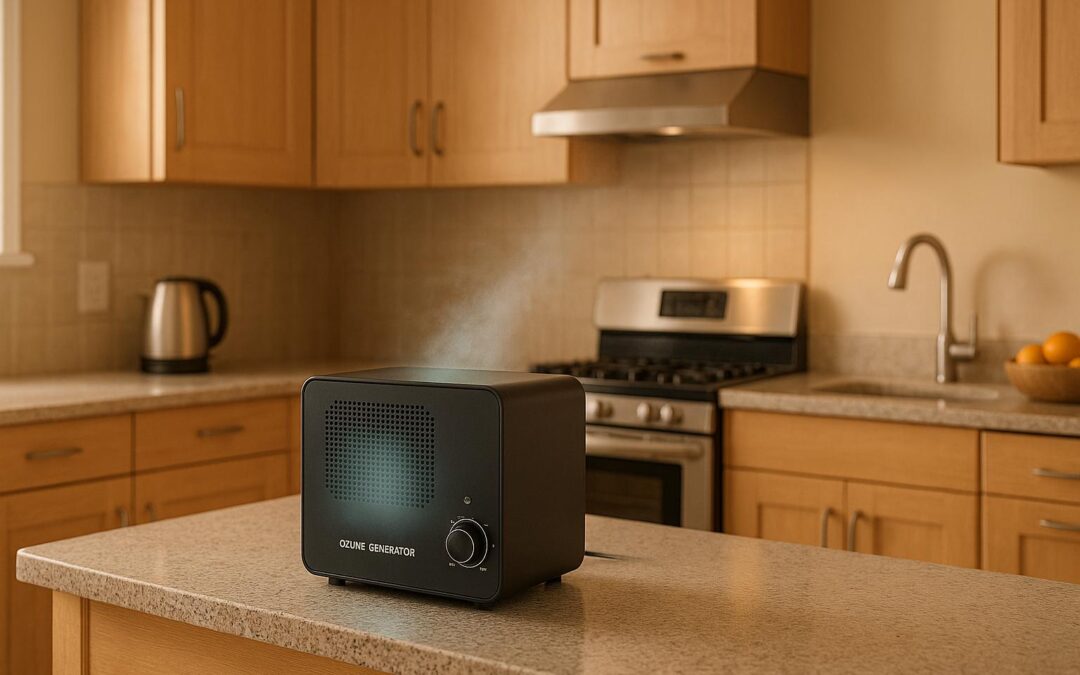
Cooking odors – like those from burnt food, garlic, or fish – can cling to surfaces and fabrics, making them hard to remove. Ozone offers a solution by breaking down odor molecules at their source through oxidation, turning them into harmless substances like oxygen and water. Unlike air fresheners that only mask smells, ozone eliminates them completely while also reducing bacteria, viruses, and mold. It’s safe, leaves no residue, and works in hard-to-reach areas. Here’s how ozone works and why it’s effective:
- What it is: Ozone (O₃) is an unstable molecule with a reactive extra oxygen atom.
- How it works: It oxidizes odor-causing molecules, breaking them apart.
- What it removes: Fish, garlic, curry, burnt food, and grease smells.
- Benefits: Targets odors deeply, sanitizes surfaces, and improves air quality.
- Usage: Requires an ozone generator, safety precautions, and proper ventilation afterward.
Ozone treatment is especially useful for stubborn, embedded kitchen odors that regular cleaning can’t handle.
What Ozone Is and How It Works
The Chemical Structure of Ozone
Ozone, represented as O₃, is a molecule made up of three oxygen atoms. In contrast, the oxygen we breathe daily is O₂, consisting of just two oxygen atoms. That extra oxygen atom in ozone is what makes it so reactive. This third oxygen atom is loosely attached, making the molecule unstable and highly reactive. Interestingly, this instability is a major advantage – ozone has a short lifespan, breaking down quickly. In water, it typically lasts about 30–40 minutes, while in air, it remains active for 2–3 hours, depending on factors like temperature and pH levels. Once ozone has done its job, such as neutralizing odors, it decomposes harmlessly back into regular oxygen. Because ozone can’t be stored or shipped, it needs to be generated on-site using an ozone generator. This feature is particularly helpful for homeowners dealing with stubborn cooking odors. Ozone’s reactivity is what allows it to oxidize and break apart odor molecules effectively.
How Ozone Breaks Down Odor Molecules
Ozone’s reactive nature is the key to its ability to eliminate odors. It works through a process called oxidation, where it interacts with and changes the structure of odor-causing molecules. When ozone encounters volatile organic compounds (VOCs) produced by decaying food, grease, or other cooking residues, its reactive oxygen atoms attack the bonds within these molecules. This chemical reaction transforms the odor-causing compounds into simpler, harmless substances like oxygen, carbon dioxide, and water vapor. Unlike air fresheners that merely cover up smells with added scents, ozone directly targets and destroys the source of the odor.
"Ozone, which is oxygen in its most active state, works by breaking down organic substances at the molecular level." – Ozonated Cleaning
Ozone is so powerful that it can even tackle complex smoke molecules from burnt food, breaking them down into basic, odor-free elements. This makes ozone particularly effective against lingering cooking smells from ingredients like garlic, fish, curry, eggs, or even burnt dishes. By neutralizing odors at their source rather than masking them, ozone provides a thorough and lasting solution to persistent smells.
HOW TO REMOVE ODORS WITH AN OZONE TREATMENT
How Ozone Eliminates Cooking Odors
Cooking certain foods – like fish, garlic, or even burnt dishes – can leave behind stubborn odors that seem to cling to every surface in the kitchen. These odors often seep into fabrics, walls, and even grout, making them tough to remove. Ozone tackles these embedded smells by oxidizing and breaking down the odor-causing molecules at their core.
What sets ozone apart is its ability to reach places that regular cleaning might miss. Whether it’s curtains, upholstered furniture, cabinet interiors, or tile grout, ozone gas spreads throughout the kitchen, breaking down odor molecules wherever they hide. The result? A kitchen that smells neutral – not artificially perfumed – because the odors have been eliminated at their source.
Types of Cooking Odors Ozone Can Remove
Ozone’s oxidizing power makes it highly effective at neutralizing a variety of cooking-related smells:
- Fish odors: Compounds like trimethylamine, which give fish its distinct smell, bind to surfaces. Ozone breaks these molecules apart, neutralizing the odor completely instead of masking it.
- Garlic and onion smells: The sulfur compounds responsible for their pungent scent penetrate deeply into porous surfaces. Ozone reacts with these compounds, breaking them down and eliminating the smell.
- Curry and spice odors: Spices like turmeric and cumin release aromatic oils that settle on surfaces. Ozone oxidizes these oil-based compounds, turning them into harmless substances like carbon dioxide and water vapor.
- Burnt food smells: Smoke particles and carbon residues from burnt foods cling to surfaces and even build up in ventilation systems. Ozone breaks down these particles, removing the odor at its source.
- Grease odors: Cooking oils and grease create a film on surfaces that traps smells. Ozone not only eliminates the grease odor but also addresses the residue, preventing future smells from lingering.
Ozone vs. Air Fresheners and Sprays
Unlike traditional air fresheners, which mask odors with artificial scents, ozone works by destroying the molecules that cause the smell. Air fresheners might temporarily cover up odors, but they leave the root problem untouched. Ozone, on the other hand, removes the odor entirely.
Even with regular cleaning, odors trapped in fabrics and surfaces can persist. Ozone’s deep-penetrating properties make it an excellent solution for long-standing smells – whether from years of cooking or when preparing a home for sale.
Interestingly, the fresh, crisp scent you might notice after a thunderstorm is caused by naturally occurring ozone in the air, highlighting its natural ability to purify and refresh.
sbb-itb-5fea4da
Step-by-Step Guide to Using Ozone in Your Kitchen
Using an ozone generator in your kitchen can effectively eliminate stubborn odors, but it requires careful preparation and adherence to safety guidelines.
Before turning on the ozone generator, start with a thorough cleaning of your kitchen. Scrub all surfaces to remove any physical residue that may be causing odors. While ozone can break down odor molecules, it can’t handle leftover grime or debris. Once the cleaning is done, make sure to seal off the area to keep the ozone contained during treatment.
Seal the space completely by closing all doors, windows, and any gaps. Remove food, dishes, or any materials that could be damaged by ozone exposure before beginning the process.
The length of ozone treatment depends on the size of your kitchen and the intensity of the odor. For mild smells, a shorter treatment may suffice, but stronger odors – like those caused by fish or curry – may require several days or even weeks of exposure.
Where to Place Your Ozone Generator
Placement of the ozone generator is critical for effective odor removal. Position the device centrally in your kitchen to allow ozone to circulate evenly throughout the space.
If your kitchen is particularly large or part of an open floor plan, you may need to adjust your strategy. Consider using a more powerful generator or treating different sections separately to ensure full coverage. If you’re unsure about the right ozone concentration or equipment for your kitchen, consult professionals who specialize in ozone systems for advice. Proper positioning ensures the ozone can reach every corner where odors might linger.
Safety Rules During Ozone Treatment
Safety should always be your top priority when using ozone in your home. Once the generator is set up, make sure everyone – humans and pets alike – leaves the area for the duration of the treatment. Never stay in the kitchen while the generator is running. Set the device, start the cycle, and exit the space.
Keep the area sealed during the entire treatment period. Resist the urge to open doors or check on progress, as this can disrupt the ozone concentration and prolong the process. Rest assured, ozone breaks down quickly and leaves no harmful residues behind. According to the FDA, ozone has been approved since 2001 as a safe antimicrobial agent for food-related applications.
Ventilating Your Kitchen After Treatment
Once the ozone treatment is complete, proper ventilation is crucial. Open all windows and doors in the treated area to allow fresh air to circulate. Cross-ventilation will help disperse any remaining ozone, and turning on exhaust fans, if available, can speed up the process.
Continue ventilating for several hours until the sharp ozone smell fades away. You’ll know the air is fully refreshed when you notice a clean scent similar to the air after a thunderstorm. At this point, your kitchen will be odor-free and ready for regular use, free from the cooking smells that initially prompted the treatment.
Other Benefits of Ozone Treatment
Ozone treatment offers more than just odor control – it contributes to a cleaner, healthier kitchen by tackling microbes and reducing allergens. These advantages not only enhance air quality but also improve the overall hygiene of your space.
Eliminating Bacteria, Viruses, and Mold
Ozone doesn’t simply cover up unpleasant smells; it actively targets and destroys harmful microorganisms. Approved by the FDA for antimicrobial use, ozone disrupts the cell walls of bacteria and viruses, effectively neutralizing them.
Mold, which thrives in warm and damp conditions, is another target. Ozone eradicates mold spores and helps prevent their return. This dual action of surface sanitization and air purification makes ozone a powerful tool for maintaining a healthier indoor environment.
Improved Air Quality and Reduced Allergens
Cooking can release a variety of byproducts, including bacteria, toxins, and gases, all of which can degrade indoor air quality. Ozone treatment tackles many of these pollutants, leaving the air cleaner and safer to breathe.
This is especially beneficial for households with individuals who have asthma, allergies, or other respiratory sensitivities. By breaking down volatile organic compounds (VOCs) from cooking oils, cleaning products, and other sources, and by reducing mold spores and other common allergens, ozone treatment creates a space with fewer irritants and noticeably fresher air.
Conclusion
Ozone has proven to be a reliable solution for tackling stubborn kitchen odors. Unlike air fresheners that merely hide unpleasant smells, ozone works at the molecular level to permanently break down cooking odors. By converting odor-causing molecules into harmless substances like carbon dioxide, oxygen, and water, it leaves your space fresh and free of chemical residues.
This natural air-cleaning method does more than just eliminate odors from strong-smelling ingredients like fish, garlic, curry, or burnt food. Ozone also helps reduce bacteria, viruses, and mold, improving the overall air quality in your home. It’s an effective way to tackle embedded odors while creating a healthier and fresher kitchen environment.
Approved by the FDA in 2001 as a safe air purifier, ozone quickly reverts back to oxygen after use, ensuring no harmful residues are left behind. Whether you opt for a personal ozone generator or professional treatment, this method addresses odors at their root. Treatment times can vary depending on the severity of the odor, ranging from as little as two days to as long as two weeks.
For those in the Chicagoland area, professional ozone treatment is readily available. Ozonated Cleaning LLC offers specialized services using ozone and hydroxyl technology to treat residential spaces. Their expertise ensures the process is carried out safely and effectively, even for the toughest odor challenges.
FAQs
How does ozone technology compare to traditional cleaning methods for removing cooking odors?
Ozone technology tackles odors by breaking down the molecules responsible for unpleasant smells right at their source. This approach doesn’t just cover up cooking odors lingering in surfaces, fabrics, or the air – it completely neutralizes them.
Unlike conventional cleaning methods that might rely on chemicals or masking agents, ozone eliminates odors without leaving any harmful residues behind. This makes it a cleaner, safer choice for removing odors, especially in homes where maintaining a healthy and fresh environment matters most.
What safety measures should I follow when using an ozone generator in the kitchen?
When operating an ozone generator in your kitchen, safety should always come first. Make sure to leave the room while the generator is running, as breathing in high levels of ozone can be hazardous. To ensure the air is safe, ventilate the space thoroughly both during and after the process before stepping back in.
Also, be sure to clear the area of any exposed food, plants, or pets before turning on the generator, as ozone can negatively impact them. For the best results, always stick to the manufacturer’s guidelines for usage and timing.
Can ozone treatment remove odors from other areas of the home or different types of smells?
Ozone treatment is an excellent way to tackle odors across your entire home – not just in the kitchen. It works by targeting and neutralizing odor-causing particles right at their source, whether those smells come from pets, smoke, mold, or other common culprits. This makes it a reliable option for achieving a fresher and cleaner living space.
Recent Comments