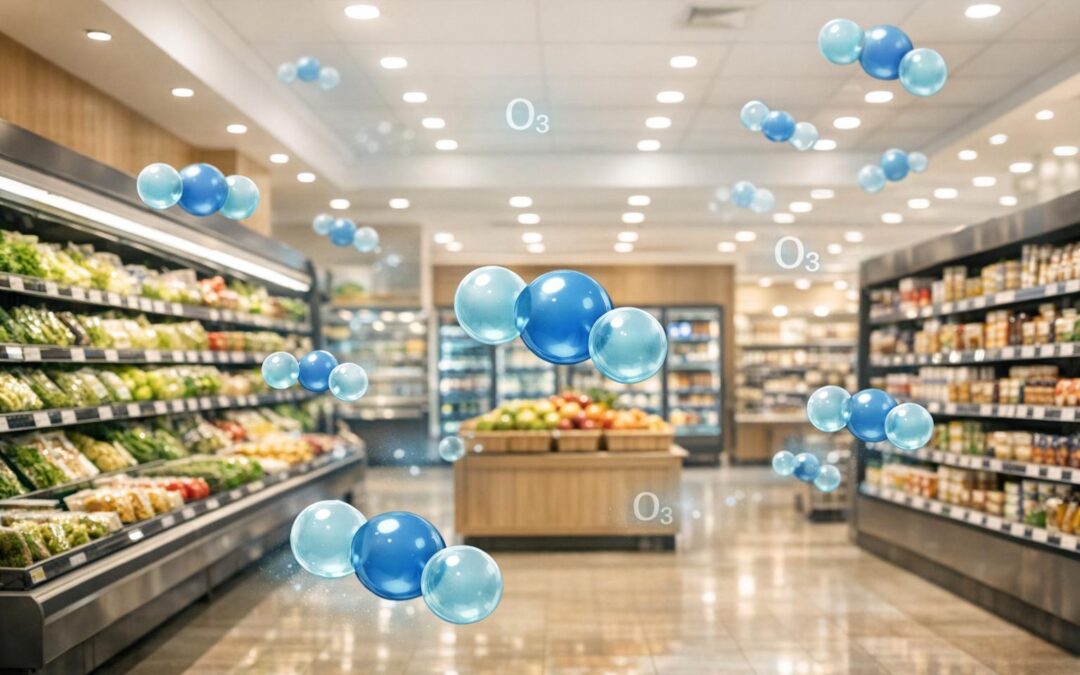
Ozone disinfection is a highly effective method for sanitizing commercial spaces by eliminating pathogens in the air and on surfaces. By generating ozone gas (O₃) on-site, this approach reaches hard-to-clean areas like air ducts and upholstery, killing 99% of viruses in just 30 seconds and achieving a 97% reduction in bacteria, viruses, and mold. Unlike chemical disinfectants, ozone leaves no toxic residues, making it safe for environments like food preparation spaces.
Key Takeaways:
- Effectiveness: Ozone treatment significantly reduces airborne and surface pathogens in crowded spaces, such as supermarkets.
- Cost Efficiency: Systems are affordable to install and run, with low electricity usage and minimal maintenance.
- Safety Measures: Proper ventilation and adherence to safety protocols ensure safe re-entry post-treatment.
- Results: Airborne bacterial counts dropped by 70%, fungal counts by 80%, and surface contamination was virtually eliminated in treated facilities.
This technology offers a practical, chemical-free solution for businesses aiming to improve sanitation standards while reducing operational costs.
The Problem: What the Commercial Facility Was Facing
Air Quality and Pathogen Levels
In June 2021, researchers from the University of Bari Aldo Moro carried out a study in four supermarkets located in an Italian city to assess contamination levels. Two of these supermarkets, which relied only on standard cleaning practices without any specialized air treatment, showed notably high contamination levels.
At the start of the day, around 8:00 AM, the median Total Bacterial Count was recorded at 93 cfu/m³. By midday, the Total Fungal Count had climbed to 85.5 cfu/m³, while high-touch surfaces averaged 9.5 cfu per swab.
Among the fungal contaminants, Penicillium was the most commonly identified species, detected in 65% of positive samples. Other fungi, including Mucorales, Aspergillus, and Feifomycetes, were also present. These pathogens thrive in crowded spaces like supermarkets, where food items and constant foot traffic create ideal conditions for microbial growth. Such elevated contamination levels had a direct impact on the facility’s safety and reputation.
"Microorganisms (bacteria, fungi and viruses) present in the air and on surfaces can have harmful effects on the health of individuals, and can spread very easily in public spaces, especially if they are closed and crowded, such as supermarkets." – Giuseppina Caggiano et al., Pathogens 2022
Effects on Operations and Health
The presence of harmful microbes posed a dual threat: it endangered the health of both employees and customers while also jeopardizing the business’s reputation. Traditional cleaning methods often fail to eliminate pathogens hidden in less accessible areas . This left dangerous microorganisms intact, increasing the risk of infections for everyone entering the building. For food retail businesses, such contamination not only posed a public health concern but also risked losing customer trust. The situation highlighted the urgent need for a disinfection solution capable of addressing these challenges comprehensively.
The Approach: Setting Up Ozone Disinfection
Equipment and Treatment Parameters
In June 2021, two out of four Italian supermarkets involved in the study were equipped with Ozotek GX model generators. These generators, using corona discharge technology, produced 2.64 grams of ozone per hour. They were installed within the false ceilings, with distribution branches ensuring even ozone coverage across the sales areas.
The system operated on a dual-cycle schedule. Overnight, it ran a 2.5-hour "shock" cycle aimed at deep disinfection. During business hours (8:00 AM to 6:00 PM), it performed 10-minute microcycles every two hours to maintain consistent air quality. Before the overnight treatments, technicians removed HVAC furnace filters, set fans to "circulate" mode to push ozone through the ductwork, and sealed any exterior openings to preserve ozone concentration levels.
These operational steps were fine-tuned to meet the specific needs of the supermarkets.
Customizing for the Space
Beyond the standard setup, the treatment schedule was tailored to fit the supermarket’s daily operations. The overnight shock cycles removed deeply embedded contaminants without interfering with business hours, while the shorter daytime microcycles ensured ongoing air quality during peak shopping times.
Safety protocols were a critical part of this customization. Warning signs were placed at all entrances during the overnight shock treatments, and only certified technicians with proper breathing equipment were permitted to enter while the system was active. After each overnight cycle, the stores were ventilated with fresh air for 30 to 45 minutes before employees returned. This process led to a measurable reduction in bacterial counts compared to stores that did not use ozone treatment (p = 0.0042).
The C1 Mobile Ozone Disinfection Cart – How It Works
Results: What the Data Showed
Ozone Disinfection Results: Before vs After Treatment in Commercial Supermarkets
Before and After Measurements
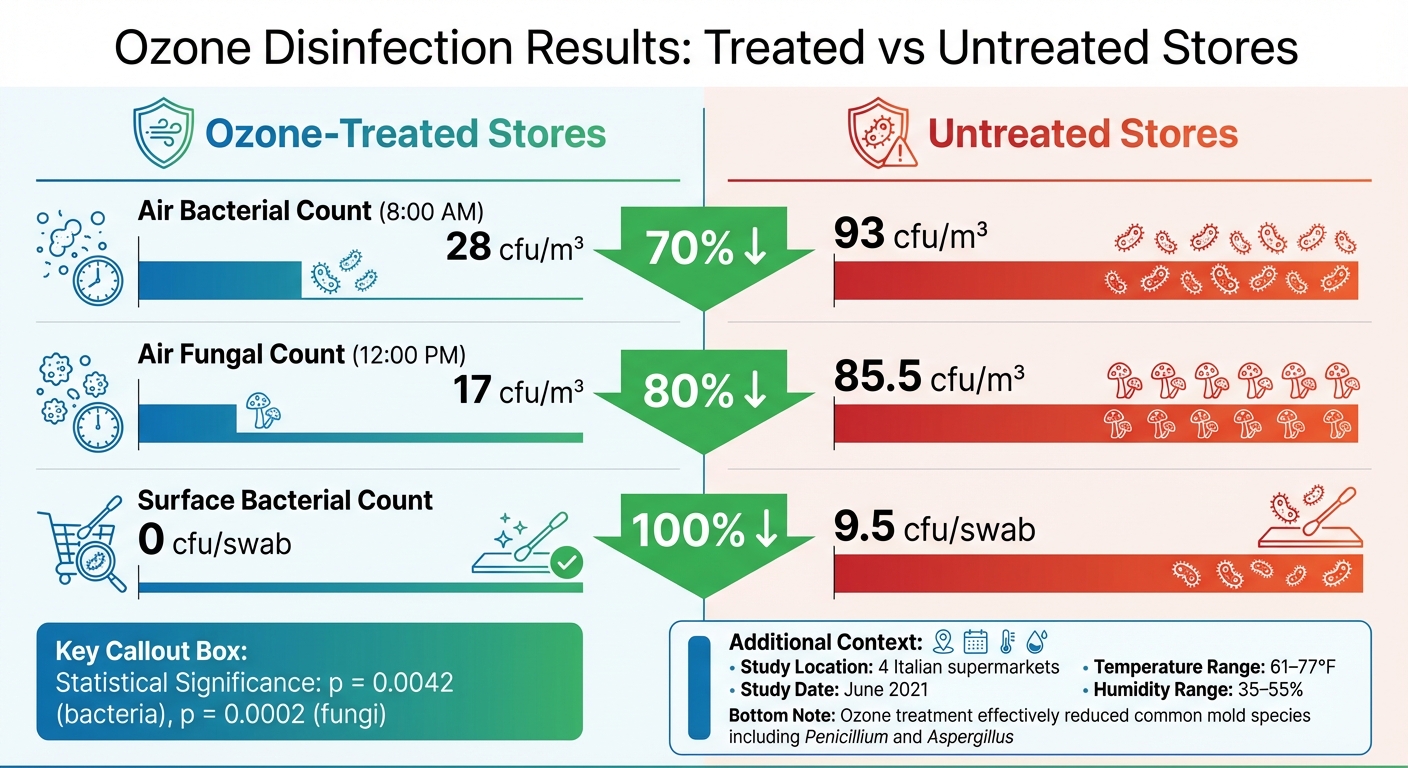
The study revealed some striking changes after ozone treatment. At 8:00 AM, air bacterial counts dropped significantly in treated stores, going from 93 cfu/m³ in untreated stores to just 28 cfu/m³ in those using ozone treatment. By noon, when customer traffic peaked, ozone-treated stores maintained a much lower air fungal count of 17 cfu/m³, compared to 85.5 cfu/m³ in stores without the treatment.
Surface contamination showed a similar improvement. The median bacterial count on surfaces in ozone-treated supermarkets fell to 0 cfu/swab, while untreated stores reported 9.5 cfu/swab. Statistical analysis confirmed these reductions were significant (bacteria, p = 0.0042; fungi, p = 0.0002).
| Measurement Point | Ozone-Treated Stores | Untreated Stores | Reduction |
|---|---|---|---|
| Air TBC (8:00 AM) | 28 cfu/m³ | 93 cfu/m³ | 70% |
| Air TFC (12:00 PM) | 17 cfu/m³ | 85.5 cfu/m³ | 80% |
| Surface TBC (Median) | 0 cfu/swab | 9.5 cfu/swab | 100% |
The treatment also effectively reduced common mold species, such as Penicillium and Aspergillus. These results held steady across a range of temperatures (61–77°F) and relative humidity levels (35–55%). This consistency highlights the reliability of the system under varying environmental conditions.
Other Improvements Noticed
The benefits of ozone treatment extended beyond just the numbers. The system reached areas that are typically hard to clean, such as HVAC ducts, behind shelving units, and ceiling spaces – places that manual cleaning often overlooks.
Another advantage was the absence of chemical residues. Ozone naturally breaks down into oxygen after each cycle, eliminating the need for additional cleanup. Plus, the automated nature of the system minimized labor requirements, leading to lower operational costs once it was set up correctly.
sbb-itb-5fea4da
Costs and Operations
Running Costs and Upkeep
Ozone disinfection systems are surprisingly budget-friendly when you break down the numbers. For example, commercial-grade stationary ozone generators start at around $3,150, and financing options make them even more accessible, with monthly payments as low as $50 over a 48-month period.
Once installed, the ongoing costs are minimal. An industrial ozone generator, paired with an oxygen concentrator and pump, uses about 700 watts of electricity – costing just $0.08 per hour if your electricity rate is $0.11 per kWh. Maintenance is also a breeze, with some units running for over 20 years with very little upkeep.
The long-term savings are even more compelling. A 10-year study of a 5 MGD facility revealed that ozone systems cost between $550,000 and $650,000 in total, compared to around $1.1 million for traditional disinfection methods. These savings stem from significantly lower chemical costs ($140,000 vs. $650,000) and reduced expenses for filter media replacements ($100,000 vs. $250,000). With such low operating costs, these systems combine affordability with efficiency.
System Operation and Automation
Modern ozone systems take efficiency to the next level with advanced automation features. Dual-mode timers allow for continuous hydroxyl generation for up to 24 hours and enable precise ozone shock treatments ranging from 0 to 60 minutes. When integrated into HVAC ductwork, these systems provide continuous sterilization that adjusts automatically to airflow, eliminating the need for dedicated staff.
Real-time ozone sensors ensure compliance with OSHA and EPA standards by continuously adjusting generator settings. Features like web-based datalogging and compliance reporting simplify regulatory documentation, easing administrative tasks and helping avoid fines. Once the system is set up, it runs disinfection cycles automatically, slashing labor costs and streamlining operations.
What This Means for Other Businesses
Applying This Method Across Industries
Ozone disinfection can be tailored to fit a wide range of commercial spaces – from small offices to large retail areas. It’s effective in environments as varied as single vehicles and offices up to 10,000 square feet. The main factor to consider is whether the space can be fully cleared of people, pets, and plants. If so, shock treatments can achieve thorough disinfection in as little as 8–12 hours. For businesses that operate around the clock, installing HVAC-mounted systems ensures continuous air sterilization at safe levels suitable for occupied spaces.
Research consistently supports ozone’s ability to significantly reduce microbial counts in commercial settings. However, environmental factors like humidity are critical. High humidity levels – above 50% – can compromise the effectiveness of ozone treatments, particularly in areas like basements or storage rooms. To maximize results, maintaining humidity at 45% or lower is essential. Since ozone gas reaches any area where oxygen is present, it’s ideal for disinfecting hard-to-access spots like HVAC ducts, storage spaces, and equipment crevices. These flexible approaches make ozone disinfection a practical option for a variety of industries.
Practical Steps for Business Owners
To make the most of ozone disinfection, business owners should follow these key steps. Start with a professional pre-assessment by certified technicians to determine the right ozone levels for your space, based on its size and the level of contamination. Prepare the area by ensuring proper air circulation, sealing off unnecessary exits, and removing any visible debris or odor sources – ozone targets pathogens and molecular residues but doesn’t address physical dirt.
Plan for downtime during the treatment process, as well as a 24-hour waiting period before re-entering the space after professional ventilation. After treatment, replace HVAC filters immediately to maintain air quality. For continuous ozone systems, install sensors to monitor ozone levels and ensure they stay below OSHA’s safety threshold of 0.10 ppm for occupied spaces. Research shows that ozone can destroy 99% of viruses within just 30 seconds of exposure and achieve a 99.99% reduction in bacteria in most scenarios.
About Ozonated Cleaning LLC
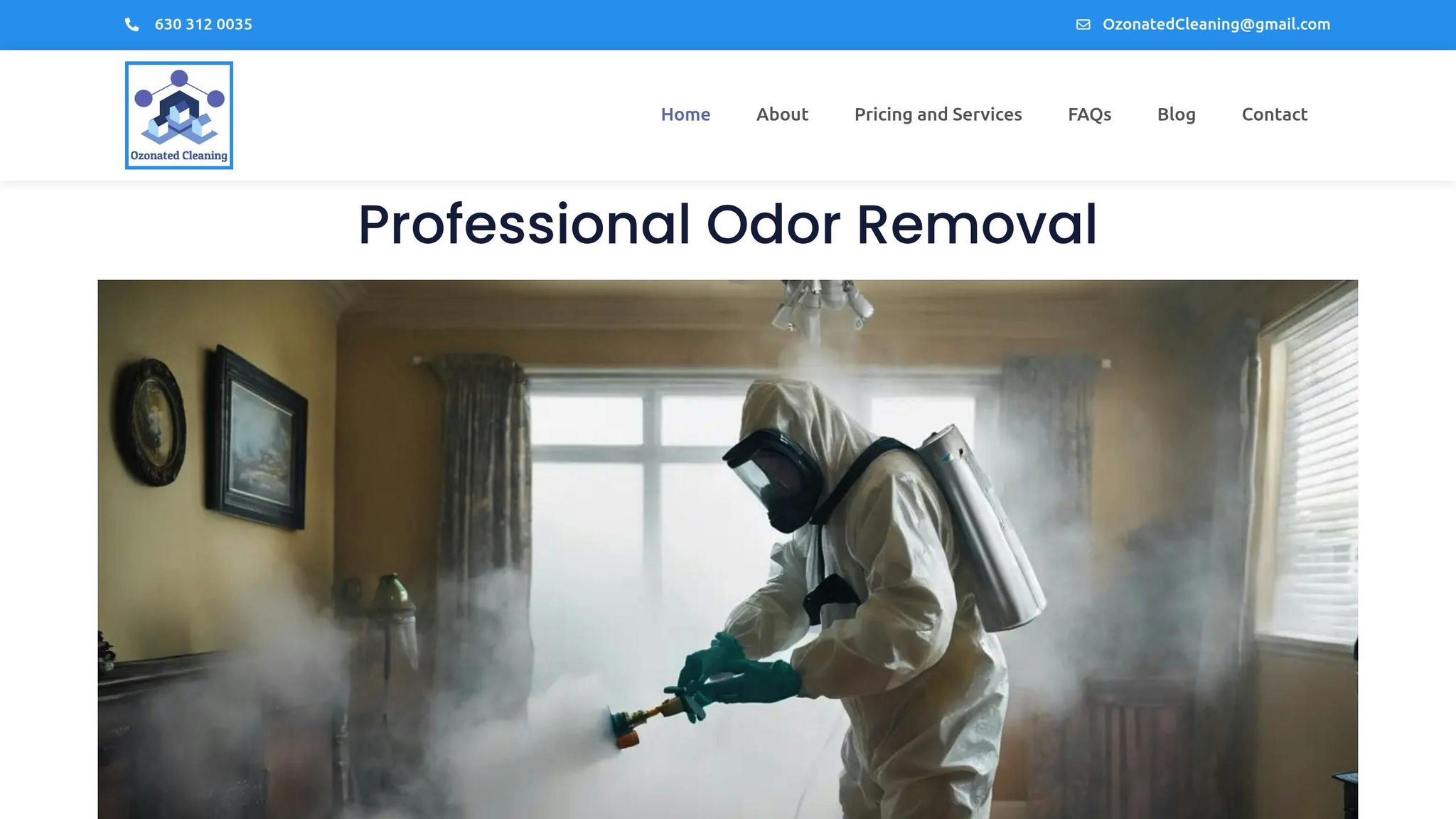
The outstanding results mentioned earlier come from professionals who specialize in ozone disinfection.
Services Offered
Ozonated Cleaning LLC provides expert ozone and hydroxyl disinfection and odor removal services throughout the Chicagoland area, including cities like Aurora, Joliet, Naperville, and Elgin. Their service area also extends into Northwestern Indiana and Southeastern Wisconsin. Using advanced ozone and hydroxyl technology, they tackle pathogens and odors in a variety of commercial spaces, from single vehicles to expansive venues.
"We use Ozone and Hydroxyl for odor removal and disinfection. Our generators create powerful disinfectants that break down organic substances at the molecular level, destroying bacteria, viruses, and odors." – Ozonated Cleaning LLC
Their expertise spans a range of settings, including hotels, gyms, restaurants, car dealerships, healthcare facilities, and office spaces. They are particularly skilled at eliminating tough odors caused by marijuana, tobacco, smoke, burnt food, pet urine, chemical vapors, and cooking. After just one treatment, most areas can be safely re-entered within 24 hours. The process is entirely chemical-free and leaves no harmful residues behind.
Contact Information
Learn more about Ozonated Cleaning LLC.
FAQs
How does ozone disinfection compare to traditional cleaning methods?
Ozone disinfection offers a distinct advantage over traditional cleaning methods. As a gas, ozone effortlessly spreads throughout an entire space, reaching hidden areas like cracks, fabrics, and even ventilation systems – places that liquid cleaners often miss. Once its job is done, ozone naturally breaks down into oxygen, leaving behind no chemical residues.
What sets ozone apart is its ability to eliminate up to 99.99% of pathogens, including bacteria, viruses, and spores, without relying on harsh chemicals. This makes it a more eco-friendly option, sidestepping the chlorine-based by-products often associated with traditional cleaners. Plus, it reduces the need for manual scrubbing and avoids releasing potentially harmful compounds. In short, ozone disinfection provides a safe, thorough, and residue-free solution for keeping spaces clean and sanitized.
What safety measures should be followed when using ozone for disinfection in commercial spaces?
Ozone is a powerful tool for reducing pathogens, but it requires careful handling to ensure safety. Because ozone can irritate the respiratory system, treatments should always take place in unoccupied spaces, and people should only re-enter once ozone levels have returned to safe limits.
Here are the essential safety steps:
- Evacuate and seal the area: Remove all people, pets, and plants, and make sure the space is properly sealed to contain ozone during treatment.
- Rely on professional expertise and equipment: Certified technicians with the right equipment should manage the setup, operation, and monitoring of ozone generators.
- Ventilate thoroughly post-treatment: After the process, allow fresh air to circulate until ozone levels fall below 0.05 ppm, ensuring the area is safe for re-entry.
- Verify safe ozone levels: Use a calibrated ozone meter or have the service provider confirm that ozone levels are within approved safety limits.
With these precautions in place, ozone disinfection can be a safe and effective solution for commercial spaces. Companies like Ozonated Cleaning LLC specialize in managing the entire process, ensuring both safety and compliance with health regulations.
Can ozone disinfection be adapted for different commercial spaces?
Ozone disinfection is versatile enough to cater to the unique requirements of different commercial spaces. By fine-tuning elements like ozone concentration, exposure duration, and delivery methods, it can effectively adapt to environments ranging from compact offices to sprawling warehouses.
For instance, ozone systems can be adjusted to account for specific airflow patterns, types of surface materials, and occupancy schedules. This ensures thorough disinfection while adhering to safety guidelines. Thanks to this adaptability, ozone disinfection is a practical option for a wide variety of settings, including gyms, salons, restaurants, and beyond.
Recent Comments