Indoor air quality impacts your health more than you might think. When choosing air purification tools, you’ll often encounter two options: ozone generators and hydroxyl generators. Here’s what you need to know:
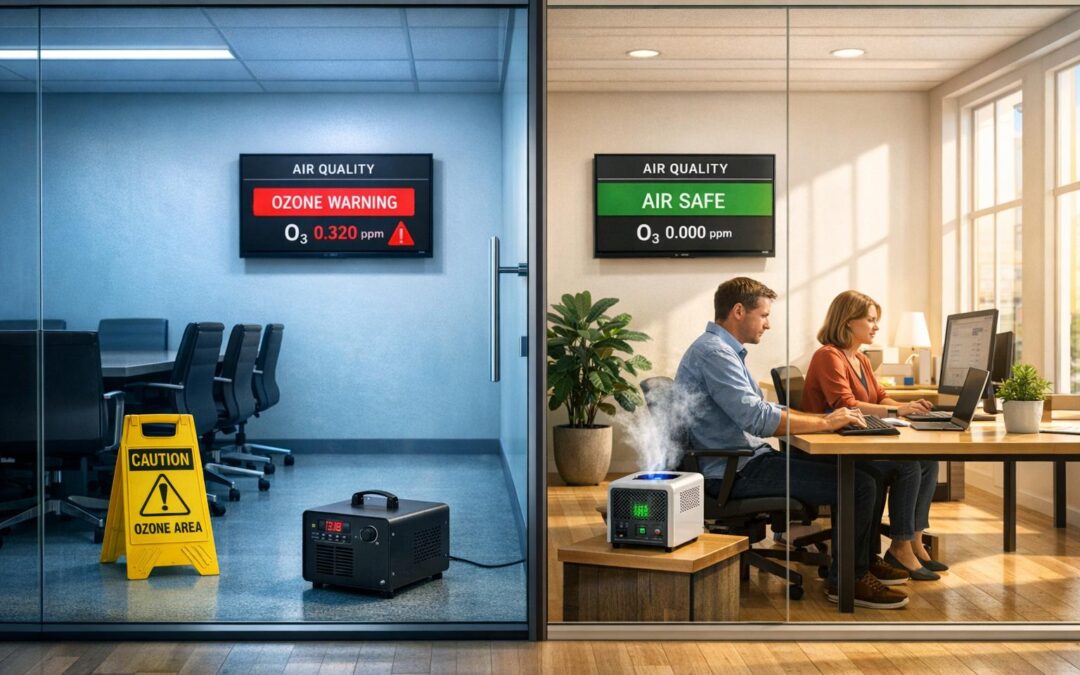
- Ozone generators are powerful but require empty spaces for use due to safety risks. They work fast, typically within hours, but can harm materials like rubber and electronics.
- Hydroxyl generators are safe for occupied spaces, making them ideal for homes and businesses. They take longer to work (3–4 days) but won’t damage materials or leave residual odors.
Quick Comparison
| Feature | Ozone Generators | Hydroxyl Generators |
|---|---|---|
| Speed | Hours | 3–4 days |
| Safety | Unoccupied spaces only | Safe during operation |
| Material Impact | Can damage sensitive items | Gentle on surfaces |
| Residual Odor | Requires ventilation | None |
| Best For | Quick odor removal | Continuous air treatment |
Choosing the right system depends on your needs: speed versus safety. If the space can’t be emptied, hydroxyl generators are the safer choice. For faster results in unoccupied spaces, ozone generators are more effective.
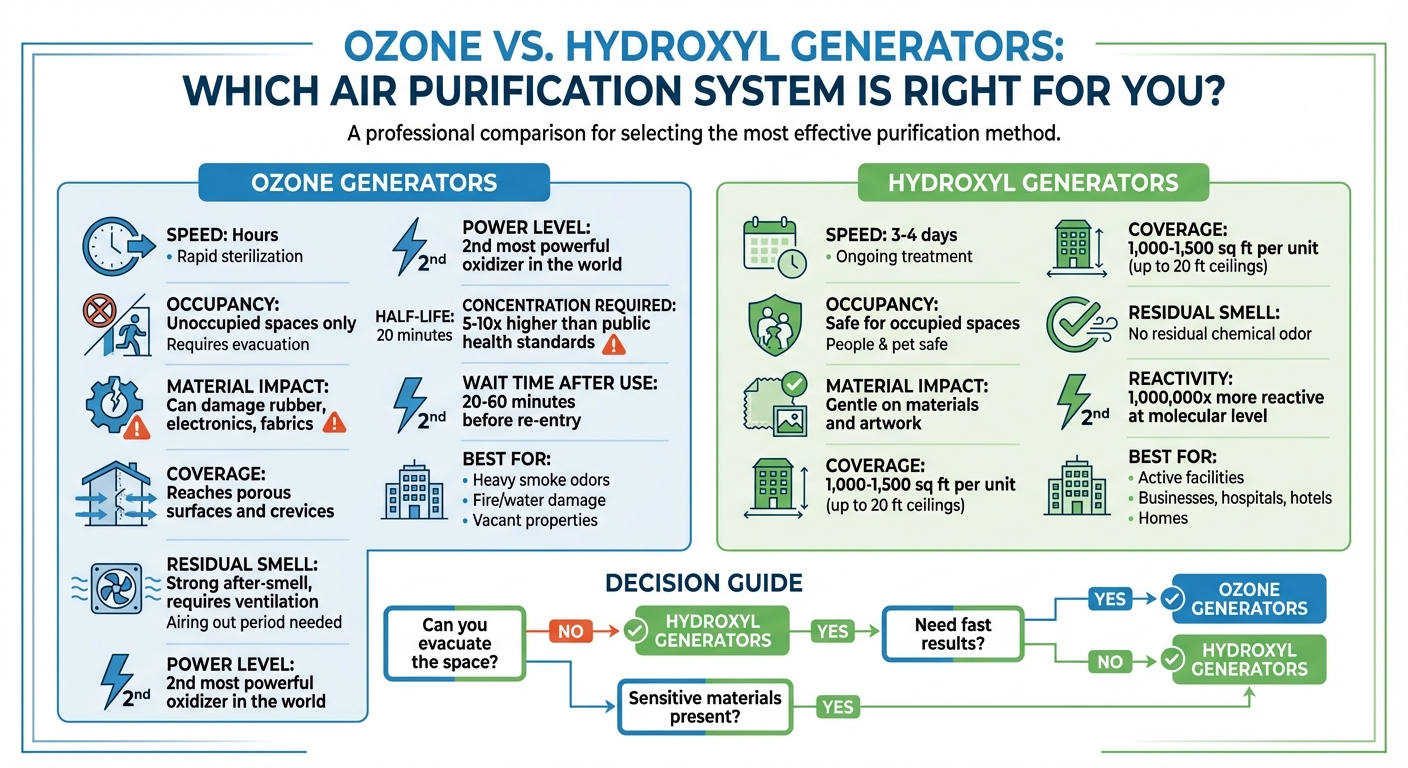
Ozone vs Hydroxyl Generators: Complete Comparison Chart
How Ozone Generators Work
The Science Behind Ozone
Ozone generators produce ozone (O₃) by mimicking natural processes. Many modern devices use high-voltage corona discharge to split oxygen molecules (O₂), allowing the freed oxygen atoms to bond with other O₂ molecules, forming ozone (O₃). Alternatively, some generators achieve this through UVC lamps operating at a wavelength of 185nm.
What makes ozone such an effective cleaner is its chemical instability. With a half-life of about 20 minutes, ozone’s third oxygen atom detaches easily and oxidizes pollutants like phenol gases from cigarette smoke. As the EPA describes:
"The third oxygen atom can detach from the ozone molecule, and re-attach to molecules of other substances, thereby altering their chemical composition."
This process doesn’t just cover up odors – it eliminates them at the molecular level. Ozone is even classified as the second most powerful oxidizer in the world. This chemical reactivity is what makes it so effective for targeted cleaning and decontamination.
Common Uses for Ozone Generators
Ozone’s reactive nature defines its practical uses. Restoration professionals often turn to ozone for challenging tasks, but only in unoccupied areas. Typical applications include removing persistent tobacco smoke odors, addressing mold and mildew, eliminating food smells, and neutralizing volatile organic compounds (VOCs) from renovation work.
For effective results, ozone concentrations must be 5 to 10 times higher than public health standards. Because of this, spaces must be completely empty during treatment – no people, pets, or plants can remain inside. After the generator stops running, it’s essential to wait at least 20 to 60 minutes for the ozone to revert to breathable oxygen before re-entering. Additionally, materials like rubber, certain fabrics, and electrical coatings should be removed or protected beforehand, as ozone’s corrosive properties can cause lasting damage.
How Hydroxyl Generators Work
What Hydroxyl Radicals Do
Hydroxyl generators provide a safer, effective solution for improving air quality, even in spaces where people are present. These devices mimic the natural process of atmospheric cleaning by using ultraviolet light at 185 nm to interact with water vapor and oxygen in the air.
The resulting hydroxyl radicals break down odors and volatile organic compounds (VOCs) at the molecular level through a process called hydrogen abstraction. Modern generators can produce between 2 and 3.25 million hydroxyl radicals per cubic centimeter, aligning with levels found outdoors on sunny days, which range from 500,000 to 2 million per cubic centimeter.
As Tom McArdle, Vice President of Odorox Hydroxyl Group, puts it:
"Hydroxyls… are often referred to as ‘nature’s broom’ because of their crucial role in helping to keep the Earth’s atmosphere clear of harmful organic and inorganic compounds."
These radicals are incredibly reactive – more than a million times faster than ozone. They are the second most powerful oxidants on Earth, surpassed only by fluorine. Once generated, hydroxyl radicals initiate chain reactions that break down contaminants, even penetrating materials like furniture, rugs, and clothing. They can react with up to 5,000 different chemical compounds, making them highly versatile for air purification.
Safe Operation in Occupied Spaces
One of the key advantages of hydroxyl generators is their safety for use in occupied spaces. Hydroxyl radicals have a half-life of less than a second, which prevents any harmful buildup, unlike ozone, which has a half-life of approximately 20 minutes.
Dr. C.J. Araps, an expert in organic chemistry, highlights their safety:
"Our skin and mucosal tissue (eyes, sinuses, mouth, throat, lungs) are in no way harmed by atmospheric hydroxyls as we’ve been exposed to them since the beginning of time and they cannot penetrate beyond the epidermis or mucosal outer layers of cells in the body."
This safety profile makes hydroxyl generators particularly useful for businesses that need to remain operational during air treatment. For instance, in 2019, Greg Dennison of ServiceMaster by Disaster Recon utilized 76 Hydroxyl XL-3 units to deodorize a large office and court complex. Remarkably, the facilities stayed open to both staff and the public throughout the process.
Further supporting their safety, a 13-week FDA GLP toxicity study on rats found no adverse effects, leading to the classification of certain models as Class II medical devices. When operated as directed, these systems keep any ozone byproducts far below OSHA‘s permissible exposure limits. Additionally, a 2016 study by Michael Pinto, CEO of Wonder Makers Environmental, showed that hydroxyl generators significantly reduced VOC levels in post-fire environments within just 8 hours, with all byproducts staying well within OSHA standards.
What Is The Real Difference Between Hydroxyl and Ozone?
sbb-itb-5fea4da
Ozone vs. Hydroxyl: Key Differences
Building on the earlier overview of ozone and hydroxyl systems, let’s dive into how these technologies differ in terms of speed, safety, and their effects on materials.
Speed and Performance
Ozone works quickly, deodorizing spaces in just a few hours, while hydroxyl treatments take 3–4 days to achieve similar results. This makes ozone an ideal choice for emergency situations where time is critical.
David Hart, Founder of RamAir Duct Cleaning System, highlights this advantage:
"There’s nearly always an opportunity to run an ozone generator for a few hours, which will often produce considerably better results than what would take a hydroxyl machine days to accomplish."
Although hydroxyl radicals are incredibly reactive – about 1,000,000 times more so at the molecular level – their lower concentrations ensure safety but slow down the process. Ozone is particularly effective against strong odors caused by smoke, fire, or flooding, while hydroxyls are better suited for addressing airborne contaminants and deodorizing specific contents.
These differences in performance naturally lead to variations in safety protocols and material effects.
Safety Requirements
The environments in which these technologies can be used differ significantly. Ozone generators require complete evacuation of people, pets, and plants during operation. In contrast, hydroxyl generators are safe to use in occupied spaces, allowing businesses and restoration efforts to continue uninterrupted.
Russ McCubbin, President of International Ozone Technologies Group, Inc., explains this trade-off:
"Ozone is faster than hydroxyl at removing odors but must only be used in un-occupied areas."
For businesses that can’t afford downtime, hydroxyl systems provide a practical solution by enabling restoration professionals to work without clearing the premises.
Effects on Materials and Surfaces
Ozone’s strong oxidizing properties can harm sensitive materials. It may bleach wet surfaces, weaken rubber, and damage plastics, electronics, and fabrics. Additionally, ozone treatments often leave behind a chemical odor that requires ventilation.
Jeff Heyd from Concrobium points out:
"Ozone… does have its drawbacks now that we understand more about the potential dangers to humans exposed to ozone, as well as potential damage to certain sensitive materials."
On the other hand, hydroxyl generators are much gentler. They don’t leave any residual odors and are safe for delicate items like furniture, artwork, and electronics. A single hydroxyl generator can effectively treat areas ranging from 1,000 to 1,500 square feet with ceilings up to 20 feet high.
Side-by-Side Comparison
Here’s a quick look at how ozone and hydroxyl systems stack up:
| Feature | Ozone Generators | Hydroxyl Generators |
|---|---|---|
| Speed | Fast (hours) | Gradual (3-4 days) |
| Occupancy | Unoccupied spaces only | Safe for occupied spaces |
| Material Impact | Can damage rubber, electronics, and fabrics | Gentle on materials and artwork |
| Coverage | Reaches porous surfaces and crevices | Primarily effective on air and porous contents |
| Residual Smell | Strong after-smell requiring ventilation | No residual chemical odor |
| Best For | Rapid sterilization and heavy smoke odors | Ongoing treatment in active facilities |
Which Technology Is Right for You
Deciding between ozone and hydroxyl generators comes down to three main factors: whether the space can be evacuated, how quickly you need results, and how sensitive the materials in the area are. Each option fits different needs, so understanding their strengths can help you make the right choice.
When to Use Ozone Generators
Ozone generators are the go-to choice when you need fast, powerful treatment and can completely evacuate the space. They shine in emergency situations like fire, smoke, or severe water damage restoration. In these scenarios, speed is key, and the building is often already unoccupied.
These machines can neutralize odors in as little as 20–30 minutes, making them perfect for vacant properties, empty commercial spaces, or cases where temporary relocation is possible. However, safety is critical – ensure all occupants leave the area before starting the treatment. Afterward, ventilate the space thoroughly before re-entry.
Here’s a handy tip: place the ozone generator near a central air return (after removing the filter) and run the HVAC fan. This helps distribute the ozone evenly through the ductwork. Keep in mind, though, that ozone can damage materials like rubber, certain plastics, fabrics, and unprotected metals due to its oxidative properties.
For spaces that can’t be vacated, hydroxyl generators are the better option.
When to Use Hydroxyl Generators
Hydroxyl generators are ideal for spaces that need to stay occupied. While they take up to three times longer than ozone treatments, they are completely safe to use around people, pets, and plants, allowing normal activities to continue.
These generators are perfect for businesses, hospitals, hotels, or homes where evacuation isn’t possible. They work effectively without damaging materials or leaving behind any chemical odors. If downtime isn’t an option or residents need to remain in place, hydroxyl generators provide a practical, non-disruptive solution.
Conclusion
Deciding between ozone and hydroxyl generators depends on your specific needs and circumstances. Ozone generators are all about speed – they can treat spaces in as little as one day, compared to the three to five days typically required by hydroxyl generators. However, this speed comes with strict safety precautions, including the need to completely evacuate the area and the potential risk of damage to sensitive materials.
On the other hand, hydroxyl generators provide more flexibility. They are safe to use in occupied spaces, meaning businesses can stay open and families don’t need to leave their homes during treatment. Although they take longer to work, they won’t damage materials or leave behind any chemical odors.
Choosing the right option comes down to understanding these differences. Consider whether the space can be evacuated, how quickly results are needed, and whether there are sensitive materials that could be affected. As Russ McCubbin, President of International Ozone, explains:
"Ozone is faster than hydroxyl at removing odors but must only be used in unoccupied areas".
Expert guidance is essential in making this decision. Professionals can evaluate environmental conditions, assess material sensitivities, and ensure proper safety protocols are followed – whether you’re dealing with ozone’s toxicity or hydroxyl’s operational requirements. Their expertise ensures the method you choose is both safe and effective.
For those in the Chicagoland area, Ozonated Cleaning LLC offers specialized services in both ozone and hydroxyl technologies. Their team can help assess your needs and recommend the best solution for your home, business, or vehicle.
FAQs
What safety precautions should I take when using an ozone generator?
When working with an ozone generator, the biggest safety issue is exposure to ozone itself. Ozone can irritate the respiratory system and pose risks to vulnerable groups, including children, older adults, and people with asthma. It’s important to remember: ozone should never be used in spaces where people are present. Exposure can lead to coughing, throat irritation, and shortness of breath.
To stay safe, always stick to the manufacturer’s guidelines. Only operate ozone generators in unoccupied areas, and give the ozone plenty of time to dissipate before anyone comes back into the space. Also, keep in mind that ozone can damage materials like rubber, fabrics, and electrical wiring. Use it carefully to avoid causing unnecessary harm. Following these precautions is key to reducing risks while achieving the desired results.
How can hydroxyl generators safely purify air in spaces where people are present?
Hydroxyl generators are designed to operate safely in spaces where people, pets, and plants are present. They work by producing hydroxyl radicals (OH•), naturally occurring molecules that help clean the air. These radicals form when UV light interacts with water vapor and oxygen, creating a strong oxidizing agent capable of neutralizing odors, bacteria, viruses, and mold – all without leaving behind harmful residues or chemicals.
What makes hydroxyl radicals so effective is their reactivity. They break down almost immediately – within less than a second – into harmless by-products like water and carbon dioxide. This rapid process ensures the air remains safe and breathable during operation. Unlike ozone generators, which can create harmful ozone levels if misused, hydroxyl systems keep air quality within safe limits. This makes them a great choice for continuous use in homes, offices, healthcare settings, and even vehicles.
By offering a chemical-free way to improve air quality, hydroxyl generators provide an efficient solution for odor removal and sanitization without interrupting daily life.
What is the best air purification tool for continuous use in homes?
For ongoing air purification at home, hydroxyl generators stand out as a solid option. They create hydroxyl radicals (OH•), which are great at breaking down odors, bacteria, viruses, and VOCs – all without leaving behind harmful residues. The best part? They’re safe to use while people are present, making them perfect for continuous air treatment.
In contrast, ozone machines are excellent for quickly tackling odors but must only be used in empty spaces due to potential health concerns. While ozone offers speed, hydroxyl generators provide a safer and more practical approach for maintaining air quality over time.
Recent Comments