
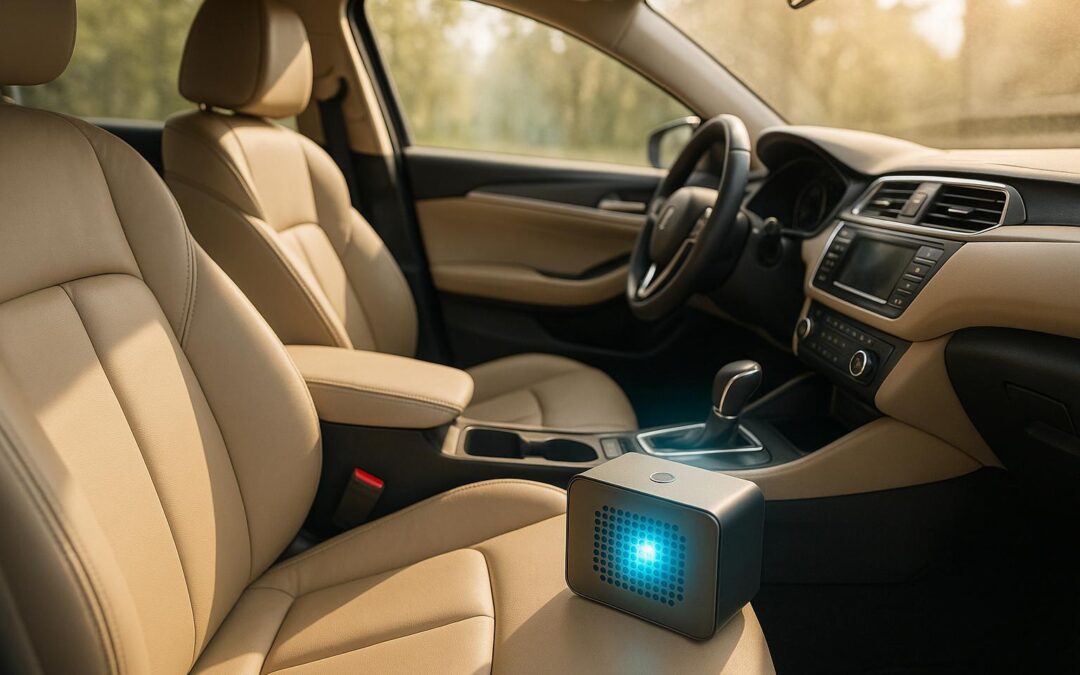
Ozone treatment is a powerful way to eliminate odors and sanitize your car’s interior. It uses ozone gas (O₃) to break down odor-causing molecules, bacteria, mold, and allergens at their source. Unlike sprays or cleaners that only mask smells, ozone penetrates deep into upholstery, vents, and fabrics for a thorough clean. Once the process is complete, the ozone safely reverts to oxygen (O₂), leaving no chemical residue behind.
Key Points:
- What it Does: Removes odors (smoke, pets, mold) and kills up to 97% of bacteria, allergens, and mold spores.
- How it Works: Ozone gas is generated and circulated in the car for 1–8 hours, depending on the severity of the odor.
- Safety: Proper ventilation is critical after treatment. Wait 12–24 hours before using the car again.
- Cost: Professional services, like Ozonated Cleaning LLC in Chicago, charge around $150 per vehicle.
This method is ideal for tackling persistent smells, mold issues, or after contamination, offering a cleaner and healthier car interior.
Eliminating Car Odors with Ozone Shock Treatments
How Ozone Treatment Works
Getting rid of car odors with ozone treatment involves three key steps: preparation, ozone generation, and ventilation. Let’s break down each step to show how it works.
Preparing Your Vehicle for Treatment
Before starting ozone treatment, it’s important to tackle the source of the odor to ensure lasting results. Begin by thoroughly cleaning the area where the smell originates. Use an enzyme-based cleaner for this initial cleanup. For more stubborn stains or deeply embedded bacteria, consider using a carpet extractor or an interior steamer. If your vehicle has older vinyl or leather surfaces, it’s a good idea to condition them before and after treatment. This helps prevent cracking, as ozone can have a drying effect on these materials.
How Ozone Generators Work
Once your car is prepped, it’s time to use the ozone generator. These devices use corona discharge technology to create ozone, which is then dispersed throughout your car’s interior. Ozone molecules actively attack and neutralize odor-causing bacteria while breaking down the structure of contaminants. To get the best results, place the generator in a central location, like the center console, and make sure all doors and windows are sealed. Depending on how severe the odor is, you’ll need to run the machine for anywhere from 1 to 8 hours. This method works especially well for tough odors caused by smoke, mold, mildew, body odor, and pets. However, avoid using UV-equipped generators – they’re not effective for this purpose. Once the ozone generation is complete, the final step is ventilation.
Ventilating After Treatment
Ventilation is essential to make your car safe and odor-free after the ozone treatment. Once the generator has finished running, wait for 30 minutes to an hour to allow the ozone to start breaking down into oxygen. Since ozone has a half-life of about 30 minutes, this waiting period is crucial. Afterward, open all doors and windows to let fresh air circulate and speed up the dissipation process. Typically, your vehicle will be safe to use again within 12 to 24 hours after the generator stops producing ozone. If you still notice a strong ozone smell or lingering odors, you may need to repeat the process. Proper ventilation not only eliminates harmful ozone but also clears out any remaining smells.
Benefits of Ozone Treatment for Cars
Ozone treatment is a powerful way to eliminate odors and sanitize your car’s interior, creating a cleaner and healthier environment. Here’s a closer look at its key benefits:
Eliminates Tough Odors
Ozone treatment works by breaking down odor molecules at their source, reaching deep into air vents, under seats, and even into carpet padding. Unlike air fresheners that simply mask smells, ozone treatment removes 75% to 100% of stubborn odors, including those caused by mold, mildew, smoke, pets, and body odor. It’s a long-lasting solution for even the most persistent smells.
Neutralizes Germs and Reduces Allergens
This method doesn’t just address odors – it also sanitizes your vehicle. Ozone treatment can neutralize up to 97% of bacteria and effectively inactivate viruses and mold. According to the World Health Organization, its ability to reduce allergens makes it particularly helpful for people with allergies or respiratory issues. By cutting down on volatile organic compounds (VOCs) and improving air quality, it creates a safer space for everyone inside the car.
Safe and Chemical-Free
One of the best parts? Ozone treatment is completely natural. It uses no harsh chemicals and doesn’t leave behind any residues. After the process, ozone naturally reverts to oxygen (O₂), all while eliminating 99.9% of bacteria, viruses, and mold spores.
For those in the Chicagoland area, Ozonated Cleaning LLC provides expert ozone treatments to refresh your car and enhance your driving experience.
With its ability to tackle odors, germs, and allergens, ozone treatment is a smart choice for maintaining a cleaner and healthier vehicle interior.
Safety Guidelines for Ozone Treatment
When it comes to ozone treatment, following safety protocols is not just important – it’s non-negotiable. While ozone treatment is highly effective for eliminating odors and sanitizing vehicle interiors, improper handling can pose serious health risks. For instance, exposure to high ozone concentrations can cause respiratory problems, eye irritation, and other health issues. Always ensure the vehicle is completely empty during treatment, including removing any pets.
Safe Ozone Handling Practices
Before starting the treatment, make sure your vehicle is fully sealed by closing all vents and openings. This ensures ozone can circulate effectively throughout the interior. It’s also important to understand exposure limits. According to the Occupational Safety and Health Administration (OSHA), the permissible exposure limit is 0.10 parts per million (ppm) for an eight-hour period. The National Institute of Occupational Safety and Health (NIOSH) echoes this guideline, while the Environmental Protection Agency (EPA) enforces an even stricter standard of 0.08 ppm for an eight-hour average.
Once the treatment is complete, ventilate the vehicle for at least one hour. Experts suggest that ozone typically converts back to oxygen within 30–60 minutes. Make sure any residual ozone smell is completely gone before using the vehicle. These steps not only ensure safety but also maintain ozone’s advantage of leaving no chemical residues behind.
Strict adherence to these handling and ventilation measures underscores the benefits of relying on professionals for ozone treatments.
Why Hire Professional Services
Because of the potential risks and technical expertise required, many vehicle owners prefer to leave ozone treatments to professionals. Experienced technicians know how to operate ozone generators safely, determine the right treatment duration, and ensure proper ventilation afterward. For example, Ozonated Cleaning LLC, a service provider in the Chicagoland area, specializes in ozone treatments for vehicles. Their team follows rigorous safety protocols and ensures your car is fully aired out before handing it back to you.
Another advantage of hiring professionals is their ability to assess whether ozone treatment is even necessary. In some cases, a thorough cleaning can resolve odor problems without the need for ozone. As Rahimeen Haider Ali explains:
"Ozone is a gas which will dissipate after about half an hour after treatment, so there is no risk of exposure from your vehicle. Your detailer will be sure to sufficiently air out your vehicle before returning it to you."
For those who prefer a DIY approach, it’s critical to follow the manufacturer’s instructions to the letter and allow sufficient ventilation time before re-entering the vehicle. Understanding and respecting these safety measures is key to recognizing when ozone treatment is the best solution for your needs.
sbb-itb-5fea4da
When to Use Ozone Treatment
Ozone treatment shines in tackling tough odors and contamination issues that regular cleaning methods just can’t handle.
Getting Rid of Persistent Odors
Cigarette smoke is one of the hardest odors to eliminate in vehicles. It seeps deep into upholstery, carpets, and ventilation systems, areas that standard cleaning methods simply can’t reach. Pet smells and food odors present similar challenges, embedding themselves into the fabric and creating long-lasting problems.
Ozone works differently. It penetrates deep into crevices, vents, and fabric fibers to attack the molecules causing the odor, completely breaking them down. This ensures the smell is eliminated at its source, not just masked. And it’s not just about odors – ozone treatment is also a powerful solution for moisture-related problems, which we’ll cover next.
Treating Mold and Mildew Problems
When vehicles are exposed to moisture – whether from leaks, flooding, or humid conditions – they become breeding grounds for mold and mildew. This not only creates musty, unpleasant smells but can also harm your health and the air quality inside the vehicle. Ozone treatment tackles these issues on multiple fronts. It doesn’t just remove the musty odor; it also targets and destroys the mold and mildew spores responsible for it, leaving your car’s interior fresher and healthier.
Flood damage, leaky windows, or even spilled drinks can create the perfect environment for mold growth. Ozone treatment is especially useful in these cases because it reaches areas that are nearly impossible to clean manually, like air vents, under seats, and deep within upholstery padding.
Deep Cleaning After Contamination
Some situations call for more than just surface cleaning – deep sanitization becomes a must for health and safety. Ozone treatment is incredibly effective in these scenarios because it disinfects thoroughly without leaving behind any chemical residues.
For example, if someone has been sick in a vehicle, traditional cleaning might not remove all bacteria, viruses, or lingering odors. Ozone treatment steps in to sanitize deeply, destroying pathogens and neutralizing smells.
Bodily fluid spills are another scenario where ozone treatment proves invaluable. These incidents can leave behind strong odors and potential health risks that regular cleaning can’t fully address.
The benefits extend beyond personal vehicles. Commercial vehicles such as taxis, rideshares, and delivery cars are exposed to constant use by different people, leading to a buildup of odors and contamination. These heavily used vehicles often develop deep-seated smells that resist standard cleaning methods, making ozone treatment an excellent solution.
Ozone treatment is highly effective at eliminating even the toughest odors. The results last because ozone neutralizes the source of the smell instead of just masking it.
For vehicle owners in the Chicagoland area facing these challenges, Ozonated Cleaning LLC offers professional ozone treatment services for $150 per vehicle. Their expertise ensures a safe and thorough approach to tackling contamination and odors effectively.
Conclusion
Ozone treatment offers a chemical-free way to get rid of odors and sanitize vehicle interiors. Unlike air fresheners that merely cover up smells, ozone works at the molecular level to neutralize odor-causing compounds from cigarette smoke, pet accidents, food spills, and even mold. Plus, it’s an eco-friendly option – ozone is a naturally occurring gas that breaks down into regular oxygen after use, making it a great choice for people who are sensitive to allergens or harsh cleaning chemicals.
When it comes to safety, there are a couple of key practices to keep in mind: make sure the vehicle is empty during the treatment and ventilate it thoroughly afterward. While DIY ozone generators are available, professional services often provide better results with commercial-grade equipment and the expertise to tailor the treatment to your specific needs.
For the best outcome, ozone treatment should be paired with a thorough pre-cleaning. This step allows the ozone to reach deep into vents, fabrics, and crevices, tackling contamination at its source. Pre-cleaning ensures ozone can work as effectively as possible, making it a powerful solution for even the toughest odor and sanitization challenges.
Whether you’re dealing with the aftermath of flood damage, stubborn smoke odors, or need a deep clean following contamination, ozone treatment provides a lasting solution that addresses the problem at its core. For vehicle owners in the Chicagoland area, Ozonated Cleaning LLC offers expert ozone treatment services at $150 per vehicle, delivering a deep, thorough clean that eliminates odors for good.
FAQs
What makes ozone treatment an effective way to remove odors and sanitize a car’s interior?
Ozone treatment stands out because it tackles odors at their root, breaking apart the molecules responsible for bad smells. Unlike quick fixes like air fresheners or surface cleaning methods such as shampooing, ozone gas penetrates deep into upholstery, air vents, and other tricky spots. The result? A cleaner, fresher environment that lasts.
On top of that, ozone doesn’t just remove odors – it also sanitizes. By oxidizing bacteria, viruses, and other harmful microorganisms, it leaves your car’s interior safer and healthier. And the best part? It achieves all this without relying on harsh chemicals, making it a safer and more eco-conscious way to deep clean and deodorize.
Are there any health risks or potential downsides to using ozone treatment in vehicles?
Ozone Treatment: Benefits and Precautions
Ozone treatment is a powerful way to eliminate odors and sanitize vehicles, but it requires careful handling. Ozone, while effective, can irritate the respiratory system, causing issues like chest discomfort or throat irritation if humans are exposed to it for too long. For this reason, it’s essential to ensure the vehicle remains completely unoccupied during the treatment process.
There’s also a potential downside to overusing ozone or exposing a vehicle to high concentrations. Over time, materials like rubber or plastic inside the car may start to degrade, leading to cracking or a loss of flexibility. To avoid these issues, it’s best to follow proper usage guidelines and rely on professional services. This approach allows you to enjoy the benefits of ozone treatment while minimizing any risks to the vehicle or its occupants.
What should I do if my car still smells after an ozone treatment?
If you still notice odors after an ozone treatment, it might be necessary to repeat the process to tackle those more persistent smells. Once the treatment is complete, ensure the vehicle is well-ventilated by opening the doors and windows – this allows any leftover ozone to clear out more effectively.
For added freshness, consider giving surfaces like carpets, upholstery, and mats a thorough cleaning to eliminate any lingering odor-causing particles. If the smell persists, it could be a sign of a hidden source. In that case, take the time to inspect and clean those harder-to-reach spots to address the problem fully.
Recent Comments