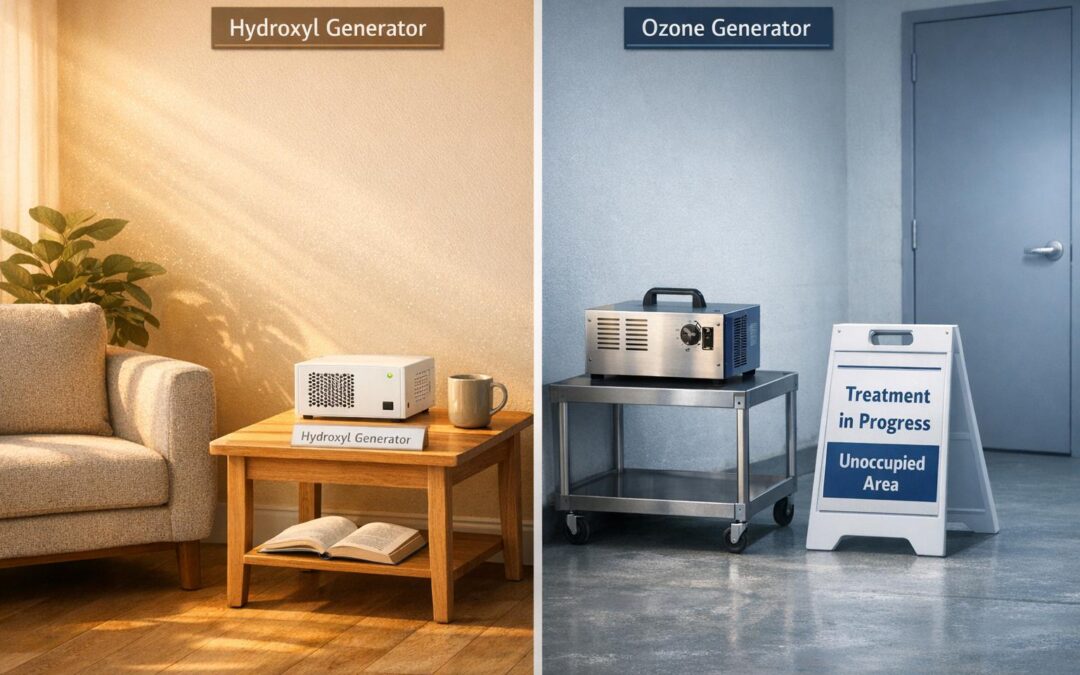
Hydroxyl and ozone generators both eliminate odors and pollutants but differ in safety, speed, and applications.
- Hydroxyl Generators: Safe for use in occupied spaces (people, pets, plants). Slower treatment (3–5 days) but gentle on materials like electronics, rubber, and artwork. Ideal for homes, offices, and hospitals.
- Ozone Generators: Faster results (1–12 hours) but require evacuation due to health risks. Effective for unoccupied spaces, fire restoration, and smoke damage. Can harm sensitive materials over time.
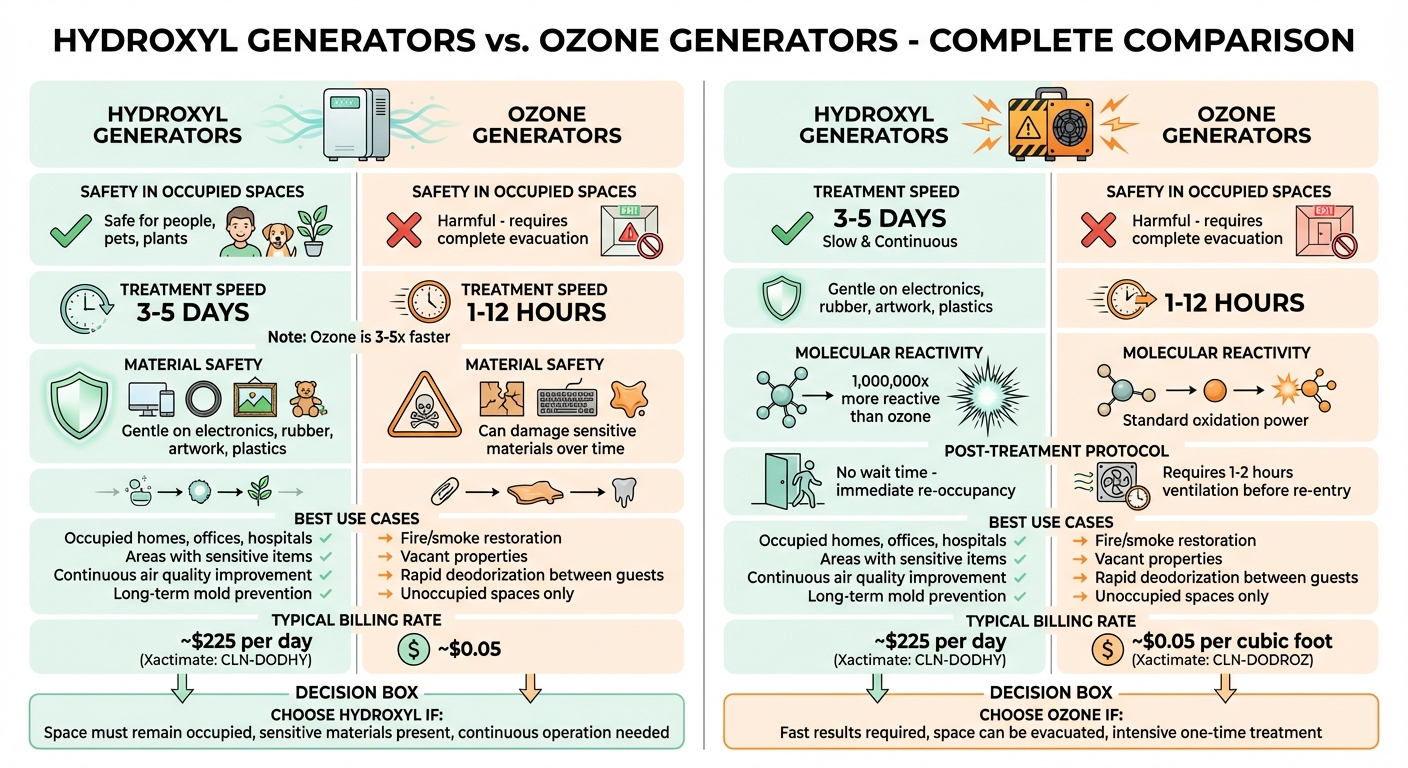
Quick Comparison
| Feature | Hydroxyl Generators | Ozone Generators |
|---|---|---|
| Safety | Safe for occupied spaces | Harmful; requires evacuation |
| Speed | 3–5 days | 1–12 hours |
| Material Safety | Gentle on sensitive items | Can damage materials |
| Applications | Homes, hospitals, offices | Fire/smoke damage, vacant spaces |
| Post-Treatment | No wait time | Ventilation required |
Choose hydroxyl generators for continuous use in occupied areas and ozone generators for quick, intensive treatments in unoccupied spaces.
Hydroxyl vs Ozone Generators: Safety, Speed, and Applications Comparison
What Is The Real Difference Between Hydroxyl and Ozone?
sbb-itb-5fea4da
What Are Hydroxyl Generators?
Hydroxyl generators are devices designed to eliminate odors and sanitize spaces by producing hydroxyl radicals (·OH). These highly reactive molecules naturally break down pollutants by targeting the molecular structure of odor-causing compounds, bacteria, viruses, and volatile organic compounds (VOCs). Instead of masking odors, hydroxyl radicals neutralize them at the source.
These devices mimic a natural atmospheric process. Outdoors, UV light from the sun interacts with water vapor and oxygen to create hydroxyl radicals. Indoors, hydroxyl generators replicate this by producing about 2,000,000 hydroxyls per cubic centimeter, making them effective against persistent odors and contaminants.
One of the standout features of hydroxyl generators is their safety for use in occupied spaces. Unlike ozone, hydroxyl radicals are non-irritating to the respiratory system and harmless to sensitive materials. As Dr. Araps, Chairman of the Scientific Advisory Board at HGI Industries, explains:
"Our skin and mucosal tissue (eyes, sinuses, mouth, throat, lungs) are in no way harmed by atmospheric hydroxyls as we’ve been exposed to them since the beginning of time."
These radicals are also non-corrosive, meaning they won’t damage rubber, plastics, leather, electronics, or delicate items like artwork. This makes them particularly valuable in restoration work. Typically, a single hydroxyl generator can cover an area of 1,000 to 1,500 square feet with ceilings between 10 and 15 feet high.
How Hydroxyl Generators Work
Hydroxyl generators primarily use a process called Photocatalytic Oxidation (PCO). UV lamps in the device emit light at specific wavelengths – usually UVA (365–385nm) or UVC (254nm). This light interacts with a catalyst, typically Titanium Dioxide (TiO₂), and ambient moisture to produce hydroxyl radicals.
These radicals are incredibly effective oxidants. They work by stripping hydrogen from organic molecules, breaking them down into harmless byproducts like carbon dioxide and water. Hydroxyl radicals operate at a speed over 1,000,000 times faster than ozone, making them highly efficient. However, they have a very short lifespan – usually under two seconds. To maximize their effectiveness, proper air circulation is crucial. High-volume air movers (5,000+ CFM) are often used to ensure the radicals are distributed evenly before they dissipate.
Maintaining a humidity level of 60% or higher is also important, as moisture is essential for generating hydroxyl radicals. In drier environments, some systems incorporate ultrasonic water vapor to boost performance.
This fast and effective process makes hydroxyl generators suitable for a variety of uses.
Applications of Hydroxyl Generators
Hydroxyl generators are ideal for continuous use in spaces where people are present. They are commonly used in commercial settings like hospitals, schools, retail stores, and offices, allowing daily operations to continue without interruption.
In residential settings, homeowners turn to hydroxyl generators for tackling tough odors like cigarette smoke, pet urine, cooking smells (such as curry or grease), and musty basements. They are also effective when detecting HVAC odor sources that spread smells throughout a property. They can even handle challenging odors like skunk spray that traditional cleaning methods often fail to remove.
Restoration professionals frequently use hydroxyl generators for fire and smoke damage, water losses (Category 2 and 3), and mold remediation. These devices are effective for addressing protein fires, fuel oil spills, and biohazard situations without harming the materials involved.
This technology is also valuable for treating vehicle interiors, RVs, and boats. Hydroxyl radicals penetrate porous materials like upholstery and carpeting to eliminate deep-seated odors, all without damaging rubber seals, plastic components, or electronics. While treatments generally take 3 to 5 days, the ability to occupy the space during the process makes hydroxyl generators a practical and convenient choice. Their safety and effectiveness set the stage for comparing them with how ozone machines remove home odors in subsequent sections.
What Are Ozone Generators?
Ozone generators are devices designed to produce ozone gas (O₃), which chemically neutralizes odors, bacteria, viruses, and mold spores. Unlike air fresheners that simply mask odors, ozone targets contaminants at the molecular level. The process involves an extra oxygen atom detaching from the ozone molecule and bonding with pollutants, breaking them down into harmless substances like carbon dioxide and water. Though ozone and hydroxyl technologies both oxidize contaminants, ozone achieves this by releasing an oxygen atom – a key difference.
What makes ozone unique is its ability to penetrate porous materials like fabrics, carpets, and upholstery – areas that traditional cleaning methods often struggle to reach. This makes it particularly effective for eliminating tough odors caused by tobacco smoke, fire damage, and pet accidents. However, ozone is a respiratory irritant. Both the Occupational Safety and Health Administration (OSHA) and the Environmental Protection Agency (EPA) classify it as a toxic air pollutant due to its potential to harm lung tissue. Ozone has a half-life of about 20 minutes in confined spaces, meaning it naturally breaks down into regular oxygen over time. With this foundational understanding, let’s dive into how ozone generators actually work.
How Ozone Generators Work
Ozone generators use two primary methods to produce ozone: Corona Discharge (CD) and Ultraviolet (UV) Light.
- Corona Discharge: This method uses high-voltage electricity to split oxygen molecules (O₂), which then reform as ozone (O₃). It’s the most effective technique for producing the high concentrations of ozone needed for intense shock treatments, such as fire and smoke restoration. Liam Cope, Founder of Engineer Fix, explains:
"Ozone generators convert the standard oxygen molecule, O₂, into the unstable three-atom ozone molecule, O₃, by introducing a high-energy source."
- Ultraviolet Light: UV-C light and ozone are both used to mimic the sun’s natural disinfection processes. While this method is simpler to maintain, it generates lower ozone concentrations, making it better suited for lighter deodorizing tasks.
Ozone works quickly, often neutralizing odors within 20–30 minutes by oxidizing contaminants. For optimal results, place the generator in a central location or near a central air return (after removing the filter) to ensure the ozone circulates effectively. Most generators include built-in timers to prevent overexposure, as prolonged ozone exposure can degrade materials like rubber, plastics, and electrical wire coatings.
Applications of Ozone Generators
Ozone generators are ideal for situations that demand fast, intensive odor removal in unoccupied spaces. They are widely used in industries like hospitality, where hotels and vacation rentals rely on them to eliminate lingering odors between guests. Property managers also use them to address smoke or pet odors in apartments, and vehicle detailing professionals often treat car interiors, buses, and RVs with persistent smells from tobacco or food.
In restoration work, ozone generators are indispensable for tackling fire and smoke damage, flood cleanup, and biohazard remediation. Johnathan McCubbin, Vice President of International Ozone Technologies Group Inc., emphasizes:
"Ozone is a great tool in contents restoration as well as typical odor jobs."
Professionals often bill ozone treatments using Xactimate code CLN-DODROZ, with an average rate of about $0.05 per cubic foot. The process involves clearing the space of all living things (including plants), running the generator for the recommended duration, and ventilating the area thoroughly for at least one to two hours before re-entry. While ozone generators deliver faster results than hydroxyl generators – often completing the job in hours rather than days – they require strict safety measures and complete evacuation during operation. These features make ozone generators a powerful option for rapid, intensive treatments, contrasting with the slower, continuous use of hydroxyl generators.
Hydroxyl Generators vs. Ozone Generators: Main Differences
Both hydroxyl and ozone generators are used to oxidize contaminants, but they differ drastically in terms of safety, speed, and appropriate applications. One major distinction lies in their suitability for occupied spaces: ozone generators require complete evacuation due to the toxicity of ozone, while hydroxyl generators are safe for use in areas with people, pets, and plants present. Beyond safety, the speed at which they work is another critical factor.
Ozone generators are known for their efficiency, often completing tasks in just 1 to 12 hours. This makes them ideal for unoccupied spaces that need quick deodorization, such as vacant homes or offices. In contrast, hydroxyl generators take longer – typically 3 to 5 days – but allow for continuous occupancy during the treatment process. Russ McCubbin, President of International Ozone Technologies Group, Inc., highlights this difference:
"Ozone is faster than hydroxyl at removing odors but must only be used in unoccupied areas."
Another key consideration is material safety. Ozone’s strong oxidizing power can harm materials like natural rubber, leather, certain plastics, and electronics if exposure is prolonged. On the other hand, hydroxyl generators are much gentler, making them ideal for environments with sensitive items such as fine art or expensive electronics that can’t be easily removed or shielded.
Interestingly, hydroxyl radicals are one million times more reactive than ozone, yet they remain safe for humans and materials. This heightened reactivity enables hydroxyl radicals to neutralize a wider range of odors and pathogens without accumulating to harmful levels, unlike ozone, which can become dangerous in confined spaces.
Side-by-Side Comparison Table
Here’s a quick breakdown of the main differences between the two technologies:
| Feature | Ozone Generators | Hydroxyl Generators |
|---|---|---|
| Safety in Occupied Spaces | Harmful; requires complete evacuation of people, pets, and plants | Safe for continuous use with occupants present |
| Treatment Speed | Rapid (1–12 hours typical) | Slower (3–5 days for similar results) |
| Material Safety | Can damage rubber, leather, plastics, and electronics | Gentle on sensitive materials and artwork |
| Post-Treatment Protocol | Requires 1–2 hours ventilation before re-entry | No wait time; immediate re-occupancy |
| Primary Technology | Corona discharge or UV light producing ozone | Photocatalytic oxidation producing hydroxyl radicals |
| Molecular Reactivity | Standard oxidation power | 1,000,000 times more reactive than ozone |
| Residual Odor | May leave a temporary chemical odor | No chemical residual odor |
| Typical Billing Rate | ~$0.05 per cubic foot (Xactimate code CLN-DODROZ) | ~$225 per day (Xactimate code CLN-DODHY) |
| Best Use Cases | Fire/smoke restoration; vacant properties; rapid deodorization | Occupied offices, hospitals, homes; areas with sensitive items |
| Environmental Requirements | Requires a sealed environment for effective concentration | Requires ambient humidity to function |
This comparison highlights the distinct strengths of each option, helping users choose the right tool for the job based on their specific needs and circumstances.
Pros and Cons of Hydroxyl Generators
Hydroxyl generators are ideal when safety and continuous operation are top priorities. They allow treatment in occupied spaces, eliminating the need for costly hotel stays or business closures. This makes them particularly useful for hospitals, homes, and offices where evacuation isn’t feasible. Another advantage is their gentle treatment of sensitive materials like rubber, electronics, and artwork. For example, a Manhattan condominium successfully used Odorox hydroxyl machines to address smoke and other indoor odors without harming its artwork.
That said, one major downside is their slower treatment speed. According to Russ McCubbin, President of International Ozone Technologies Group, Inc.:
"If a strong ozone generator would take one day to do a job, a hydroxyl generator will take three to five days to do the same job."
In most cases, standard deodorization with hydroxyl technology takes about three to four days. This slower pace can be a challenge in time-sensitive situations or severe contamination cases.
Their effectiveness is also influenced by factors like ambient humidity and the need for rapid distribution, which are critical for proper operation. Additionally, hydroxyl generators are not designed to handle heavy surface contamination. As McCubbin explains, "Hydroxyl generators are not intended for use on mold remediation jobs where there is a large infestation on surfaces or behind walls". In such cases, physical removal of the mold is still required.
Comparison Table: Pros and Cons of Hydroxyl Generators
| Advantages | Disadvantages |
|---|---|
| Safe for use in occupied spaces (humans, pets, plants) | Slower treatment process (3–5 times longer than ozone) |
| Does not damage sensitive materials (rubber, electronics, art) | Requires high humidity (60%+) for peak efficiency |
| Leaves no harmful chemical residues or lingering odors | Ineffective for heavy surface mold infestations |
| Operates continuously throughout restoration projects | Higher equipment cost ($500–$4,500) compared to some ozone units |
| Safe for use on wet materials without bleaching | Limited effectiveness due to short (2-second) radical lifespan |
This breakdown highlights the distinct advantages and limitations of hydroxyl generators, especially when compared to ozone generators. Next, we’ll dive into the pros and cons of ozone generators for a more complete evaluation.
Pros and Cons of Ozone Generators
Ozone generators are known for their ability to neutralize odors quickly – often within 20 to 30 minutes – making them a go-to solution for time-sensitive situations like fire restoration or hotel room turnovers. Russ McCubbin, President of International Ozone Technologies Group, Inc., highlights this efficiency:
"If people and animals can be removed from the treatment area, ozone will always do the job faster."
This speed is possible because ozone chemically alters odor molecules instead of simply masking them. As a gas, it seeps into porous materials, reaching places that traditional cleaning methods might overlook. This capability makes ozone especially useful for addressing smoke damage, mold spores, bacteria, and viruses. However, while its effectiveness is impressive, it comes with serious safety concerns.
The primary drawback is ozone’s toxicity. At the concentrations needed for treatment, it is harmful to humans, pets, and plants. Spaces must be completely evacuated during use. OSHA sets a strict exposure limit of 0.1 ppm as an 8-hour time-weighted average, emphasizing the need for proper safety measures. After treatment, a waiting period of at least four hours is recommended before re-entry, followed by one to two hours of ventilation.
Another downside is the potential for material damage. Ozone’s strong oxidizing properties can degrade materials like rubber, electronics, and fabrics. Jeff Heyd from Concrobium explains that while ozone "has been used to deodorize contents and structures on fire losses for decades" because "it works", it also poses "potential dangers to humans and can damage sensitive materials".
Comparison Table: Pros and Cons of Ozone Generators
| Advantages | Disadvantages |
|---|---|
| Rapid odor neutralization (20–30 minutes) | Harmful to humans, pets, and plants |
| Effective on smoke and bio-contaminants | Can damage materials like rubber and electronics |
| Reaches porous and hidden areas | Requires evacuation during use |
| Targets mold, bacteria, and viruses | Leaves a temporary residual smell |
| Cost-effective for short-term, intensive treatments | Risk of overuse if not carefully monitored |
When to Choose Hydroxyl Generators Over Ozone Generators
Deciding between hydroxyl and ozone generators often comes down to whether the space will remain occupied during treatment. If people, pets, or plants need to stay in the area, hydroxyl generators are the safer choice. As Russ McCubbin, President of International Ozone Technologies Group, Inc., puts it:
"If a homeowner cannot leave or a store cannot shut down, hydroxyl generators are the way to go."
Hydroxyl generators are perfect for places like hospitals, occupied offices, 24-hour retail stores, and homes where evacuation isn’t feasible. They’re also gentle on sensitive items, such as electronics, rubber materials, artwork, and high-value furnishings, which ozone could potentially harm. This makes them ideal for situations where continuous decontamination is necessary, and downtime isn’t an option.
While ozone generators work quickly to remove home odors, hydroxyl generators offer ongoing air quality improvement without health risks or interruptions. They’re particularly useful for long-term mold prevention and treating wet materials without causing discoloration.
For tackling severe smoke damage, persistent pet odors, or ensuring operations continue during treatment, consulting an expert is crucial. Companies like Ozonated Cleaning LLC can help customize a treatment plan using either ozone or hydroxyl technology to suit your specific needs.
Conclusion
Both ozone and hydroxyl generators serve important roles in odor removal and sanitization, each excelling in different situations. Ozone generators are known for their speed, delivering results in as little as 20–30 minutes. This makes them a great option for unoccupied spaces dealing with smoke damage, flooding, or biohazard contamination. However, their use comes with important precautions – they require complete evacuation of people, pets, and plants due to potential respiratory risks, and they can harm sensitive materials like rubber or electronics.
On the other hand, hydroxyl generators focus on safety and versatility. They can operate continuously in occupied areas like homes, hospitals, or offices without posing health risks or damaging materials. The trade-off? Hydroxyl treatments generally take about three times longer to achieve similar results. As Airbotx explains:
"Hydroxyl generators provide a more gradual but continuous odor-removal process… they offer the advantage of being safe for use in occupied areas, allowing for continuous operation without disrupting daily activities."
Ultimately, the best choice depends on factors like whether the space is occupied, how quickly results are needed, and the sensitivity of the materials involved. For particularly tough odor problems or complex scenarios, consulting an expert is highly recommended.
If you’re in the Chicagoland area, Ozonated Cleaning LLC offers professional vs. DIY odor removal and disinfection services. They use both ozone and hydroxyl technologies and tailor their approach to meet the specific needs of your home, vehicle, or commercial space, ensuring safe and effective results.
FAQs
Which generator is best if I can’t leave the building?
If leaving the building isn’t an option, a hydroxyl generator is your best bet. Unlike ozone generators, which can pose safety risks and require the space to be empty during operation, hydroxyl generators are safe to use even when people are present. They don’t emit harmful residual ozone, making them a great choice for occupied spaces. In scenarios where evacuation isn’t feasible, hydroxyl generators offer an effective way to tackle odors and sanitize the area.
Will ozone or hydroxyl damage electronics, rubber, or artwork?
Ozone generators can harm delicate materials such as electronics, rubber, and artwork because their high ozone levels react with these items, leading to degradation. On the other hand, hydroxyl generators are much safer for use around such materials. They produce hydroxyl radicals, which don’t cause damage or deterioration. This makes hydroxyl technology a more suitable choice for odor removal and sanitization in spaces containing fragile or sensitive items.
What setup (humidity and airflow) makes hydroxyl treatment work best?
Hydroxyl treatment works best when the humidity level is approximately 60% and there’s adequate airflow in the area. To maximize its effectiveness, position the generator in a central location and use air movers to help distribute the hydroxyls evenly throughout the space.
Recent Comments