Ozone (O₃) is a highly effective disinfectant that eliminates bacteria, viruses, and odors by oxidizing their cell walls and genetic material. It’s 3,000 times faster and 150 times stronger than chlorine, with no harmful residues left behind. Here’s why ozone disinfection works:
- Powerful Oxidation: Ozone disrupts bacterial cell walls and viral envelopes, destroying pathogens at a molecular level.
- Eco-Friendly: Ozone naturally breaks down into oxygen after use, leaving no chemical traces.
- Fast and Efficient: It can reduce bacteria by up to 99% in just 2 hours and inactivate viruses like SARS-CoV-2.
- Versatile Applications: Used for homes, businesses, vehicles, and water treatment.
However, ozone requires careful handling due to its toxicity and lacks a residual disinfectant effect, meaning continuous monitoring is essential. It’s a game-changing solution for thorough, chemical-free disinfection.
Sanitize Everything With Ozone
How Ozone Kills Bacteria and Viruses
Ozone is a powerful oxidizer that neutralizes harmful pathogens through direct oxidation and the creation of free radicals. This process is the foundation of its effectiveness in both home and professional disinfection applications. Known as one of the most potent oxidizing agents, ozone works by breaking down bacterial cell walls, disabling viruses, and using free radicals to intensify its antimicrobial action.
Breaking Down Bacterial Cell Walls
When it comes to bacteria, ozone attacks their cell walls, causing them to rupture and disrupting their internal functions. Here’s how it works: as the ozone molecule (O₃) breaks down into oxygen (O₂), it releases a reactive oxygen atom. This oxidative burst damages the bacterial cell wall by reacting with its carbon atoms, sometimes forming carbon monoxide, which further destabilizes the structure. Once the cell wall is breached, ozone continues its assault by oxidizing essential biomolecules, effectively shutting down the bacteria’s metabolism.
A study by Rangel et al. highlighted ozone’s impact on common bacterial pathogens. Low doses of ozone reduced the viability of E. coli by 30%, P. aeruginosa by 25%, and A. baumannii by 15%.
Destroying Viruses
Ozone’s antiviral effects rely on a two-step process. First, it targets the virus’s outer layer, breaking down capsid proteins and, in enveloped viruses like SARS-CoV-2, disrupting the lipid membrane. This damage prevents the virus from attaching to and infecting host cells. Once the outer barrier is compromised, ozone moves on to oxidize the virus’s genetic material – primarily RNA – rendering it incapable of replicating.
For example, a 2015 study published in Food Microbiology found that gaseous ozone could inactivate norovirus on fresh produce, with its effectiveness increasing as the ozone dose was raised.
How Free Radicals Boost Ozone Action
An important part of ozone’s antimicrobial strength lies in its ability to generate free radicals, which amplify oxidative damage. As ozone decomposes, it produces reactive oxygen atoms and other oxidizers, like hydrogen peroxide. These secondary free radicals extend the damage, continuing to attack microbial cells even after the initial oxidative burst.
Research by Rangel et al. supports this mechanism, showing that low doses of ozone significantly increased reactive oxygen species (ROS) levels – by 90% in E. coli, 62.5% in P. aeruginosa, and 52.6% in A. baumannii.
Factors That Affect Ozone Disinfection
Ozone is a powerful disinfectant, but its effectiveness hinges on several critical factors. By understanding these variables, you can optimize ozone treatments, whether you’re targeting surface contamination or airborne pathogens.
Ozone Concentration and Contact Time
The combination of higher ozone concentrations and extended contact times leads to better disinfection results. Fortunately, ozone acts quickly, often delivering significant pathogen reduction within minutes rather than hours.
For example, a study involving the Sani Sport Supreme Dupliskate Ozone generator found that most bacteria were eliminated within 30 minutes, achieving up to a 99% reduction in viable bacteria after 2 hours at 20 ppm. The same research showed that synthetic SARS-CoV-2 RNA experienced notable degradation after just one hour of ozone exposure.
Andrew Zaske, Market Manager at Osmonics, Inc., highlights ozone’s efficiency:
"Ozone is extremely efficient as a bactericide, fungicide and virucide, killing even chlorine-resistant Cryptosporidium."
Research also indicates that ozone is up to 3,000 times faster acting and 150 times stronger than chlorine in eliminating bacteria, fungi, and other pathogens when conditions are optimal. With these parameters in mind, environmental factors further shape ozone’s performance.
Temperature and Humidity Effects
Temperature and humidity work together to boost ozone’s reactivity, enhancing its antimicrobial effectiveness. Higher humidity levels significantly improve ozone’s pathogen-killing ability by promoting the formation of aggressive chemical compounds that intensify the oxidative process.
Studies have shown that ozone treatment achieves a 99.9% reduction in viral infectivity at relative humidity levels between 50% and 70%, thanks to the increased production of reactive hydroxyl radicals. At even higher humidity levels (85% or more), the ozone concentration needed for 90% and 99% virus inactivation drops significantly compared to conditions at 55% relative humidity. One study achieved a three-order-of-magnitude reduction in virus titer using just 25 ppm of ozone for 15 minutes at humidity levels above 90%.
Temperature also plays a role, as higher temperatures accelerate ozone’s reactivity, improving its ability to inactivate pathogens. However, both high temperature and humidity can speed up ozone decay. Despite this, the net effect remains positive for disinfection. On the flip side, low humidity (below 50%) limits ozone’s effectiveness, making it difficult to achieve thorough disinfection. These principles also apply in water-based environments, where additional factors come into play.
Water Chemistry in Disinfection
When ozone is used for water treatment, the chemical makeup of the water becomes a key factor in its effectiveness. pH levels and dissolved organic matter (DOM) directly affect ozone’s behavior, influencing both its stability and its ability to form secondary disinfectants like hydroxyl radicals.
Organic matter in water can reduce ozone’s efficiency by consuming it before it reaches the target pathogens. Additionally, particulates and aggregates in water can physically shield microorganisms, creating "safe zones" where pathogens survive.
pH is another crucial element. Ozone decomposes more rapidly in alkaline conditions, which makes slightly acidic to neutral water more effective for disinfection. Lower pH levels allow ozone molecules to remain stable longer, enhancing their antimicrobial action.
Organic matter poses one of the biggest challenges in water disinfection. These compounds can react with ozone, reducing its availability for pathogen inactivation, or shield microorganisms from direct contact with the disinfectant. To counteract this, water is often pretreated to reduce solid materials to acceptable levels, ensuring better results.
Interestingly, the effectiveness of ozone in water treatment follows a specific hierarchy: Viruses >> Giardia cysts > C. parvum oocysts. This ranking underscores ozone’s efficiency in targeting certain pathogens over others.
sbb-itb-5fea4da
Benefits and Drawbacks of Ozone Disinfection
Ozone disinfection, like any other method, comes with its own set of advantages and challenges. Weighing these factors is essential to determine its suitability for specific applications. Below, we take a closer look at both the strengths and limitations of ozone disinfection.
Benefits of Ozone
Ozone stands out as a powerful disinfectant due to its high oxidation potential of 2.07 V, which surpasses chlorine’s 1.36 V. This allows it to disinfect more effectively and efficiently. For example, achieving 99.99% virus inactivation requires a CT (concentration–time) value of just 0.5 mg·min/L for ozone, compared to 12.5 mg·min/L for chlorine dioxide. Moreover, ozone effectively eliminates chlorine-resistant pathogens like Cryptosporidium. As noted by a Purifico industry expert:
"Ozone’s superior oxidizing capability means it can achieve the same disinfection levels as other methods with lower dosages and shorter contact times."
Another key advantage is the ability to generate ozone on-site, eliminating the need for storing or transporting hazardous chemicals. It also performs well across a wide pH range and at higher temperatures, which often translates to lower operating costs and reduced maintenance needs. A real-world example from a soft drink plant highlights these advantages: a three-step ozone cleaning-in-place (CIP) process achieved a 97% negative result for microbiological tests, outperforming a traditional five-step hot CIP protocol. This switch also saved the facility nearly $72,000 annually in energy costs.
Drawbacks of Ozone
Despite its benefits, ozone disinfection has its share of challenges. Setting up an ozone system can be more complex and expensive than traditional chlorine-based systems, partly because corona discharge technology loses about 85% of its energy as waste heat.
Material compatibility is another concern. Ozone’s high reactivity can corrode treatment systems, often requiring costly, corrosion-resistant materials like stainless steel. Additionally, it can degrade materials such as rubber, plastics, fabrics, and metals over time, with certain polymers being particularly vulnerable.
Safety is a critical issue. Ozone is toxic to humans and animals, with OSHA setting strict exposure limits: 0.1 ppm over 8 hours or 0.3 ppm for 15 minutes. As one analysis puts it:
"Ozone is a fantastic disinfectant as it is highly reactive. But with such reactive strength, comes some disadvantages."
Operationally, ozone systems require continuous monitoring, which adds to costs since ozone analyzers are expensive to purchase and maintain. The high voltage needed for ozone generators also introduces electrical safety concerns. Chemically, ozone can react with certain organic compounds, forming harmful by-products like bromate, a suspected carcinogen. Unlike chlorine, ozone does not leave a residual disinfectant, making it harder to confirm that disinfection remains effective after treatment. Furthermore, because ozone is unstable, it must be generated on-site and cannot be stored or transported.
The table below summarizes these key points:
| Aspect | Benefits | Drawbacks |
|---|---|---|
| Effectiveness | About 50% stronger oxidant than chlorine; effective against chlorine-resistant pathogens | Potential to form harmful by-products like bromate |
| Speed | Rapid disinfection due to lower CT requirements | Requires precise control and continuous monitoring |
| Environmental Impact | Breaks down into oxygen, leaving no chemical residues | Energy-intensive generation process |
| Cost | Lower operating costs and reduced chemical usage | High initial setup costs and need for corrosion-resistant materials |
| Safety | Eliminates hazardous chemical storage and transport | Toxic to humans and pets; strict exposure limits |
| Monitoring | Performs well across a broad pH range | Lack of residual disinfectant complicates post-treatment monitoring |
Carefully balancing these pros and cons is crucial for deciding whether ozone disinfection aligns with your operational needs and goals.
How Ozone Disinfection is Used
Ozone disinfection is a powerful method for neutralizing odors and eliminating pathogens, making it a practical solution for homes, businesses, and vehicles. Here’s how it’s applied in different settings.
Home and Business Applications
In homes, ozone generators target odors at their source instead of just masking them. By breaking down bacteria, mold, and fungi, ozone effectively removes smells caused by smoke, fire residues, and other contaminants embedded in materials like carpets, upholstery, and drywall.
"Ozone transforms the molecules that make up the offending odors – eliminating them rather than simply covering them up. It’s a safe and effective tool when used by professionals."
Before starting ozone treatment, it’s essential to remove plants, animals, and people from the area. After the process, ventilate the space thoroughly to ensure any remaining ozone dissipates safely.
In commercial settings such as hotels, offices, gyms, hospitals, and childcare centers, ozone disinfection is widely used. The World Health Organization recognizes ozone as one of the most effective disinfectants, with a 97% bacteria kill rate and the ability to neutralize viruses and mold. However, using ozone in occupied or high-traffic areas requires strict safety protocols. For instance, OSHA and NIOSH both recommend a maximum exposure limit of 0.1 ppm over 8 to 10 hours, with a 15-minute ceiling of 0.3 ppm.
Vehicle and Transportation Sanitization
Ozone treatment is particularly effective for vehicles, where confined spaces can trap odors and contaminants. Before treatment, vehicles should be cleaned and vacuumed. Afterward, allow 30–60 minutes for airing out, and confirm safe ozone levels with an ozone meter before reentry. These steps mirror the safety protocols used in other settings to ensure proper disinfection.
Studies highlight ozone’s effectiveness, showing a 99.22% kill rate against the SARS coronavirus. Equipment costs for vehicle ozone treatment vary. Entry-level models like the Micro3 Ozone Generator are priced at around $47.99 and receive positive reviews. For more advanced needs, professional-grade units such as the DC HUNT and DC MOBILE models cost between $499 and $549.
Ozonated Cleaning LLC: Professional Ozone Service
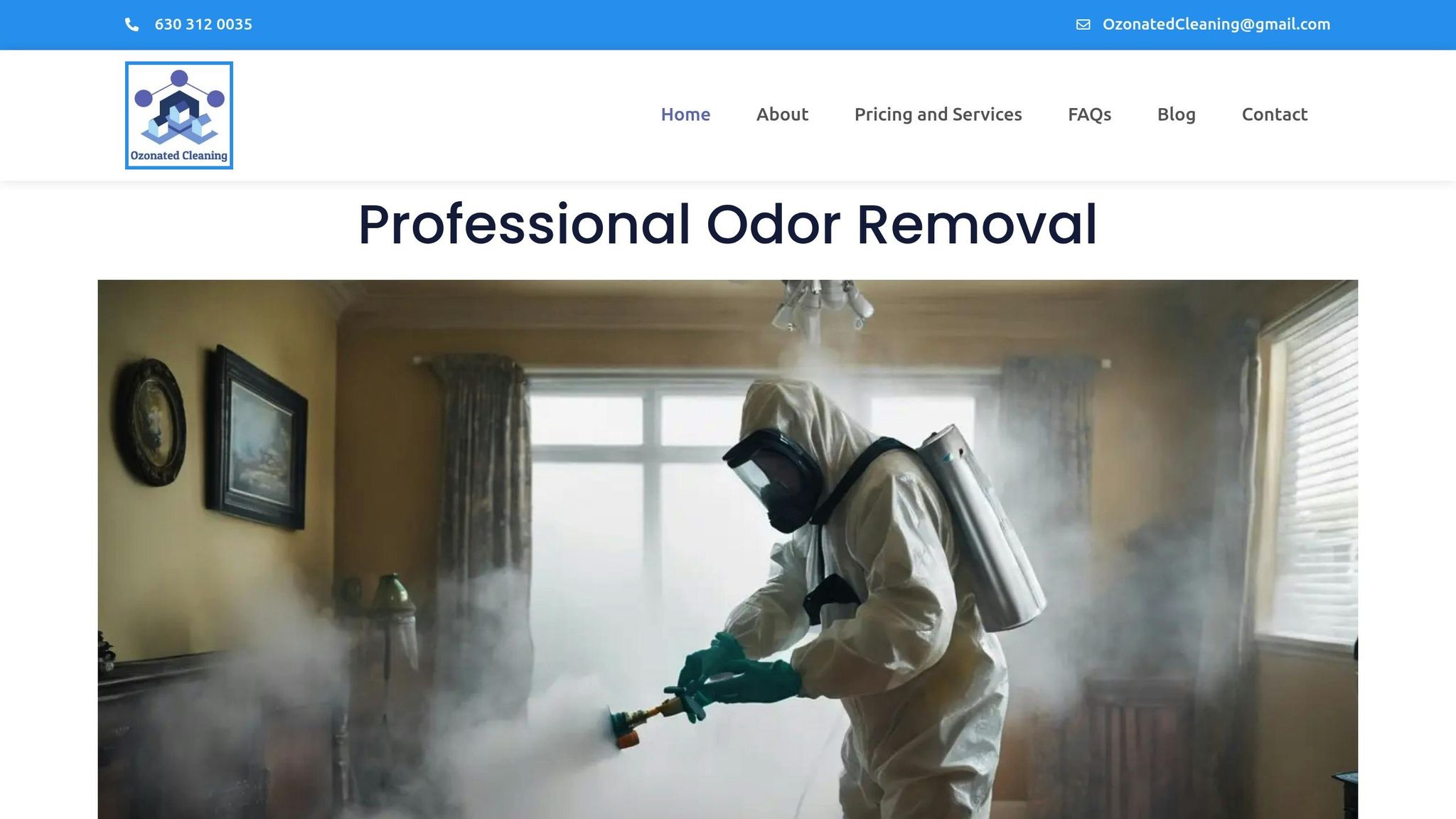
In the Chicagoland area, Ozonated Cleaning LLC provides professional odor removal and disinfection services using ozone and hydroxyl technology. Their home treatments range from $600 to $900 depending on the size of the space. Vehicle deodorizing costs $150 per vehicle, while semi-truck sanitization is offered at $200 per truck. By leveraging ozone’s rapid oxidative properties, they deliver reliable and effective disinfection services.
Why Ozone Changes the Game for Disinfection
Ozone stands out as a game-changer in disinfection, offering advantages that traditional methods simply can’t match. By building on the mechanisms discussed earlier, ozone showcases its ability to transform how we approach sanitization.
One of ozone’s biggest strengths is its high oxidation potential, which allows it to destroy pathogens quickly and effectively. It doesn’t discriminate either – it works against bacteria, viruses, fungi, and even protozoa, making it a powerful, all-in-one solution.
Another major perk? Ozone is generated on-site, eliminating the need to transport or handle dangerous chemicals. It’s also effective across a wider pH range and holds up well in warmer conditions, where other disinfectants might falter.
When it comes to practical use, ozone shines in areas where UV light can’t reach, like intricate spaces with multiple surfaces – think vehicle interiors or HVAC systems. As Areen Kalantari from Thornton puts it:
"Ozone’s eco-friendly nature and ability to decompose into harmless oxygen make it an attractive option, particularly when considering the energy savings associated with cold WFI systems."
With standard treatment cycles lasting just two hours and reducing viable bacteria by up to 99%, ozone proves to be a dependable choice for professional-grade sanitization. On top of that, its ability to neutralize odors and pathogens at the molecular level makes it an invaluable tool for keeping homes, businesses, and transportation environments clean and healthy.
FAQs
Is ozone a safe and environmentally friendly disinfectant?
Ozone stands out as a powerful disinfectant, capable of neutralizing bacteria and viruses without the leftover chemical residues associated with many traditional cleaning agents. Once its job is done, ozone naturally breaks down into oxygen, making it a cleaner choice for the environment.
That said, ozone requires careful handling. At high concentrations, it can irritate the respiratory system and, if mismanaged, may contribute to air quality issues.
When used responsibly, ozone provides an effective and eco-conscious way to disinfect, particularly in settings where minimizing chemical exposure is a top concern.
What safety precautions should you take when using ozone for disinfection at home or work?
When working with ozone for disinfection, safety should always come first. Make sure the area is completely free of people, pets, and plants during the treatment, as exposure to ozone can pose serious health risks. Once the process is finished, thoroughly ventilate the space before allowing anyone to enter.
To minimize hazards, consider using ozone detectors to keep track of concentrations and closely follow the manufacturer’s guidelines. Both the EPA and OSHA advise maintaining ozone levels below 0.10 ppm in spaces where people are present. Handle ozone equipment with care to safeguard your health while achieving effective disinfection results.
Does ozone work effectively in all environments, or are certain conditions better for disinfection?
Ozone is a powerful disinfectant, but its effectiveness hinges on specific conditions. It performs best in controlled environments where people aren’t present, as it rapidly decomposes and doesn’t leave lingering residues. Factors such as humidity, temperature, and the presence of organic materials can significantly impact how well it works.
It’s particularly effective indoors or in water treatment systems, where it can be generated and applied on the spot. On the flip side, ozone tends to be less reliable in outdoor settings or areas with a lot of organic matter. Using it correctly is key to achieving optimal results for sanitization and odor control.
Recent Comments