
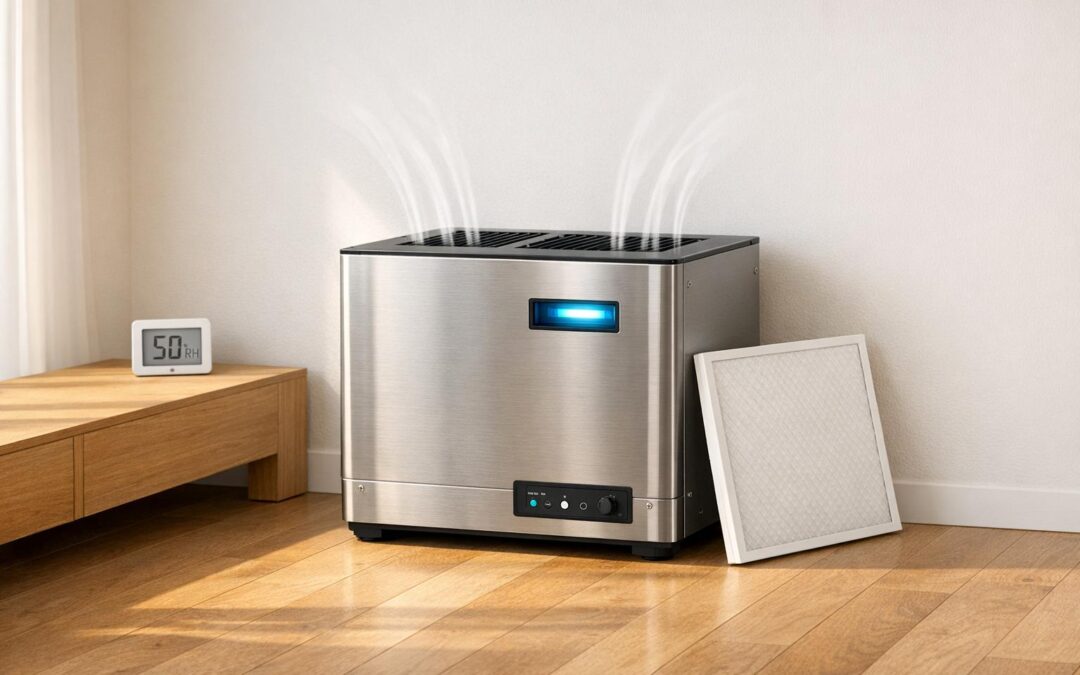
Hydroxyl generators clean indoor air by mimicking natural processes, breaking down odors and harmful compounds into harmless byproducts. While they’re safe to use in occupied spaces, proper setup and maintenance are essential for effective performance. Here’s what you need to know:
- Key Factors: Humidity, airflow, and contaminant levels significantly affect results. For best performance, maintain 40–60% humidity, ensure good air circulation, and address the source of odors before treatment.
- Setup Tips: Place the unit 2–4 feet off the ground, near odor sources, and ensure vents are clear. Adjust settings based on odor severity – low for light odors, high for stronger ones.
- Maintenance: Regularly clean filters, vents, and UV bulbs to keep the unit efficient. Replace UV bulbs annually to maintain effectiveness.
- When to Call Professionals: For severe cases like smoke damage or mold, professional services may be needed to address hidden odor sources.
ODOROX® hydroxyl generator – Set up and Operation Instructional Video
sbb-itb-5fea4da
Key Factors That Affect Hydroxyl Generator Performance
Using a hydroxyl generator effectively involves more than just switching it on. Variables like humidity, airflow, and the level of contaminants play a major role in how well the generator improves indoor air quality. Fine-tuning these elements can make a noticeable difference in achieving the best results. Let’s break down how each factor – humidity, airflow, and contaminant levels – impacts performance.
Humidity and Temperature
Hydroxyl generators work best when the air has the right level of humidity and the temperature is stable and moderate. If the air is too dry – something that often happens in winter with indoor heating – it can reduce the generator’s efficiency. In such cases, using a humidifier to add moisture to the air can improve performance.
Temperature and humidity aren’t the only considerations. The size of the room and the way air circulates also matter.
Airflow and Room Size
Good airflow is essential for the generator to treat the entire space effectively. Without proper circulation, certain areas – known as dead zones – can be missed, leaving odors and contaminants untreated.
"Hydroxyl generators effectively cover approximately 1,000 to 1,500 square feet with normal 10 to 15 foot ceilings when treating moderate to severe odors."
- Tom McArdle, Vice President of the Odorox Hydroxyl Group
In larger spaces, you might need multiple units or a more powerful model to ensure proper coverage. Keeping air pathways open – like avoiding blocked vents and leaving doors ajar – can further improve performance.
The level of contamination in the space is another critical factor to address.
Contaminant Level and Odor Severity
How long you’ll need to run the generator depends heavily on the concentration of contaminants. For light odors, such as faint cooking smells or slight mustiness, treatment can be relatively quick. However, stronger odor types – like those caused by smoke, mold, or fuel – often require longer treatment times.
"Some deodorization can be done within only a few hours, but most applications take three to four days."
- Tom McArdle, Vice President of the Odorox Hydroxyl Group
Porous materials, such as carpets, furniture, and drywall, can hold onto odors and contaminants more deeply. For spaces with heavily saturated materials, placing the generator closer to the source or using techniques like tenting can help concentrate the treatment and improve results.
Step-by-Step Setup for Best Results
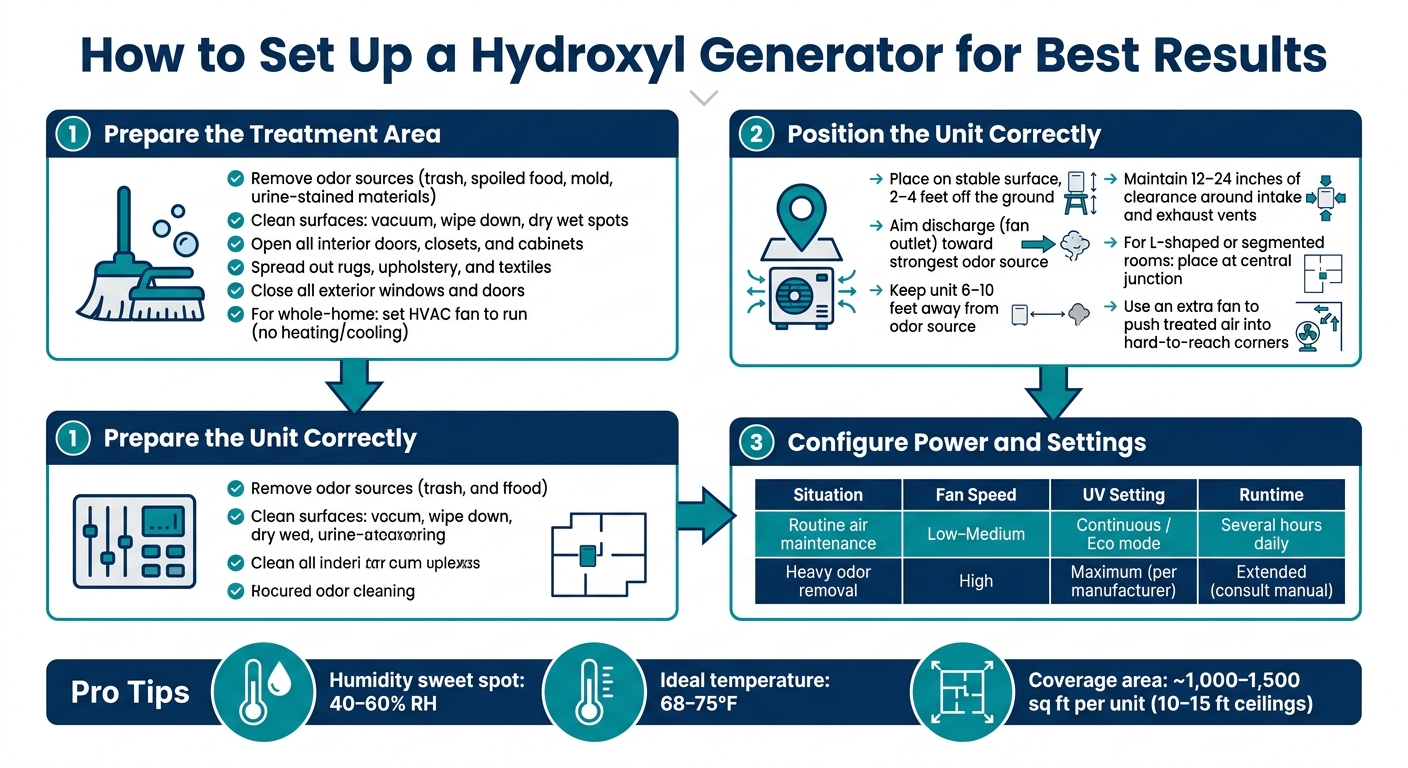
How to Set Up a Hydroxyl Generator for Best Results
To get the most out of your hydroxyl generator, focus on three key steps: preparing the treatment area, positioning the unit correctly, and adjusting the settings based on the job’s needs. Skipping any of these steps can lower the effectiveness of the treatment.
Preparing the Treatment Area
Start by removing the source of the odor with professional odor elimination solutions – whether it’s trash, spoiled food, urine-stained materials, or mold. Hydroxyl generators are designed to tackle residual odors, not ongoing contamination. Clean the area thoroughly by vacuuming, wiping down surfaces, and drying any wet spots. Keep in mind that heavy grime or biofilms can shield odor molecules, making treatment less effective.
Once the space is clean, take steps to ensure optimal airflow. Open all interior doors, closets, and cabinets in the treatment area to allow air to circulate freely. Spread out rugs, upholstery, or other textiles to expose as much surface area as possible. Close all exterior windows and doors to keep the treatment contained. If treating a single room, close supply and return vents. For whole-home treatments, set the HVAC fan to run (without heating or cooling) to help circulate the treated air throughout the space.
With the area ready, the next step is to position the unit for maximum efficiency.
Positioning and Placement
Where you place the hydroxyl generator can make a big difference. Set the unit on a stable surface, 2 to 4 feet off the ground, to target the breathing zone and minimize areas of stagnant air. Aim the discharge (fan outlet) toward the area with the strongest odor, keeping it about 6 to 10 feet away from the source. Positioning the unit too close can oversaturate the area, while placing it too far may weaken the treatment.
Ensure there’s at least 12 to 24 inches of clearance around the intake and exhaust vents to maintain good airflow and prevent overheating. If the space has an L-shape or other segmented layout, place the unit at a central junction point. You can also use an additional fan to help move treated air into hard-to-reach corners.
Once the unit is in place, configure its settings to match the job’s intensity.
Power and Settings Configuration
Adjust the settings based on the type of odor you’re addressing. For everyday air maintenance – like managing light pet odors or cooking smells – use a low to medium fan speed. If your unit has a UV or photocatalytic setting, run it continuously (often labeled as Eco mode). For more severe odors, such as those caused by smoke, mold, or fuel, crank up the fan speed and UV output to the highest levels recommended by the manufacturer. Extended run times may be necessary for these situations.
Here’s a quick guide to settings:
| Situation | Fan Speed | UV/Photocatalytic Setting | Typical Runtime |
|---|---|---|---|
| Routine air maintenance | Low to medium | Continuous / Eco mode | Several hours daily or continuous |
| Heavy odor removal | High | Maximum (per manufacturer) | Extended run times (consult manual) |
Operating Strategies for Different Situations
Once your unit is set up and positioned, choosing the right operating strategy is key to achieving the desired results. The best approach depends on the specific situation – whether you’re maintaining everyday air quality, tackling common household odors, or working in a confined space like a car or boat.
Routine Air Maintenance
For everyday use in homes, offices, or gyms, set the unit to a low or medium speed and let it run for 8–24 hours a day. Place it near areas that consistently generate odors, like kitchens or pet spaces. To support its performance, make sure to keep up with regular cleaning tasks, such as HEPA vacuuming and changing filters as needed.
If noise is an issue – say, in a bedroom or office – consider running the unit on a higher setting when the room is empty, then switching to a quieter mode when it’s occupied.
When standard measures aren’t enough, it might be time to shift to a more intensive odor removal plan.
Intensive Odor Removal
For stubborn odors like smoke, mold, or pet urine, start by addressing the source. Clean carpets and upholstery with a HEPA vacuum, wipe down hard surfaces, and wash any removable fabrics.
Once the area is prepped, set the unit to high output and run it continuously for 24–72 hours if the odor is severe. Focus the airflow directly on affected areas such as carpets, drapes, or upholstery. Check odor levels every 12–24 hours; if there’s little improvement after 48–72 hours, try repositioning the unit or using plastic sheeting to concentrate the treatment. For lingering smoke odors, inspect for hidden sources like wall cavities, HVAC systems, or subflooring, and consider pairing the unit with other remediation methods.
For smaller, enclosed spaces like vehicles or boats, these strategies can be adapted.
Vehicles, RVs, and Boats
In confined spaces, place the unit in a central location – on the center console or rear floor in a car, or in the main living area of an RV or boat. Make sure airflow isn’t blocked. Keep all doors and windows closed during the process. For light odors like stale food or faint smoke, run the unit for 1–4 hours. For stronger odors such as tobacco, pet urine, or mildew, extend the treatment to 4–24+ hours, repeating the cycle if needed. Afterward, ventilate the space thoroughly before re-entering.
If odors persist despite repeated treatments, professional services like Ozonated Cleaning LLC in the Chicagoland area offer specialized deodorization for vehicles, RVs, and boats, using both ozone and hydroxyl technology.
Maintenance and Troubleshooting
Cleaning and Component Care
To keep your hydroxyl generator running smoothly, aim to clean it every 1–2 weeks during regular use. Start by unplugging the unit, then wipe down the exterior with a damp cloth. For the intake and exhaust grilles, use a soft brush or a vacuum attachment to remove dust – this step is crucial because clogged vents can severely limit airflow.
Inspect your filters monthly. Washable pre-filters or foam filters should be rinsed as needed, while HEPA or activated carbon filters typically need replacing every 3–6 months. If your environment is particularly dusty or you have pets, you might need to replace them even more often.
Don’t overlook the UV bulbs. Even if a bulb still lights up, its UV output may have dropped by 20–30% or more, reducing its ability to generate hydroxyl radicals effectively. Replace these bulbs every 8,000–9,000 operating hours (roughly once a year if used continuously). Always power down and unplug the unit before handling bulbs, and let them cool for 10–15 minutes. Wear clean gloves to avoid transferring skin oils to the glass, as this can create hot spots and shorten the bulb’s lifespan.
Once you’ve completed cleaning, take note of the unit’s performance to ensure it’s operating as expected.
Monitoring Performance and Fixing Common Issues
After cleaning, it’s important to monitor how well your generator is working. One simple way is to track odor reduction. Rate the odor on a 0–10 scale before starting treatment, then reassess after 2, 8, and 24 hours. A properly functioning unit should show noticeable improvement. If a space that used to clear overnight now takes days, it could signal clogged filters, blocked vents, or an aging UV bulb.
Keep an ear out for changes in sound and check the airflow. The exhaust should feel strong and steady. If you hear rattling or grinding, or if the airflow weakens, these could be early warning signs of a problem. Use the table below to troubleshoot common issues:
| Problem | Likely Cause | What to Do |
|---|---|---|
| Weak or no airflow | Blocked grilles or clogged filters | Clear vents and clean or replace filters |
| UV lamp not turning on | Bulb failure or loose connection | Reseat the bulb or replace it if past its hours |
| Odors not improving | Under-sized unit, poor placement, or aging lamp | Reposition unit, extend runtime, or replace bulb |
| Unusual noise or vibration | Loose panel or failing fan motor | Power off, check for debris, or inspect for damage |
Most problems can be fixed by cleaning or replacing components. However, if the issue involves the fan motor, ballast, or control board, stop troubleshooting and call a professional. DIY repairs on these parts can void your warranty or create safety risks.
When to Call a Professional
If regular maintenance and adjustments don’t fix persistent odors, the problem could be deeper. Contaminants might be trapped in areas like subflooring, wall cavities, or HVAC ducts. In such cases, no amount of runtime will fully resolve the issue without addressing the source.
This is especially true for severe situations like smoke or fire damage, heavy mold growth, or bio-contamination. For these challenges, professional services may be necessary. Companies like Ozonated Cleaning LLC specialize in remediation and can treat hard-to-reach spaces using advanced ozone and hydroxyl technology. They handle everything from homes and businesses to vehicles, RVs, and boats, particularly in the Chicagoland area.
Conclusion
To keep your hydroxyl generator running efficiently, a simple maintenance routine is key. For the best performance, pay attention to environmental factors like humidity (40–60% RH), temperature (68–75°F), and consistent airflow. These elements are just as important as the unit itself.
Placement and settings also play a huge role. A generator that’s too small for the room, blocked by furniture, or operating on incorrect settings won’t work effectively, no matter how long it’s on. Instead of just increasing runtime, focus on matching the unit to the space and conditions.
Over time, components like filters, UV bulbs, and vents can affect performance. Filters clog, bulbs dim, and vents collect dust – all of which can silently reduce the unit’s effectiveness. Regular cleaning and inspections help maintain performance and extend the life of the generator.
If you’ve addressed setup, runtime, and maintenance but still can’t eliminate a stubborn odor, the issue might be beyond the generator’s reach. Common sources of indoor odors trapped in areas like wall cavities, subfloors, or HVAC systems often require a different solution. In such cases, consulting a professional can save time and effort. Companies like Ozonated Cleaning LLC specialize in advanced odor removal and disinfection, using ozone and hydroxyl technology to tackle tough problems in homes, businesses, vehicles, RVs, and boats across the Chicagoland area. They combine cutting-edge equipment with tailored assessments to address specific odor sources effectively.
FAQs
How do I know if my hydroxyl generator is too small for my space?
If you’re wondering whether your hydroxyl generator might be undersized, start by comparing its capacity to the size of your space. For example, a generator built to handle 1,000–1,500 square feet may not perform well in larger areas. This could lead to uneven oxidation and diminished effectiveness. To maximize performance, place the generator in a central spot and ensure the area has proper ventilation.
Can I run a hydroxyl generator with my HVAC system on?
Yes, you can safely use a hydroxyl generator while your HVAC system is running. These devices are built for continuous operation in areas where people are present. For the best results, place the generator where airflow is optimal. You might also use an external air mover or ducting to help spread hydroxyl radicals more effectively. Be sure to follow the manufacturer’s guidelines and ensure your specific model is rated for use in occupied spaces.
Why isn’t my hydroxyl generator removing odors after 2–3 days?
Hydroxyl treatment typically requires 3 to 5 days to effectively eliminate odors, depending on how intense the odors are. However, for the treatment to work properly, it’s crucial to address the root cause of the smell. For instance, materials like burnt wood or items damaged by water must be removed beforehand.
Hydroxyl radicals alone can’t fully neutralize odors if the original source is still present. By removing the source and using the generator under the right conditions, you can improve the results and stay within the expected treatment timeframe.
Recent Comments